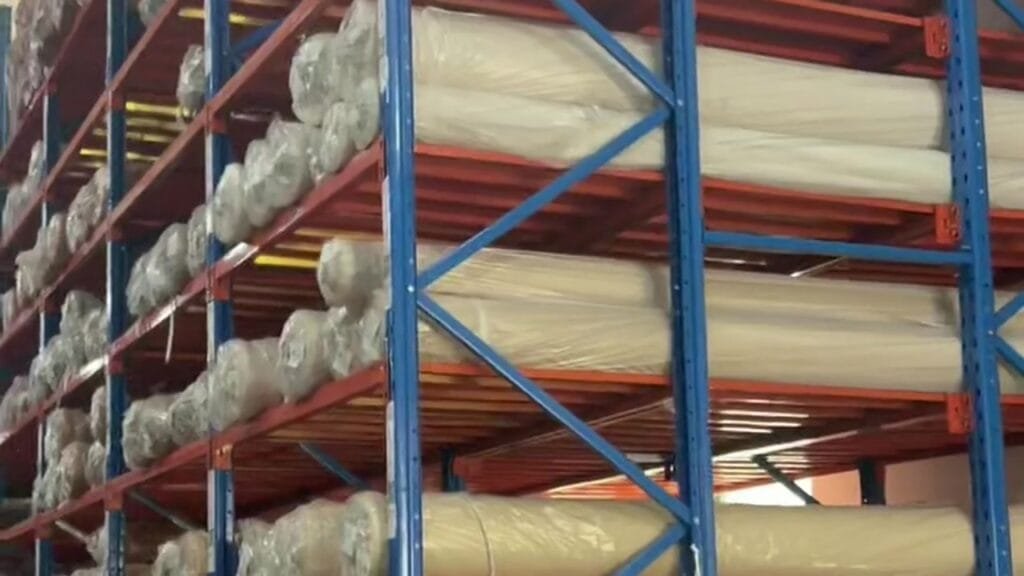
Bottom line: Curtain factories own production lines, fabric inventory, and in-line QC; trading companies do not — they add 10–20% markup and rely on the factory’s QC remotely. Factory-direct blackout curtain prices in Shaoxing 2026 sit between $4.50 and $14 per panel FOB Ningbo depending on GSM and finishing; quotes 30%+ below that range usually mean fabric substitution. Choose factory-direct for spec-sensitive orders and long-term programs; suppliers fit one-off small runs if you accept the markup.
When you’re sourcing curtains from China, you’ll hit the same crossroads almost every time: do you work with a curtain supplier — or go directly to a curtain factory?
The answer isn’t as obvious as it sounds. Not all suppliers are middlemen. And not all factories are worth your time. This guide breaks down the real difference, so you can make the call that actually protects your order — and your business.
This is written from a curtain factory in Shaoxing, Zhejiang, with 12 years in the industry. No sales pitch. Just an honest look at what each option actually means for your project. If you want the structured 8-criteria sourcing framework instead, see our China curtain manufacturer guide.
First: What Do “Supplier” and “Factory” Actually Mean?
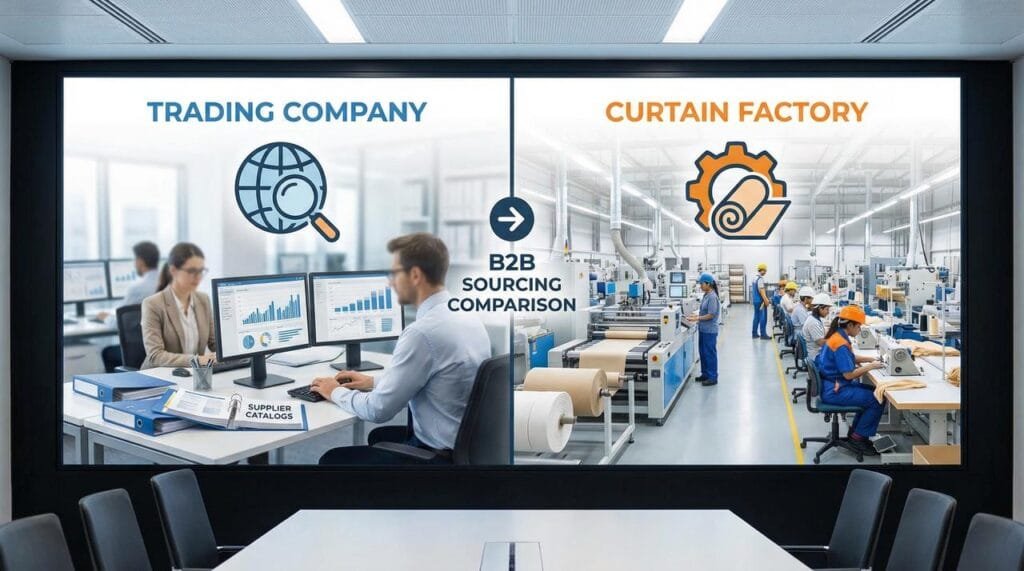
These terms get used interchangeably online, but they mean very different things.
A curtain factory is a manufacturing facility. It owns production lines, employs sewers and technicians, sources its own fabrics, and controls the entire process from cutting to packaging.
A curtain supplier is a broader term. It can mean a factory selling directly to buyers, a trading company sourcing from multiple factories and reselling, or an export agent connecting buyers with manufacturers for a cut. The problem: you often can’t tell them apart from a website alone.
Factory vs Supplier: The 6 Real Differences
1. Price: Why the Gap Exists
It’s tempting to assume the factory always gives the lowest price. That’s not always true — and here’s why.
A factory’s price reflects their actual production cost: fabric, labor, overhead, and margin. A trading company adds their markup (typically 10–20%) on top of that. So in theory, buying direct from a factory should be cheaper.
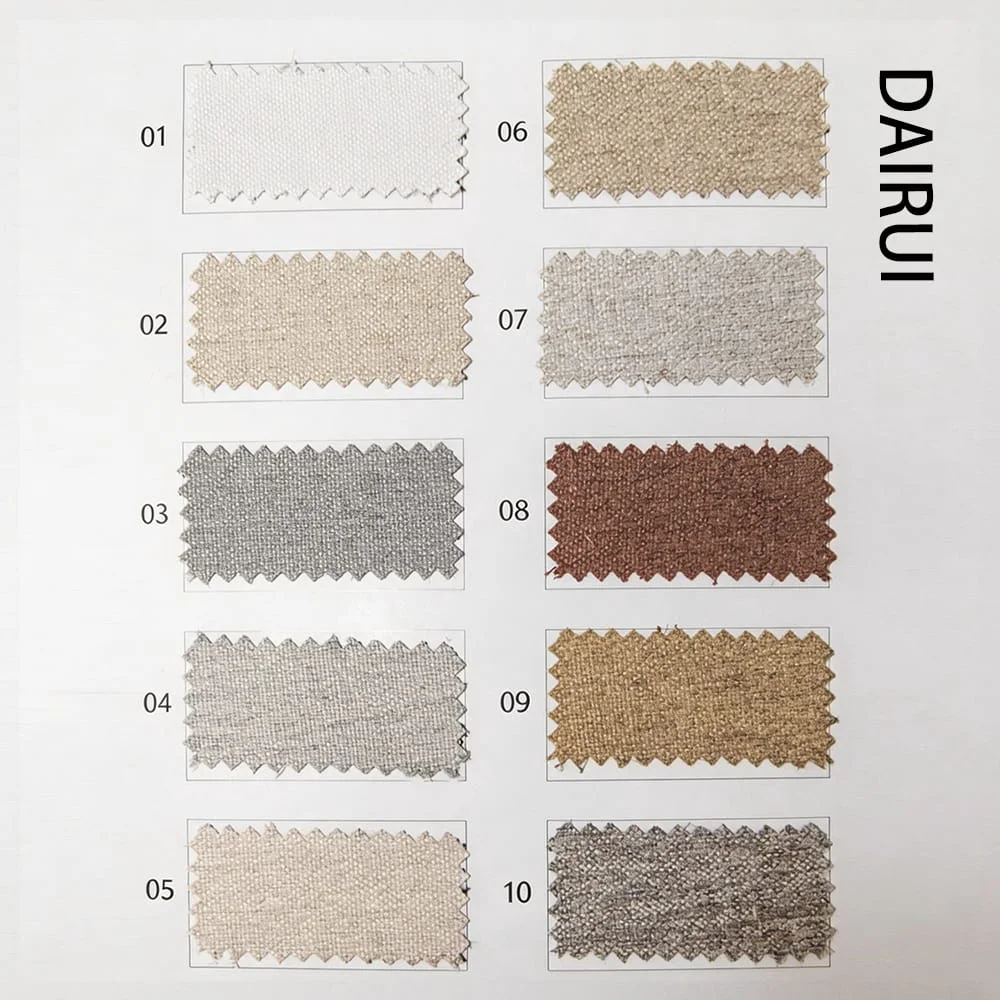
But a factory with poor efficiency, high overhead, or outdated equipment may quote higher than a lean trading company sourcing from optimized workshops. For reference: factory-direct blackout curtain prices in Shaoxing in 2026 typically sit between $4.50 and $14 per panel FOB Ningbo, depending on gsm and finishing. Quotes 30%+ below that range usually mean fabric substitution somewhere.
What matters more than price is understanding what’s included in the quote:
- Fabric grade and weight (gsm)
- Lining type and coating quality
- Finishing and hemming details (3 cm side hem vs 5 cm)
- Header style and hardware
- Packaging for export
A low price with vague specs is usually a trap. Ask for the line-item breakdown before comparing.
2. Quality Control: The Critical Difference
This is where the factory-versus-supplier gap becomes enormous.
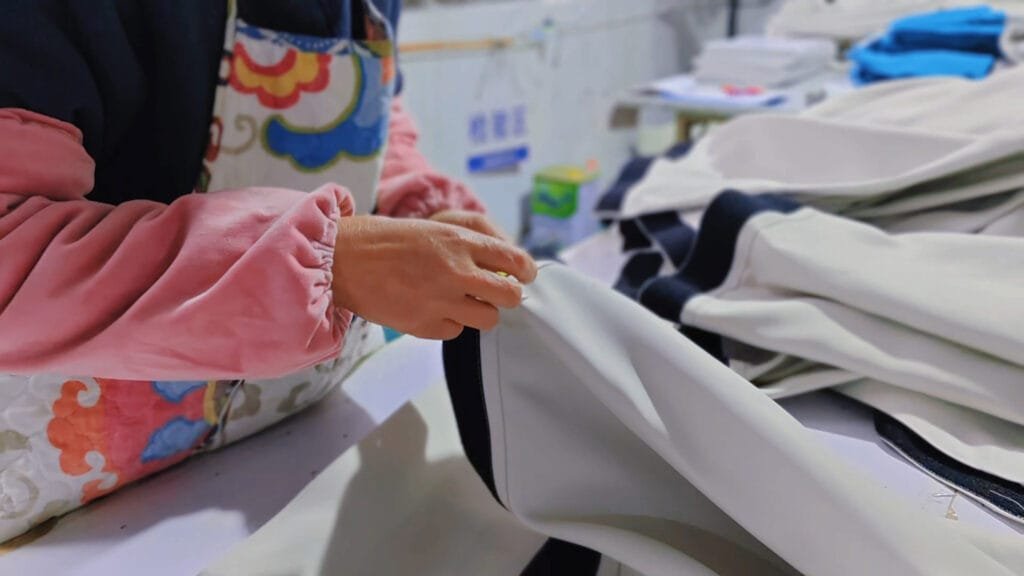
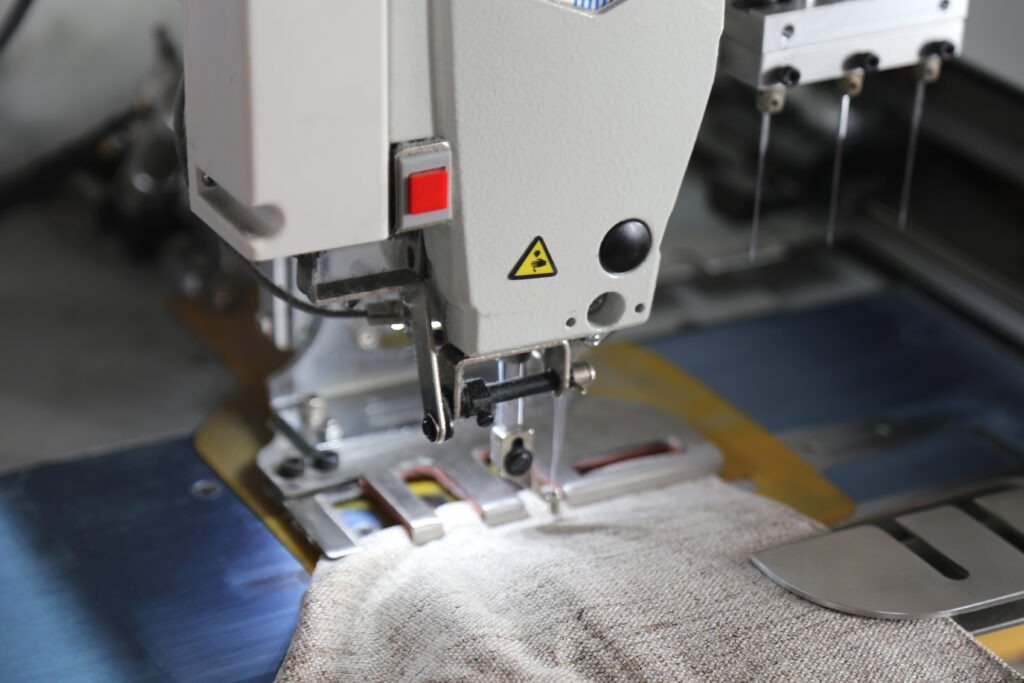
A real factory has quality control built into every step:
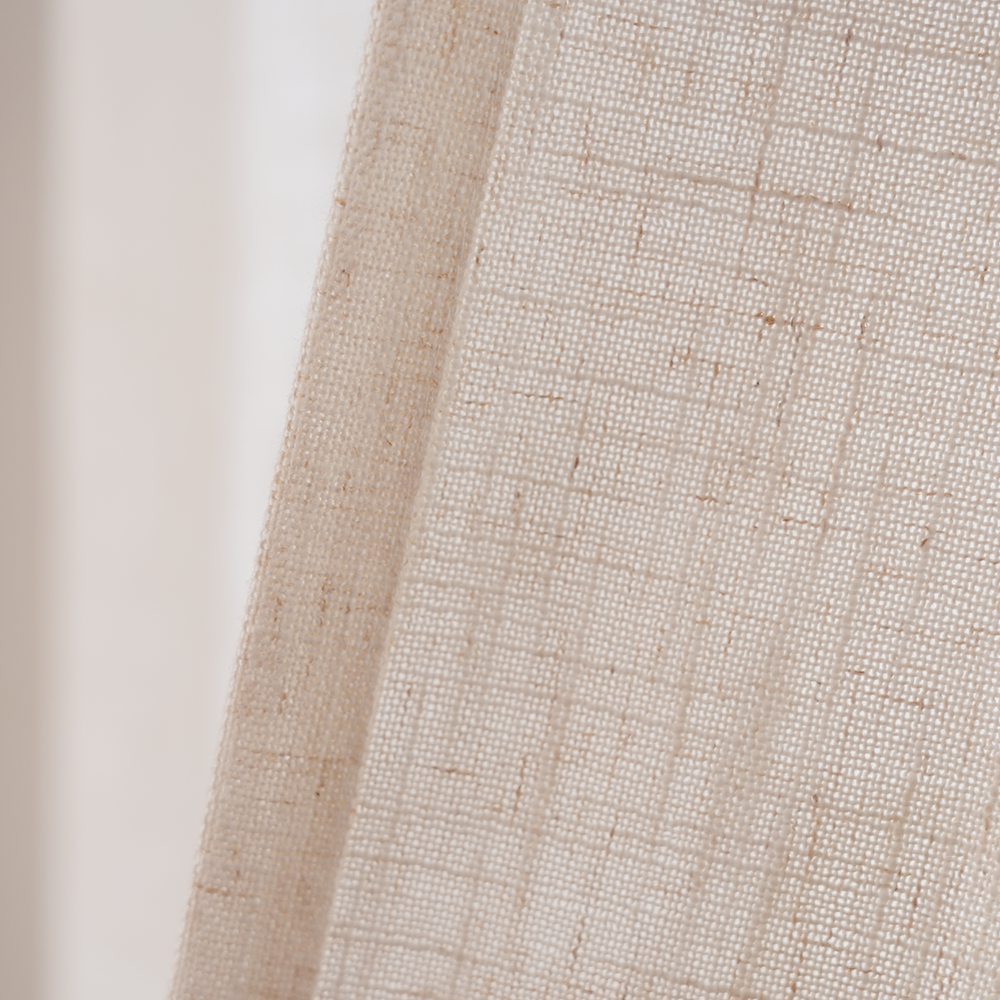
- Fabric inspection before cutting (gsm verification, color match against approved swatch)
- Thread tension and seam strength checks during sewing
- Final product check and pre-shipment audit before packaging
- Photo documentation of packed goods before container loading
A trading company relies on the factory’s QC — but typically has no inspectors on-site. When something goes wrong, they have to go back to the factory to fix it, which adds days or weeks to your timeline.
At our facility, we run in-line QC at every stage of production. If a seam fails, we catch it before the whole order is packed. We send photos before goods ship — not after they arrive at your port.
3. Communication: Speed and Clarity
A factory with 12 years of export experience communicates differently than a trading company.
With a factory, you’re typically talking to someone who understands product specs in detail, can walk you through fabric options and lead time realities, and tells you the truth when something isn’t feasible. With a trading company, you’re often working through a sales rep relaying messages to the production team — a simple question about curtain heading dimensions can take days to answer.
We’ve had buyers come to us after weeks of runaround — wrong specs on their order, no one who could explain why, and no resolution. That’s what happens when communication isn’t direct.
4. Lead Times: Which Is More Reliable?
Factory lead times are predictable because the factory controls the schedule. Trading company lead times have an extra variable: they depend on the factory’s queue. If the factory gets busy, the trading company’s order gets pushed back — and the buyer is the last to know.
Our typical production timelines from our own production floor:
- Sample (existing style): 3–5 working days
- Sample (custom design): 5–7 working days
- Bulk order (50–100 piece trial): 15–20 days
- Bulk order (200–500 pieces standard MOQ): 25–30 days
- Bulk order (2,000+ pieces): 30+ days from deposit confirmation
These are real numbers, not marketing claims. Our 12-month on-time delivery rate runs at 98%.
5. Flexibility and Customization
When you need something adjusted — a different header style, a custom color, a non-standard width — a factory can usually make it happen quickly. A trading company has to go back to the factory and negotiate those changes. The more custom your order, the more you lose going through a middleman.
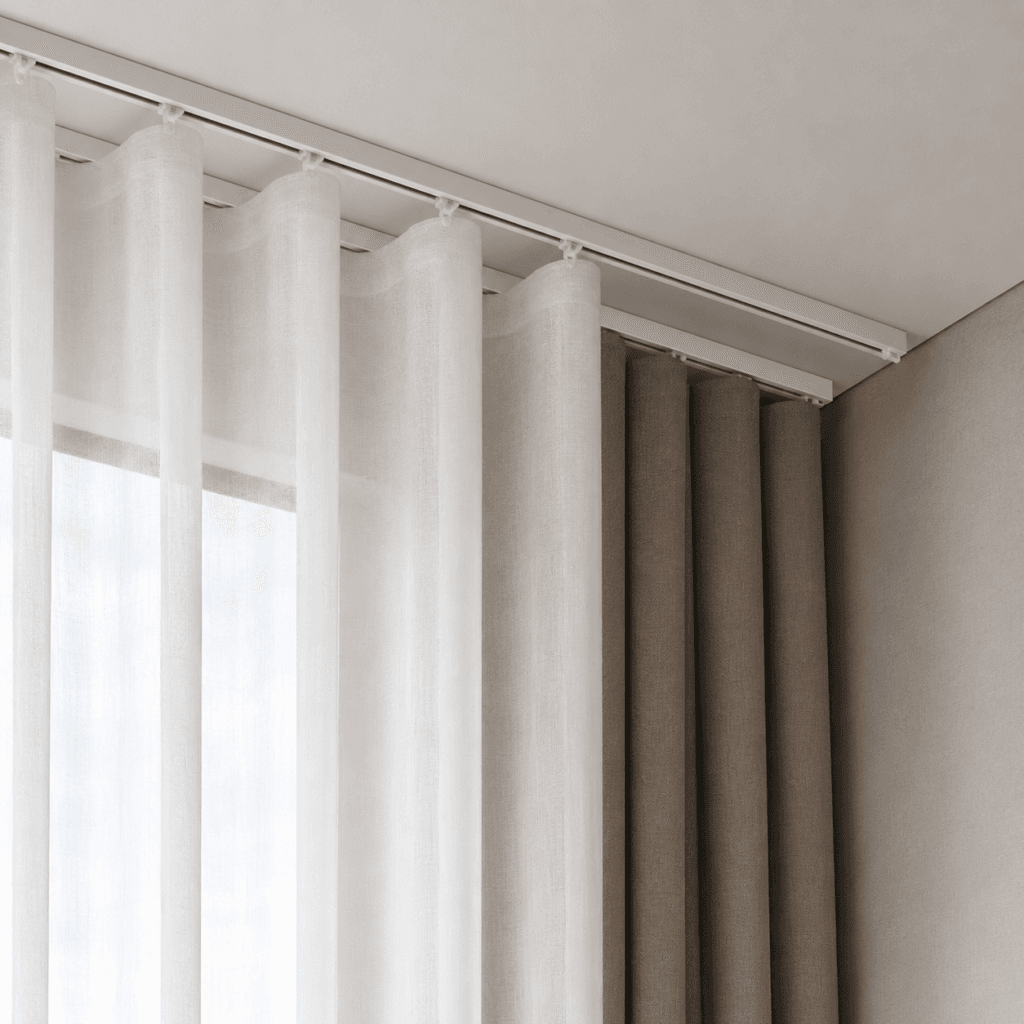
We handle custom dimensions, custom header styles (Ripplefold 8 cm pitch, S-Fold 6 cm pitch, Pinch Pleat 1.5x/2.0x/2.5x fullness, Grommet, Tab Top, Rod Pocket, Back Tab, Pencil Pleat, Wave Top), custom printing, embroidery, and Pantone color matching (lab dip typically $50–80 per color). All managed in-house. For DTC private label work specifically, see our Private Label service page.
6. Export Documentation and Shipping
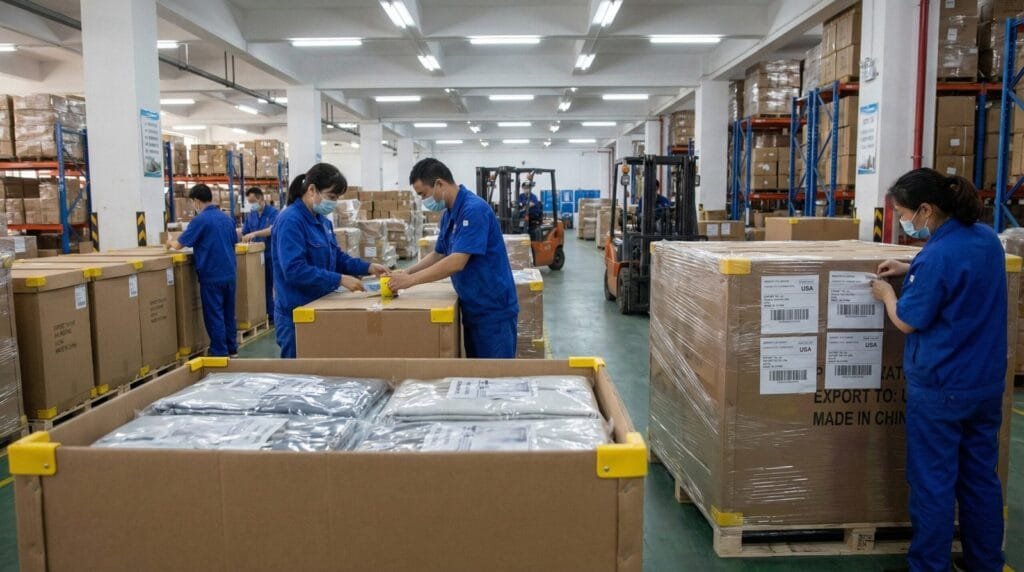
This is where many buyers get surprised. A reputable factory handles:
- Carton reinforcement and moisture barrier packing
- Packing list and commercial invoice preparation
- HS code classification
- Phytosanitary or fumigation certificates if your country requires them
- Coordination with your freight forwarder, or FOB/CIF/DDP options
A trading company may handle this — or may pass it back to the factory, creating another layer of potential miscommunication. We prepare complete export documentation for every international order. We ship through Ningbo and Shanghai ports to buyers in North America, Europe, Southeast Asia, the Middle East, and Africa.
The Hidden Red Flags to Watch For
Whether you’re dealing with a supplier or a factory, these warning signs should make you pause:
- “Our MOQ is very flexible” — Real factories have tiered minimums (50–100 trial / 200 standard / 800–1,000m custom-woven). If MOQ keeps dropping to win your order, the supplier may not be serious about production.
- “We can make anything” — Real factories specialize. Broad claims without fabric or material specifics usually mean they’re sourcing from someone else.
- No factory address or production photos — Real manufacturers are proud to show their facility. Hesitation is a red flag.
- Price significantly below market rate — Someone is cutting corners. Usually on fabric weight, lining quality, or finishing thread count.
- No sample required — Any serious B2B order starts with a sample. If a supplier skips this step, walk away.
So Which Should You Choose?
Here’s a practical framework based on order profile, not factory marketing.
Choose a trading company / supplier if:
- You’re buying small quantities (under 50 pieces per style)
- You don’t need customization
- You’re testing a new market or product line with no commitment
- The supplier has a proven track record with verifiable references
Choose a curtain factory directly if:
- Your order is 200+ pieces per style
- You need custom dimensions, colors, or header styles
- You’re supplying a project (hotel, hospital, restaurant, institution)
- You’re building a brand and need private label packaging
- Quality and consistency matter more than lowest price
- You want direct communication when something goes wrong
The simplest test: ask for a video walkthrough of the production floor. A serious factory will provide one in 30 seconds. A trading company will deflect or delay.
What We Actually Do at Dairui
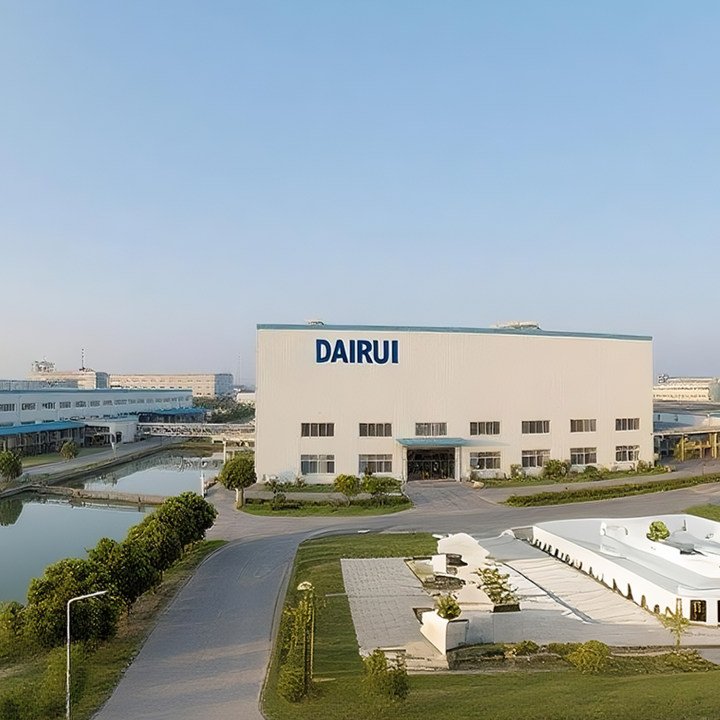
We’re a curtain factory in Shaoxing, Zhejiang — operating since 2014, 10,000 m² facility, 50+ in-house staff. Not a trading company, not an export agent. We own our production lines, employ our own workers, and manage every step of the order ourselves.
Our product range covers blackout curtains (coated, composite, and physical woven black yarn at 200–400 gsm), sheer curtains (voile, linen-look, chiffon, lace, net at 85–110 gsm), velvet curtains (180–280 gsm with optional blackout backing), shower curtains, outdoor curtains, and custom OEM/ODM work across all categories.
Our typical buyers: wholesale distributors, hotel project managers (largest single project to date: 600 hotel rooms), DTC e-commerce brands, interior designers, and procurement teams for institutions. About 80% of our customers are recurring partners on weekly or monthly cycles, with DTC brand orders averaging 4,000–10,000 pieces per month at scale.
If you’re evaluating suppliers for your next curtain order, we’re happy to walk you through what we can actually deliver — the good and the limitations. That’s how good business relationships start. Request samples or contact us with your target SKU and timeline.
Last reviewed: May 2026 · DAIRUI Editorial Team · Written from a Shaoxing curtain factory, Yuecheng District, Zhejiang Province.