Bottom line: Drapery weights keep curtains hanging straight and still. Chain weights (typically 40-80 g/m) suit sheers and full hems; sewn-in corner weights structure formal panels. Match the weight to fabric GSM and drop length, and specify lead-free for retail and child-safe markets. On wholesale orders, weights are added in production by the panel – confirm type and placement on your spec.
Drapery weights are one of the smallest components in curtain manufacturing—and one of the most overlooked. A 20-gram strip sewn into the wrong position can ruin the drape of an entire panel. Here’s what sourcing buyers actually need to know.
What Are Drapery Weights and Why Do They Matter?
Drapery weights are small metal, resin, or chain components sewn into curtain hems, corners, or seams. Their job is simple: pull the fabric downward so it hangs straight, stays put, and holds its intended shape.
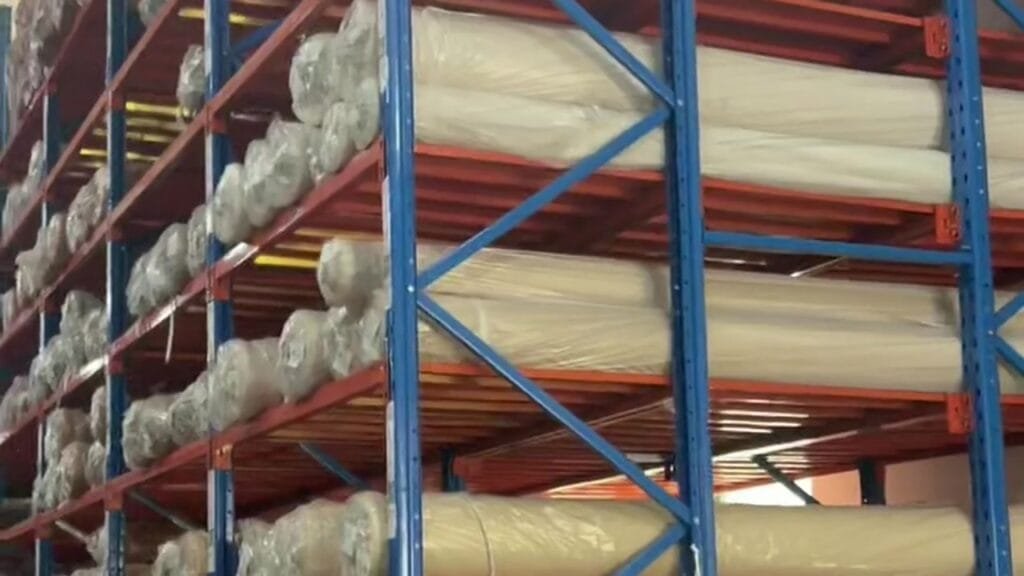
That sounds trivial until you see the difference on a production floor. We cut and sew roughly 41,000 curtain pieces a month in our 10,000 m² facility in Shaoxing. Panels without weights—especially sheer and linen fabrics under 180 GSM—curl at the edges, drift with air movement, and lose their fold geometry within days of installation.
For B2B buyers sourcing curtains for retail shelves, hotel projects, or DTC storefronts, the weight isn’t just a finishing detail. It’s a return-rate variable. Curtains that don’t hang properly generate complaints, and complaints eat margins.
Four Types of Drapery Weights We Use in Production
Not every curtain needs the same weight. The choice depends on fabric density, panel width, heading style, and end-use environment. Here are the four types we work with at Dairui:
Lead Weight Tape
A continuous flexible strip encased in fabric, sewn directly into the bottom hem. This is the most common option for standard residential and commercial curtains. Lead tape distributes weight evenly across the full width of the panel, which prevents corner curling and keeps the hemline level. It works particularly well with ripplefold and pinch pleat styles where uniform fold spacing matters.
Chain Weights
Small steel bead chains threaded through the hem channel. Chain weights are the standard for sheer curtains and voile panels because they add enough downward pull without creating visible bulk through translucent fabric. In our cutting room, we run chain weights on most sheer orders—roughly 30% of our monthly output falls in this category.
Coin / Disc Weights
Round metal discs, typically covered in fabric, inserted at specific points—usually the bottom corners and seam junctions of each panel. Coin weights are the go-to for grommet curtains and back tab styles where corner stability matters more than full-width hem tension. They’re also the default for hotel blackout curtains, where panels need to return to a closed position cleanly after guests adjust them.
Resin-Covered Weights
Metal cores encased in plastic or resin coating. These are used when the curtain will be machine-washed regularly—hospital privacy curtains, rental properties, Airbnb units. The resin shell prevents rust staining on wet fabric. We started offering these as a standard option in 2022 after a UK hospitality client reported rust marks on white panels washed at 60°C.
Production note: At Dairui, drapery weights are an add-on customization option, not included by default. This keeps base pricing competitive for buyers who don’t need them (e.g., heavy velvet panels that hang well on their own), while giving full flexibility to specify weight type, placement, and quantity per panel.
Drapery Weight Comparison: Which Type Fits Which Curtain?
| Weight Type | Ideal Use | Fabric Pairing | Visibility | Washability |
|---|---|---|---|---|
| Lead Tape | Full-width hem stability, ripplefold, pinch pleat | Blackout, linen, poly-cotton (150–300 GSM) | Hidden in hem fold | Dry clean preferred |
| Chain Weights | Sheer curtains, voile, lightweight panels | Voile, organza, sheer polyester (<120 GSM) | Minimal — thin profile | Machine wash safe |
| Coin / Disc | Corner anchoring, grommet & back tab styles | Blackout, velvet, hotel project panels | Hidden at corners / seams | Depends on covering |
| Resin-Covered | Frequent washing, healthcare, rental properties | Polyester, antimicrobial fabrics | Slightly bulkier | Machine wash at 60°C+ |
Where Do You Place Drapery Weights?
Placement matters as much as type. The same lead tape sewn into the wrong position changes how the panel breaks at the floor.
There are three standard placement zones:
Bottom hem (full width). The most common. Lead tape or chain runs the entire width of the panel inside the folded hem—our standard bottom hem is 7 cm, with 8 cm and 10 cm options for heavier panels. This gives uniform downward pull and keeps the hemline parallel to the floor.
Corner pockets. Coin or disc weights inserted at the two bottom corners of each panel. This is the minimum viable weighting—enough to prevent corner curl on medium-weight fabrics (200–280 GSM) without adding cost across the full hem.
Seam junctions. For wider panels (above 150 cm width), weights at every vertical seam junction prevent the “bellying” effect where fabric billows outward between seams. This matters most in hotel corridors and large windows with HVAC airflow pushing against the curtain.
Not every panel needs weights in all three zones. Over-weighting creates its own problem—a stiff, lifeless hang that defeats the purpose of soft drapery.
Our QC team checks weight placement at the sewing station before panels move to pressing. In Q1 2026, we caught 3 batches where corner weights had shifted during stitching—it’s a 2-minute fix at sewing, but a customer complaint if it ships.
How Do You Choose the Right Weight for Your Curtain Order?
The decision tree is shorter than most buyers expect. Three variables drive it:
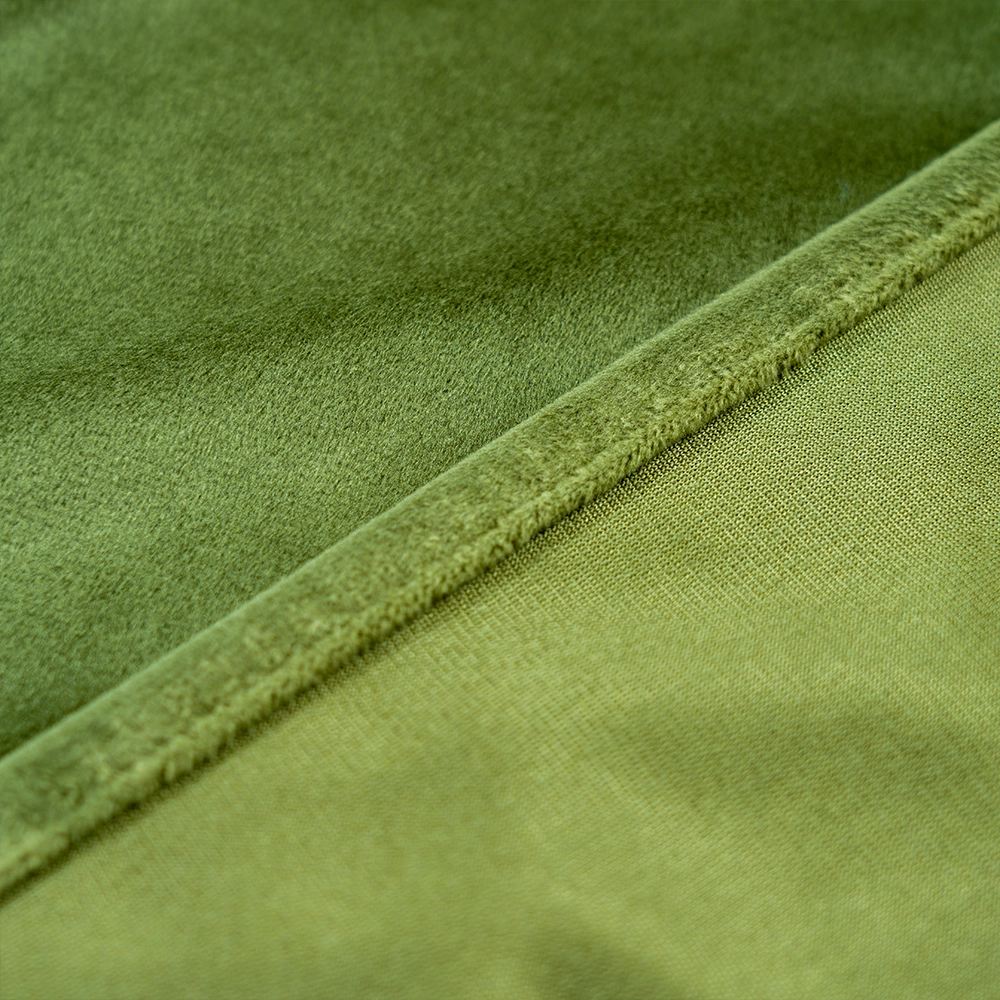
1. Fabric weight (GSM). Fabrics under 120 GSM (sheers, voile) need chain weights—anything heavier shows through. Fabrics between 150–300 GSM (linen, poly-cotton, standard blackout) work with lead tape or coin weights. Above 300 GSM (heavy velvet, thermal-backed blackout), weights are often unnecessary—the fabric’s own mass provides sufficient drape.
2. Heading style. Ripplefold and S-fold curtains are the most sensitive to weight distribution because the fold geometry is precise—our ripplefold panels use carrier spacing of 6 cm or 8 cm, and uneven weight throws off the wave pattern. Pinch pleat and grommet styles are more forgiving. Tab top and rod pocket styles rarely need full-hem weights, just corner discs.
3. Installation environment. High-traffic commercial spaces (hotels, hospitals, offices) benefit from resin-covered or coin weights that survive repeated handling and washing. Residential curtains sold through e-commerce channels need to ship flat and fold compactly—lightweight chain or flexible lead tape works well here. Outdoor panels need corrosion-resistant options exclusively.
Buyer tip: If you’re ordering samples from multiple factories to compare, request the same weight type and placement spec for each. Differences in weighting alone can make one factory’s sample look better than another—even when fabric and sewing quality are identical.
What Happens When You Skip Drapery Weights?
Some buyers skip weights to save cost. Sometimes that’s the right call—velvet blackout panels at 350+ GSM hang perfectly without them. But on lighter fabrics, the consequences show up fast.
Corner curling is the most visible issue. The bottom corners of unweighted panels flip upward within a few weeks of hanging, especially in rooms with ceiling fans or HVAC vents. It looks sloppy on a retail shelf photo and worse in a customer’s living room.
Drift is the second issue. Unweighted sheer panels shift laterally with any air movement. For hotel rooms where blackout performance is part of the guest experience, drifting sheers that expose gaps between panels are a maintenance complaint.
We learned this the hard way with a 2019 hospitality order. A Dubai hotel project specified no weights on sheer panels to cut per-unit cost. Within 4 months, the property manager requested replacement panels with chain weights added—the originals moved constantly under the building’s climate system. The rework cost more than the weights would have.
Drapery Weights in Different Curtain Categories
Blackout curtains
Standard 3-layer and 4-layer coated blackout fabrics (typically 220–280 GSM) benefit from lead tape in the full hem. The coating adds stiffness that resists draping naturally—weights counteract that rigidity. For composite blackout with TPU lamination, corner discs are usually sufficient because the lamination layer adds its own weight.
Sheer and voile curtains
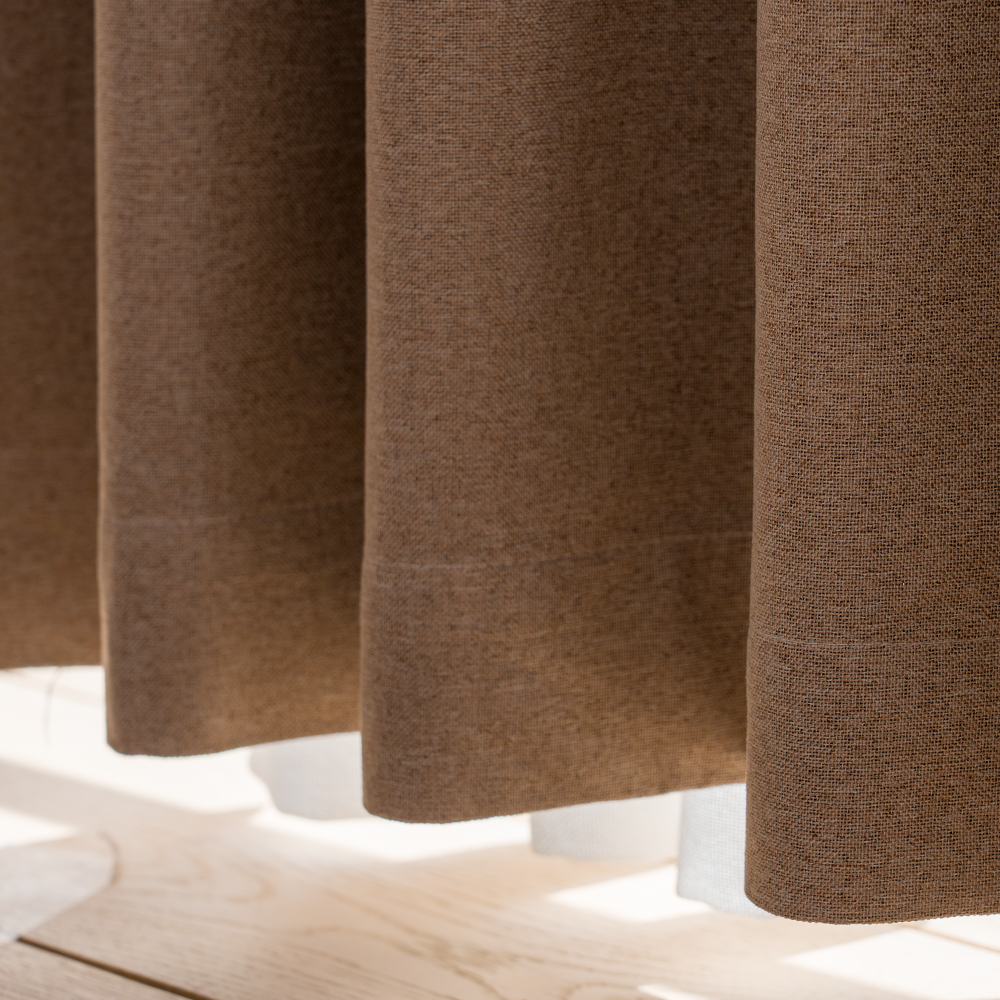
Chain weights are mandatory for anything under 100 GSM. Without them, sheer panels billow like laundry on a line. The chain sits inside the hem fold and is virtually invisible—even on white voile.
Linen and linen-blend curtains
Natural linen has good inherent weight (typically 180–250 GSM) but wrinkles easily. Lead tape in the hem helps linen panels hang straight after steaming, while our heat-setting process locks the fabric’s shape memory for long-term drape retention.
Hotel project curtains
Hotels are the most demanding application. Our largest single hotel project—600 rooms—required coin weights at both corners plus seam junctions on every blackout and sheer panel. The property specified weights because their housekeeping staff re-hangs curtains after cleaning, and weighted panels realign faster on the track.
How to Specify Drapery Weights in Your Order Brief
Most sourcing issues with drapery weights come from vague specifications. Writing “add weights” on a purchase order tells the factory nothing useful. A complete weight specification should cover four points in one line.
Example spec line: “Lead weight tape, full-width bottom hem, 7 cm hem fold, all panels — SKU BLK-042 through BLK-048.”
That single sentence eliminates ambiguity. Compare it with what we often receive: “Please add weights to curtains.” That leaves weight type, placement, and scope all undefined—and the factory has to guess or ask, which adds 1–2 days to the pre-production timeline.
Here’s what each element controls:
- Weight type — Lead tape / chain / coin / resin-covered. Determines material cost and sewing method.
- Placement — Full-width hem / corners only / seam junctions. Determines labor time.
- Hem dimensions — 7 cm / 8 cm / 10 cm fold depth. Must match the weight profile physically.
- Scope — All SKUs in the order, or specific product codes only. Prevents accidental over- or under-application.
If you’re unsure which weight type to specify, request 2–3 sample panels with different configurations during the sampling stage. Dairui ships samples in 3–5 working days, and comparing a chain-weighted sheer next to an unweighted one side-by-side makes the decision obvious.
Weights are only one line in a bigger brief – for fabrics, MOQs, quality checks and payment terms, see our wholesale curtain sourcing guide.
Heading Styles and Weight Pairing: What Works Together
Different heading styles interact with drapery weights differently. The heading creates the top structure; the weight controls the bottom behavior. When these two are mismatched, the panel hangs awkwardly—too stiff at the bottom, too loose at the top, or the fold pattern breaks partway down.
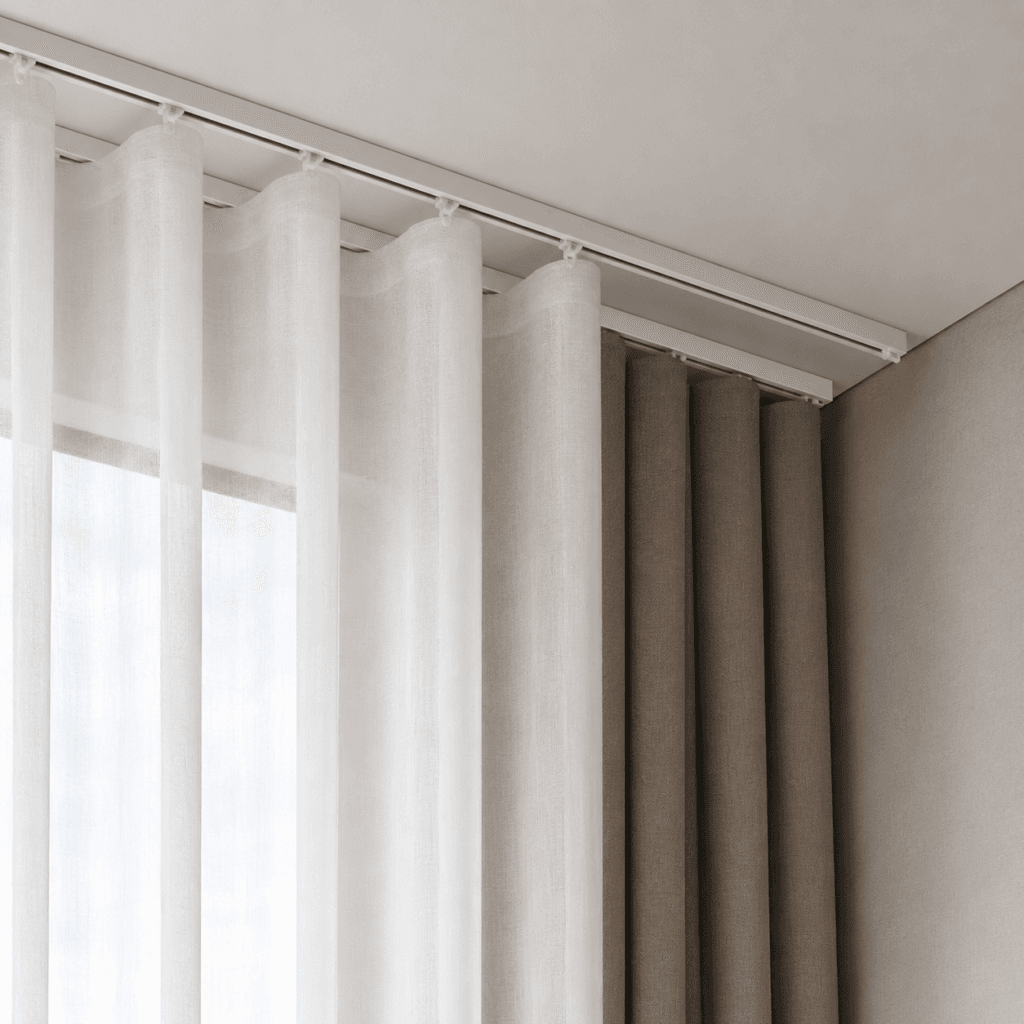
Ripplefold / S-fold. The most weight-sensitive heading. Ripplefold panels rely on precise carrier spacing (6 cm or 8 cm at Dairui) to create uniform waves from track to hem. Lead tape across the full hem is the standard pairing—it ensures the wave pattern carries all the way to the bottom edge without flaring. Coin weights at corners only will leave the center of the panel lighter, disrupting the wave rhythm.
Pinch pleat (single, double, triple). Pinch pleat headings create structured folds at the top that fan out naturally toward the hem. Full-width lead tape works well for formal installations. For a softer, more relaxed fall, corner coin weights alone can be sufficient—especially on fabrics above 200 GSM.
Grommet / eyelet. Grommet curtains form deep, even folds between each ring. These folds are self-structuring at the top, so the weight’s role is primarily to prevent the hem from kicking outward. Corner discs at both bottom corners are the typical pairing. Full-width tape is overkill for most grommet applications unless the fabric is exceptionally light.
Back tab and tab top. These casual headings create a gathered, slightly bunched look. Corner coin weights are usually enough. Full-width tape would make the bottom too rigid relative to the relaxed top—a visual mismatch.
Factory insight: The peak season for weighted-curtain orders is August through October. Northern Hemisphere winter orders—especially hotel refurbishment projects—require heavier fabrics with full weight specifications. Planning your sampling before July gives the production line breathing room to dial in your weight configuration without peak-season delays.
Frequently Asked Questions About Drapery Weights
No. Heavy fabrics above 300 GSM—like velvet or dense thermal blackout—usually hang well on their own. Weights are most beneficial for lightweight sheers (under 120 GSM), standard blackout panels (150–280 GSM), and any curtain installed in environments with strong air circulation.
Resin-covered weights and stainless steel chain weights are both machine-wash compatible. Resin-covered weights handle temperatures up to 60°C without rust or coating damage. Standard lead tape should be dry-cleaned only, as repeated washing can degrade the fabric casing.
The material cost per panel is minimal. The main cost factor is the additional sewing time—inserting and securing weights adds 1–3 minutes per panel depending on the type and number of placement points. On bulk orders of 1,000+ pieces, this is a small per-unit increment.
Yes. Mixed specifications within a single order are standard practice. For example, a typical hotel project order might specify chain weights for sheer panels and coin weights for blackout panels—both produced on the same production run at Dairui.
Lead tape and coin weights add measurable weight to cartons. On a 40ft container holding 12,000–16,000 curtain pieces, the added shipping weight from lead tape across all panels can reach 150–300 kg depending on tape density and panel width. Chain weights have a smaller impact. This is worth factoring into freight cost calculations for FOB or CIF terms.
Lead weights used in curtain manufacturing are encased in fabric or sealed channels—there is no direct contact with room occupants. For markets with strict lead content regulations (EU REACH, US CPSIA for children’s products), alternatives like steel chain or resin-covered weights are available. If your curtain line targets children’s rooms or nurseries, specify lead-free weights during sampling.
Drapery weight customization follows Dairui’s standard MOQ structure: 200 pieces per style and color for in-stock fabrics, with trial orders from 50–100 pieces available for first-time buyers. Weight type and placement are specified as part of the standard order brief—no separate MOQ for the weights themselves.
Related Pages
OEM, ODM & Wholesale Curtain Manufacturing
— Full customization including weight specifications, heading styles, and fabric selection for bulk orders.
Private Label Curtain Manufacturing
— Build your branded curtain line with custom finishing details including drapery weights, heat-setting, and packaging.
— 30 answers covering MOQ, lead times, sampling, and logistics.
Need samples with specific weight configurations?
Dairui ships custom samples in 3–5 working days. Specify fabric, heading style, and weight type in your inquiry—our team will confirm pricing and options within 24 hours.
Author: DAIRUI Sourcing Desk · Last reviewed: 2026-06
Dairui Textile Co., Ltd. · Shaoxing, China since 2014 · 10,000 m² facility · 500,000 pieces/year capacity