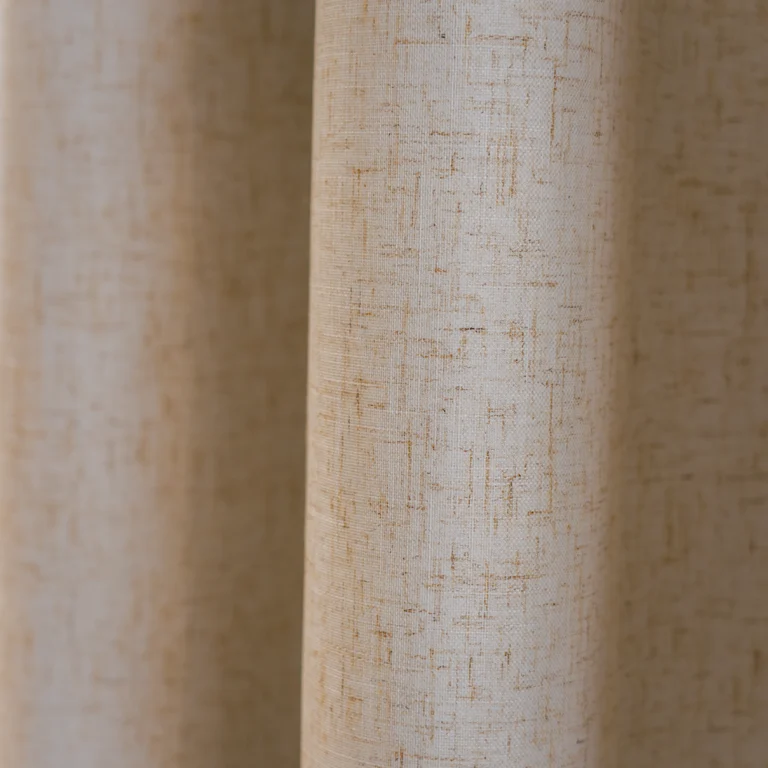
OEM & ODM Curtain Manufacturing
Custom Curtain Support
Dairui Textile is an OEM/ODM curtain manufacturer and wholesale supplier in Shaoxing, China since 2014. We turn brand specifications and bulk requirements into production-ready orders. Annual capacity of 500,000 pieces across blackout, sheer, linen, and velvet curtains.
Key OEM/ODM Information
Sample Lead Time
3–5 working days
Bulk Lead Time
Around 30 days from deposit
MOQ
50–100 pcs trial orders on in-stock fabrics; custom-woven fabric from 800–1,000 m
Certifications & Testing
BSCI audited factory. SGS test reports to NFPA 701 and CAN/ULC S109 for applicable fabrics. OEKO-TEX certified fabrics available.
OEM or ODM: which side you start from
The two routes differ in who writes the specification, not in who makes the goods. Minimums, sampling and bulk timing are the same either way — the figures above apply to both.
| OEM — you bring the specification | ODM — we bring the specification | |
|---|---|---|
| What you send | A photo, a reference link, or a finished sample — whichever you have. Add finished size, heading and packing if you know them; a full spec sheet is welcome but not needed to start. | Your market, target retail price, sales channel and season. No spec sheet needed. |
| What we do | Match the fabric to your reference, then make a counter sample and hold it as the production standard. Add 15–20 days if the fabric has to be custom woven or dyed. | Propose fabric directions from our in-stock ranges, costed against your price band, then sample the ones you pick. |
| Who it suits | Brands and retailers with an existing spec; project buyers working to an FF&E book. | New brands, DTC launches, and buyers entering the curtain category for the first time. |
Most first orders sit somewhere between the two — a fabric you have already chosen, a construction you have not. Send whatever you have and we will tell you which side it falls on.
What You Can Customize
1. Fabric Selection
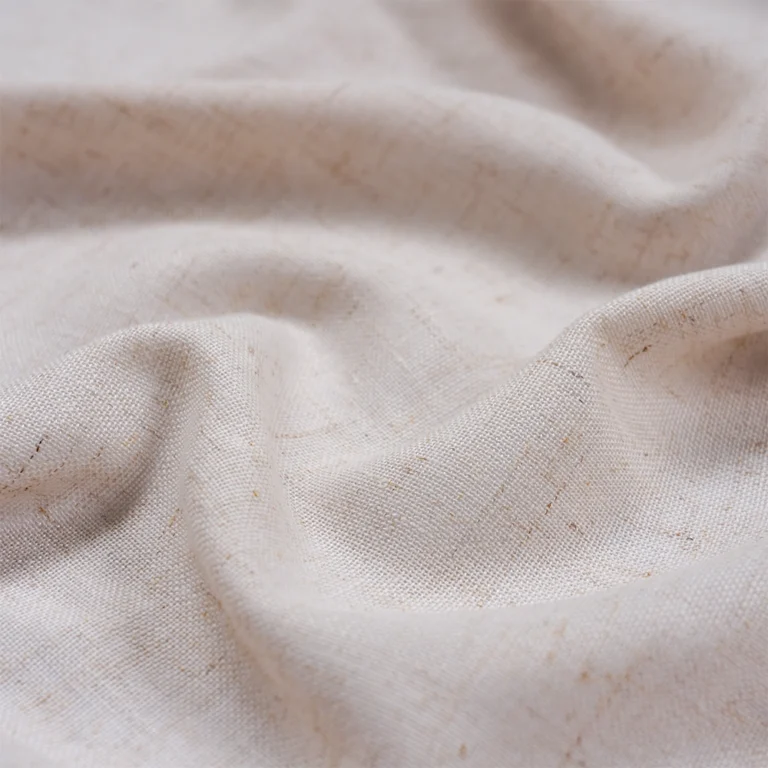
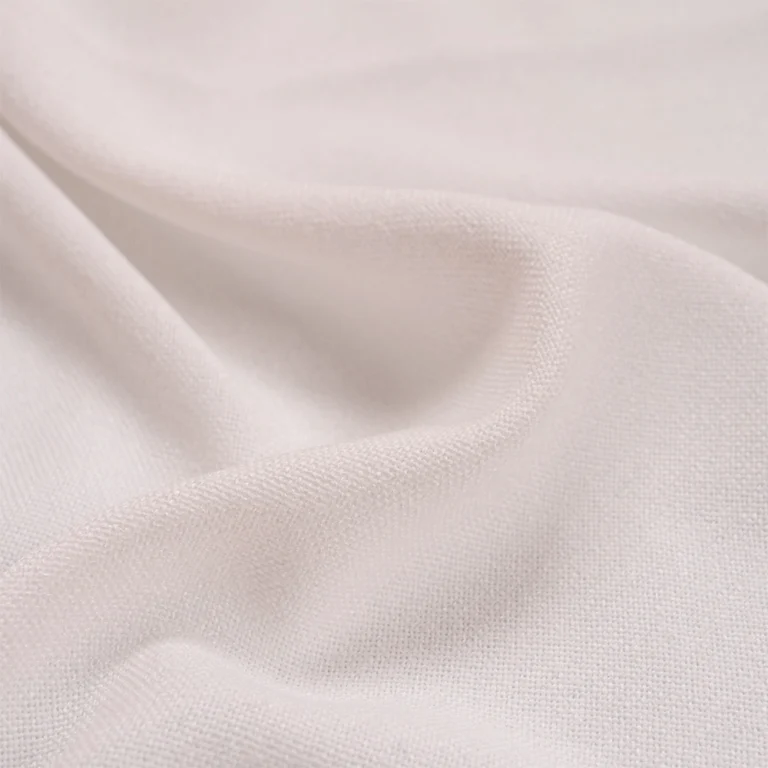
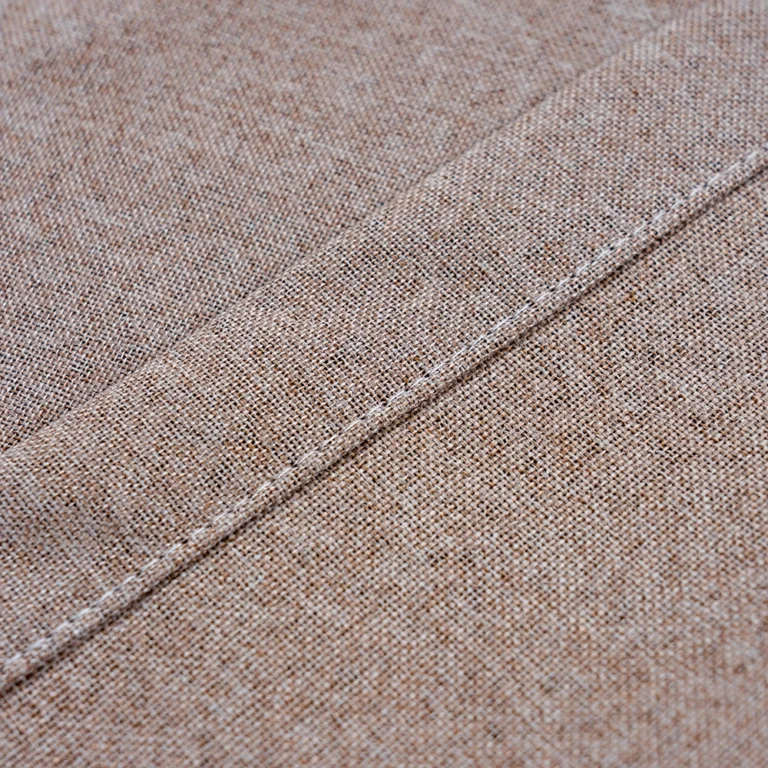
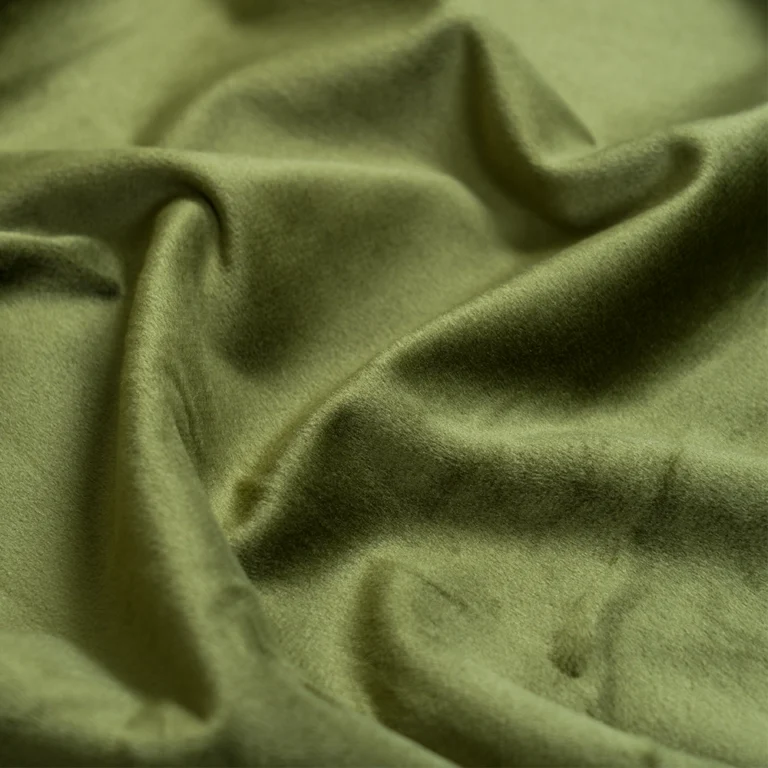
Choose fabric directions based on your market, target price range, and product positioning, including blackout, sheer, velvet, linen-look, and other suitable curtain materials.


2. Functional Treatments
Three treatment routes we run in production. Every one of them is a fabric-level decision, so it has to be settled before sampling — none of these can be added to a finished panel afterwards.


Blackout
Three routes: 1–3 pass acrylic coating, composite construction (face fabric + coated backing), or yarn-level woven blackout on shuttle looms. Coated and composite reach 95–100% light blocking; woven reaches 80–90% but stays breathable with natural drape. Working range 180–400 gsm, with 200–260 gsm the usual DTC retail band. See the blackout range.

Flame Retardant
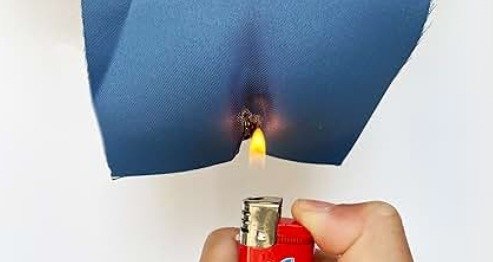
SGS test reports to NFPA 701 (US) and CAN/ULC S109 (Canada) are available for applicable fabrics — our S109 report covers a 353 g/m² single-layer curtain fabric. Tell us which standard your market enforces before we select fabric.

Waterproof
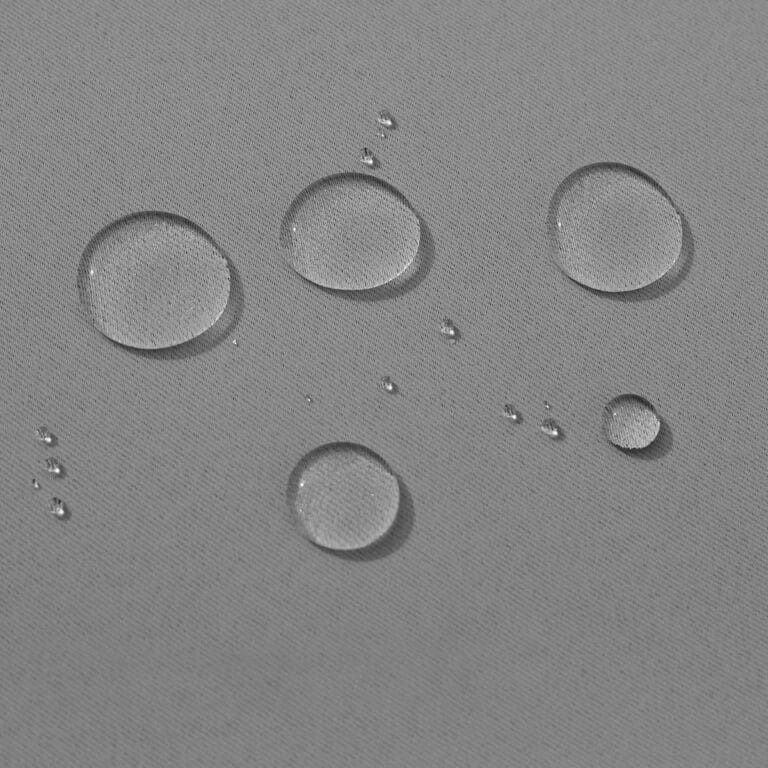
PA or PU coated polyester, typically 70–110 gsm for shower and outdoor programs. The coating type decides the handfeel and the price, and it also decides whether the panel can be machine washed — worth fixing early if your product page will carry care instructions.
On the finishing line
Four steps from our own floor in Shaoxing. They are the steps that decide whether a panel hangs straight after two years, and they are the ones worth asking any supplier to show you.
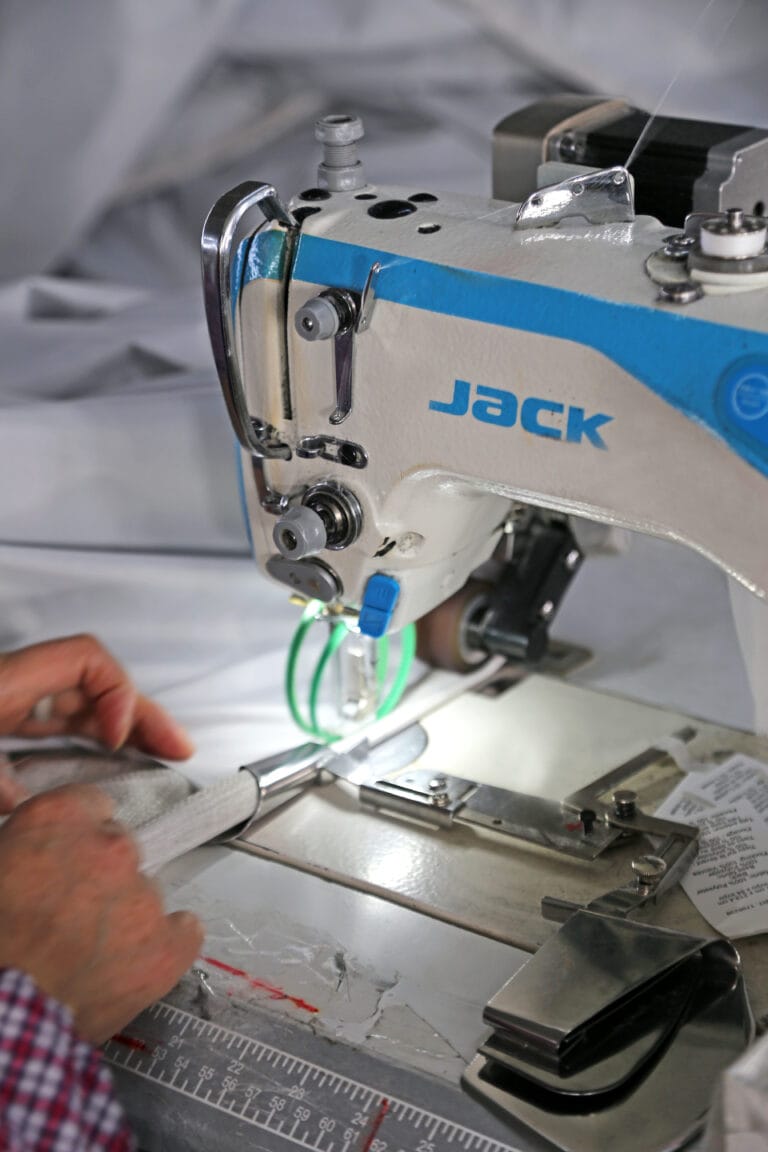

Sewing. Hems and heading seams. This is where fullness and carrier spacing get fixed — get it wrong and the pleats will not sit evenly no matter how good the fabric is.
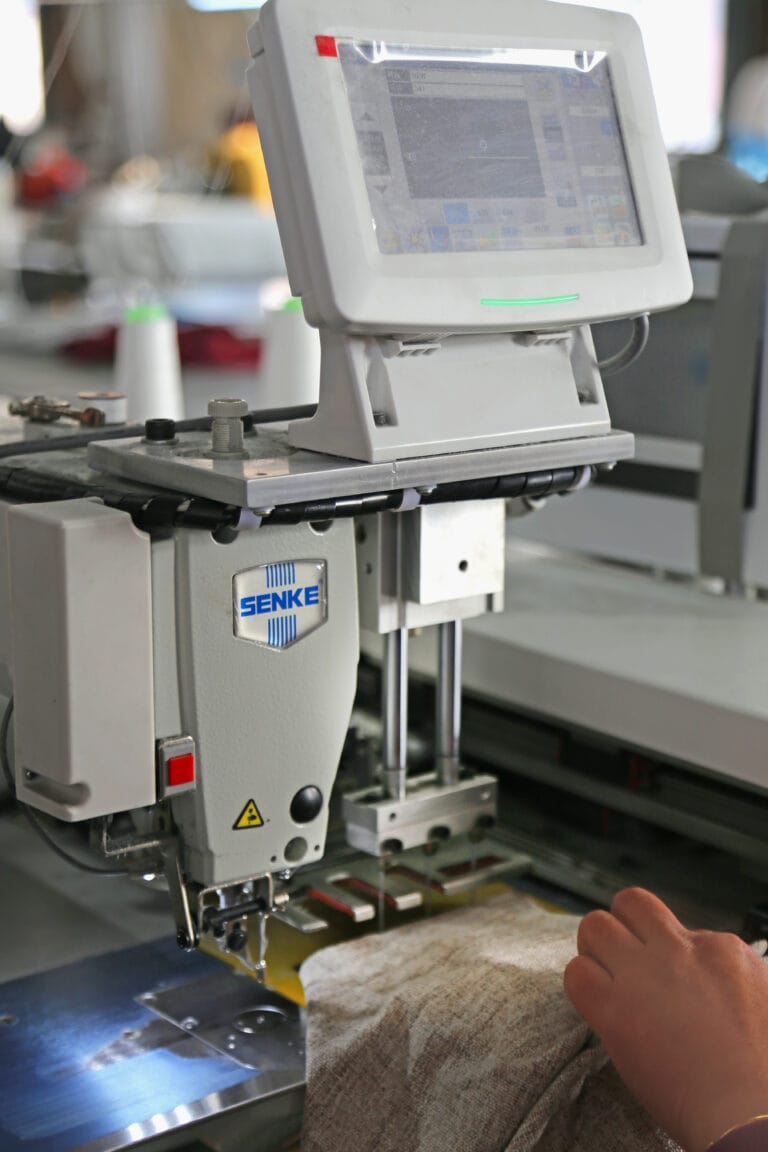

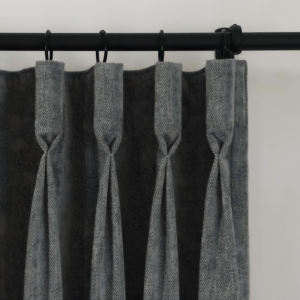
Pleating. Pleat spacing is set on the machine rather than marked by hand, so the same pleat lands in the same position across a whole run instead of drifting panel by panel.
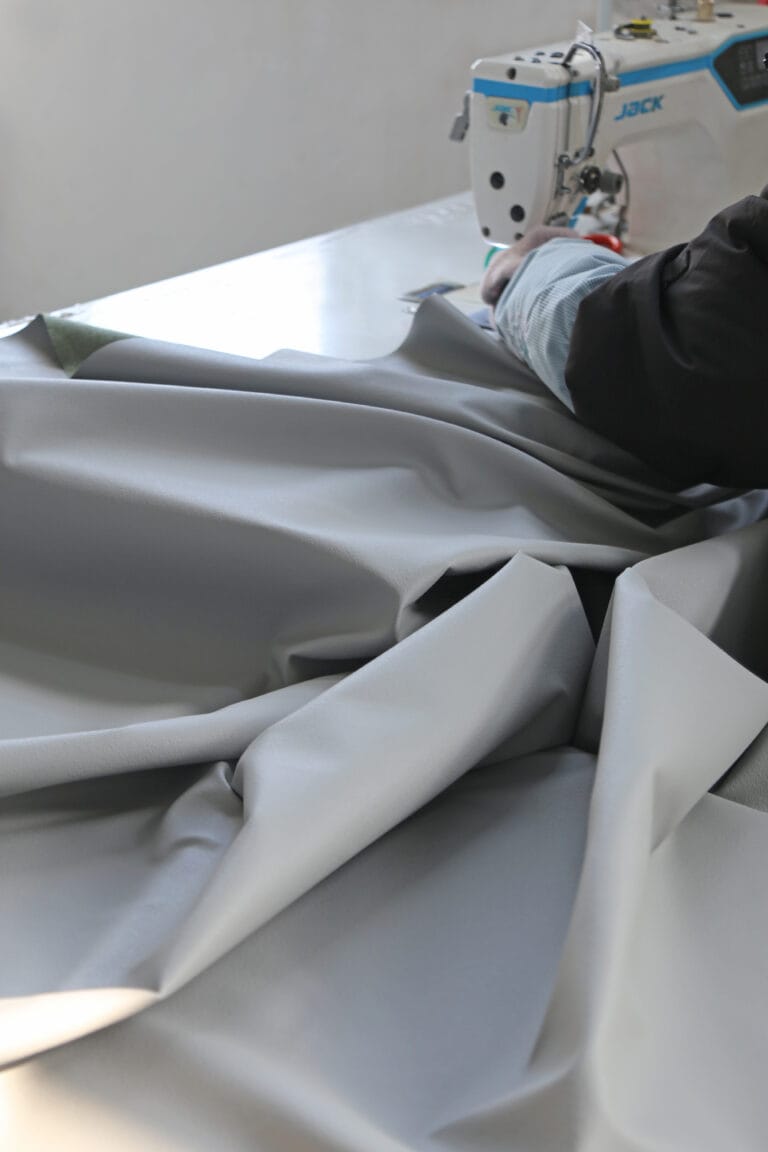

Coated blackout. Face and coated back in one shot. Because of the coating, coated panels need a wider hem allowance than woven blackout.
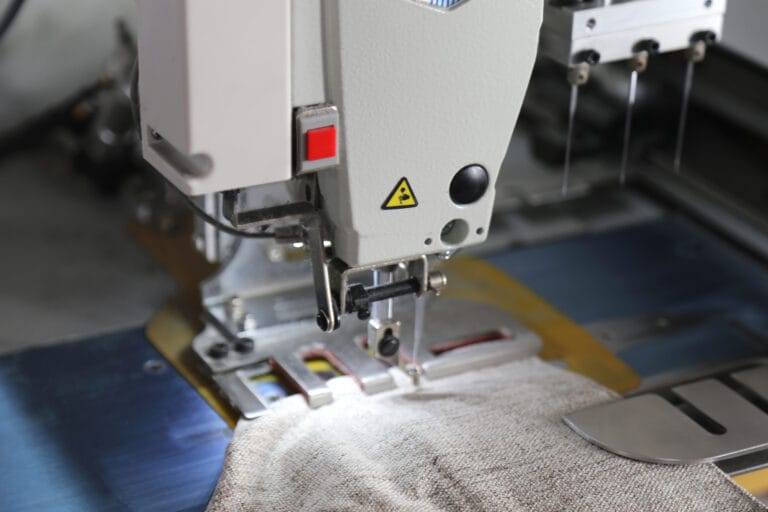

Template work. Openings cut and stitched to a template. That is what makes hole spacing repeatable across a 2,000-panel order.
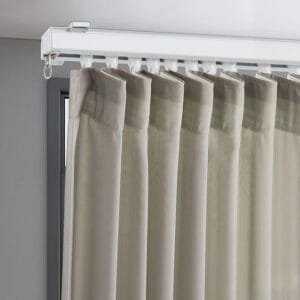
3. Heading styles
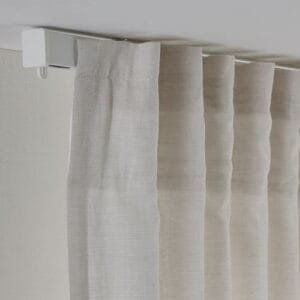
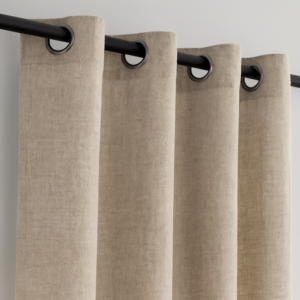
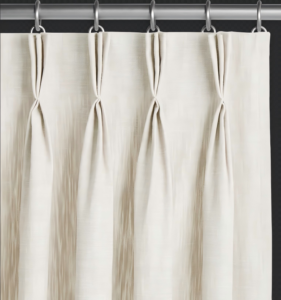
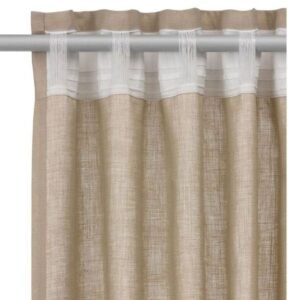
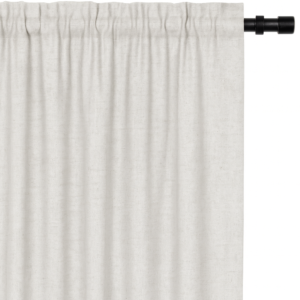
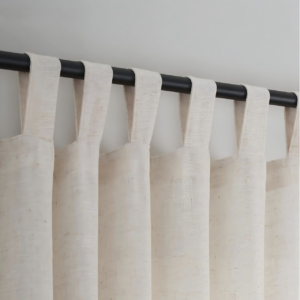
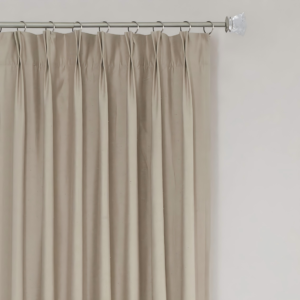
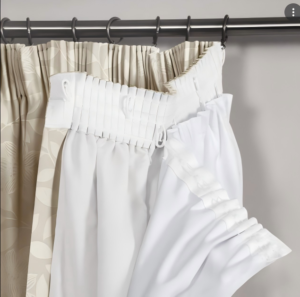
S-fold (ripple fold), pinch pleat (double or triple), grommet, rod pocket, back tab, tab top and tie top. Fullness is what actually drives your fabric cost: 2–2.5× the track width is standard for lined pinch pleat and ripple fold work, so a 3 m window consumes 6–7.5 m of fabric width before hems. Because the heading has to match the carrier spacing it hangs from, curtain tracks and accessories can be specified on the same order — that page carries the track profiles, motor clearances and wall-to-wall deductions.


4. Labeling and Packaging
Woven or printed wash labels, size and care labels, hang tags and barcode stickers. Packing options run from PE or OPP bags for wholesale volume, to PVC zipper bags, printed header cards with a hanger, and retail boxes for shelf-ready programs; carton marks are printed to your shipping-mark artwork. For a full branded program — your labels, your packaging, your carton — see our private label curtain manufacturing page.
Frequently Asked Questions
We are a China curtain supplier with our own factory in Shaoxing, Zhejiang. Our team focuses on custom curtain making and finishing for wholesale, OEM, and project orders.
On in-stock fabrics, trial orders start at 50–100 pieces and can be discussed. If the fabric has to be custom-woven or custom-dyed, the minimum is usually 800–1,000 meters of fabric, which is what makes custom fabric a volume decision rather than a sampling decision. 100% linen starts higher, and the final MOQ is confirmed in the quotation.
Our main markets are North America, Europe, the United Kingdom, and Australia. We support wholesale, brand, and project orders across these regions, including buyers working to FF&E specifications.
Yes. We supply full container loads (20ft, 40ft and 40HQ) with load planning. FOB Ningbo or Shanghai is standard, with CIF and DDP available on request. For mixed-SKU container programs see our Finished Curtain Wholesale service.
Our factory is located in Shaoxing, Zhejiang, China. It is about a 30-minute drive from Hangzhou Airport and around 2 hours from Shanghai Airport, which makes factory visits and travel coordination more convenient for overseas buyers.
Yes. If you are planning a sourcing trip or supplier review, you are welcome to contact us in advance to arrange a factory visit.
Helpful starting information includes the curtain type, approximate quantity, finished size, preferred fabric or material direction, heading style if known, functional requirements, and packaging or private-label needs where applicable. Not every item must be finalized before you contact us.


Start Your OEM / ODM Curtain Inquiry
Tell us your curtain type, quantity, size, fabric direction, and any packaging or functional requirements. Our team will review your request and reply with the next step for sampling, quotation, or production support.
We’re Just a Message Away
- No.36, Zhongxing Avenue, Yuecheng District, Shaoxing City, Zhejiang, China
- +86 13456579329
- WhatsApp: +86 13456579329
- [email protected]
OEM & wholesale only. We do not sell single panels for personal or home use.