Bottom line: A 40HQ (High Cube) container fits roughly 20,000 pieces of 140–160 gsm sheer curtains, or 17,000–18,000 pieces above 200 gsm. For roll goods at 280 cm width, a 20ft holds 15,000 m of 300 gsm coated blackout up to 60,000–70,000 m of 50 gsm sheer, and a 40HQ roughly 2.4× those fabric figures. Actual numbers vary 10–15% with carton size, panel dimensions, and stacking efficiency. Buyers should plan PO quantity around full-container math early — finishing 1,200 panels short of an FCL load wastes $1,200–$1,800 in per-piece freight versus filling the container. This guide gives the CBM math, packing standards, mixed-load rules, and the common loading mistakes that quietly cost money.
Container Internal Dimensions and Usable CBM Capacity
Before counting curtains, you need to know what you’re filling. The three container types used for curtain shipments from China are 20ft standard, 40ft standard, and 40ft High Cube (40HQ). Their listed capacities are theoretical maximums; the usable space, after accounting for stacking gaps, carton tessellation, and the 6–8% safety margin freight forwarders apply, is meaningfully lower.
| Container | Internal L×W×H (m) | Theoretical CBM | Usable CBM (curtains) | Max Payload (kg) |
|---|---|---|---|---|
| 20ft Standard | 5.90 × 2.35 × 2.39 | 33.1 | 27–29 | 28,000 |
| 40ft Standard | 12.03 × 2.35 × 2.39 | 67.5 | 55–58 | 26,500 |
| 40ft High Cube | 12.03 × 2.35 × 2.69 | 76.0 | 65–68 | 26,500 |
Curtains and fabric rolls are volume-bound, not weight-bound cargo — you’ll fill the cubic capacity long before you hit weight limits. This is why nearly all curtain export from China ships in 40HQ rather than 40ft standard: the extra 30cm of internal height adds about 10 CBM of usable space at the same ocean freight rate.
How Curtain Panels Are Packed for Export
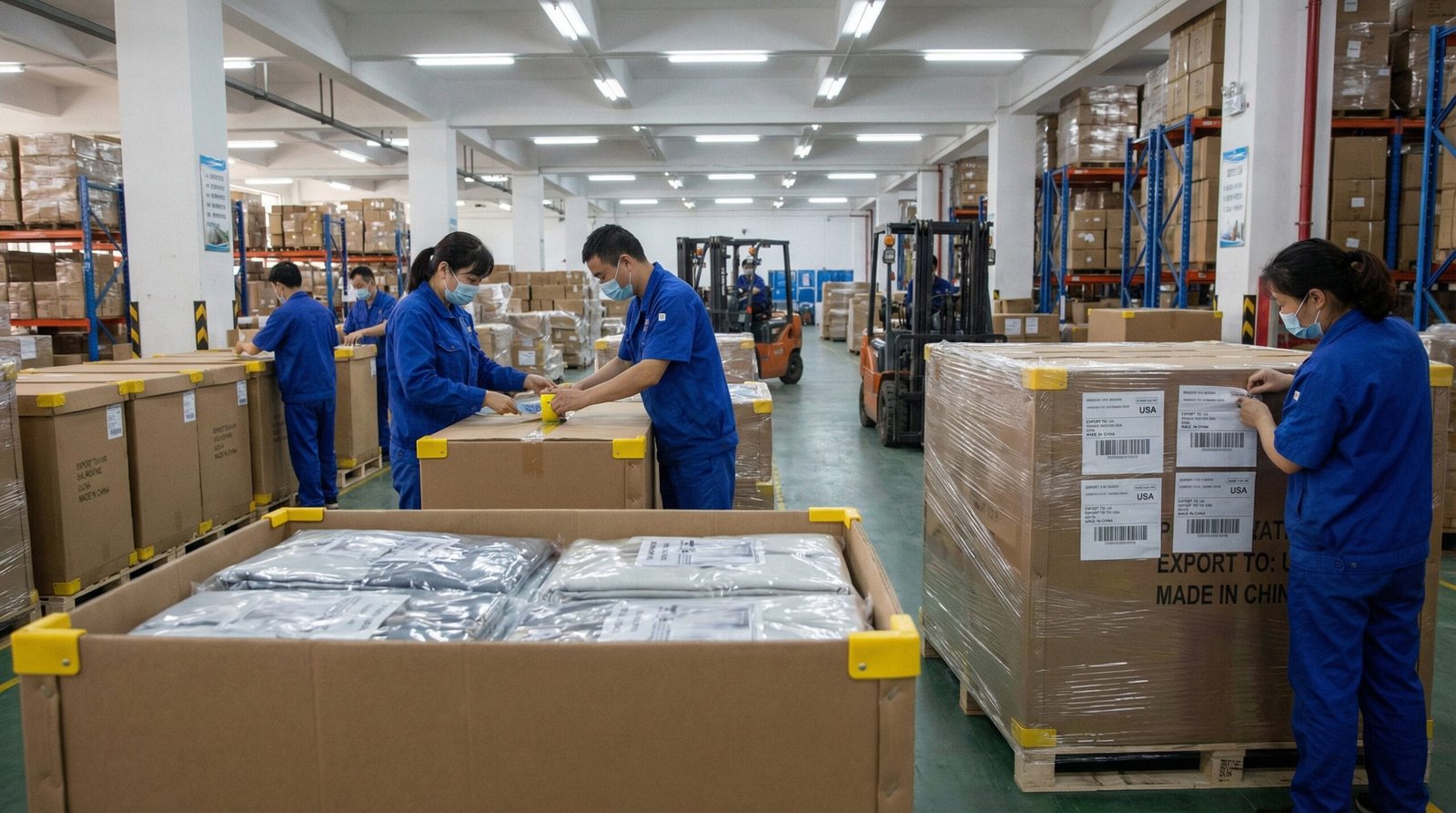
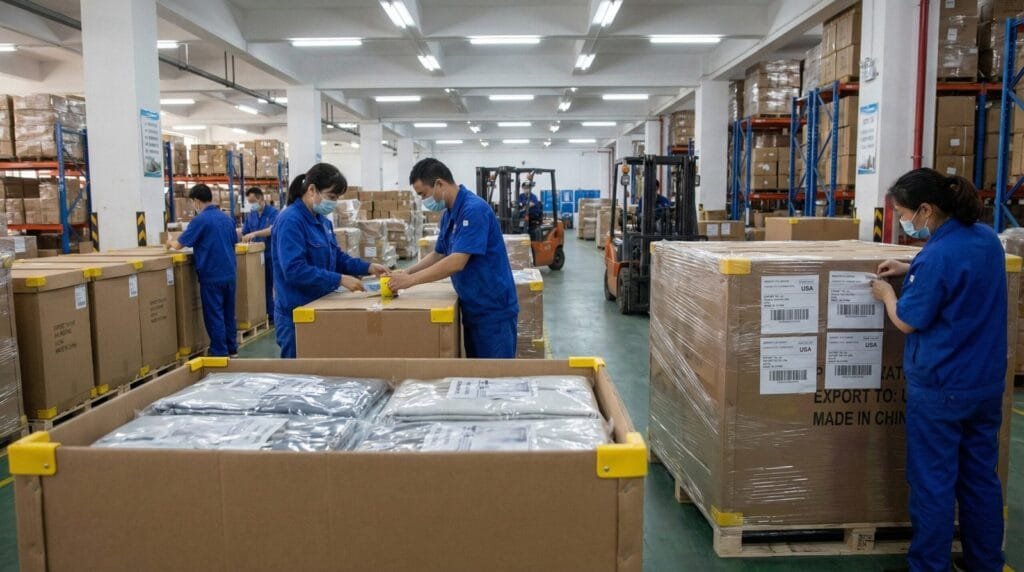
Curtain panels ship folded and bagged, then case-packed into export cartons. The chain is: panel → poly bag → inner carton → master export carton. Standard configurations we use at Dairui:
- Standard size panels (84″×84″ or 100×270cm): 12–16 panels per master carton, carton outer ~55×40×35cm, ~0.077 CBM per carton, 8–11 kg
- Wide / long panels (108″×84″ or 140×270cm): 8–10 panels per master carton, carton outer ~65×45×35cm, ~0.10 CBM per carton, 10–14 kg
- Hotel project panels (custom-cut for room specs): 6–10 panels per carton, larger outer dimensions, ~0.12 CBM per carton
- Premium / branded panels with hangers and hangtags: 6–8 panels per master carton to protect labeling and packaging, ~0.085 CBM per carton
Inner poly bags protect each panel from moisture and friction; the master carton is double-wall corrugated B-flute, taped on three seams. We can stack cartons 10 high without bottom-carton crush damage when palletized; cargo loaded loose (floor-stacked) generally goes 8 high to avoid edge crushing during ocean transit.
How Many Curtain Panels Fit in 20ft vs 40ft vs 40HQ

The panel-per-container math depends on carton size, which depends on panel size. Below are realistic loading numbers for our standard, wide, and project-grade panels, based on actual shipments out of Ningbo and Shanghai. The table is calculated by carton configuration — an 84″×84″ standard panel packed 14 per carton — and assumes floor-stacked loose loading (the most common method for curtains, since palletizing wastes 10–15% of usable height). Lightweight sheers fold much flatter, which is why a 40HQ of 140–160 gsm sheers reaches about 20,000 pieces:
| Panel type | Panels/carton | 20ft (~28 CBM) | 40ft (~57 CBM) | 40HQ (~67 CBM) |
|---|---|---|---|---|
| Standard 84″×84″ | 14 | 5,000–5,500 | 10,300–11,200 | 12,100–13,200 |
| Wide 108″×84″ | 10 | 2,800–3,100 | 5,700–6,300 | 6,700–7,400 |
| Long 100×270cm | 12 | 4,300–4,700 | 8,900–9,700 | 10,400–11,400 |
| Hotel custom | 8 | 1,800–2,200 | 3,800–4,500 | 4,400–5,300 |
| Premium retail (full labeling) | 7 | 2,500–2,800 | 5,100–5,700 | 6,000–6,700 |
If you don’t know your panel size yet, the rule of thumb is: 40HQ ≈ 12,000 standard panels or 5,000 hotel-grade panels. Use this for high-level PO sizing; final numbers shift 10% in either direction with the actual carton dimensions confirmed at pre-production.
How Many Curtain Fabric Rolls Fit by Container Size
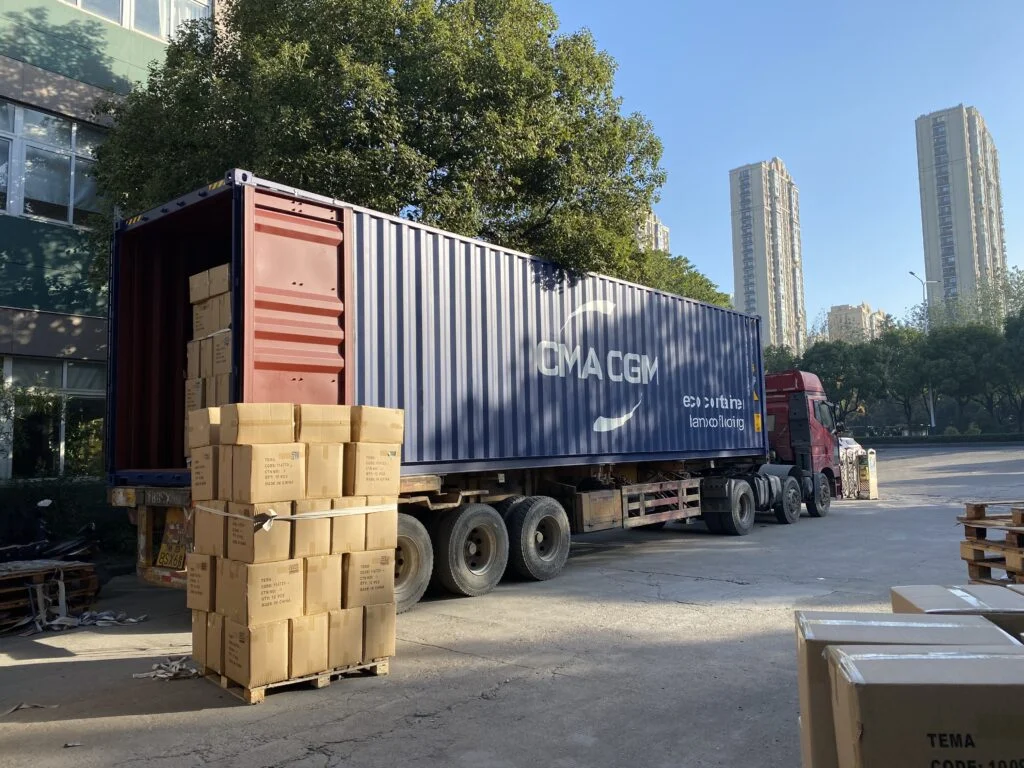
For buyers ordering fabric by the roll instead of finished panels, the math is different — rolls take more cubic space per meter of textile than folded panels.
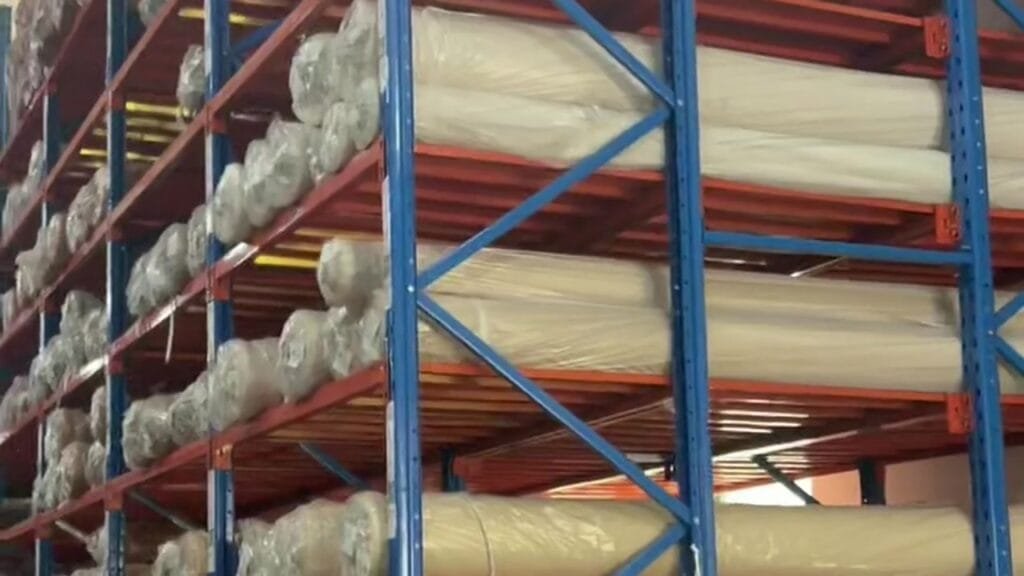
Fabric ships on tubes matched to the fabric width, normally 280–300 cm. Plan the booking in meters, not roll count — roll diameter changes with fabric weight and winding tension, so meters per container is the number that holds. Roll length is set per order: 50 m is common for sheers and lightweight polyester, while velvet and linen usually run 30 m, because a 50 m velvet roll reaches 35–40 kg against the usual 22–28 kg and becomes hard to unload by hand.
| Fabric line | Weight | 20ft | 40HQ | Basis |
|---|---|---|---|---|
| Sheer voile | 50 gsm | 60,000–70,000 m | 145,000–165,000 m | Measured |
| Light polyester, linen-look | ~100 gsm | ~39,000 m | ~93,000 m | Interpolated |
| Mid-weight jacquard, velvet | ~200 gsm | ~22,000 m | ~53,000 m | Interpolated |
| Coated blackout (2–3 pass) | ~300 gsm | 15,000 m | ~36,000 m | Measured |
Loading does not scale in simple inverse proportion to weight: coated blackout packs denser per gram than an open sheer, so going from 50 to 300 gsm — six times the weight — cuts loading by about 4.3×, not 6×. The 50 gsm and 300 gsm rows are measured from our own shipments at 280 cm width; the two middle rows are interpolated between them and should be confirmed against your actual fabric before booking. Fabric is volume-bound, not weight-bound — a full 20ft of coated blackout weighs about 12.6 tonnes against a 28-tonne payload limit.
Mixing Curtain Panels, Fabric Rolls, and Hardware in One Container
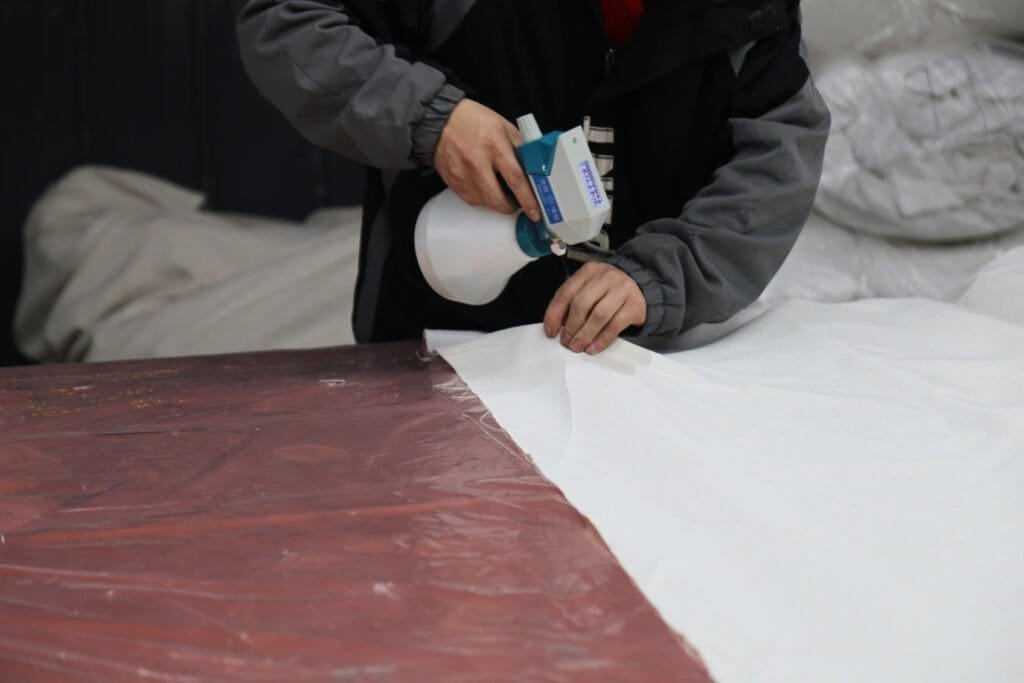
Many retailers and DTC brands consolidate finished panels, fabric rolls, and curtain hardware (rods, brackets, rings, hooks) into a single container to minimize freight cost. We coordinate this on request; the practical rules are:
- Load order matters: Heaviest goods (hardware, fabric rolls) load first against the container’s far wall, finished panel cartons load last near the door — protects cartons from being crushed by shifted rolls during transit
- Rolls and panels don’t stack on each other: Roll diameter is uneven, so panel cartons stacked on rolls slip and collapse. We separate them with a row of empty cartons or use stretched film barriers
- Hardware needs its own zone: Curtain rods (1.5–3m long) ship in dedicated long boxes loaded floor-level under the rolls; brackets and rings ship in smaller cartons that fit gaps
- Plan for a 6–10% CBM penalty: Mixed loads always cube-out less efficiently than single-product loads, because you lose tessellation flexibility
For a typical mixed load — say, 6,000 panels + 60 rolls + 200 hardware sets — expect to fill a 40HQ at roughly 95% efficiency vs 99% for panel-only loads. The freight saving from consolidation still outweighs the lost CBM in nearly every case, but it’s worth knowing the math when modeling landed cost per SKU.
When to Choose LCL (Less-than-Container) Shipping
If your order is below half a 20ft container — roughly under 2,500 standard panels, or under half the meterage shown in the fabric table above — full-container shipping is no longer cost-efficient. LCL (Less-than-Container Load) consolidation through a freight forwarder ships your goods alongside other shippers’ cargo in a shared container, billed per CBM.
Indicative cost trade-off (Ningbo to US East Coast, Q2 2026 rates):
- FCL 20ft: ~$2,800–$3,500 all-in for full container (~28 CBM = ~$100–125 per CBM)
- FCL 40HQ: ~$3,400–$4,200 all-in (~67 CBM = ~$50–63 per CBM)
- LCL: ~$70–$110 per CBM + ~$150–$250 fixed origin/destination charges
The crossover point is around 15–20 CBM: below that, LCL wins; above that, a 20ft FCL is cheaper per CBM. Trial orders of 50–200 panels almost always ship LCL or even by air courier (DHL/FedEx) for samples and very small batches. Production orders of 1,000+ panels nearly always justify FCL.
Cost and Lead-Time Trade-offs at the Container Stage

Container loading is the last cost lever before goods leave the factory. A few decisions made here shift your landed cost per panel by 8–15%:
- FOB Ningbo vs FOB Shanghai: Ningbo is closer to Shaoxing (90km vs 250km), trucking is $200–$300 cheaper per container, and Ningbo handles more textile volume so vessel availability is better. Shanghai only wins if you have other consolidation needs there
- FOB vs EXW vs DDP: FOB (Free on Board) is most common — we deliver cargo loaded on the vessel, you handle ocean freight and destination. EXW (Ex Works) leaves goods at our factory for your forwarder to collect — gives buyer full control, but adds 7–10 days for inland coordination. DDP (Delivered Duty Paid) means we handle door-to-door including import duties — convenient but typically 8–12% more expensive than handling import yourself
- Container booking lead time: 7–14 days from cargo-ready notice to vessel departure for FCL out of Ningbo; LCL adds another 5–7 days waiting for consolidation
- Peak season surcharges: Mid-July through October typically adds $400–$800 to FCL rates, plus 1–2 week vessel availability delays. Book ahead if shipping in this window
Freight Insurance and Demurrage: Two Hidden Costs Worth Pricing In
Two cost lines rarely quoted upfront can shift your landed cost meaningfully on curtain FCL shipments — and both are easier to budget for than to fight after the fact.
- Marine cargo insurance is optional but strongly recommended for curtain shipments. Premiums run 0.15–0.4% of CIF value for institutional coverage (All Risks), typically $80–$200 per 40HQ. Without it, you carry the full risk of water damage, container loss overboard (rare but happens), and theft at intermediate transshipment ports. We can arrange coverage on quote through our forwarder, or you can buy directly from your destination broker — either way, decide before vessel loading.
- Demurrage and detention charges kick in if your container sits at the destination port or on your premises beyond the free time window (typically 3–7 days free, then $80–$200 per day per container). Common triggers: customs clearance delays, missing import documents, or warehouse receiving backlogs during peak season. Coordinate customs broker and warehouse availability before vessel arrival, not after.
Neither line is large in isolation, but together they can add $300–$1,200 to a 40HQ shipment if mishandled — enough to wipe out the freight savings from upgrading from a 20ft to a 40HQ in the first place. Build both into your landed cost model from the first PO.
Common Container Loading Mistakes That Waste Money
After hundreds of curtain export shipments, the same five mistakes keep eating buyer margin. All are avoidable at the PO stage:
- Ordering 4,800 panels for a 40HQ. If a 40HQ fits ~12,000 standard panels, ordering 4,800 wastes 60% of container capacity at full freight cost. Either round up to fill the container, round down to an LCL-friendly volume, or consolidate fabric/hardware to fill the rest
- Not specifying carton size at PO stage. Larger cartons (16 panels/box) save loading time but tessellate worse than smaller (12 panels/box). Tell us your priority — labor cost on receiving end or container fill efficiency — and we’ll optimize accordingly
- Ignoring fumigation requirements. Wooden pallets need ISPM-15 heat treatment certification for entry into US, EU, AU, NZ, Canada. We ship goods loose (no pallets) by default to avoid this. If your warehouse requires palletized goods, declare it at PO so we use ISPM-15 certified pallets ($8–$15 per pallet adder)
- Underestimating destination unloading time. A floor-loaded 40HQ takes 90–120 minutes to manually unload at destination. If your warehouse charges by the hour or has narrow receiving windows, request palletized loading (loses 10–15% CBM but cuts unload to 30 minutes)
- Skipping pre-loading photos. We send pre-loading and post-loading photos with every FCL shipment showing carton count, stacking pattern, and container seal number. Buyers who skip reviewing these have no recourse if cargo arrives damaged or short. Always confirm photos match your packing list before authorizing departure
Frequently Asked Questions
1. How many standard curtain panels fit in a 40-foot container?
A 40ft standard fits roughly 10,300–11,200 standard 84″×84″ panels packed 14-per-carton. A 40ft High Cube (40HQ) fits 12,100–13,200 — the extra 30cm of internal height adds about 10 CBM of usable space. Most curtain shipments use 40HQ for this reason.
2. What’s the difference between 40ft and 40HQ for curtain shipping?
Both have the same 12-meter internal length and 2.35-meter width. The 40HQ is 2.69m tall internally vs 2.39m for standard — an extra 30cm of height. For curtains (volume-bound cargo), this adds about 18% more usable CBM at the same ocean freight rate. Always pick 40HQ unless your destination port or warehouse has height restrictions.
3. Can I mix fabric rolls and finished panels in one container?
Yes, and it’s common practice. Load rolls and hardware first (against the far wall), panel cartons last (near the door). Expect roughly 6–10% lower fill efficiency than single-product loads because tessellation flexibility decreases. We coordinate the load plan on request and send pre-shipment photos confirming layout.
4. Should I palletize or floor-stack curtain cartons?
Default is floor-stacked loose loading — gives the best CBM utilization (95–99%) and avoids ISPM-15 wood treatment requirements. Palletize only if your destination warehouse requires it or charges high unloading labor. Palletized loading loses 10–15% of usable container height and adds $8–$15 per pallet for ISPM-15 certified wood.
5. What’s the minimum order that justifies a full container vs LCL?
The crossover is around 15–20 CBM. Below 15 CBM (~2,000 standard panels), LCL is cheaper per cubic meter. Above 20 CBM, a 20ft FCL is more economical. For 30+ CBM orders, jump directly to 40HQ — the per-CBM rate is roughly half that of a 20ft container.
6. How long does container shipping from Ningbo take to US/EU/AU destinations?
Ningbo to US West Coast: 18–22 days transit. To US East Coast: 30–35 days via Panama. To Northern Europe: 32–38 days. To Australia East Coast: 22–28 days. Add 7–14 days for container booking and vessel scheduling on the origin side, and 5–10 days for customs clearance and inland transport at destination. Total door-to-door is typically 6–8 weeks for FCL.
Bottom Line: Plan Container Capacity Into the PO, Not After
Container math should drive your purchase order quantity — not the other way around. Order 4,800 panels for a 40HQ, and you waste roughly $1,800 in per-CBM freight cost; order 12,000 panels for the same container, and your landed cost per panel drops 15%. Container math is one piece of the bigger picture — our curtain wholesale guide for e-commerce buyers ties MOQ, sampling, and freight together.
Before placing a PO, lock these three numbers: panel size and weight (drives cartons), target container type (drives quantity rounding), and FOB vs EXW vs DDP (drives who handles ocean and destination). With those three set, the per-piece freight cost is locked, and the final PO quantity is the highest multiple of carton-pack that fills the chosen container without overflow.
For specific quantity-to-CBM modeling on your fabric weight, panel size, and destination port, request a loading plan with your inquiry. We’ll come back with a panel-count-to-container-fit table and indicative freight quote within 24 hours of receiving panel specifications.
Author: DAIRUI Sourcing Desk · Last reviewed: 2026-06