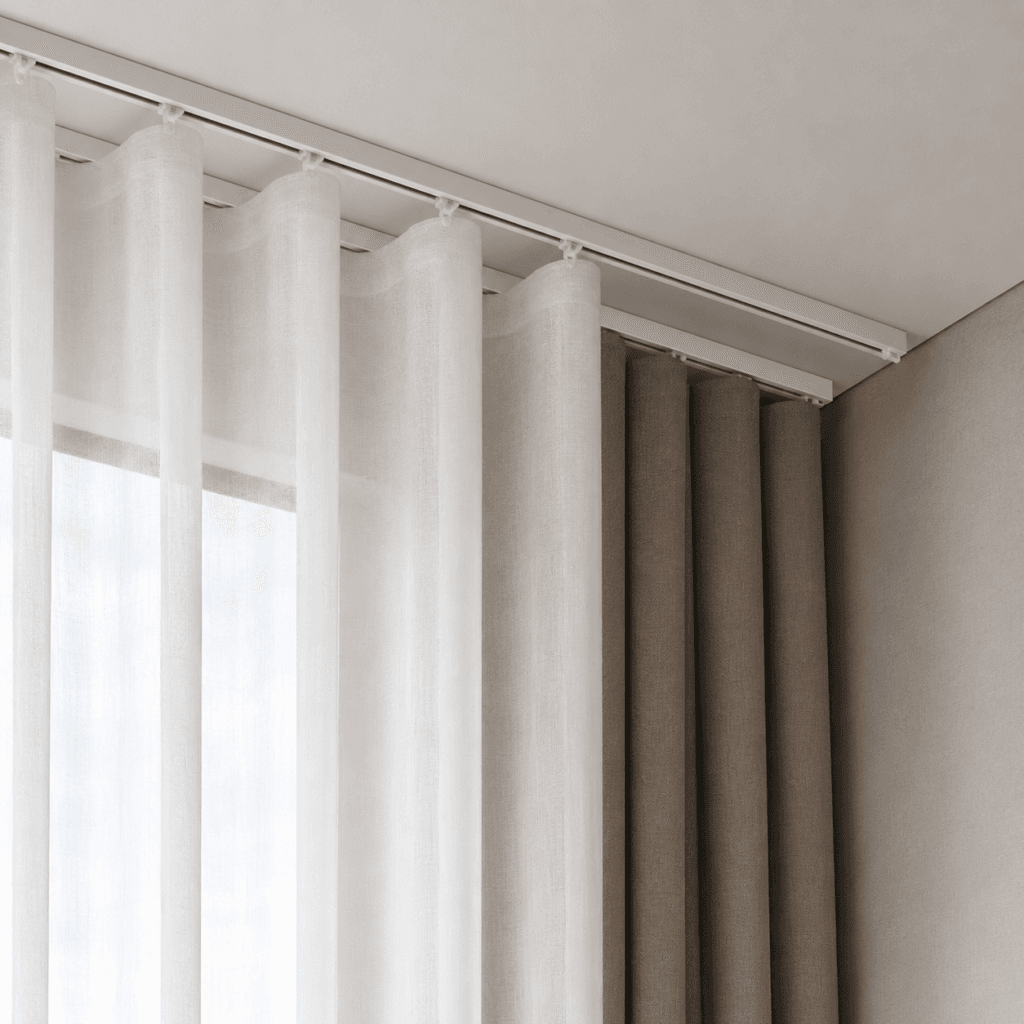
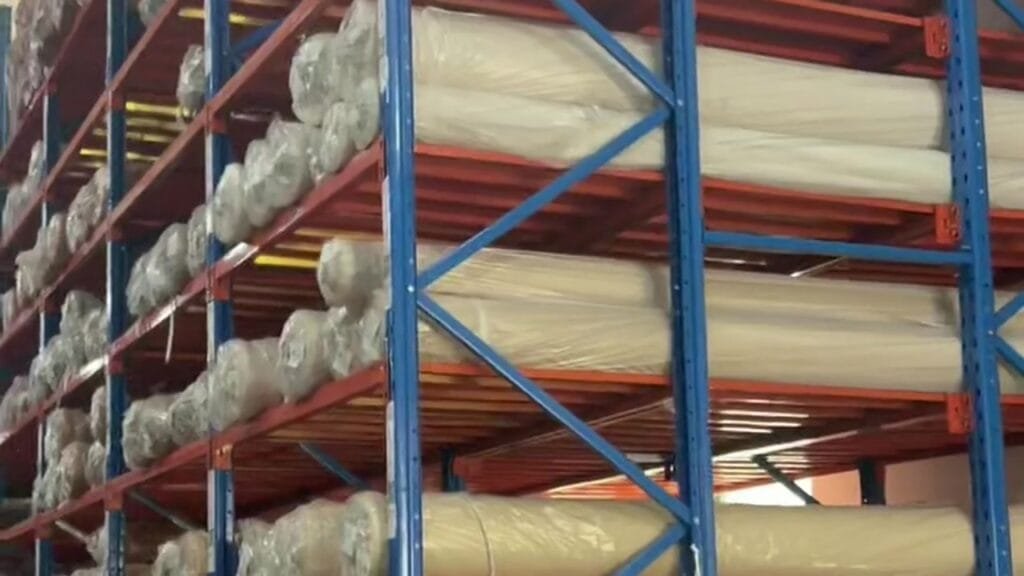
Bottom line: A curtain lining is a second fabric layer added behind the face fabric to control light, add insulation, protect the outer cloth, and improve drape. The four you will actually spec are standard, blackout, thermal, and interlining. Choosing well comes down to three numbers — light block (0–100%), lining weight (about 120–300 GSM), and whether it is sewn-in or detachable. This guide covers each type, how they attach, what to write on your spec sheet, and how lining changes MOQ, cost, and lead time.
What a Curtain Lining Actually Does
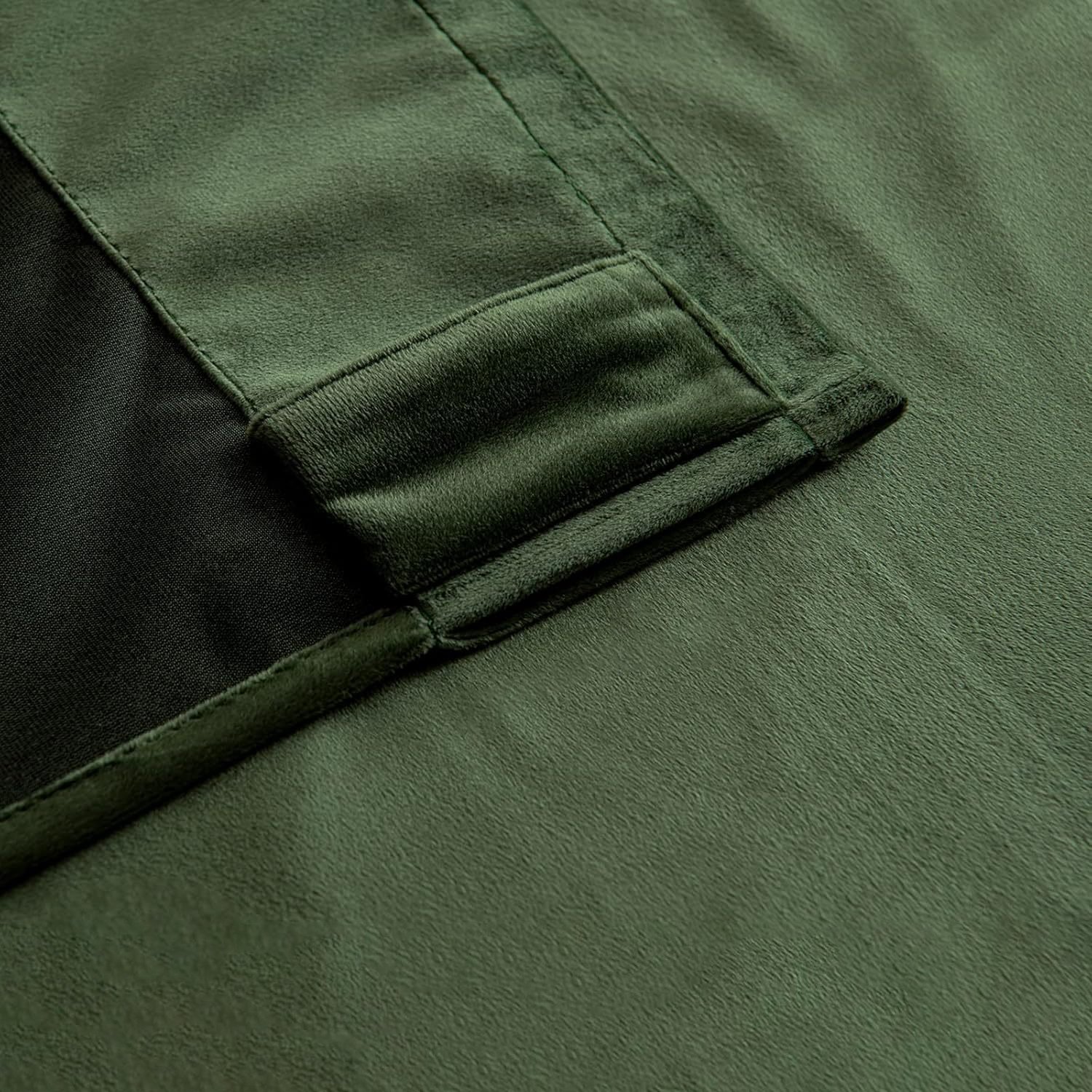
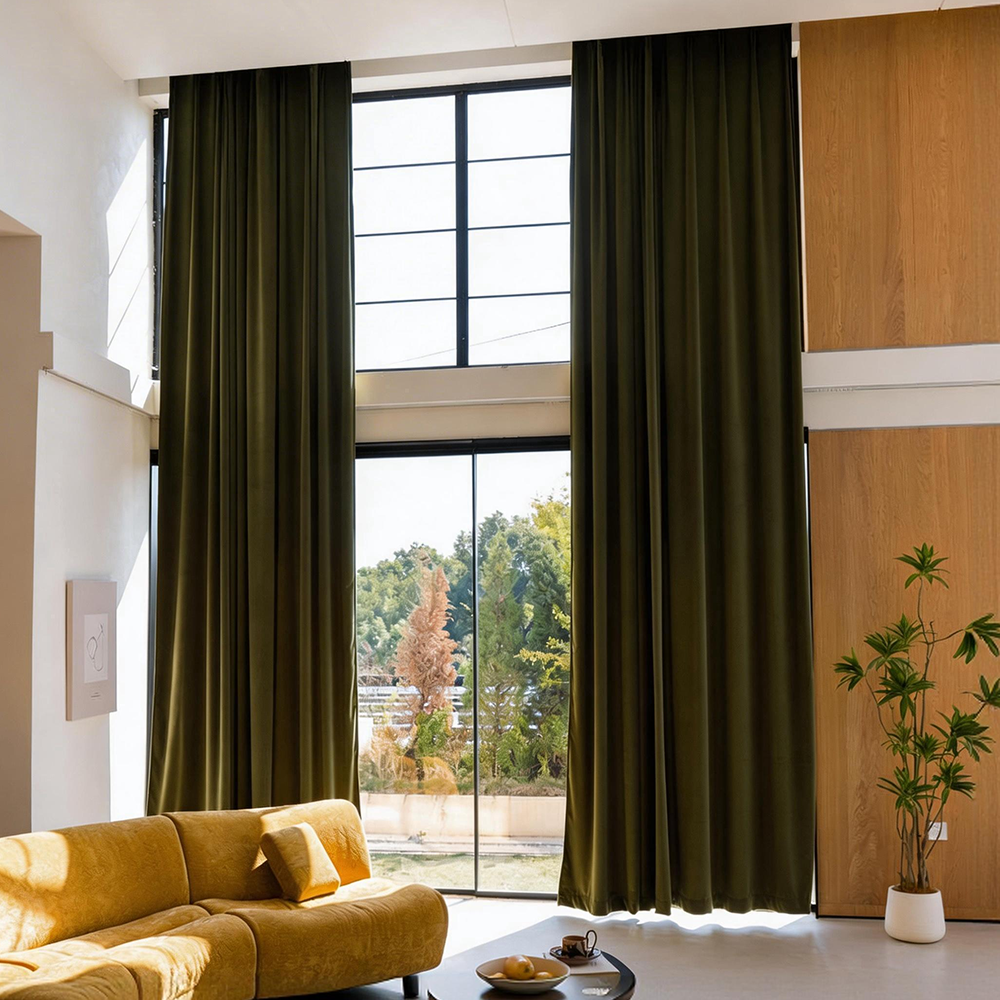
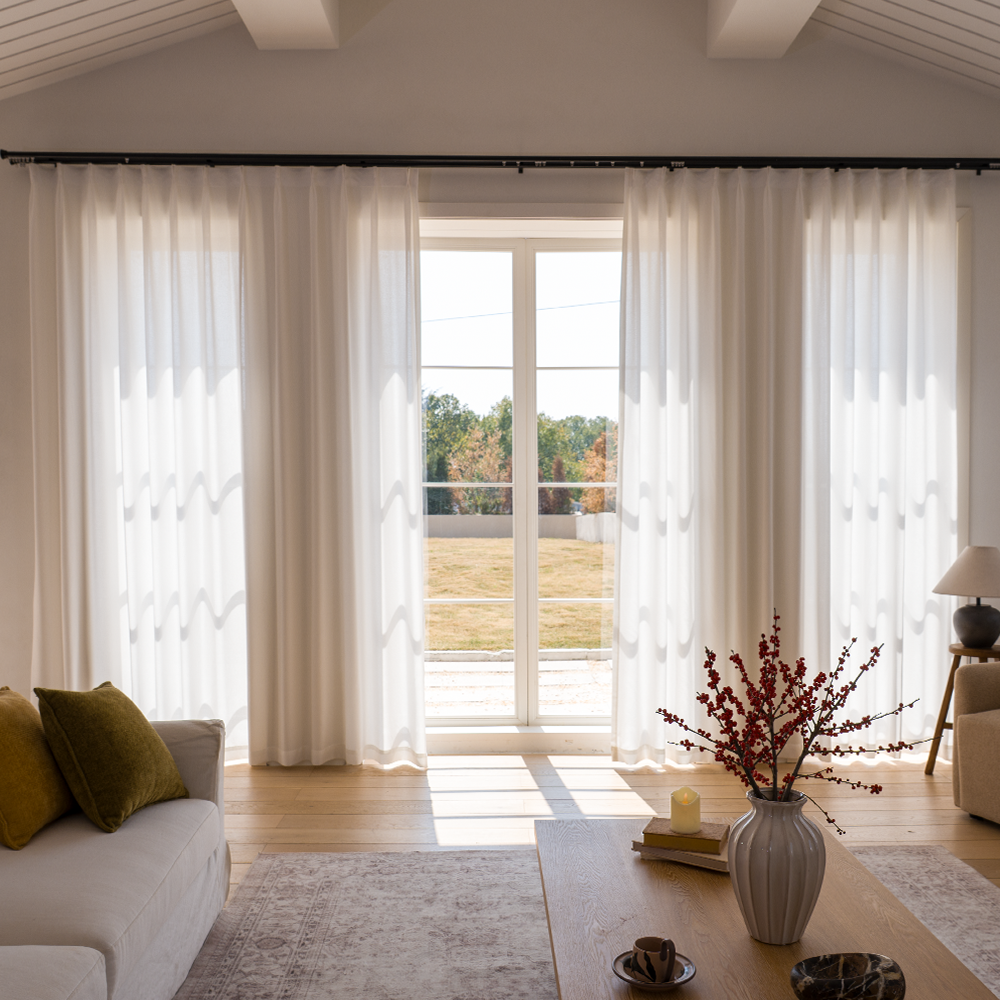
A lining is the unsung half of a finished curtain. The face fabric is what the buyer sees; the lining is what makes the curtain perform. Adding a lining behind almost any decorative fabric changes how it hangs, how much light it stops, how warm the room stays, and how long the face fabric survives. That is why most contract, hospitality, and mid-to-premium retail orders are lined by default, and only cheap flat panels ship unlined.
There are five jobs a lining does, and buyers usually want two or three of them at once:
- Light control — a coated or dense lining turns an ordinary printed or woven face fabric into a room-darkening or blackout curtain without changing its look.
- Thermal insulation — a coated lining slows heat transfer through the window, which matters for hotels and cold-climate retail.
- Privacy — a lining stops silhouettes at night, even behind a lighter face cloth.
- Fabric protection — the lining takes the UV, condensation, and fading, so an expensive face fabric lasts longer.
- Drape and body — a lining adds weight and structure so folds hang evenly instead of looking thin or limp.
Because a lining is a separate layer, you can mix and match: a light linen-look face fabric with a blackout lining, or a printed face with a simple thermal backing. That flexibility is the whole point of speccing lining as its own line item.
The Main Types of Curtain Lining
Factories quote linings in a few standard families. Names vary by region, so always confirm by construction and specification rather than by label alone.
| Lining type | Typical weight | Light block | Best for |
|---|---|---|---|
| Standard (poly-cotton sateen) | 120–160 GSM | 10–30% | Body, mild privacy, protecting the face fabric |
| Dimout lining | 150–220 GSM | 70–90% | Bedrooms, hotels wanting rest without full black |
| Blackout lining (coated) | 180–300 GSM | 90–100% | Hotels, media rooms, shift-worker housing |
| Thermal lining (foam-coated) | 180–260 GSM | 60–90% | Insulation-driven markets, cold climates |
| Interlining (bump/flannel) | Adds 100–200 GSM | Varies | Premium drapery, acoustic and luxury drape |
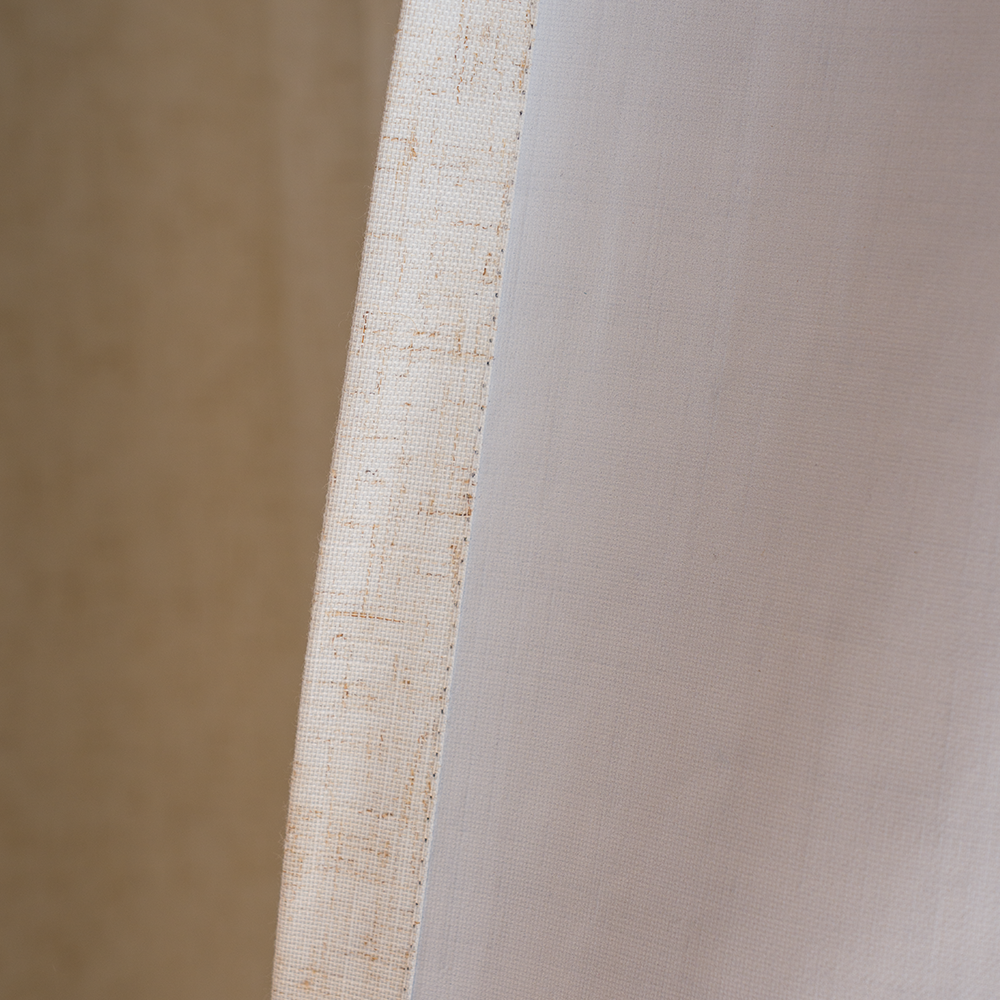
Standard lining
A poly-cotton or 100% polyester sateen, usually in white or ivory. It adds no meaningful light control but gives the curtain body, protects the face fabric, and is the cheapest way to make a panel look finished. This is the default when the buyer just wants a “lined” curtain.
Blackout and dimout linings
These are the linings buyers ask about most. A blackout lining is either a coated fabric (two or three passes of acrylic or foam on a base cloth) or a tightly woven triple-weave. Sewn behind a decorative face fabric, it lets you sell a blackout curtain that still looks like a normal drape from inside the room. A dimout lining does the same job at 70–90% light block for buyers who find full blackout too stark. If you want the difference between these constructions in detail, see our guide on dimout vs blackout curtains and the deeper breakdown of coated, woven and triple-weave blackout.
Thermal lining
A thermal lining is typically an acrylic-foam-coated cloth. The foam layer traps air and slows heat moving through the window, which cuts heat loss in winter and heat gain in summer. Many thermal linings also block a good share of light, so the two functions overlap. For markets where insulation is the main selling point, read our full guide to thermal insulated curtains.
Interlining
Interlining is a soft, brushed layer — often called “bump” or “domette” — sandwiched between the face fabric and the lining. It is not about light; it is about luxury. Interlining gives a deep, rounded fold, adds insulation and acoustic dampening, and is standard in high-end hospitality and heritage projects. It also adds the most cost and weight and lengthens sewing time, so reserve it for premium lines.
How Linings Attach: Sewn-In, Detachable, or Separate
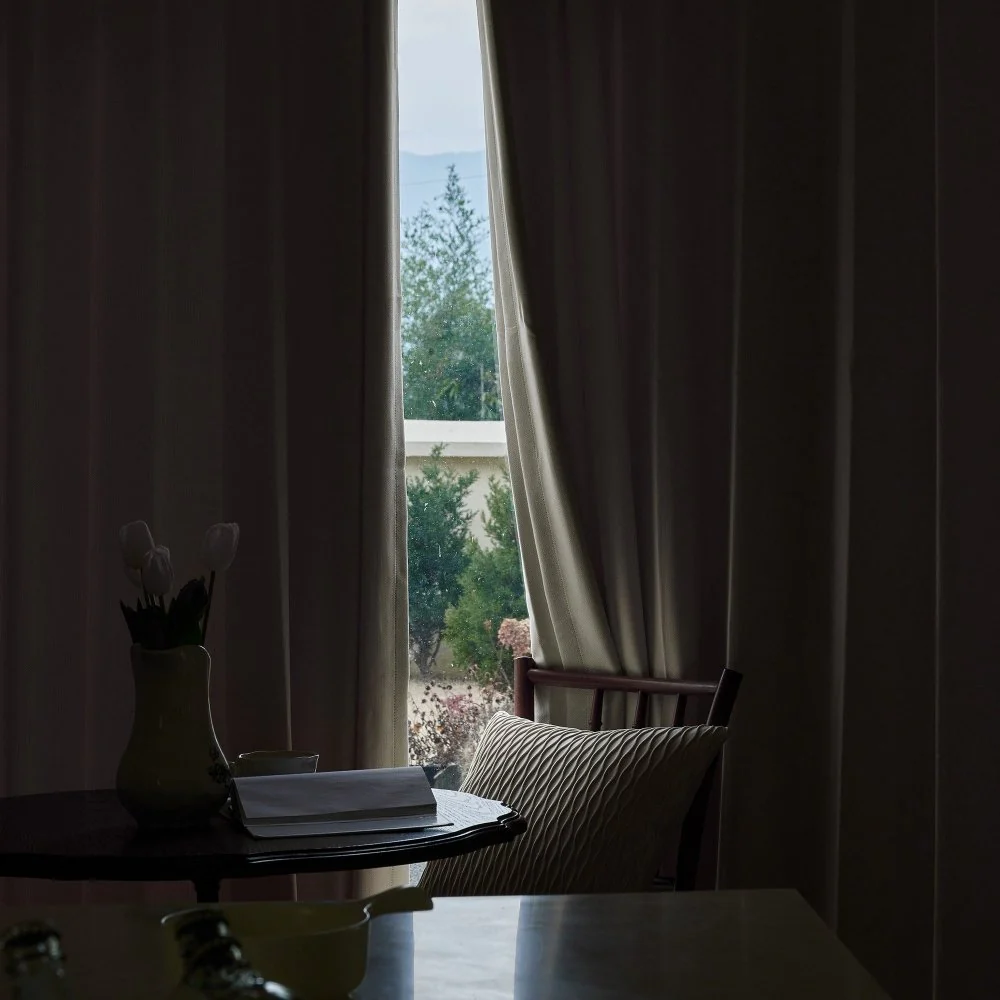
How the lining is joined to the curtain matters as much as which lining you choose, because it decides washability, cost, and repairability.
- Sewn-in (locked-in) lining — the lining is stitched to the face fabric along the edges and often locked up the seams. Cleanest look, best drape, but the whole curtain must be cleaned as one piece. Standard for hospitality and most retail.
- Detachable lining — the lining hangs on the same hooks or a separate tape and can be unhooked. Buyers who want to wash the lining separately, swap a summer lining for a blackout one, or replace a worn lining without scrapping the curtain choose this. Slightly higher make-up cost.
- Separate / independent lining — the lining runs on its own track or rod behind the main curtain. Common in projects where the same window needs a sheer, a lining, and a heavy drape on layered tracks.
For hotels there is one more rule that trips up new buyers: the lining colour that faces the street is often specified to be uniform across the whole property (usually white or ivory) so the building looks consistent from outside, even when guest-room face fabrics differ. Always confirm this before production.
What to Tell Your Factory: The Lining Spec Sheet
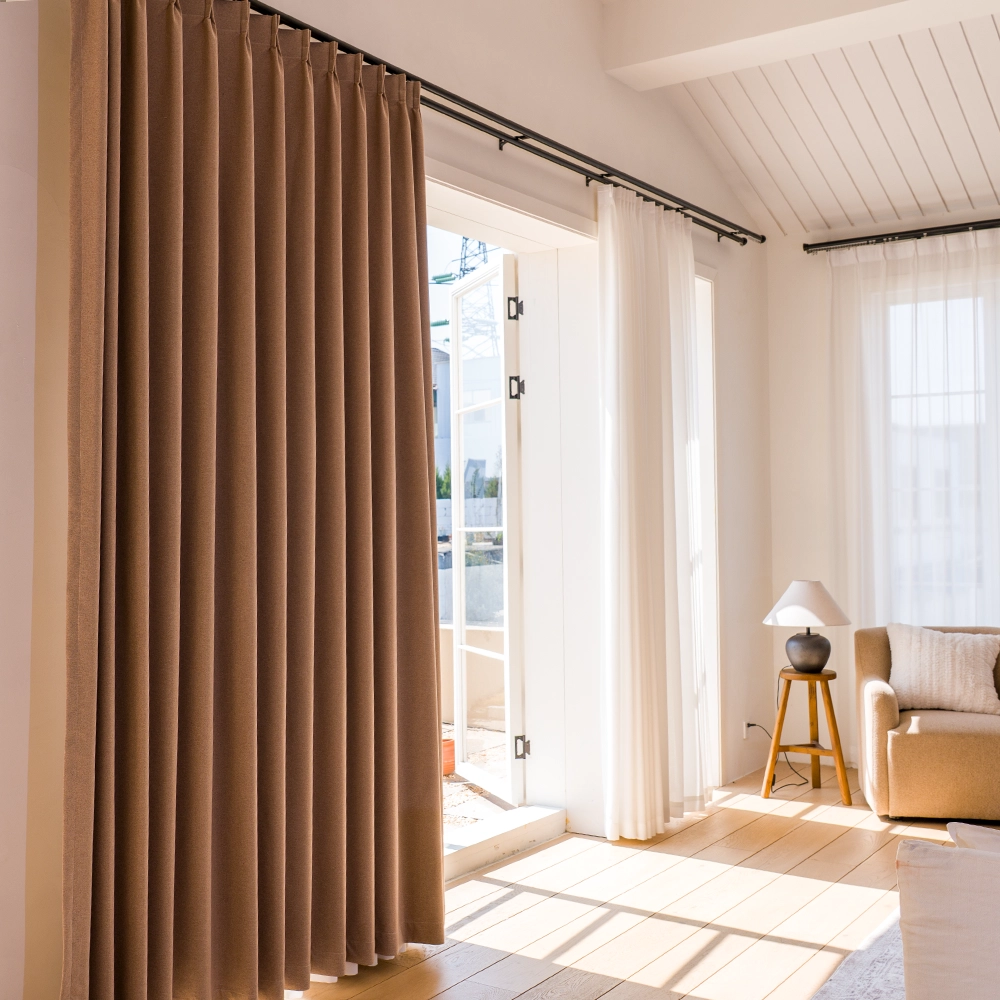
Most lining problems come from a vague brief, not a bad factory. “Please line the curtains” leaves at least six decisions open. Put these on your spec sheet and the quote — and the goods — will match what you expect:
- Lining type and target performance — e.g. “coated blackout lining, 90%+ light block” or “thermal foam lining.” State the outcome, not just a name.
- Composition and weight (GSM) — so you can compare quotes on equal terms and check what arrives. Weight is the fastest way to catch a downgraded lining.
- Coating passes — for coated linings, 2-pass vs 3-pass changes both opacity and hand feel; specify it.
- Attachment method — sewn-in, detachable, or separate track.
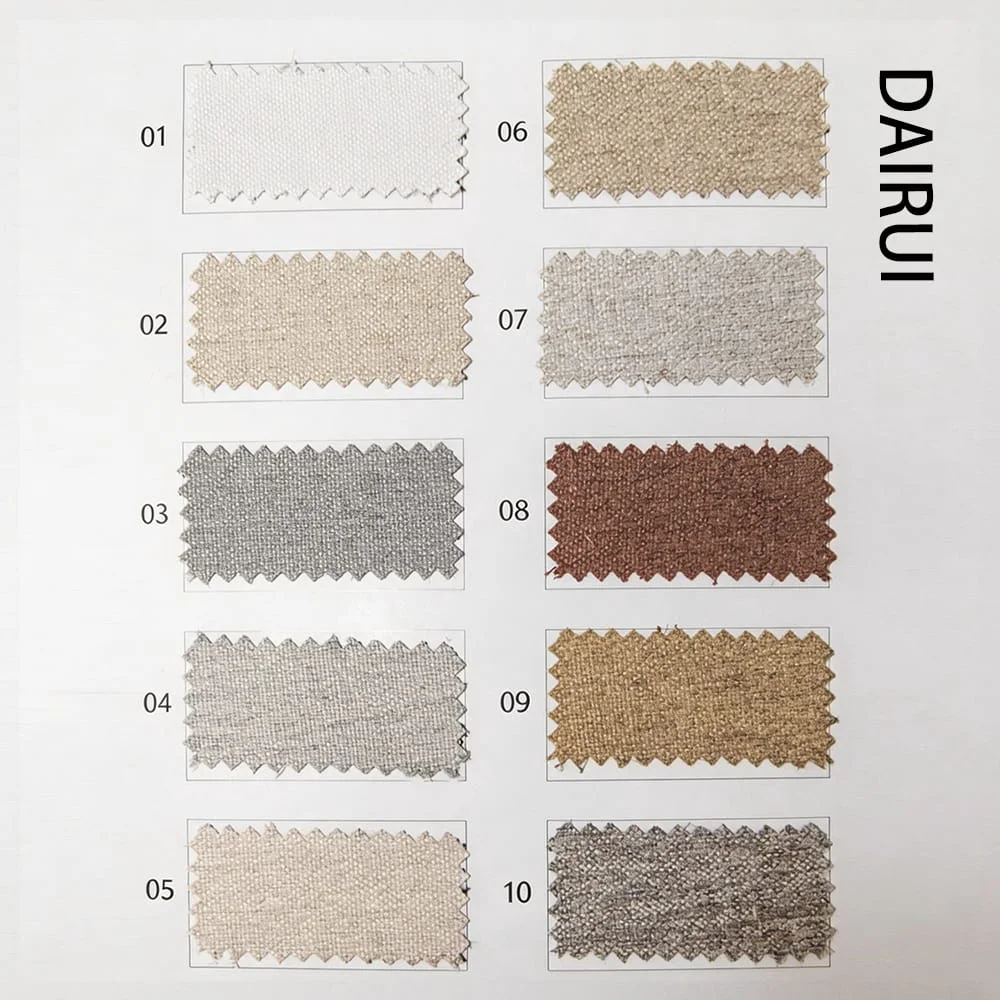
- Lining colour — especially the street-facing colour for contract work.
- Wash and shrinkage — state the care method and require pre-shrunk lining so the lining and face fabric do not shrink at different rates after the first wash.
- Flame-retardant requirement — for hotels, healthcare, and public spaces, the lining usually has to meet the same fire standard as the face fabric.
That last point is easy to miss: a curtain is only as compliant as its least compliant layer. If the face fabric passes a fire test but the lining does not, the finished curtain fails. We can supply flame-retardant lining options with the relevant test documents on request — the difference between treated and inherently FR material is covered in our guide to FR-treated vs inherently FR curtains. Ask for the specific report that applies to your market.
How Lining Changes Cost, MOQ, and Lead Time
A lining is a second fabric plus extra cutting and sewing, so it always adds to the unit price — but by how much depends on the type:
- Standard lining adds the least: one more inexpensive cloth and a straightforward seam.
- Blackout and thermal linings add more because the coated fabric costs more per metre and is heavier, which also affects shipping weight and the hardware needed to carry it.
- Interlining adds the most: a third layer, more material, and noticeably more labour per panel.
On minimums, lining fabric usually carries its own MOQ, so very small orders may be limited to whatever lining colours the factory stocks; custom-dyed lining to an exact colour will have a higher minimum. Treat lined curtains as a slightly higher MOQ than unlined for the same reason. All quantities and prices here are indicative — confirm against an actual quote for your fabric and order size.
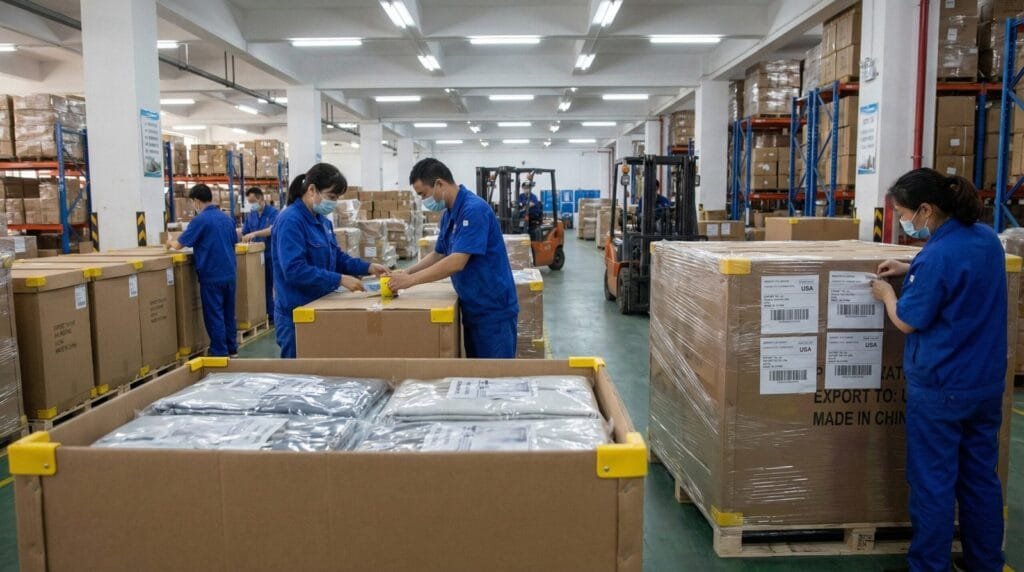
On timing, plan for lining to sit inside your normal make-up window rather than on top of it for standard and blackout linings; interlining is the exception and adds sewing days. A typical lined order still lands in the usual production planning range of around 30 days after sample approval, with sea freight on top. Heavier linings also mean heavier cartons, so factor lining weight into your container-loading maths for large orders.
Matching Lining to Your Market
The right lining is not a fixed answer — it depends on who you sell to. The same face fabric can ship with three different linings for three markets, and getting that match right is often what separates a buyer who reorders from one who does not. Here is how the main segments usually break down:
- Hotels and hospitality — almost always lined, usually with a coated blackout or dimout lining, a sewn-in build for a clean look, a uniform street-facing colour, and a flame-retardant requirement. This is the most specification-heavy segment, and cutting corners on the lining is where cheap suppliers get caught.
- Cold-climate retail (Northern Europe, Canada, mountain markets) — thermal foam linings are the selling point. Buyers here care about insulation performance and heavier hand feel, and will pay for it, so lead with a thermal-lined range.
- Hot and tropical markets (Middle East, Southeast Asia) — the priority is blocking sun and heat gain, so blackout and thermal linings that reduce solar heat sell well, often paired with lighter, brighter face fabrics.
- Private-label and DTC brands — usually want a detachable lining so their end customer can wash it, plus consistent lining colour across a collection. A tidy, serviceable lining is part of the perceived quality that justifies a premium price.
- Budget and volume retail — a standard poly-cotton lining is enough to make a panel look finished and protect the face fabric without pushing the price up. Reserve coated linings for the tiers where buyers will pay for the function.
When you brief a factory, name the target market as well as the lining type. A supplier who understands you are quoting for a cold-climate insulation range versus a tropical sun-control range can steer you to the lining that actually sells, instead of quoting a generic backing that satisfies no one. If you are still deciding how deep to go on customization across a collection, our fabric weight and GSM guide pairs naturally with lining choice, since face weight and lining weight need to balance for the curtain to hang well.
Curtain Lining FAQ
Do I need a separate blackout lining if my face fabric is already blackout?
No. If the face fabric is itself a blackout construction, a second blackout lining is redundant. Buyers add blackout linings when they want a decorative face fabric — a print, a weave, a linen look — to also block light. Use the lining to add the function the face fabric lacks.
What is the difference between a lining and interlining?
A lining is the back layer of the curtain. Interlining is a soft extra layer placed between the face fabric and the lining, used for luxury drape, insulation, and sound dampening. A curtain can have a lining only, or a lining plus interlining; interlining is never used alone.
Should the lining be sewn in or detachable?
Sewn-in gives the cleanest look and best drape and is standard for hospitality. Detachable lets the buyer wash or replace the lining separately and swap functions (for example a blackout lining in winter). Choose detachable when serviceability matters more than a perfectly flat finish.
What colour should the lining be?
White and ivory are the defaults because they look neutral from outside and do not shadow the face fabric. For hotels and multi-unit projects, the street-facing lining colour is often fixed across the whole building for a uniform exterior, so confirm the required colour before production.
Does a lining affect fire compliance?
Yes. The finished curtain must meet the fire standard as a whole, so the lining usually has to meet the same requirement as the face fabric. Flame-retardant lining options and the matching test documents are available for contract and public-space orders.
How much does lining add to the price and lead time?
It varies by type: standard lining adds the least, coated blackout and thermal linings add more, and interlining adds the most in both cost and sewing time. Standard and blackout linings usually fit inside the normal production window; interlining adds days. Ask for a lined and unlined quote side by side to see the exact gap for your order.
Bottom Line
A lining is where a curtain earns its performance. Decide the job first — light, warmth, privacy, protection, or drape — then pick the lining type that delivers it, choose sewn-in or detachable based on serviceability, and write the weight, coating, colour, and fire requirement onto your spec sheet. Get those details right and lined curtains are one of the easiest ways to lift a product line from basic to premium without changing the face fabric at all.
Sourcing lined curtains for hotels, projects, or your own brand? Browse our blackout curtain range or send your lining spec for a sample and quote.
DAIRUI Sourcing Desk
Last reviewed: 2026-07