Department stores operate on a different curtain sourcing logic than e-commerce platforms. A Shopify seller can test a new SKU with 50 pieces and pull it if it underperforms. A department store buyer commits to shelf space, planogram slots, and replenishment cycles — usually 6 to 12 months in advance. The curtain trends that matter for department store channels in 2026 are not just about aesthetics. They are about which fabrics photograph well under fluorescent lighting, which packaging survives a warehouse-to-shelf transit without looking crushed, and which heading styles a customer can understand without reading instructions.
This guide covers the 2026 trends gaining the most traction in mid-tier and premium department store curtain ranges — and what they mean for wholesale buyers supplying those channels.
How Department Stores Select Curtain Collections
Department store curtain buyers typically work on a 2-season calendar: spring/summer and autumn/winter. Buying decisions for Q3–Q4 floor sets usually close in March–April, which means wholesale suppliers need production-ready samples and pricing by February at the latest. For curtain suppliers, this creates a hard deadline: bulk lead time of 30+ days plus 14–18 days sea freight means deposit confirmation needs to happen in January for product to land on shelves by August.
Selection criteria differ from online retail in three key ways. First, in-store customers touch the fabric — hand-feel and drape under store lighting matter more than photography. Second, the product needs to work at multiple price tiers simultaneously: a department store curtain range typically spans $19–$79 retail, with each tier needing a clear visual differentiation. Third, packaging must function as a silent salesperson — the folded panel on a hanger or in a retail polybag needs to communicate fabric weight, heading style, and size at a glance.

The Fabrics and Colors Gaining Shelf Space in 2026
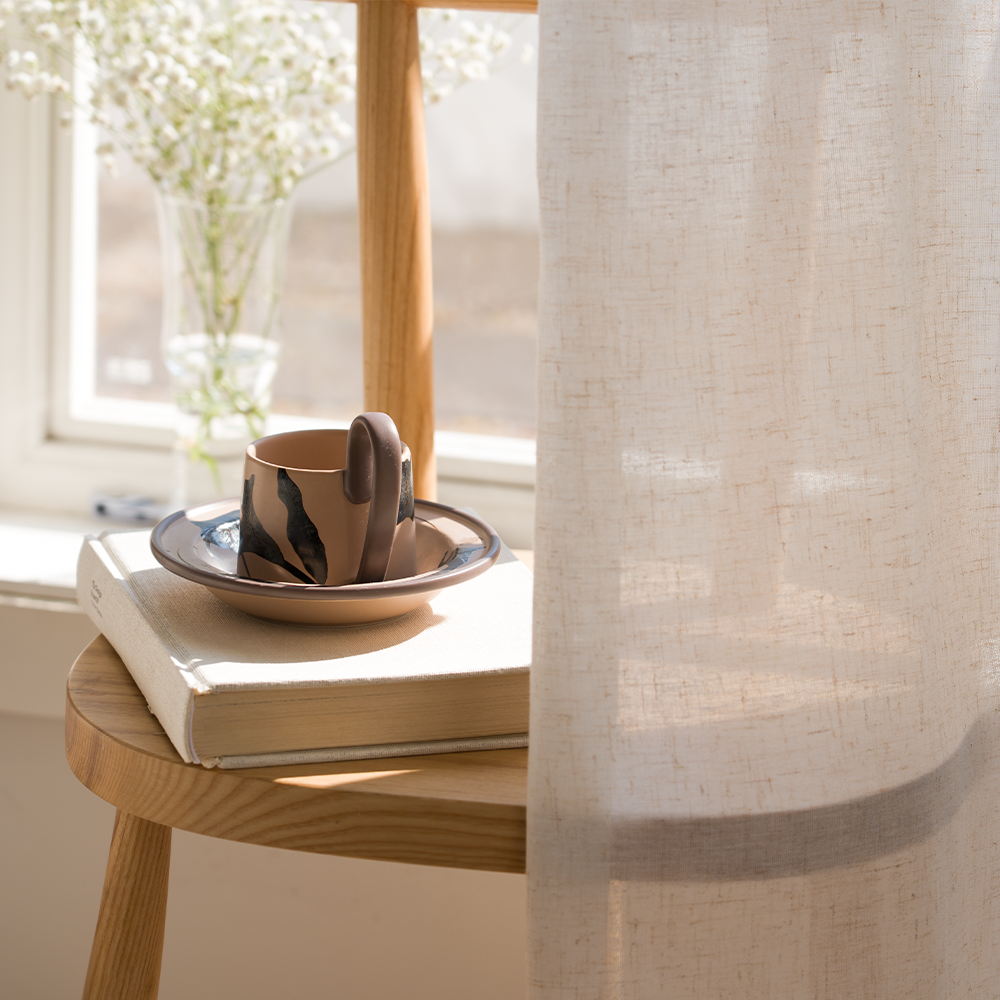
The dominant fabric story for 2026 department store ranges is linen-look polyester at 180–240 gsm. Pure linen is too expensive for mid-tier retail price points and too inconsistent in color lot matching for large store replenishment runs. Polyester-linen blends and full polyester fabrics engineered to replicate linen’s slubby surface texture hit the $29–49 retail window that drives most department store curtain volume. For the market-level data behind these shelf shifts, see our 2026 curtain market statistics.
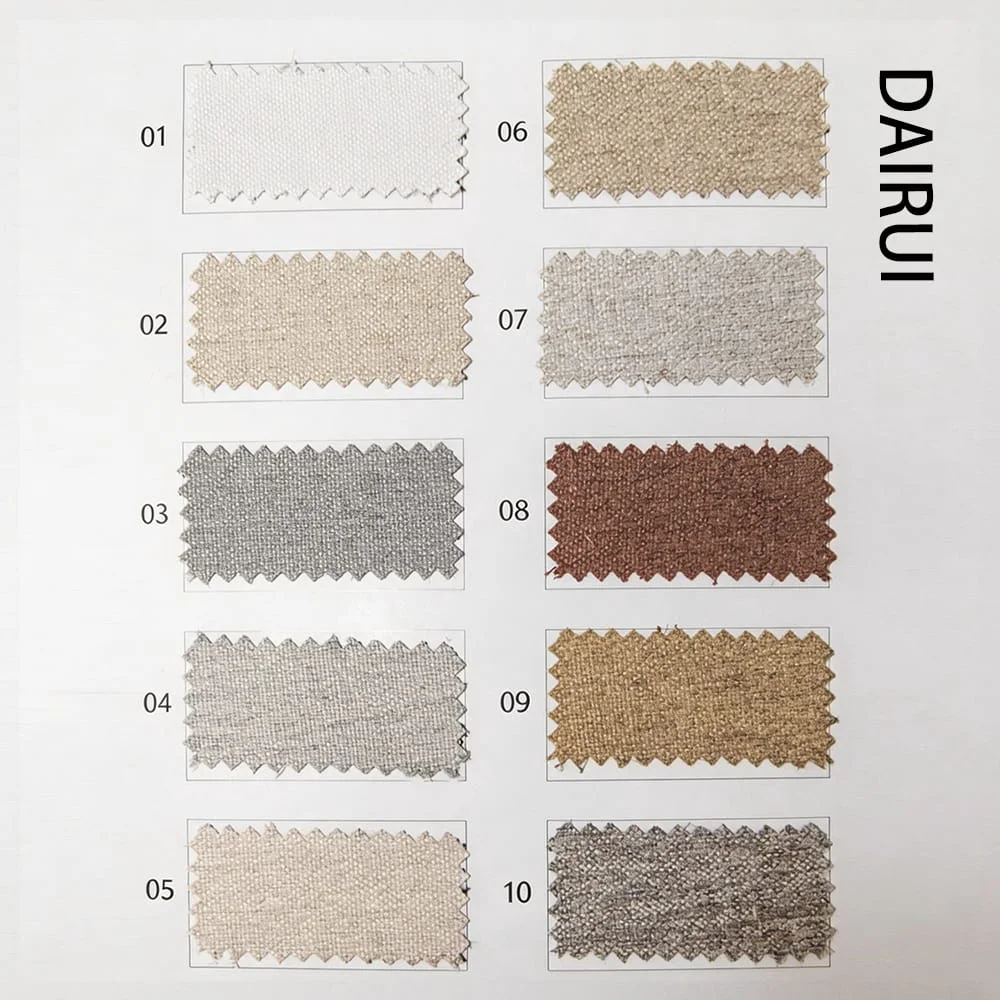
Color is moving warm. The grays that dominated 2019–2023 floor sets are being marked down to make room for ivory, oat, sand, putty, and the warmer taupes. Pantone’s 2026 Color of the Year — Cloud Dancer, a chalky off-white — sits inside this palette and has given buyers cover to accelerate the transition. For a wholesale supplier, this shift means Pantone color matching on neutral tones adds $50–80 per color for lab dip approval, but the investment pays back in replenishment orders because neutral colorways repeat season after season without being retired.
Heading Styles That Perform on the Department Store Floor
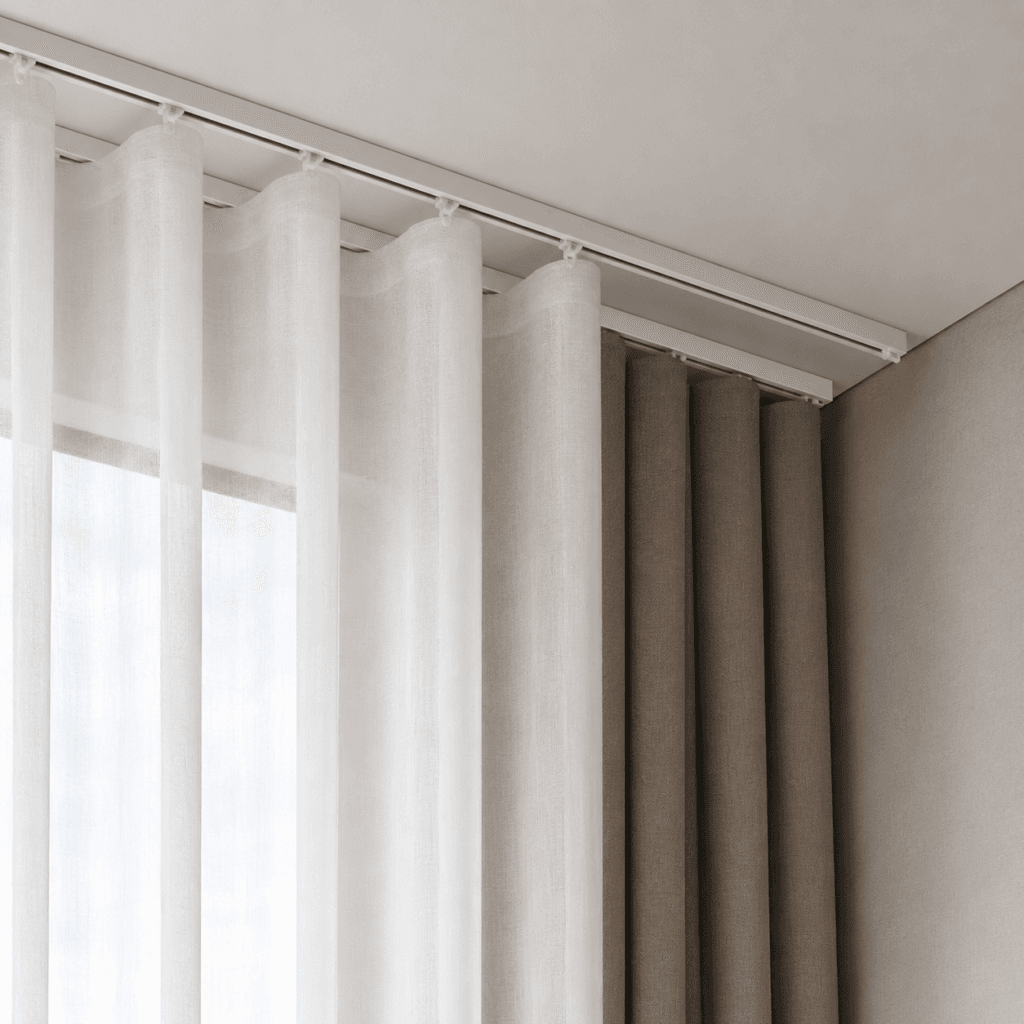
In-store curtain ranges need heading styles that customers can evaluate without installation. Grommet panels are the volume leader for this reason — the rings are visible on the hanger, the fold pattern is obvious, and the installation story (“slides onto any rod”) is self-explanatory. Grommet accounts for roughly 60–70% of department store curtain units in North America and Western Europe.
Rod pocket is the second-largest category, dominant in traditional and country-style home sections. Back tab is gaining ground in premium tiers because it reads “cleaner” on display than rod pocket and photographs better in lookbook inserts. Pinch pleat remains in formal drapery sections at the higher end of the price range — typically $59–79 retail — where the customer is buying on aesthetics rather than ease of installation.
| Heading Style | Retail Price Tier | Department Store Section | Container Loading (40HQ) |
|---|---|---|---|
| Grommet | $19–49 | Main floor, volume display | ~16,000 panels (132×213 cm) |
| Rod Pocket | $19–39 | Traditional / country home | ~16,000 panels |
| Back Tab | $39–59 | Modern / premium section | ~15,000 panels |
| Pinch Pleat | $59–79 | Formal drapery | ~12,000 panels (-25%) |
Retail Packaging Requirements for Department Store Supply
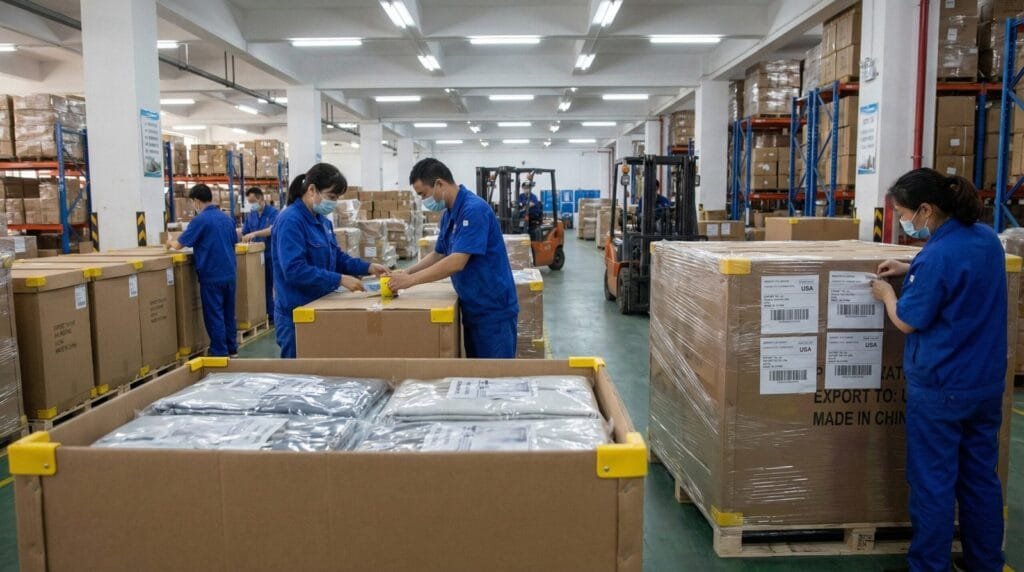
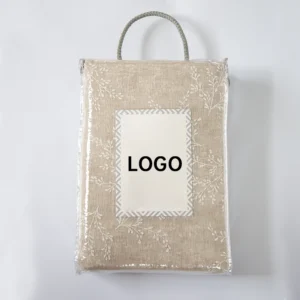
Department store packaging requirements are more demanding than e-commerce. A polybag that works for Amazon FBA typically fails a department store planogram because it does not display the product on a hanger or allow a customer to feel the fabric through the packaging window. The standard for mid-tier department store curtain supply in 2026 runs on one of three formats: hanger-bag (panel folded and inserted into a printed polybag with a hanger loop), header-card (panel folded around a printed card that hooks onto a display bar), or retail box (panel folded into a rigid or semi-rigid box with a window panel — used for premium tiers).
Incremental packaging cost over standard polybag: hanger-bag runs $0.40–0.70 per panel, header-card $0.25–0.50, retail box $0.80–1.40. All three formats support branded private-label printing. For department store buyers sourcing under their own house brand, custom packaging is standard — the store’s own label replaces the manufacturer’s brand on all consumer-facing surfaces.
Aligning Production Timelines With Department Store Replenishment
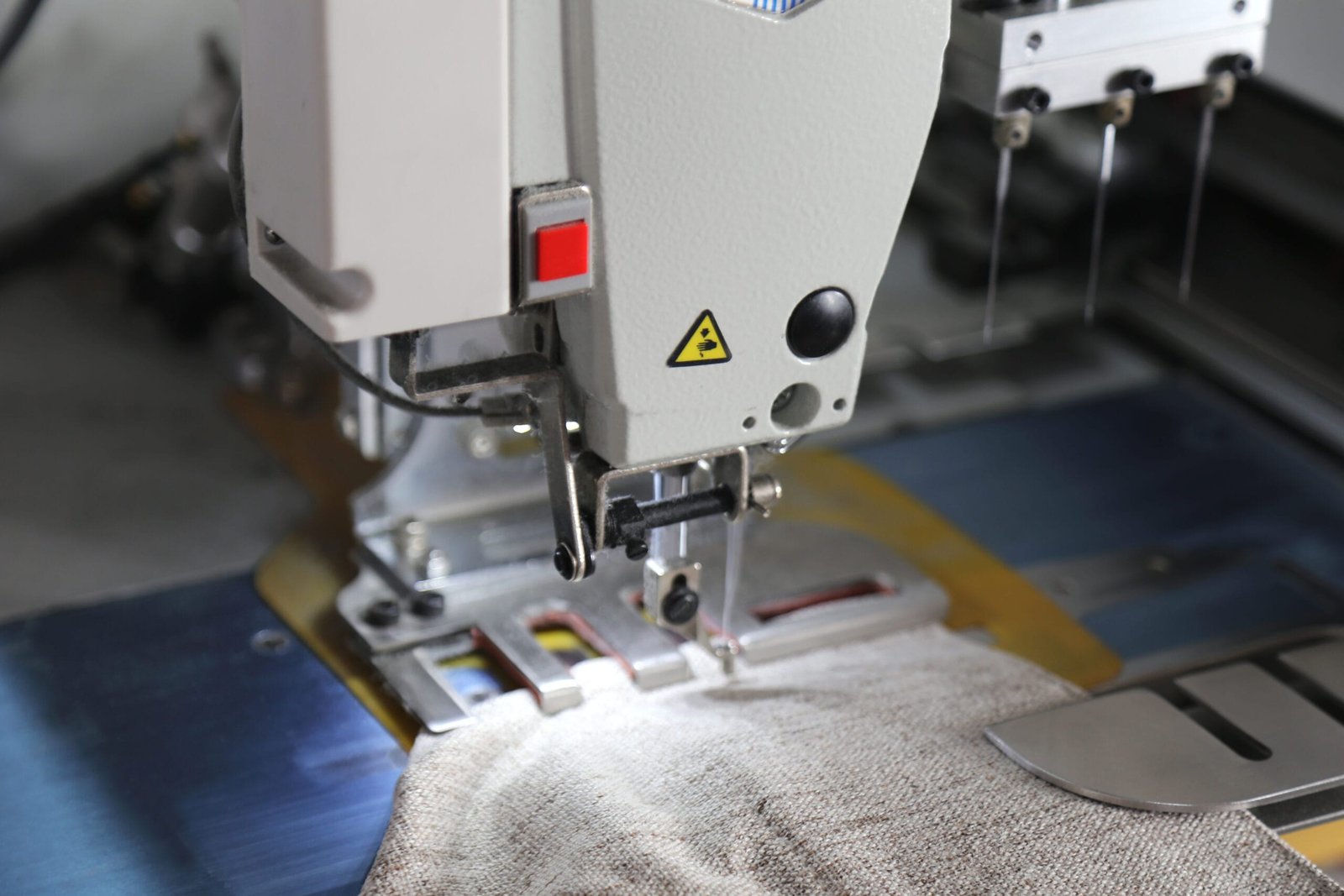
Department stores run two types of curtain orders: initial buy (the floor set launch, typically 4–8 weeks of projected sales per store) and replenishment (automatic reorder triggered by sell-through thresholds, usually weekly or bi-weekly). For a supplier, these two order types have different production implications.
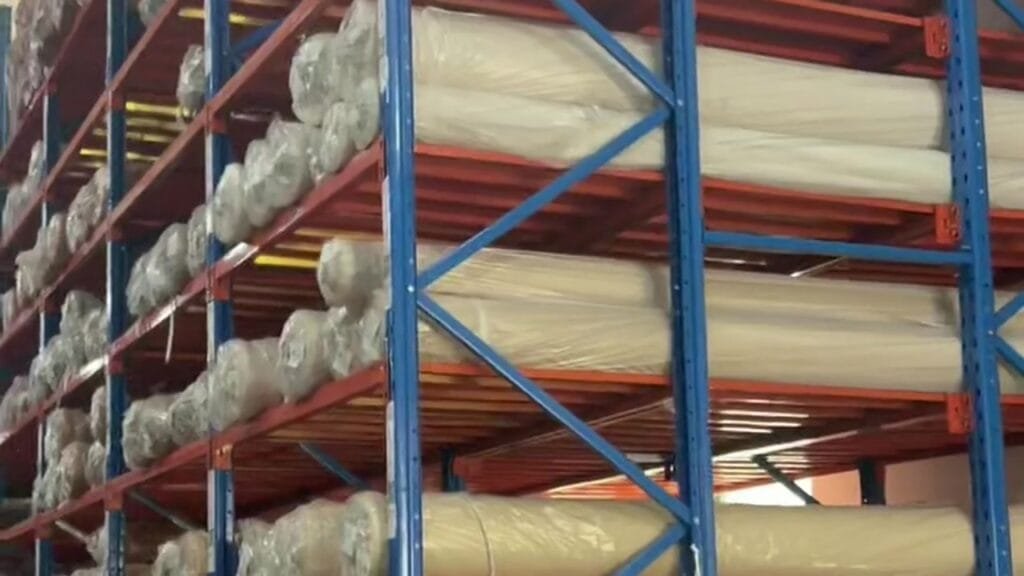
Initial buy orders are large and predictable — a 200-store chain buying 6 facing units per store per SKU is 1,200 pieces per SKU per initial buy. Replenishment orders are smaller and time-sensitive — typically 200–400 pieces per SKU per replenishment cycle, with a 2–3 week delivery expectation. Factories that hold fabric inventory in popular weights and colorways can turn replenishment orders in 10–15 days from receipt; factories that require a fresh fabric run for each order cannot meet this cycle. At Dairui, we hold linen-blend, blackout polyester, and sheer voile fabric in continuous stock specifically to support replenishment-speed orders for retail partners.
Frequently Asked Questions
What curtain fabrics are department stores prioritizing in 2026?
Linen-look polyester at 180–240 gsm dominates new range launches across mid-tier department stores. The fabric delivers the texture and drape of natural linen at retail price points between $29–49 per panel, which is the core department store volume window. Pure linen and velvet hold positions in premium sections at $59–79 retail but are not driving volume growth.
How far in advance do department stores place curtain orders?
Most department store buyers work 6–9 months ahead of floor set dates. For a Q3 floor set (August), buying decisions close in February–March. Factoring in 30+ days bulk production and 14–18 days sea freight, deposit confirmation needs to happen in January. Suppliers who cannot commit to samples by February are effectively locked out of that buying cycle.
What is the typical MOQ for a department store curtain supply program?
Initial buy orders for a mid-size chain (100–300 stores) typically run 800–3,000 pieces per SKU per color. Replenishment orders per cycle run 200–400 pieces. Our standard MOQ for in-stock fabrics is 200 pieces per style per color, which means a single replenishment cycle meets MOQ without negotiation. Trial orders from 50–100 pieces are available for range development and sampling stages.
Do department stores require private label packaging?
Most mid-tier and premium department stores source under their own house brand for curtain ranges, which means all consumer-facing packaging carries the store’s label rather than the manufacturer’s. Custom hangtags, wash care labels, header cards, and retail polybags are standard. Incremental packaging cost runs $0.25–1.40 per panel depending on format, with hanger-bag being the most common department store specification.
How does department store curtain sourcing differ from e-commerce sourcing?
Three main differences: packaging format (hanger-bag or header-card versus polybag for e-commerce), buying calendar (6–9 months forward versus 4–8 weeks for e-commerce), and replenishment speed (2–3 week cycle versus 4–6 weeks acceptable for online). Department stores also require barcode and compliance labeling on every unit that meets the retailer’s EDI and vendor compliance specifications — a requirement e-commerce rarely enforces at the same level.
Which curtain heading styles sell best in department stores?
Grommet accounts for 60–70% of department store curtain units in North America and Western Europe because it is the easiest heading for customers to evaluate in-store without installation knowledge. Rod pocket is the second-largest category. Back tab is growing in premium sections. Pinch pleat holds a niche at the formal drapery end of the range. For a new supplier entering department store channels, a grommet-led range with a rod pocket option covers the majority of the floor set requirement.
What This Means for Wholesale Buyers Supplying Department Stores
The department store curtain channel rewards suppliers who can match retail buying calendars, hold fabric inventory for replenishment speed, and deliver retail-ready packaging without quality variation between initial buy and replenishment. The 2026 trend toward linen-look neutrals actually simplifies this — a tightly edited palette of 6–8 colorways in 2 fabric weights covers most of the floor set requirement, reducing color management complexity while supporting replenishment consistency season over season.
At Dairui Textile, we have supported department store and retail chain programs since 2014, running 500,000 pieces annually from our 10,000 m² facility in Shaoxing. Our Private Label service covers full custom packaging and branded labeling for store house brands. For broader wholesale and OEM programs, see our OEM/ODM and wholesale page. For context on how 2026 trends compare across DTC and retail channels, our 2026 curtain trends guide covers the full picture.
Contact us to discuss range development, request retail packaging samples, or get pricing on a department store supply program.
Last reviewed: 2026-05 · DAIRUI Sourcing Desk