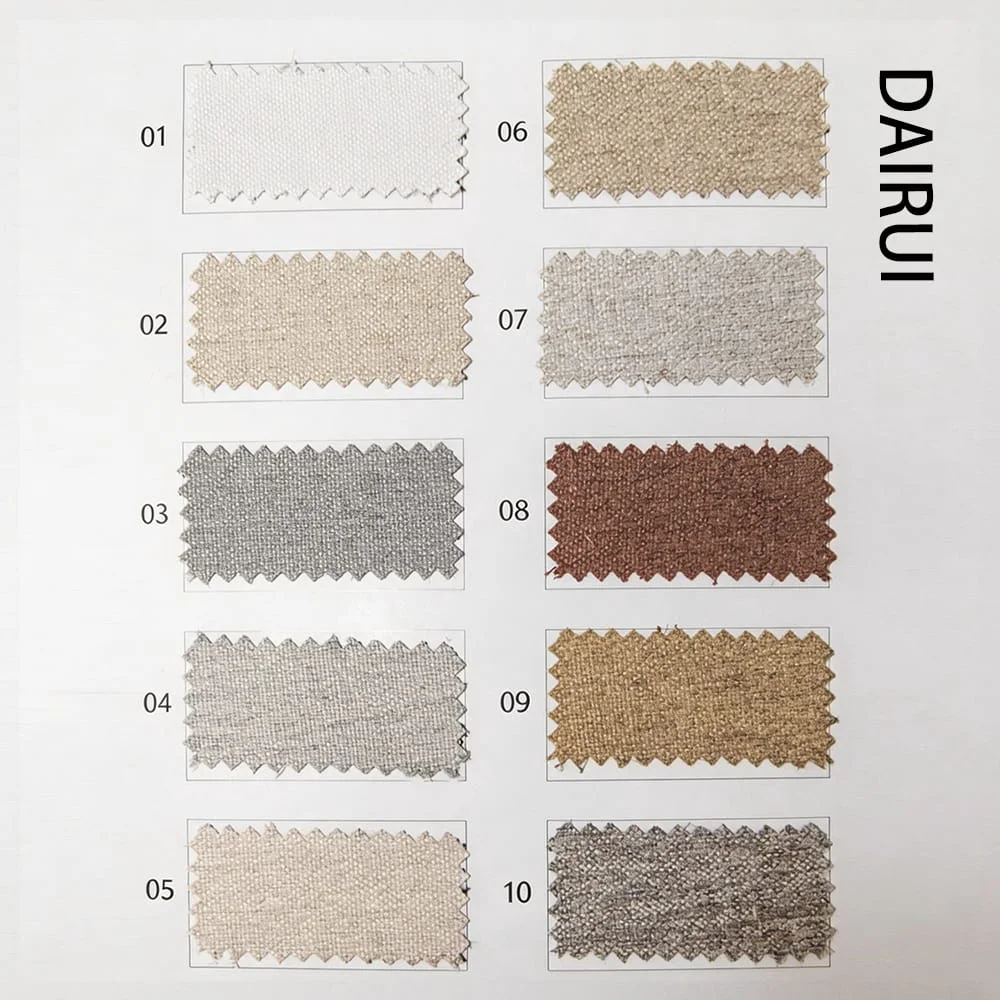
Bottom line: Commercial curtains are specified by performance, not just looks. Across hotels, restaurants, offices and public spaces, the four specs that decide a project are flame retardancy (NFPA 701 / BS 5867), light control (blackout vs dimout), acoustics, and durability for high-cycle use. Standard production runs 25-30 days after sample approval, and most factories quote contract MOQs per fabric and color. This guide breaks sourcing down by setting so you spec the right curtain the first time. For acoustic comfort, soundproof window curtains dampen ambient noise.
What Makes a Curtain “Commercial” (vs Residential)
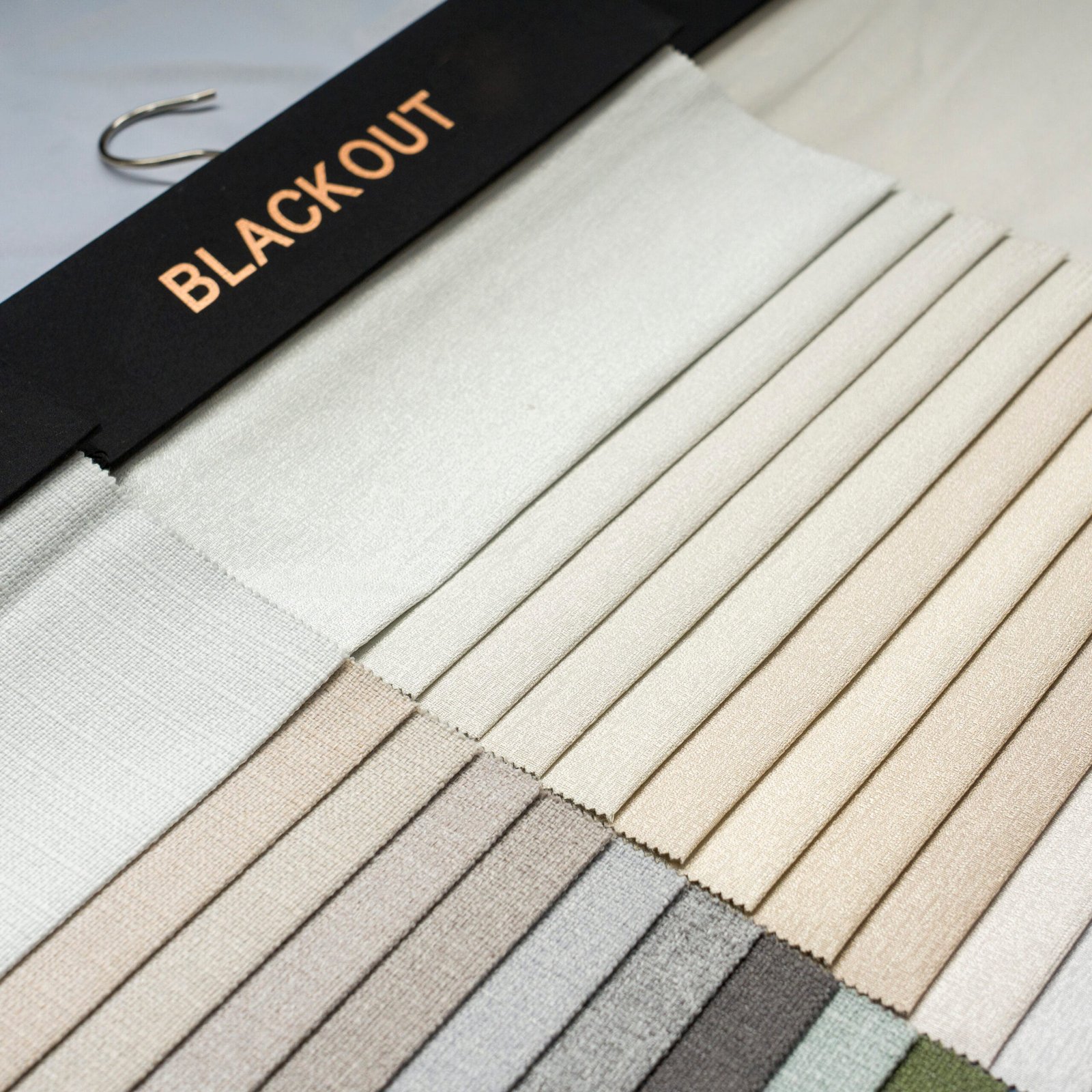
A commercial or contract curtain is not just a bigger home curtain. It is specified to pass safety codes, survive heavy daily use, and stay consistent across hundreds or thousands of windows. The buyer is usually a procurement manager, FF&E consultant, interior contractor, or facilities team — not an individual homeowner.
That changes everything about the spec. A residential panel is chosen for color and price. A contract panel is chosen for fire rating, fabric weight, light performance, washability, and the supplier’s ability to repeat the exact same dye lot on a reorder six months later. Get those wrong and the project fails inspection or looks mismatched on opening day.
In practice, “commercial curtains” covers a few overlapping categories: hospitality (hotels, resorts), food service (restaurants, cafes, banquet halls), workplace (offices, co-working, meeting rooms), and public or institutional spaces (theaters, clinics, community halls). Each has its own dominant requirement, which we break down next. For lighter retail and dining looks, see café and dining-space curtains.
Commercial Curtains by Setting
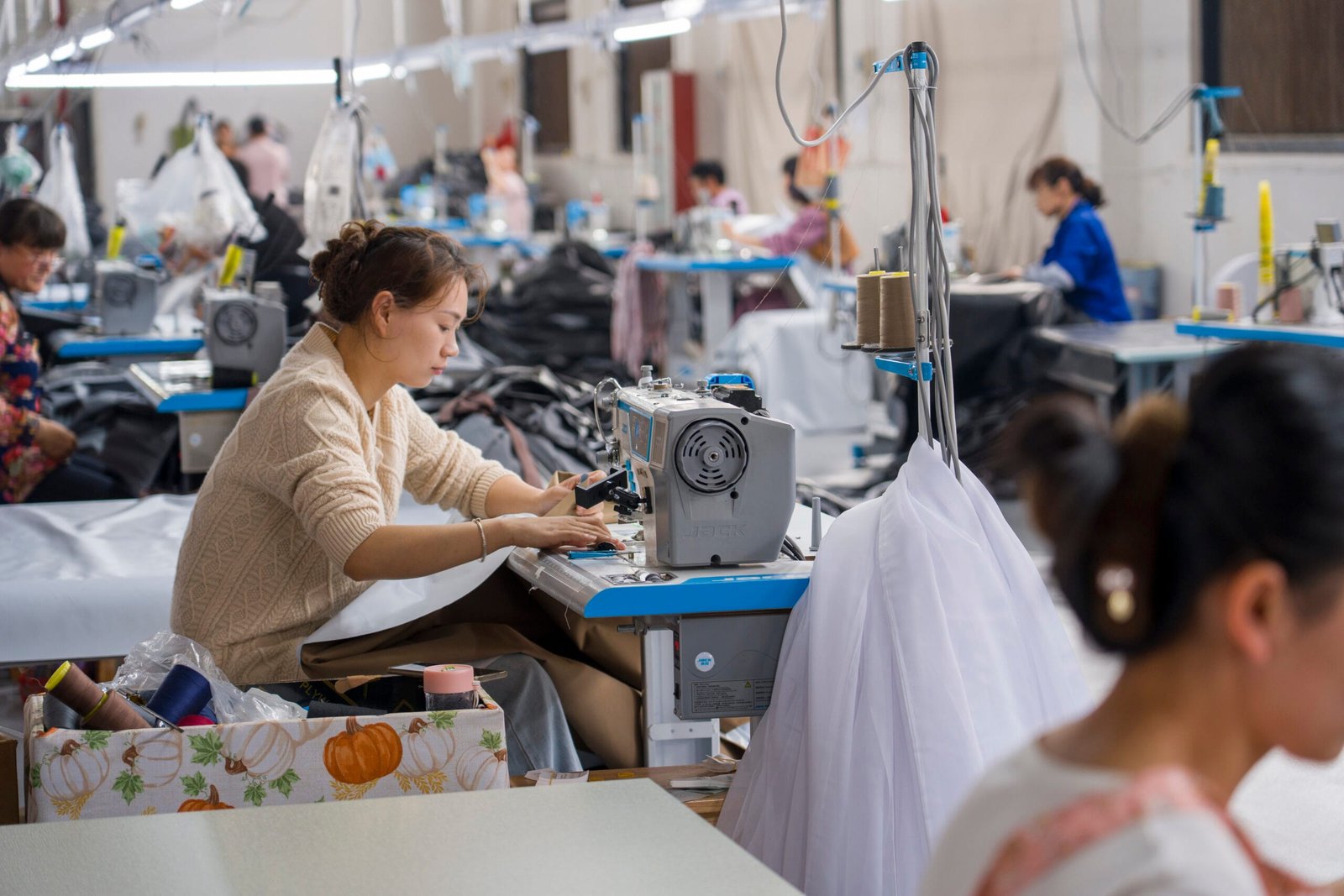
The fastest way to spec correctly is to start from the room’s job, not the fabric. Here is how the priority shifts across the most common commercial settings:
| Setting | Top priority | Typical spec |
|---|---|---|
| Hotels & resorts | True blackout + FR | Triple-weave or 3-pass blackout, 200-280 GSM, sheer layer, FR-compliant |
| Restaurants & banquet | Ambience + flame safety | Velvet or heavy dimout, acoustic benefit, FR-treated or inherently FR |
| Offices & co-working | Glare control + durability | Dimout or solar-friendly fabric, easy-clean polyester, neutral tones |
| Theaters & halls | Acoustics + total blackout | Heavy multi-layer drape, 250+ GSM, FR mandatory |
| Clinics & waiting areas | Hygiene + light | Washable polyester, anti-microbial finish optional, FR for public buildings |
Hotels are the most demanding because guests notice every gap of light, so they usually get a two-layer system (sheer + blackout). If your project is a hotel specifically, our dedicated hotel curtain supplier guide covers panel-count math, FF&E budgeting and inspection in depth.
Restaurants and banquet halls lean on heavier, richer fabrics like velvet for ambience — but those still need to meet flame-retardancy rules for public assembly spaces. Offices prioritize glare control and a clean, low-maintenance look, so dimout polyester in neutral tones is the workhorse.
The Four Performance Specs That Decide a Project
Whatever the setting, four specs do most of the heavy lifting. Nail these and the rest is detail.
1. Flame retardancy. Almost every commercial and public building requires curtains that meet a fire-safety standard — NFPA 701 in the US, BS 5867 in the UK, or EN 13773 across the EU. You can either use inherently flame-retardant polyester or apply an FR coating to a standard fabric. The difference matters for washing durability, which we compare in our guide on FR-treated vs inherently flame-retardant curtains.
2. Light control. Blackout blocks 99-100% of light (essential for hotels and theaters); dimout reduces but does not fully block it (good for offices and restaurants). Don’t over-spec — full blackout in an office wastes money. See dimout vs blackout for the decision.
3. Acoustics. Heavy, full curtains absorb sound. In restaurants, halls and open offices this is a real selling point — a 250+ GSM drape at 2x-2.5x fullness noticeably softens echo.
4. Durability. Commercial curtains are opened and closed thousands of times and washed on a schedule. Fabric weight (GSM) is the proxy for this; our GSM guide maps weight ranges to end use. Polyester dominates contract work because it is dimensionally stable, washable, and takes FR treatment well.
Flame-Retardancy & Compliance by Market
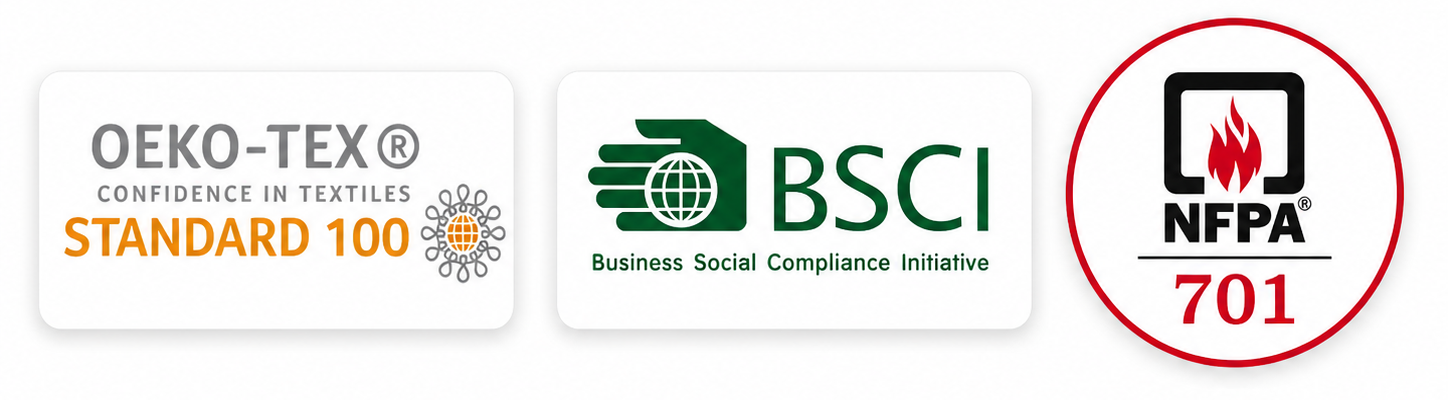
Compliance is where commercial projects most often get stuck at customs or inspection. The standard you need depends on the destination market and the building type. Always ask your supplier for the actual test report on the fabric you are buying — not a verbal “yes, it’s fire-rated.”
- United States: NFPA 701 is the baseline for drapes in public occupancies.
- United Kingdom: BS 5867 Part 2 (Type B or C) for curtains and drapes.
- European Union: EN 13773 classes (Class 1 for high-risk public spaces).
- Australia / NZ: AS/NZS 1530.3 for flammability in commercial fit-outs.
For a full country-by-country breakdown of which certificates you need at import, see our curtain import certifications reference. On certifications, Dairui is BSCI audited and OEKO-TEX certified fabrics are available for your compliance file.
MOQ, Lead Time & Sampling for Contract Orders
Commercial orders are quoted differently from retail. MOQ is usually set per fabric and per color rather than per total order, because the factory has to set up a dye lot. If you need several colors, ask whether you can mix SKUs to reach the minimum — many factories allow it.
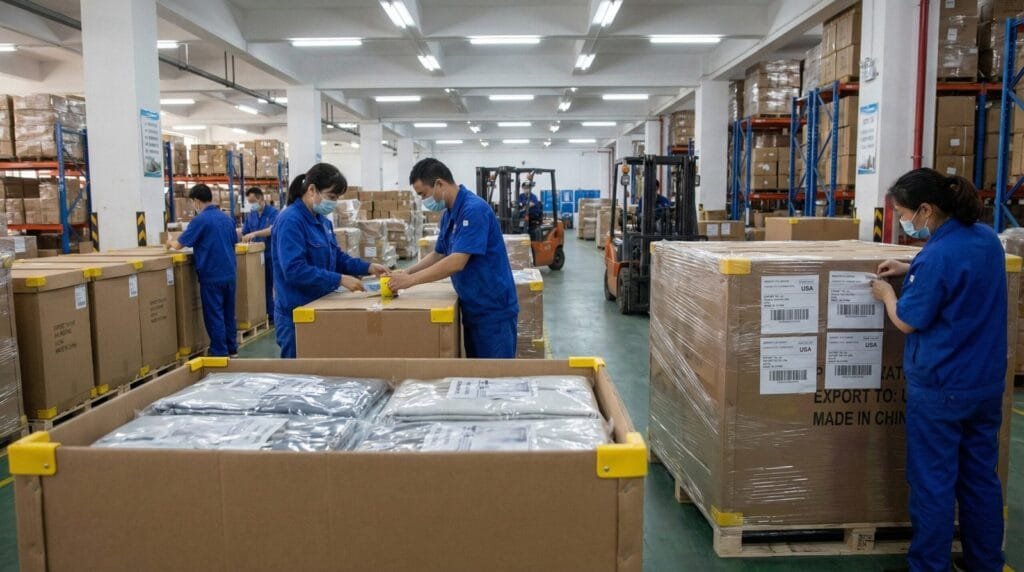
Standard production runs 25-30 days after sample approval for in-stock fabrics; custom dyeing, prints or complex headers can push beyond 30 days. Build sampling time in front of that — a lab dip and pre-production sample typically add 3-5 days each but protect you from a mismatched bulk run. Ocean freight is separate (roughly 15-25 days to US West Coast, 30-40 to US East Coast or Europe).
Price moves with quantity, fabric weight and finish; treat all figures as indicative and confirm against an actual quote for your spec. The one number to never chase blindly is the lowest price — on contract fabric, a suspiciously cheap quote usually means lighter GSM than specified.
How to Source & Vet a Commercial Curtain Supplier
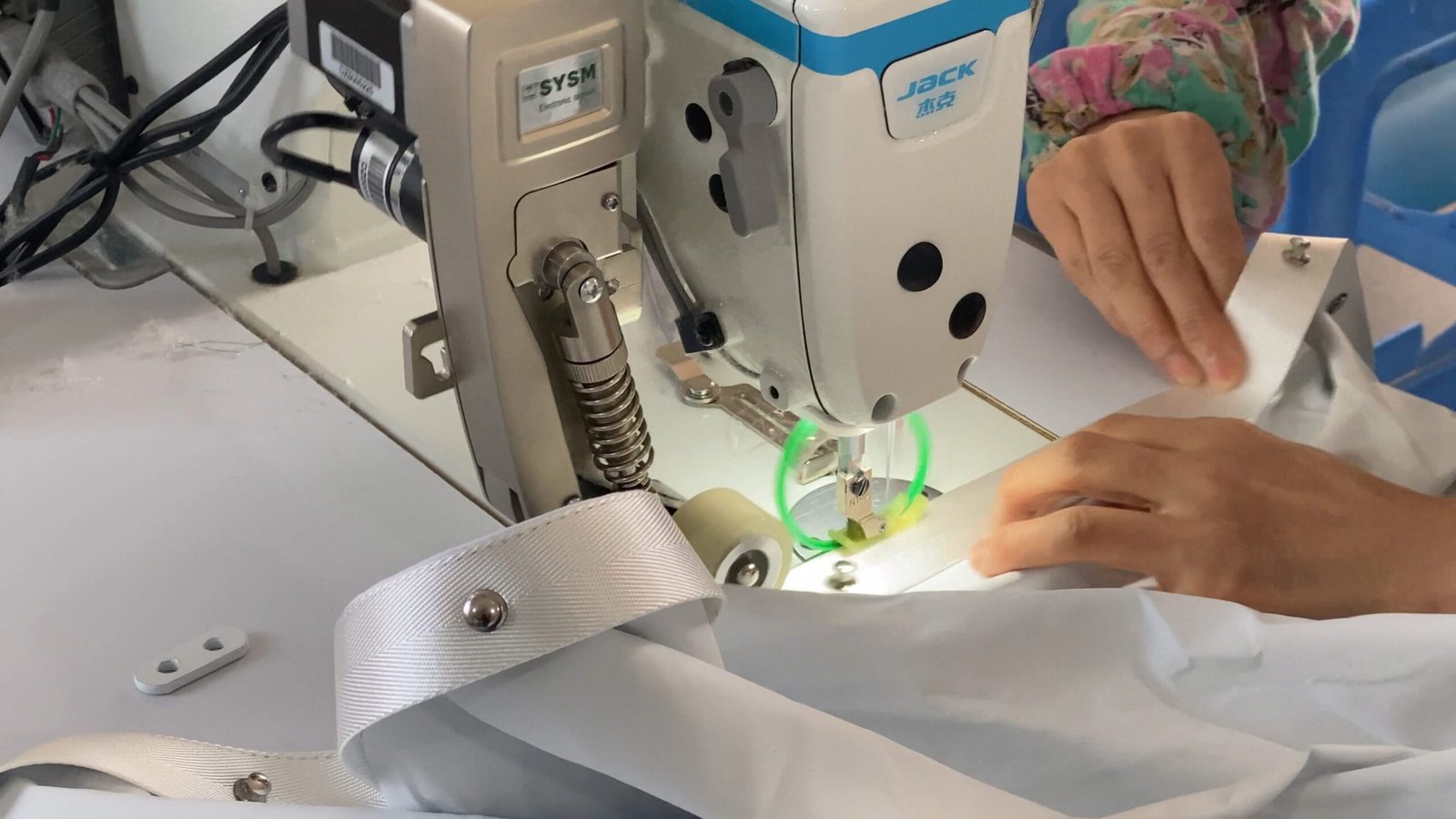
For a contract project, supplier reliability matters more than the unit price. A factory that misses your opening date or ships an off-spec batch costs far more than a few cents per panel. Here is a practical vetting checklist:
- Ask for the FR test report on the exact fabric, dated and matching the batch.
- Confirm per-color MOQ, sampling cost and lead time in writing on a proforma invoice.
- Request a pre-production sample and approve it before bulk — never skip this on a large run.
- Check that they do per-batch inspection (or allow third-party QC like SGS / Intertek) before shipment.
- Confirm they can hold dye-lot consistency for phased deliveries or future reorders.
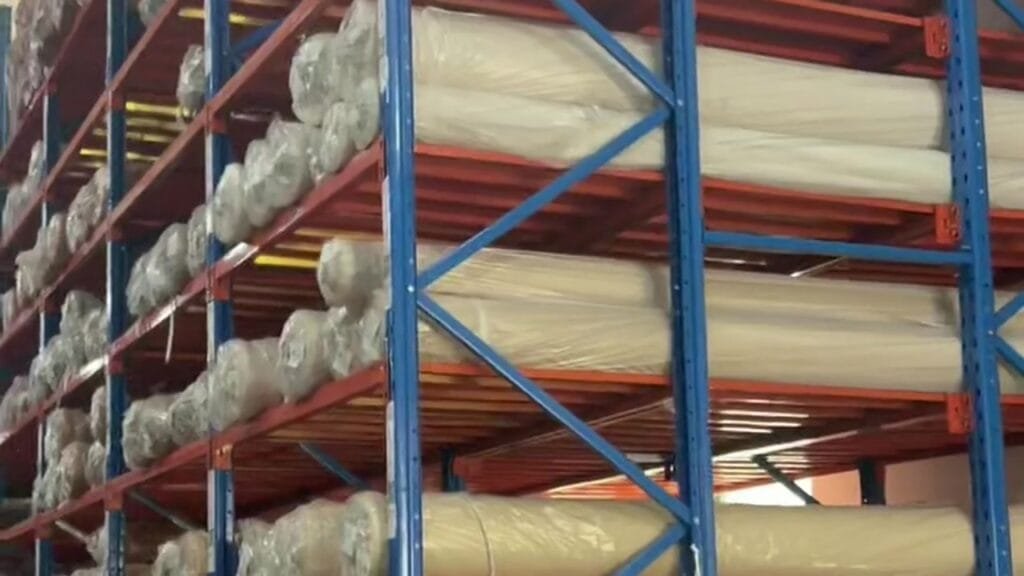
It also helps to understand how the curtains are actually made, so you can judge whether a supplier is a real manufacturer or a trader. Our walkthrough of the curtain manufacturing process shows the stages a genuine factory controls in-house. You can also browse our commercial and hotel curtain range to see typical contract specs.
The Two-Layer System: Pairing Sheer and Blackout
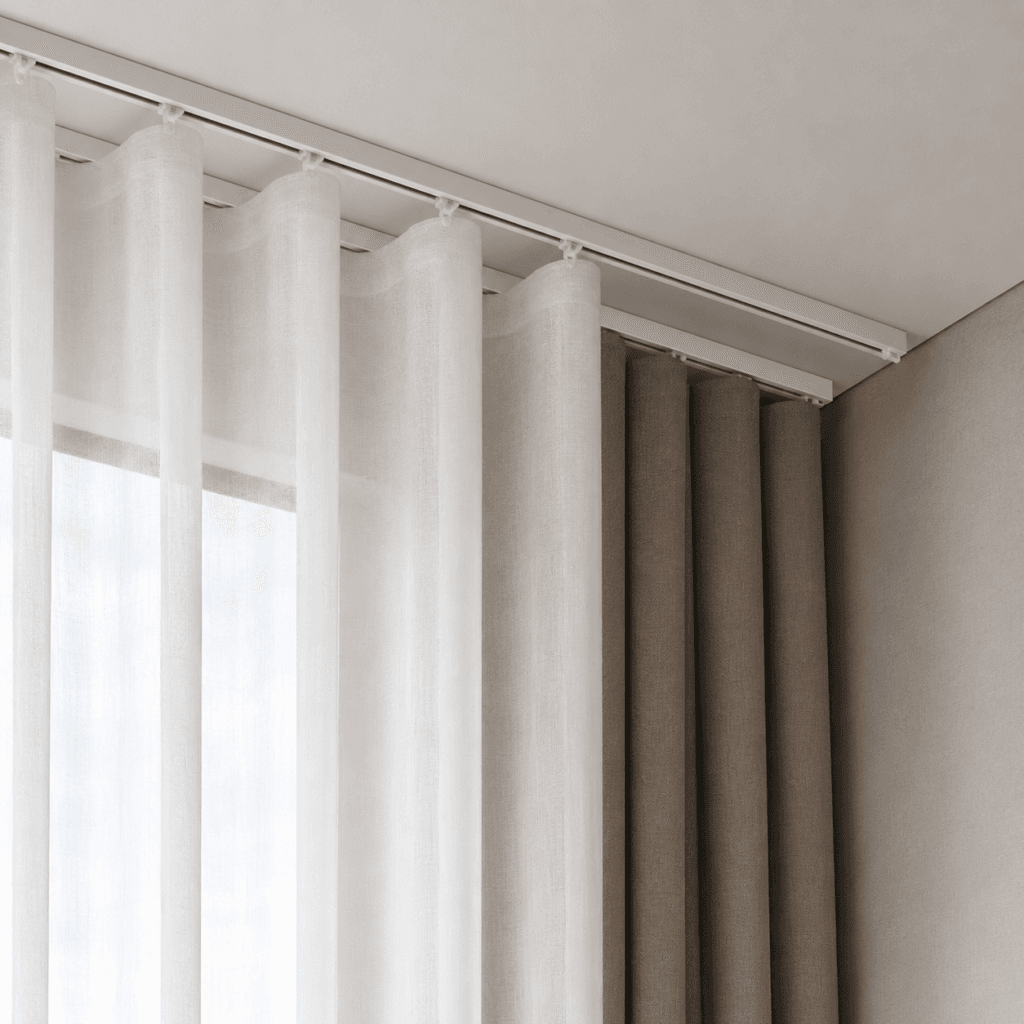
Most hospitality and many premium commercial projects do not use a single curtain — they use a layered system. A sheer or voile inner layer manages daytime privacy and softens incoming light while keeping the room bright; a blackout outer layer delivers full darkness at night. Together they give staff and guests room-by-room control over light and privacy.
Layering doubles the panel count and the hardware, so it has to be built into both your budget and your MOQ math. A 200-room hotel speccing two layers per window needs roughly twice the panels of a single-layer job — the kind of math we walk through in how many curtains a hotel needs. The upside is that two layers let you pair a light, airy sheer with a heavyweight FR blackout, which is impossible to achieve in one curtain.
For offices and casual restaurants, a single dimout layer is usually enough. The two-layer system earns its extra cost mainly where guests sleep or where full blackout is non-negotiable, so do not default to it everywhere.
Headers, Hardware and Installation for Contract Projects
The header style affects both appearance and durability. For high-cycle commercial use, S-fold (ripplefold) and pinch pleat are popular because they stack neatly and wear well; grommet headers are simple and robust for offices. If you are weighing options, see ripplefold vs S-fold and our guide to curtain heading styles.
Decide between track and rod early. Commercial spaces usually use ceiling- or wall-mounted tracks, which carry heavy drapes smoothly and suit motorization for large or hard-to-reach windows. Confirm whether your supplier provides hardware or curtains only — many curtain factories supply the textile and leave the track to a local fit-out contractor, so this should be clarified on the quote.
Fullness is the last lever. A ratio of 2x to 2.5x the track width gives a full, professional drape and better acoustics. Skimping on fullness to save fabric is the most common way a commercial install ends up looking cheap, even with good fabric.
If you would rather keep fabric and hardware on a single purchase order, Dairui supplies wholesale curtain tracks — manual, curved, telescopic, hidden, and electric — matched to the curtain weight and heading style of the same project.
What Drives Commercial Curtain Cost
When you compare quotes, the price gap usually traces back to a few drivers: fabric weight (higher GSM costs more but lasts longer), FR treatment versus inherently FR fiber, single versus layered systems, custom dyeing or printing (which carries its own MOQ), header complexity, and whether hardware is included. A quote that looks unusually low is almost always cutting one of these — most often the GSM. Ask each supplier to itemize so you are comparing like for like, and treat every figure as indicative until confirmed against your final spec.
Frequently Asked Questions
What is the difference between commercial and residential curtains?
Commercial curtains are specified for safety codes, heavy daily use and batch consistency across many windows. They almost always need a flame-retardancy rating (NFPA 701, BS 5867 or EN 13773) and use durable, washable fabrics — usually polyester — while residential curtains are chosen mainly for appearance and price.
Do commercial curtains have to be flame retardant?
In most public and commercial buildings, yes. The exact standard depends on the market: NFPA 701 in the US, BS 5867 in the UK, EN 13773 in the EU, and AS/NZS 1530.3 in Australia. Always obtain the fabric’s fire test report before ordering and importing.
What fabric weight (GSM) is best for commercial curtains?
Most contract drapery falls in the 200-280 GSM range — heavy enough to hang well, absorb sound and resist wear, but still manageable on standard track hardware. Theaters and acoustic-critical spaces often go to 250+ GSM, while office dimout panels can be lighter.
What is the MOQ and lead time for commercial curtain orders?
MOQ is typically set per fabric and per color because each color needs its own dye lot; many factories let you mix SKUs to reach it. Standard production is about 25-30 days after sample approval, plus sampling time up front and ocean freight separately.
Can one supplier handle hotels, restaurants and offices together?
Yes. A full-line contract manufacturer can supply blackout systems for hotels, FR velvet for restaurants and dimout panels for offices from the same order, which simplifies your sourcing and keeps compliance documentation consistent.
How do I make sure reorders match the original curtains?
Ask the supplier to retain your dye-lot reference and a master sample, and to run a lab dip against it on every reorder. Confirming this before the first order prevents visible color drift on phased deliveries or future top-ups.
What This Means For Your Sourcing
Commercial curtain sourcing comes down to matching the spec to the setting and then vetting a supplier who can actually deliver it — on code, on color, and on time. Decide your light control and FR standard first, set the GSM for durability, then lock MOQ, lead time and a pre-production sample in writing. Do that and the curtains that arrive in the container are the curtains you approved.
DAIRUI Sourcing Desk
Last reviewed: 2026-06