Bottom line: Fire retardant certifications are the entry ticket for hospitality, healthcare, and institutional curtain procurement — 4 standards cover ~90% of global B2B requirements: NFPA 701 (US), BS 5867 (UK), EN 13773 (EU), DIN 4102 B1 (Germany). FR-treated polyester costs $0.40–0.80 per curtain; inherently FR fabric runs $1.20–2.50. “Fireproof” is not a real standard — accept only third-party test reports (SGS, Intertek, TÜV) and check validity (typically 1–2 years).
Fire retardant certifications aren’t decorative—they’re the entry ticket for hospitality, healthcare, and institutional curtain procurement. In the past 12 months, Dairui has shipped FR-certified curtains to projects in the US, UK, Germany, and Australia, and we’ve seen the same procurement mistakes repeated across continents: buyers confuse “fire retardant” with “fireproof,” accept self-certified compliance documents, or specify the wrong standard for their target market. This guide breaks down the four certifications that actually matter, the real factory-level cost difference between FR treatment and inherently FR fabric ($0.40–0.80 vs $1.20–2.50 per curtain), and how to verify a supplier’s certification before you place an order.
Per NFPA 701 Test Method 1, a curtain fabric sample held vertically in a controlled flame must self-extinguish within 2 seconds of flame removal, with a char length not exceeding 6.5 inches. Fabrics that fail this test cannot legally be installed in US hotels, theaters, or assembly venues with occupancy over 50 people.
Fire Retardant vs Flame Resistant vs Fireproof — The Terminology Most Buyers Get Wrong
Three terms get used interchangeably in procurement specs, and that’s a problem. We’ve seen tender documents from Asian importers requesting “fireproof curtains compliant with NFPA 701″—a specification that doesn’t technically exist. Here’s what each term actually means at the standards level:
| Term | What It Means | Status in Standards |
|---|---|---|
| Fire Retardant (FR) | Fabric treated with chemicals that slow combustion and self-extinguish | Standard term in NFPA 701, BS 5867, EN 13773 |
| Inherently Flame Resistant | Flame resistance built into the polymer fiber itself (e.g., inherently FR (IFR) polyester) | Recognized; tested under same standards but with permanent properties |
| Fireproof | “Cannot burn”—an absolute claim | Not a legitimate term in NFPA / EN / BS standards. Marketing word only. |
If a supplier markets curtains as “fireproof,” ask them which testing standard they’re certified under. Reputable manufacturers describe their products as “fire retardant per NFPA 701” or “inherently flame resistant per EN 13773 Class 1″—never “fireproof.”
The 4 Certifications That Actually Matter for B2B Curtain Procurement
Different markets enforce different standards. A curtain certified for the US doesn’t automatically qualify for Germany. Specifying the wrong standard in your tender is the most common reason orders get rejected at customs or fail final project inspection.
The four standards below cover roughly 90% of global B2B curtain procurement requirements. We provide third-party test reports (SGS, Intertek, TÜV) for each—not factory self-certifications, which are rejected by most institutional buyers.
| Standard | Region | Test Method | Primary Application | Report Validity |
|---|---|---|---|---|
| NFPA 701 | US, parts of Canada | Test Method 1 (vertical burn, ≤2s self-extinguish) | Hotels, theaters, assembly venues | 1–2 years |
| BS 5867 Part 2 | UK, parts of Commonwealth | Type B (medium hazard) / Type C (high hazard) | Hotels, schools, hospitals | 1 year |
| EN 13773 | EU member states | Class 1 (highest) – Class 4 | Public buildings, hospitality | 1 year |
| DIN 4102 B1 | Germany, parts of Central Europe | Single-flame source test | Public buildings, offices | Project-specific |
UK and EU projects often require both BS 5867 and EN 13773. German federal buildings typically require DIN 4102 B1 specifically, even when EN 13773 Class 1 is provided. For US hospitality projects, NFPA 701 is the baseline—some states (California, New York) layer additional fire marshal requirements on top.
Canada — CAN/ULC S109: While NFPA 701 is accepted across much of Canada, many Canadian projects and authorities having jurisdiction specify CAN/ULC S109, the national flame test standard for flame-resistant fabrics and films. Its small-flame test caps the average damaged length at 165 mm across 10 specimens (190 mm for any single specimen) and requires that any material dripping onto the cabinet floor stop flaming within 2 seconds. Dairui holds a current third-party SGS test report (issued June 2026) confirming a woven curtain fabric passed CAN/ULC S109:2014(R2024) — average afterflame 0 s, average damaged length 86 mm, and no burning drips — available on request for Canadian project buyers. As with any FR report, it certifies the specific tested fabric, so we re-test to your chosen fabric and weight when a project requires it.
For a complete list of certifications Dairui holds, see our certifications page.
FR Treatment vs Inherently FR Fabric — What Each Costs at the Factory Level
This is where most procurement decisions get made—and where buyers either save money intelligently or overspend on the wrong specification. The two FR approaches have very different cost profiles and lifespans:
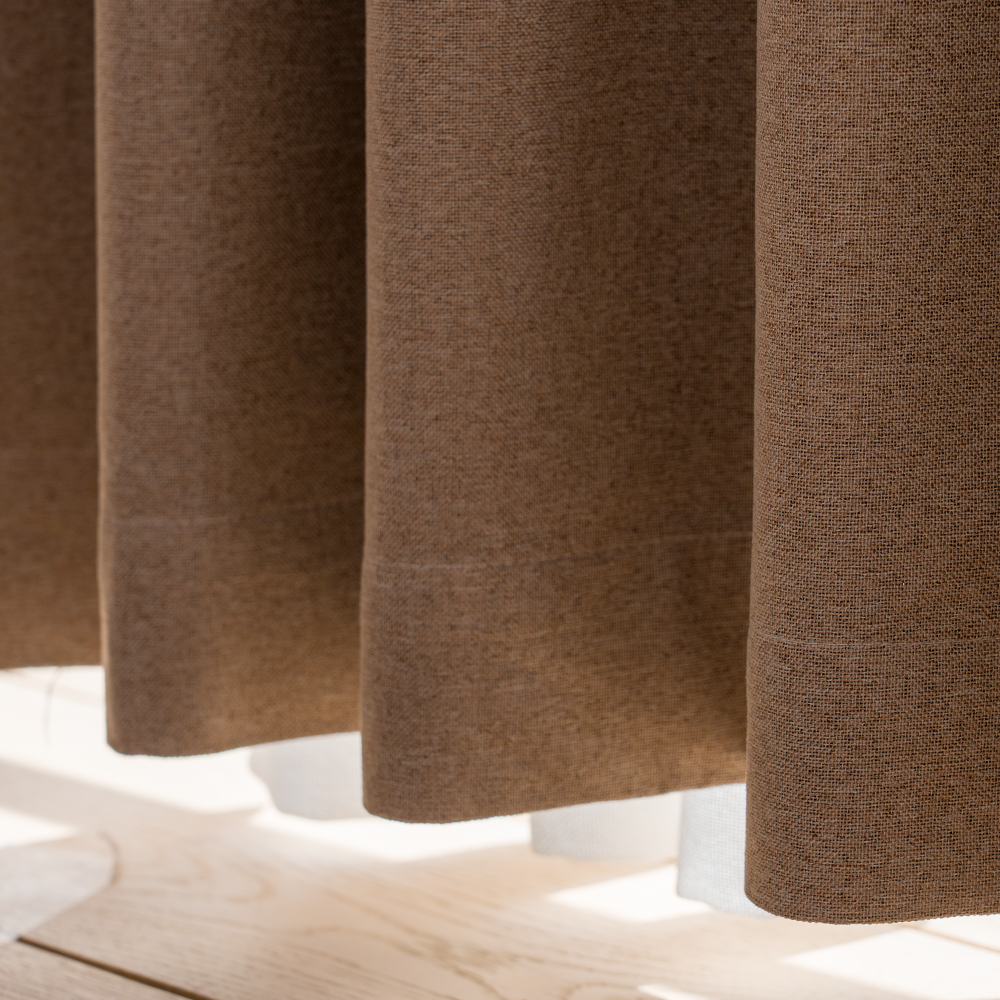
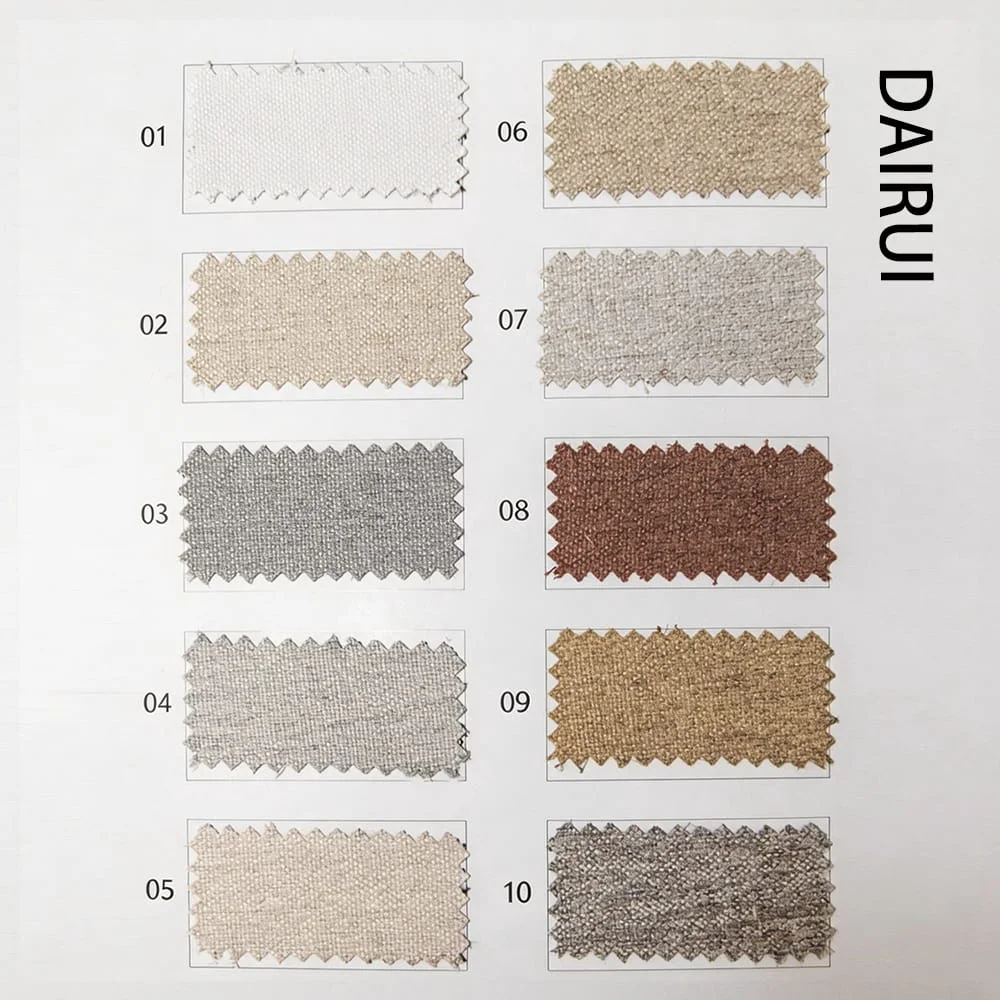
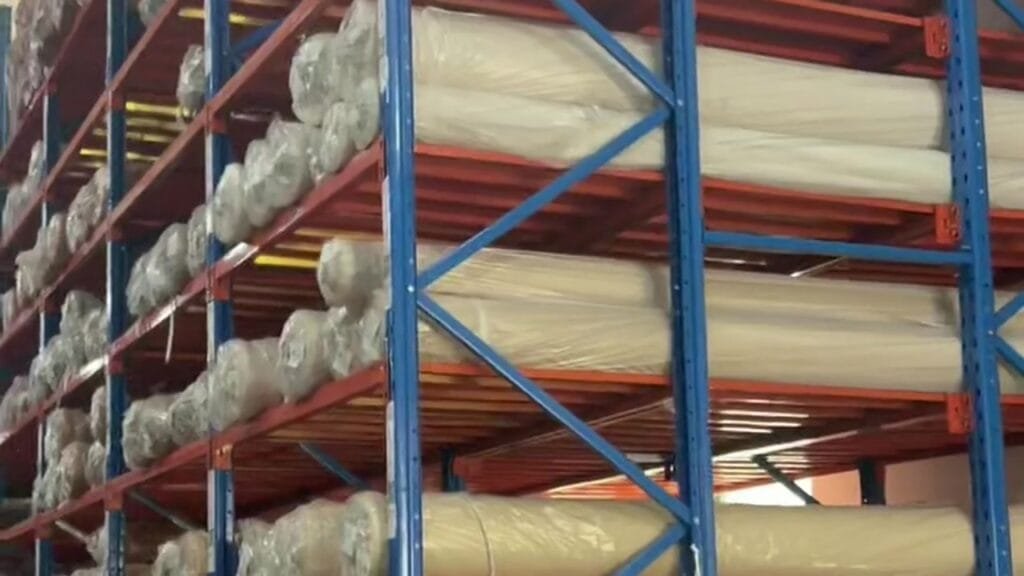
Our fabric inventory covers both FR-treated polyester and inherently FR options. Once an order is placed, fabric is cut and sewn to the customer’s heading style and dimensions—we don’t stock finished SKUs because the combination of heading × size × color × treatment runs into the thousands.
- FR Treatment (post-finishing): Standard fabric is dipped in a flame-retardant chemical solution after weaving. Adds roughly $0.40–0.80 per curtain at factory level. The treatment degrades after repeated washing, so flame resistance declines over time.
- Inherently FR Fiber (built into the yarn): Inherently FR (IFR) polyester has flame resistance engineered into the polymer itself during fiber production. Adds $1.20–2.50 per curtain at factory level. The flame resistance is permanent—it cannot be washed out, ever.
The decision rule we give procurement teams: short-term installations (trade shows, temporary venues, seasonal pop-ups) use FR treatment; long-term hospitality and institutional projects use inherently FR. Of the hotel curtain projects Dairui has shipped in the past 12 months, roughly 70% specified inherently FR fabric—because hotels typically replace curtains every 5–7 years, and the higher upfront cost amortizes over hundreds of wash cycles.
Waterproof Curtains — Why “Waterproof” Means Three Different Things
“Waterproof” in curtain procurement actually covers three distinct technical capabilities. Confusing them leads to spec mismatches and customer complaints down the line:
- Water-Resistant (DWR coating): Hydrophobic surface treatment that beads water but doesn’t block sustained moisture penetration. Suitable for bathroom dividers, light kitchen splash protection.
- Waterproof (TPU lamination): Thermoplastic polyurethane film bonded to the fabric back creates a complete water barrier. Used for hospital privacy curtains, hotel shower enclosures, outdoor commercial curtains.
- Anti-Microbial Treatment: Chemical or silver-ion treatment that inhibits bacterial and fungal growth. Almost always paired with TPU lamination for hospital and institutional applications.
Dairui’s Composite Blackout with TPU Lamination uses single-side or double-side TPU film bonding, depending on whether the project requires waterproofing on both faces or just the back. For hospital privacy curtain projects, we typically combine TPU lamination with anti-microbial treatment in the same production run—see our OEM/ODM curtain manufacturing page for spec details.
Combined FR + Waterproof Curtains — Where the Real B2B Demand Comes From
A North American hospitality group with 600 hotel rooms across 8 properties recently completed an order combining NFPA 701-certified blackout fabric with TPU lamination on the bathroom-side panels. Federal and state fire codes mandated the FR rating; the property operator added the waterproof requirement after recurring guest complaints about steam damage to standard fabric in shower areas.
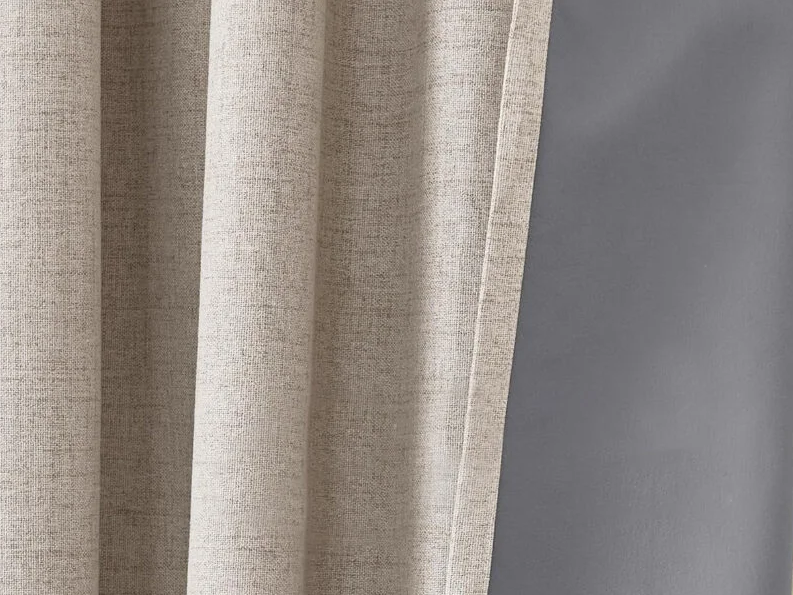
The combined applications most B2B buyers source for:
- Hotel bathroom and shower areas (NFPA 701 + TPU)
- Hospital privacy curtains (FR + anti-microbial + waterproof)
- Cruise ship cabins (IMO FTP Code + waterproof + FR)
- Institutional dining halls and cafeterias (BS 5867 / EN 13773 + stain-resistant)
One thing many procurement teams get wrong: they assume combining FR and waterproof treatments doubles the cost. In reality, when both are processed in the same finishing line, the combined cost is only 15–25% higher than a single treatment—because the fabric only goes through the chemistry tank once with a combined formulation.
How to Verify a Supplier’s FR Certifications Before You Place an Order
This is the section we wish more buyers read before signing POs. The fake-certification problem is real—we regularly see “compliance certificates” from competitors that are either expired, issued for a different fabric, or simply photoshopped. Here’s the verification checklist our institutional clients use:
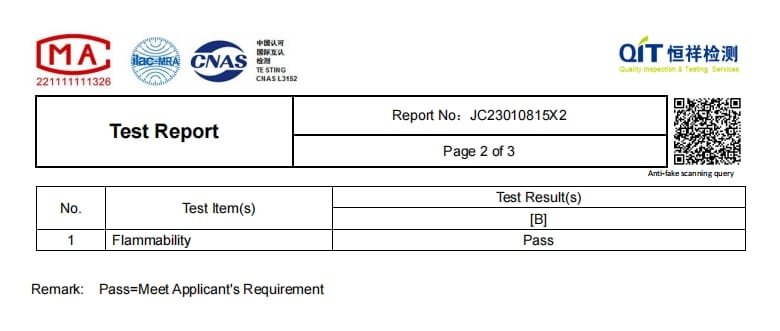
- Request the original test report PDF, not just a certificate image. Real reports include sample fabric specifications, test conditions, and lab signatures.
- Verify the testing lab is independent third-party. Recognized labs include SGS, Intertek, TÜV, Bureau Veritas, BTTG, and Hohenstein. Avoid reports from labs you can’t find on a basic web search.
- Confirm the test sample matches your order specifications. A report tested on 280 GSM blackout fabric does not certify a 180 GSM sheer fabric, even from the same supplier.
- Check the report date. Most certifications require renewal every 1–2 years. Reports older than 24 months should be re-tested.
- Be skeptical of “factory self-certified” or “compliance available” language. These phrases usually mean the factory has not actually tested the fabric and will scramble to obtain a report only after you raise concerns.
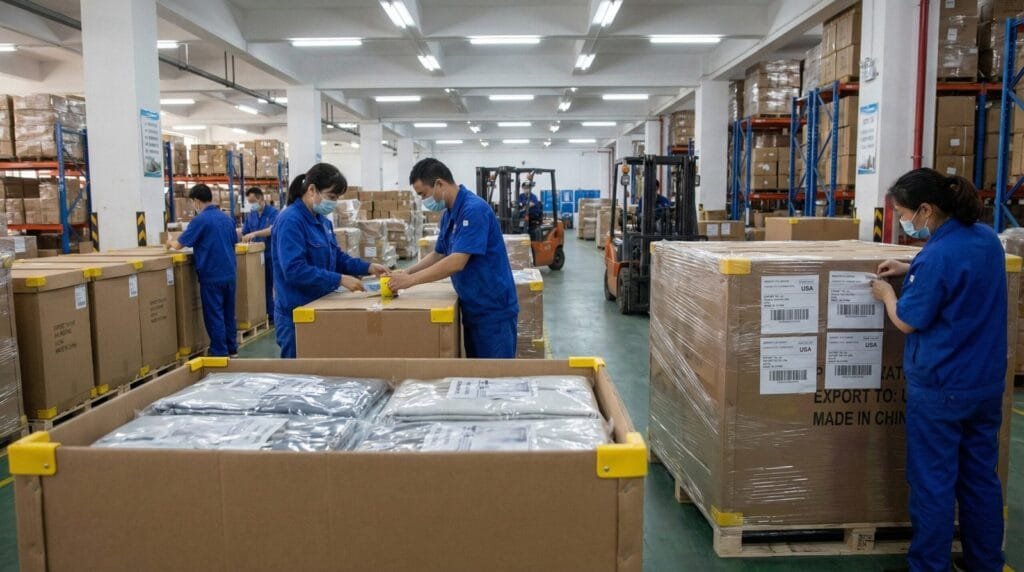
For Dairui orders, we provide SGS or Intertek test reports as standard documentation. For larger projects requiring jurisdiction-specific testing, we can arrange testing through TÜV or Bureau Veritas at the customer’s request, with lead time typically adding 7–10 working days.
FAQ: Fire Retardant and Waterproof Curtain Procurement
Is NFPA 701 mandatory for all hotel curtains in the US?
NFPA 701 is required for assembly venues with occupancy over 50 people, which includes nearly all hotel public spaces (lobbies, ballrooms, restaurants, conference rooms). Individual guest rooms are sometimes exempt depending on local fire marshal interpretation, but most US hospitality groups specify NFPA 701 for all curtains as a corporate liability standard, not just public areas.
How long does an FR certification report stay valid?
NFPA 701 reports are typically valid for 1–2 years from issue date. BS 5867 and EN 13773 reports are usually valid for 1 year. After expiration, fabrics must be re-tested. We recommend not accepting any certification report dated more than 24 months before your order date.
Can you wash fire retardant curtains without losing protection?
It depends on the FR type. FR-treated fabrics lose flame resistance with repeated washing as the chemical treatment leaches out. Inherently FR (IFR) polyester retains flame resistance permanently because the property is built into the fiber itself; it can be washed indefinitely without losing certification.
What’s the price difference between FR-treated and inherently FR curtains?
At Dairui’s factory level, FR treatment adds roughly $0.40–0.80 per curtain to standard polyester. Inherently FR fabric adds $1.20–2.50 per curtain. The cost gap usually pays back within 2–3 years for installations that wash curtains regularly, because inherently FR fabric doesn’t need re-treatment or replacement to maintain certification.
Can FR and waterproof treatments be combined on the same curtain?
Yes. When both treatments are applied in the same finishing line, the combined cost is typically 15–25% higher than a single treatment, not double. Common combinations include NFPA 701 with TPU lamination for hotel showers, and FR with anti-microbial treatment for hospital privacy curtains.
How do I verify if a supplier’s FR certification is real?
Request the original test report PDF (not a certificate image), confirm the testing lab is recognized third-party (SGS, Intertek, TÜV, BTTG), verify the tested fabric specifications match your order, and check the report date is within 24 months. Be skeptical of “factory self-certified” or “compliance available” language—these usually indicate untested fabric.
What MOQ does Dairui require for FR-certified curtain orders?
For in-stock FR-treated fabrics, our standard MOQ is 200 pieces per style and per color, with trial orders of 50–100 pieces available subject to discussion. For custom-woven inherently FR fabric (IFR polyester), the minimum is 800–1,000 meters because the fiber itself is custom-ordered. For more details, view our complete buyer FAQ.
Bottom Line — What This Means for Your Sourcing
Specify the right standard for your target market (NFPA 701 for US, BS 5867 + EN 13773 for UK/EU, DIN 4102 B1 for Germany), match the FR type to your installation lifespan (treatment for short-term, inherently FR for hospitality), and verify every certification with a third-party test report dated within 24 months. The cost premium for inherently FR fabric is real but recoverable across a 5–7 year hospitality replacement cycle.
To request FR test reports and fabric samples for your project, contact our sourcing desk—we typically ship samples within 3–5 working days.
Last reviewed: 2026-05 | DAIRUI Sourcing Desk
Related reading
- How to Choose Fireproof Curtains for Hotels and Public Spaces
- FR-Treated vs Inherently Flame-Retardant Curtains: Durability, Washing & Which to Spec
- Hotel Curtain Supplier Guide: Sourcing Hospitality Drapery That Passes Inspection (2026)
Sourcing for a live hospitality or commercial project? Explore Dairui’s flame retardant curtain manufacturing and supply options.