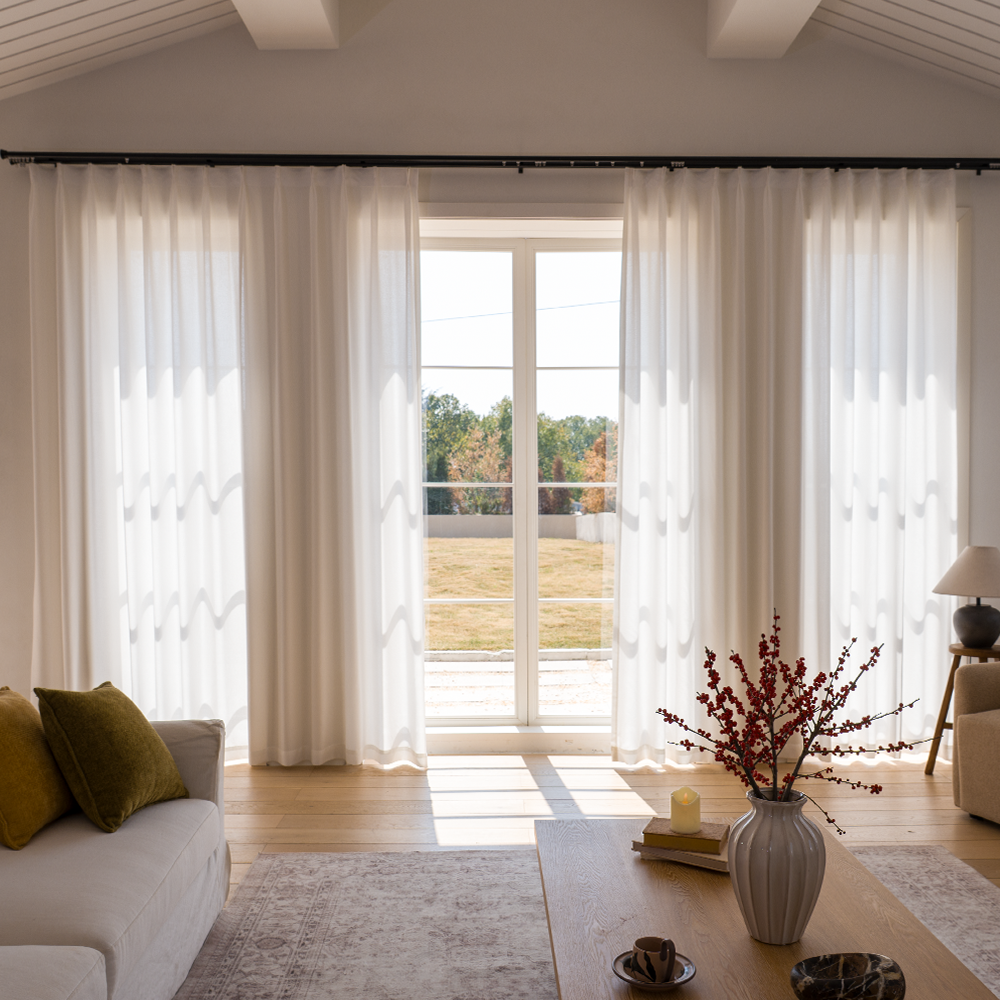
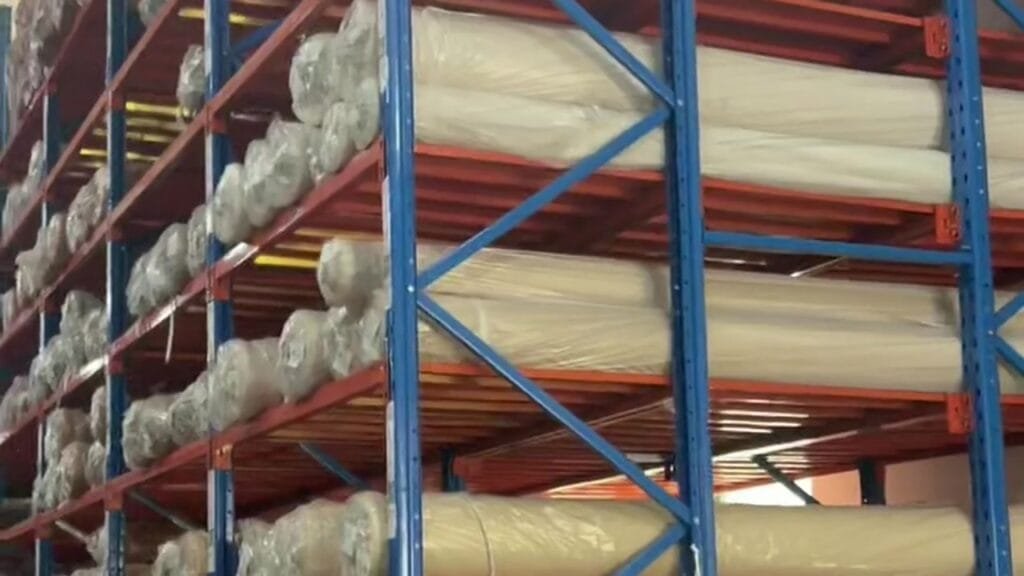
Bottom line: Net curtains and voile are not interchangeable. Net is Raschel-knit at 40–80 GSM with 20–35% mesh openness — stronger daytime privacy, poor print/embroidery base, dominant in UK and Eastern Europe. Voile is flat-woven at 50–120 GSM with a smooth uniform surface — softer drape, excellent print/embroidery hold, dominant in North America, Australia, and most of Asia. Spec voile for printed or embroidered patterns; spec net for plain-color daytime privacy at a slightly lower cost. Compare with light airy voile curtains for softer light diffusion.
Net curtains and voile curtains are often grouped together as “sheer window treatments,” but for B2B buyers they’re not interchangeable. The weave structure is different, the opacity behaves differently in daylight, and the wholesale price points sit a tier apart. If you’re sourcing for a retail program, a hotel project, or a private-label collection, getting these two categories straight saves a round of sampling — and avoids a return of “this doesn’t look like the photo.” For trend and customization help, see how to choose sheer curtains.
What Are Net Curtains?
Net curtains are sheer panels woven with an open-mesh structure, traditionally on a Raschel or lace-knit machine rather than a standard loom. The visible mesh gives them a slightly textured surface — sometimes patterned, sometimes plain — and a softer hand than a flat-woven sheer. They originated in UK and European interior design, where they’re often hung as a permanent daytime privacy layer behind heavier drapes.
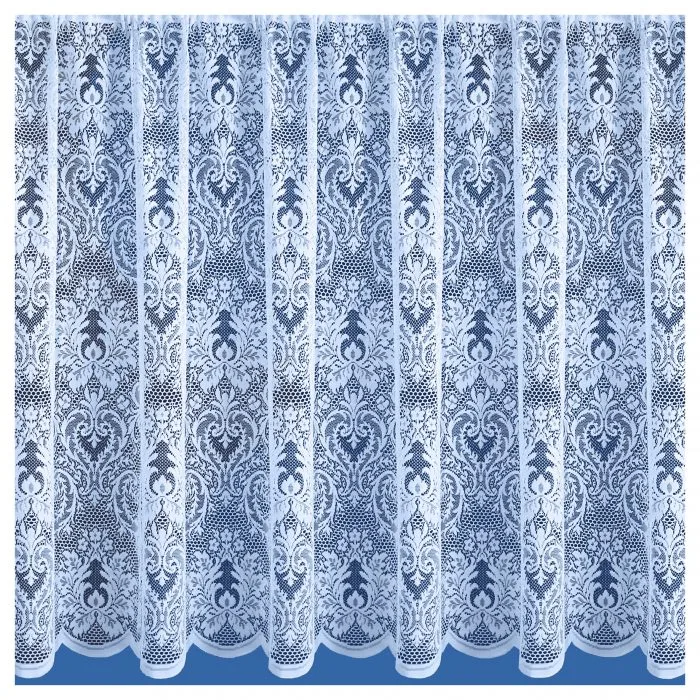
Typical wholesale net curtain specifications: 40–80 GSM, 100% polyester yarn, mesh openness around 20–35%. The yarn is usually a fine 75D or 100D polyester filament, knitted on a 28-gauge machine for the standard mesh, finer gauges for tighter privacy nets. Most buyers spec white or ivory; black-out nets aren’t a real product category — by definition, the mesh structure lets light through.
What Are Voile Curtains?
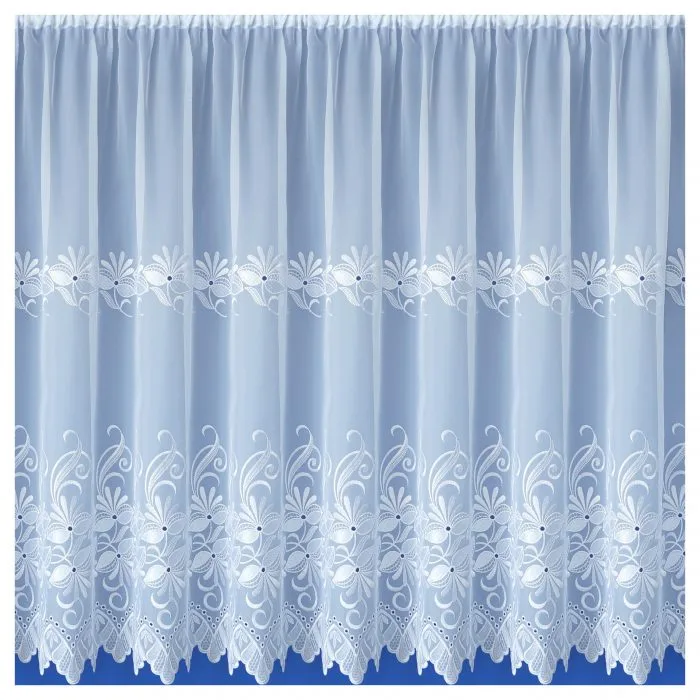
Voile is a flat-woven sheer fabric — the yarn is woven on a standard loom in a plain or leno weave, producing a smooth, translucent panel without a visible mesh. The surface looks closer to chiffon or fine cotton than to net. Voile is the dominant sheer category in North America, Australia, and most of Asia, where “net curtain” as a term is less commonly used at retail.
Typical wholesale voile specifications: 50–90 GSM for standard polyester voile, up to 120 GSM for faux-linen voile with a heavier hand. Yarn is usually 50D–75D polyester filament, sometimes blended with linen or rayon for premium SKUs. The weave is uniform, so voile takes printing and embroidery much better than net curtains — most embroidered sheer panels in retail are voile-based, not net-based.
Net Curtains vs Voile: Side-by-Side Comparison
| Property | Net Curtains | Voile Curtains |
|---|---|---|
| Weave method | Raschel knit / lace knit (open mesh) | Plain weave / leno weave (flat woven) |
| Surface texture | Visible mesh, slightly textured | Smooth, uniform, chiffon-like |
| GSM range | 40–80 GSM | 50–120 GSM |
| Opacity | Mesh-pattern privacy; 20–35% openness | Diffused privacy; uniform translucency |
| Daytime privacy | Stronger (mesh blocks direct sight lines) | Moderate (silhouette visible) |
| Print / embroidery | Poor — yarn structure breaks designs | Excellent — uniform surface holds print |
| Drape | Stiffer, more structured fall | Soft, flowing drape |
| Primary markets | UK, Ireland, Eastern Europe, parts of Middle East | North America, Australia, most of Asia, Western Europe |
| Wholesale cost index | 0.8–1.1× (baseline voile) | 1.0× baseline |
| Best use case | Permanent daytime privacy layer | Decorative sheer with print or layering potential |
The single most useful distinction at the sourcing stage: if your retail or hospitality program needs a printed or embroidered pattern, spec voile. If the brief is plain-color daytime privacy with a slightly textured look, net curtains do it better and often cost a bit less because the knitting process is faster than weaving at comparable GSM.
What Net Curtains Look Like in Production
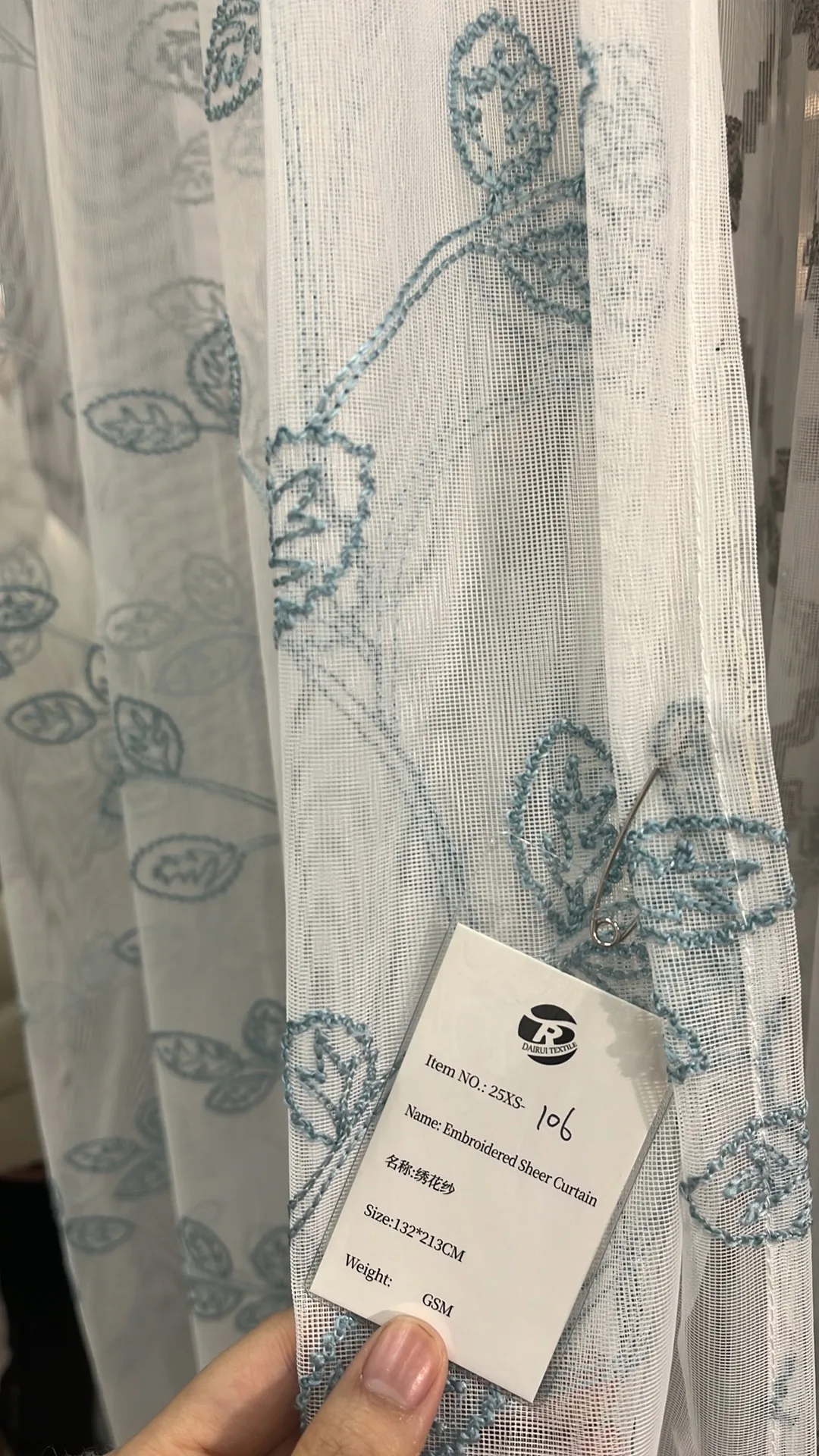
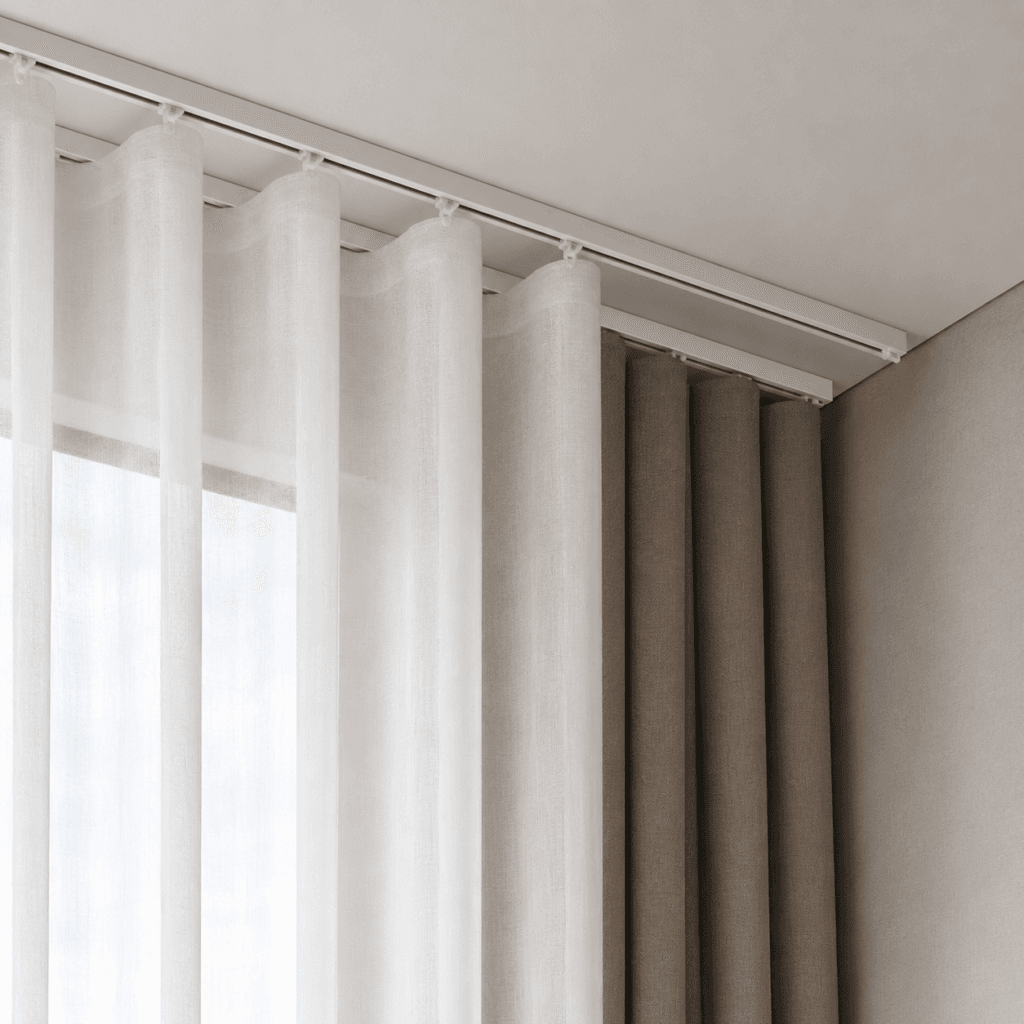
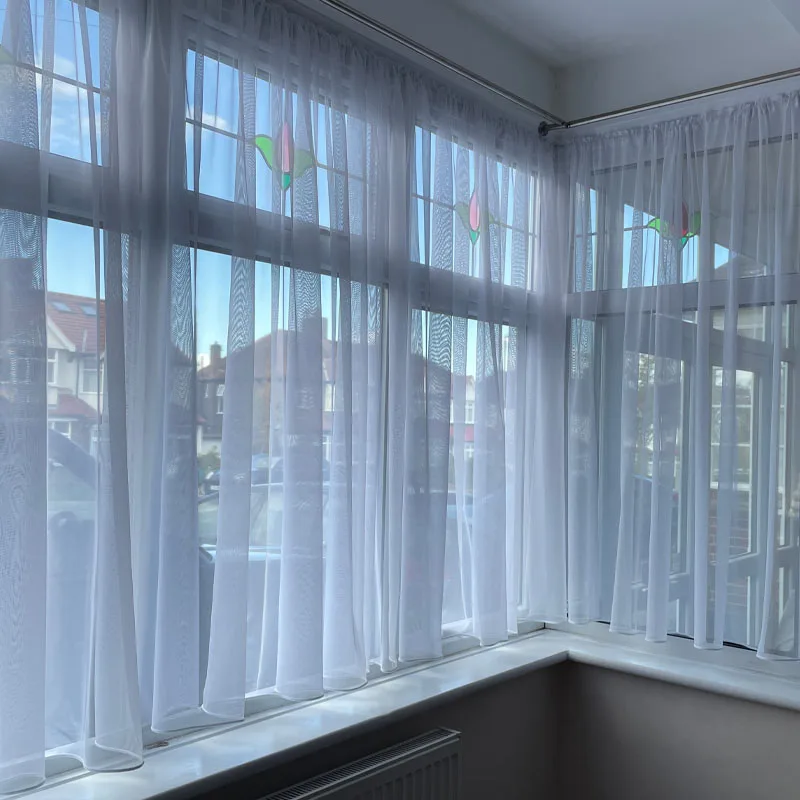
This is a net curtain we produced for a wholesale order — Raschel-knit polyester at 60 GSM with a fine geometric mesh pattern. Voile is our higher-volume sheer category, but we run net curtain production whenever a buyer’s brief calls for it, sourcing the base fabric from our knitting partners and finishing in-house: heading attachment, hemming, packaging. MOQ for net curtain orders follows the same structure as the rest of our catalog — 200 pieces standard, 50–100 pieces for trial orders subject to discussion.
Heading Styles, Sizes, and Customization
Both net and voile panels accept the standard sheer-curtain heading styles: rod pocket, pencil pleat (the dominant UK net curtain heading), tab top, grommet, and back tab. For ripple-fold or S-fold sheer programs — common in commercial hospitality — voile is the more reliable substrate because it heat-sets cleanly; net curtains can hold pleat memory but with more variability.
Standard wholesale widths: 140 cm, 200 cm, 280 cm panel widths for retail-ready SKUs; full bolt widths of 280–300 cm for cut-to-measure programs. Drops: 137 cm, 183 cm, 213 cm, 229 cm for UK / European retail; 84-inch, 95-inch, 108-inch for North American retail.
For private-label development, voile is the higher-margin substrate because it supports printing, embroidery, lace inlay, and bottom-border embellishments — the visual differentiation that justifies retail markup. See our private label curtain manufacturing service for full development support including custom patterns, branded packaging, and wash labels.
Wholesale MOQ, Lead Time, and Logistics
MOQ for in-stock voile fabrics is 200 pieces per style per color, with 50–100 piece trial orders available for first-time customers subject to discussion. Net curtain orders follow the same tiers when produced from stock yarn. For custom-knit or custom-woven sheer fabrics (unique mesh patterns, special yarn blends, exclusive colorways), the minimum is 800–1,000 meters.
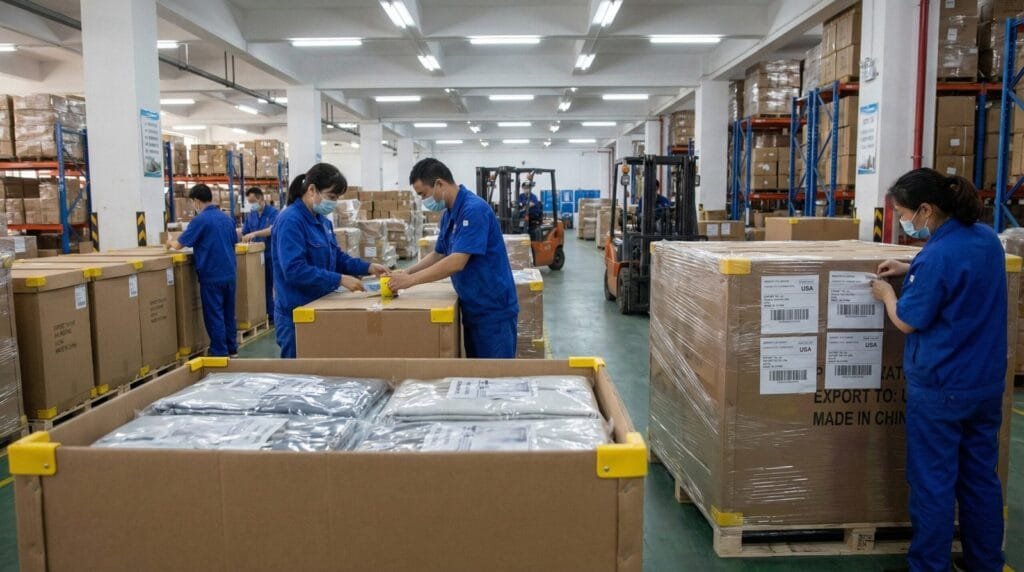
Lead times: samples in 3–5 working days excluding shipping. Bulk production 30+ days from deposit confirmation. Sheer panels — both net and voile — pack compactly because of their light weight, so they support high container density when consolidated with other curtain categories in a 40HQ load.
For OEM/ODM and bulk wholesale programs covering both sheer categories alongside blackout, linen, and project curtain ranges, see our OEM, ODM and wholesale curtain manufacturing service. For Shopify and independent-store sellers running per-order fulfillment, our curtain dropshipping program covers selected sheer SKUs with 7–10 day delivery to US, Canada, UK, EU, and Australia. Payment terms and pricing are confirmed during inquiry based on order volume, destination, and product specification.
Nets and voiles both belong to the wider sheer family – see our sheer curtains collection for fabrics, headings and wholesale options.
FAQ: Net Curtain Materials, Quality, and Demand
What are net curtains made of?
Modern net curtains are almost always knitted from 100% polyester yarn on Raschel warp-knitting machines at 40–80 GSM — the knit structure is what creates the open mesh. Older nets were cotton lace, but cotton has largely disappeared from wholesale programs because it yellows, shrinks, and costs more to launder. The main alternative material, voile, is flat-woven polyester (sometimes a linen-look blend) at 50–120 GSM with a closed, smooth surface.
How do you tell if a net curtain is good quality?
Five checks we run at the factory: mesh uniformity — hold the panel against light and look for dropped stitches or uneven holes; GSM against spec — a net quoted at 60 GSM but delivered lighter will feel flimsy and hang poorly; heat-set hems that lie flat without waving; whiteness — quality white nets use UV-stabilized yarn so they don’t yellow after a season of sun; and colorfastness for dyed runs. At Dairui, custom and DTC orders get 100% piece inspection, volume runs are AQL-sampled, and per-batch SGS/Intertek reports are available.
Do people still use net curtains in 2026?
Yes — but demand is regional. Net curtains remain a staple in the UK, Ireland, and much of Eastern Europe, where street-facing windows make daytime privacy the priority. In North America, Australia, and most of Asia, the market has shifted to voile and wider sheer panels for a softer, more modern look. For wholesale buyers this is a range-planning question rather than a fashion verdict: keep net in UK-focused assortments, and lead with voile and sheers everywhere else.
Bottom Line for Sourcing Teams
If your buyer base sits in the UK, Ireland, or Eastern Europe and the spec calls for permanent daytime privacy with a slightly textured plain panel — order net curtains. If you’re building a print-led or embroidery-led retail collection, or selling into North America, Australia, or most of Asia — voile is the right substrate. Most wholesale buyers we work with end up running both: net curtains for the privacy-first SKUs, voile for the decorative SKUs.
Send a specification — fabric type, GSM, panel width, drop, heading style, target market — to our sourcing desk and we’ll quote within one working day.
Last reviewed: 2026-05 · DAIRUI Sourcing Desk
Related reading: privacy window curtains.