Bottom line: daylight privacy and fullness should be approved together on the exact sheer fabric, color and construction in a representative finished arrangement. Fullness changes how much fabric overlaps within the view, but it does not turn an open sheer into a guaranteed privacy barrier. Buyers should therefore record both the fabric identity and the conditions under which the visual judgment was made.
Why privacy and fullness cannot be approved separately
A flat swatch can show yarn character, color and openness, but it cannot reproduce the repeated folds of a finished curtain. Conversely, a full-looking sample can appear more private simply because more fabric sits within the viewing angle. If the fabric, color, finished width or viewing conditions change, the result may change as well.
For B2B approval, the useful question is not whether a sheer is “private” in the abstract. It is whether the selected sheer and planned fullness give the required balance of daylight, outward view and visual screening for the intended room and observation conditions.
Build one controlled evaluation set
Keep the variables below together in the approval record. This makes the decision reproducible for the brand, project team, sample room and production partner.
| Approval variable | What to record | Why it matters |
|---|---|---|
| Exact fabric | Approved article, weave or construction reference | Different yarns and structures can transmit and scatter light differently. |
| Exact color | Approved color reference | Color can change perceived openness and contrast. |
| Finished arrangement | Panel width, covered width, heading and intended fullness | Fold density and overlap influence the visible field. |
| Viewing direction | Inside looking out and, where relevant, outside looking in | The two views are not equivalent. |
| Light condition | Representative daytime condition and the location of the brighter side | Privacy perception changes when the light balance reverses. |
| Observation point | Agreed distance, angle and room position | A close oblique view may reveal more than a front view from farther away. |
Use samples in the right sequence
Start with the exact fabric and color
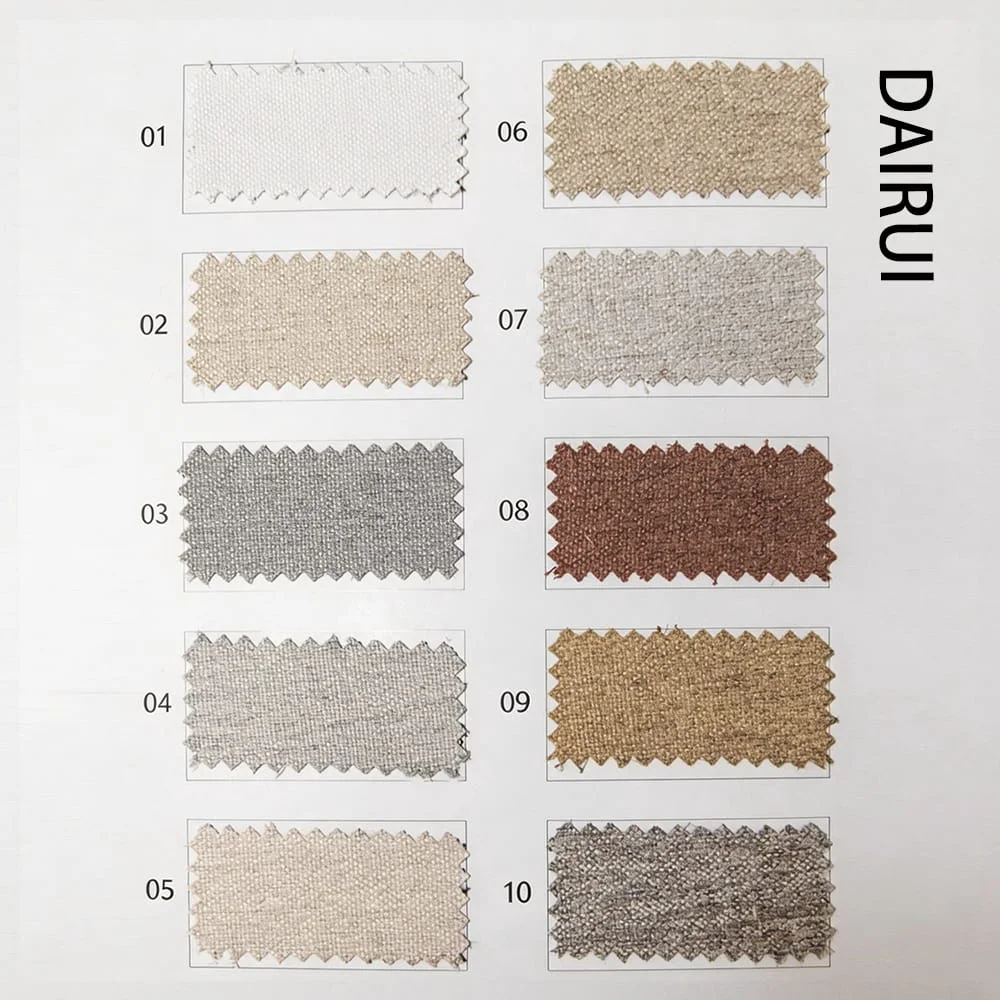
Use the swatch or fabric sample to confirm the material identity, color direction, handfeel and construction. This stage can screen unsuitable options, but it should not be treated as the final privacy decision because it does not show the planned folds across a window area.
Review a representative finished arrangement
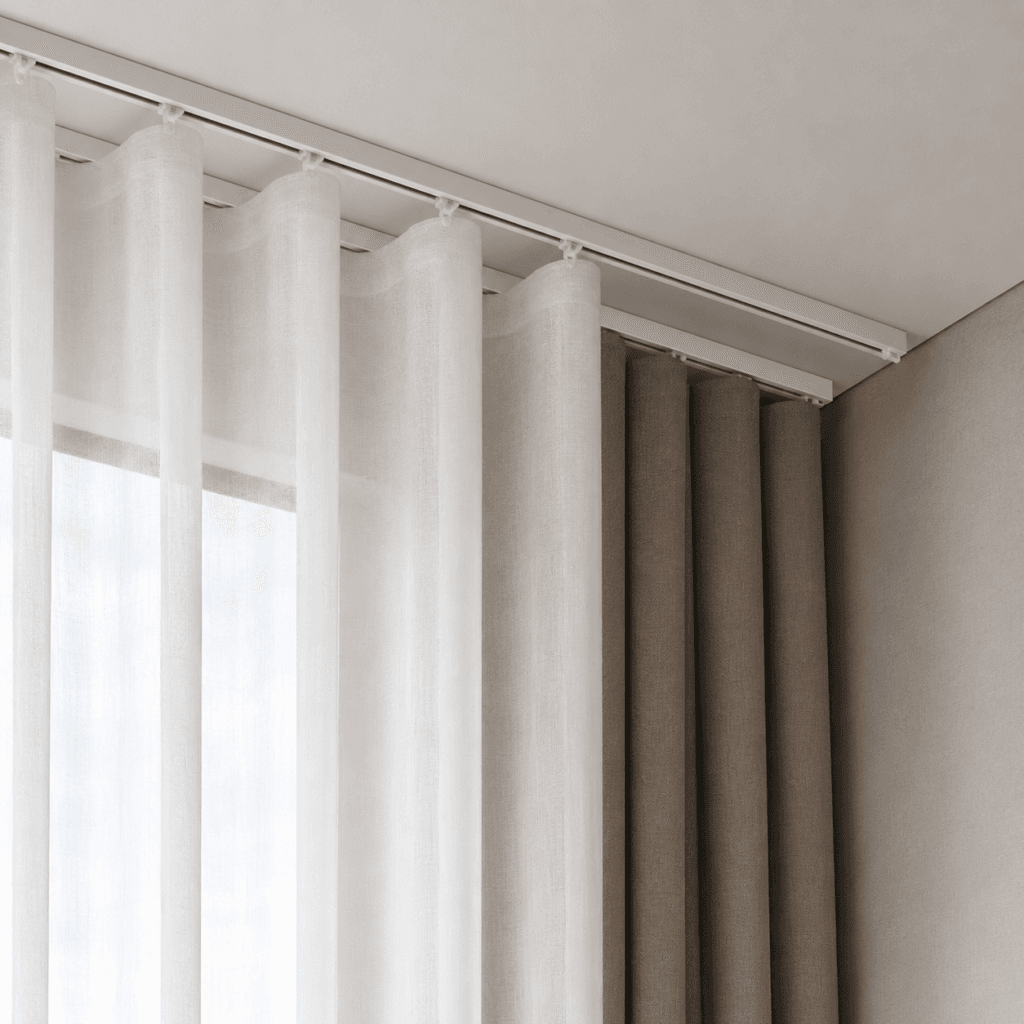
A finished sample should reproduce the intended heading and enough width to show repeated folds. Record the sample width and the width it covers rather than relying only on a verbal fullness label. If the project later changes the panel width, heading or covered opening, the previous visual conclusion may no longer apply without review.
Observe both the fabric and the gaps created by the system
Look through the fabric face, through fold valleys and at the edges of the arrangement. Privacy can be affected by the textile, the distribution of fullness and any gaps created by the heading, track or installation. A fabric judgment should not be used to promise whole-window privacy when the completed system has not been evaluated.
A practical buyer approval checklist
- Confirm the exact sheer fabric, color and construction reference.
- State the intended heading and the relationship between finished panel width and covered width.
- Use a sample large enough to show repeated folds rather than only a small flat swatch.
- Review from the required viewing directions under an agreed representative daylight condition.
- Record where the brighter side was during the review.
- Check outward visibility and inward visual screening as separate observations.
- Note whether the conclusion applies only to daytime conditions or whether another condition still requires evaluation.
- Keep images and written observations tied to the controlled sample reference.
How to write a useful approval note
Avoid a stand-alone statement such as “privacy approved.” A more useful note identifies the controlled variables: the exact fabric and color, sample arrangement, heading, finished width and covered width, viewing direction, daylight condition and accepted visual result. This does not create a universal performance claim; it records what the buyer actually observed and approved.
If a room needs both daytime diffusion and stronger light control or nighttime screening, treat the sheer as one layer of the system. The separate layers and their installation should be specified together rather than expecting the sheer alone to perform every function.
Where this decision fits in sourcing
Use the sheer curtain category to review relevant product directions, then use sample support to define the approval form and controlled reference. If the sheer includes embroidery, cutwork, printing, flocking or foil, the decorative sheer fabric approval checklist covers the additional artwork and process checks; it does not replace the daylight-and-fullness review described here.
FAQ
Does more fullness always create more privacy?
No. Additional fabric can increase overlap and change the visual field, but the result still depends on the exact fabric, color, construction, heading and viewing conditions. Approve the combined arrangement rather than treating fullness as a privacy guarantee.
Can a small swatch prove daylight privacy?
A swatch can help compare openness and construction, but it cannot reproduce repeated folds across a finished opening. Use a representative finished arrangement for the final visual decision.
Should daytime approval be used as a nighttime privacy claim?
No. A daytime observation applies to the recorded light balance and viewing conditions. If nighttime privacy is part of the requirement, evaluate that condition separately or specify an additional curtain layer.
Next step: send the exact sheer reference, color, heading, proposed finished width and covered width, plus the intended viewing conditions, so the approval sample can be defined before bulk release.