Bottom line: curtain fabric quantity should be calculated from the usable fabric width and the approved finished construction, not from window width alone. Finished panel width, fullness, fabric orientation, seams, vertical or horizontal repeat, matching direction, hems and pattern placement must be resolved before the booking quantity can be trusted.
A B2B quantity sheet should expose every input. That lets a buyer compare calculations, identify assumptions and update the result when a fabric or panel specification changes.
Keep five widths separate
Many errors begin when one number called “width” is used for several different things. A quantity worksheet should distinguish:
- Opening width: the architectural window or wall dimension.
- Track or coverage width: the span the curtains are intended to cover.
- Finished flat curtain width: the combined width of the made panels before they are dressed into folds.
- Nominal fabric width: the width stated for the fabric item.
- Usable fabric width: the width available for cutting after excluding selvedge or other unusable areas.
The nominal and usable fabric widths may not be identical. Use the item-specific confirmed usable width in the calculation.
Translate coverage into finished flat width
The track or coverage width is converted into finished flat curtain width through the specified fullness and any approved overlap or return logic. The buyer should state whether the fullness factor applies to the track width, to each panel, or to another defined baseline.
A transparent expression is:
Required finished flat width = defined coverage basis × approved fullness, adjusted for the agreed overlap and return method.
This is a planning relationship, not a universal cutting formula. Heading style and workroom method can change how fullness, joining and edge allowances are handled.
Choose the fabric orientation before counting drops
Some wide-width fabrics may be used with the fabric width running across the curtain height, allowing a railroaded construction when the design, finish and pattern permit it. Other fabrics are cut in vertical drops and joined to achieve the finished flat width.
Orientation affects seam direction, nap or pattern direction, usable width, drop length and repeat matching. It must be an approved construction decision, not a last-minute quantity shortcut.
Calculate seam count from usable width and panel layout
For a vertical-drop construction, determine how much usable cut width one drop contributes after the workroom’s seam and edge method. Divide the required finished flat width by that contribution and round up to a whole number of drops. Then allocate the drops across the approved panel count.
Rounding is important: a fraction of a drop cannot usually be booked as if it were a complete, usable joined width. The layout should also avoid unbalanced narrow pieces or unintended seam positions where appearance matters.
Add cut length, then account for vertical repeat
Each drop needs enough length for the finished drop plus heading, hem and the allowances used by the approved construction. If the fabric has a vertical pattern repeat and motifs must align, each cut length may need to be rounded to a repeat-compatible length.
A practical worksheet separates:
- Finished curtain drop.
- Heading and hem allowances.
- Other construction allowances.
- Repeat-matching adjustment.
- Number of drops.
Horizontal repeat can also influence panel layout and seam placement. A centered motif or matched pair may require a starting position that uses more fabric than a simple area calculation suggests.
Use an auditable quantity matrix
| Input | Buyer should provide or approve | Why it changes quantity |
|---|---|---|
| Coverage and panel plan | Track width, returns, overlaps, panel count and draw direction | Defines the width to be made and how it is divided |
| Fullness | Factor and the baseline to which it applies | Converts coverage into flat curtain width |
| Fabric width | Item-specific usable width | Determines possible orientation and the number of drops |
| Construction | Heading, seams, hems, sides and finished drop | Determines cut width and cut length allowances |
| Pattern | Vertical and horizontal repeat, direction and placement rule | Can require repeat rounding and matched cutting |
| Risk allowance | Order-specific agreed basis, if any | Should be visible rather than hidden inside another input |
A practical fabric quantity calculation sequence
For each curtain type, calculate in this sequence: confirm the coverage basis; apply the approved fullness; establish the panel split; select fabric orientation; calculate whole drops from usable width and seam method; calculate cut length from finished drop and construction allowances; adjust for pattern matching; multiply whole drops by adjusted cut length; then apply only the order-specific allowance that the buyer has approved.
Do not copy a percentage or consumption factor from another program. Different widths, headings, repeats and panel layouts can make apparently similar curtains consume different quantities.
Quantity approval checklist
- All width terms are labeled and use the same unit.
- Usable fabric width is confirmed for the exact item.
- Fullness and its calculation basis are explicit.
- Fabric orientation and panel split are approved.
- Seam contribution and edge treatment are included.
- Finished drop, heading and hem allowances are recorded.
- Vertical and horizontal repeat rules are confirmed.
- Rounding and any order-specific allowance are shown separately.
- The final quantity sheet has a version, owner and approval date.
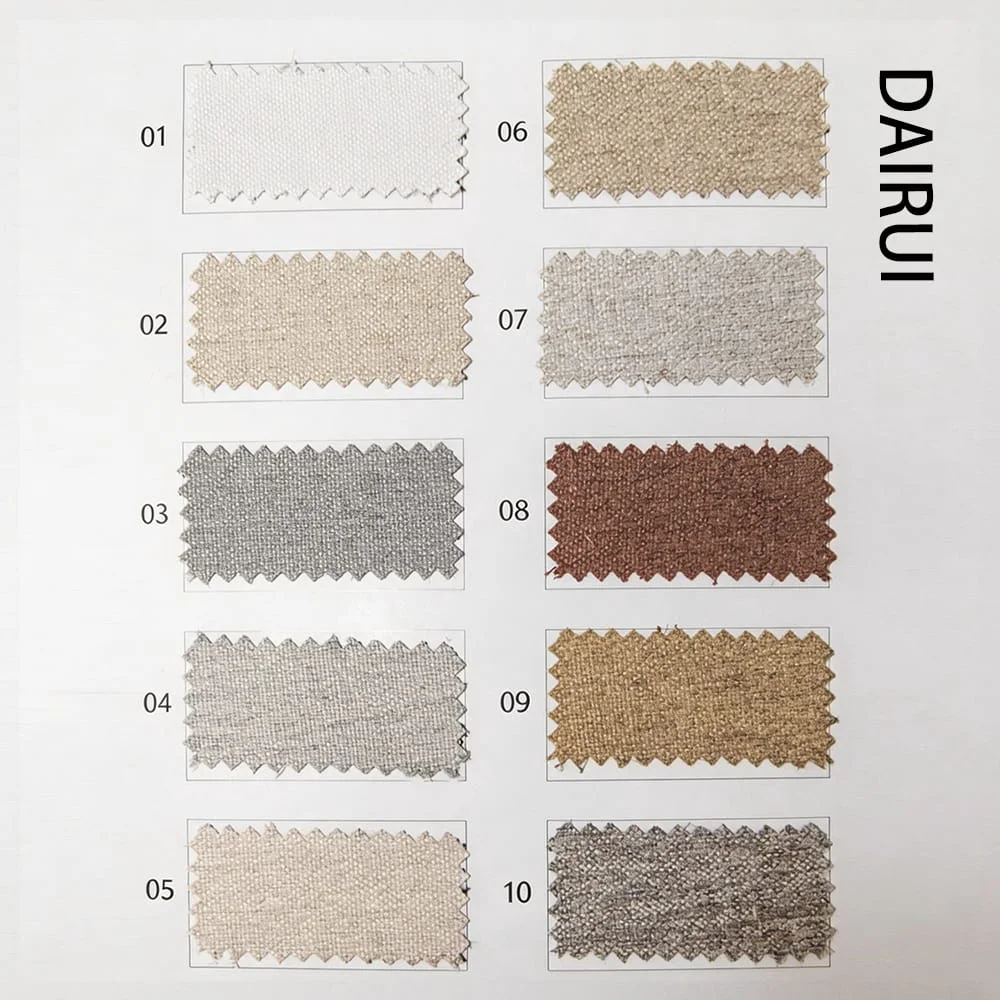
Use Dairui’s curtain fabric wholesale page to review fabric categories before requesting item-specific width, finish and sampling information for a calculation.
Frequently asked questions
Can buyers calculate fabric from window area?
Area alone is not reliable. It does not capture fullness, whole-drop rounding, orientation, seams, headings, hems, pattern repeat or panel layout.
Is nominal fabric width enough?
No. The calculation should use confirmed usable width for the exact item and construction. Selvedges or other unusable portions can reduce the cutting width.
Does a pattern repeat always increase quantity?
Not in the same way for every design. The effect depends on repeat dimensions, orientation, motif-placement rule, number of drops and whether adjacent panels must match. Record the rule before calculating.