Bottom line: The 7 curtain trends moving 12,000+ pieces per 40HQ container in 2026: linen-look textiles, layered sheer-plus-blackout sets, warm neutrals replacing cool grays, and subtle botanical patterns. 100% linen runs $8–14/panel FOB Ningbo; polyester blends carry volume at 90–140 gsm sheers, 180–240 gsm mid-weight, 280–320 gsm hospitality. Layered dual-track sets cost ~1.6× a single panel, not 2×. Pantone lab dips: $50–80 each, +3–5 days lead time — batch all colors in one round. See department-store curtain trends for retail buyers.
The curtain trends that matter in 2026 are not the ones generating Pinterest screenshots. They are the ones changing what wholesale buyers, DTC brands, and project sourcing teams put into production. Bold maximalism is fading. Linen-look textures, layered sheers, and warm neutrals are now the categories that move 12,000+ pieces through a 40HQ container — not just the ones photographing well on a designer’s portfolio.
This guide breaks down the seven curtain trends shaping 2026 from a manufacturing perspective: what the fabric specs actually look like, what GSM ranges retailers are ordering, and which trends translate into repeat orders versus one-season experiments.
1. Natural Fabrics and the Linen-Look Surge
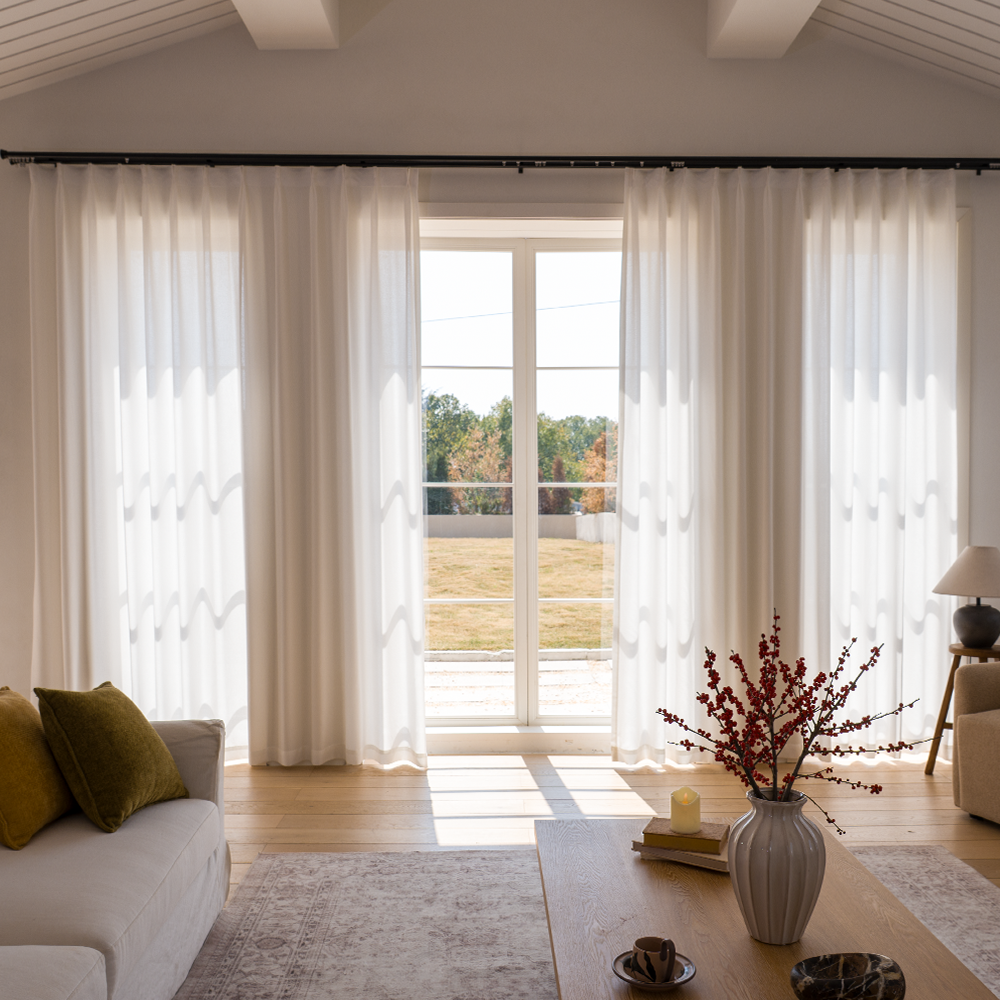
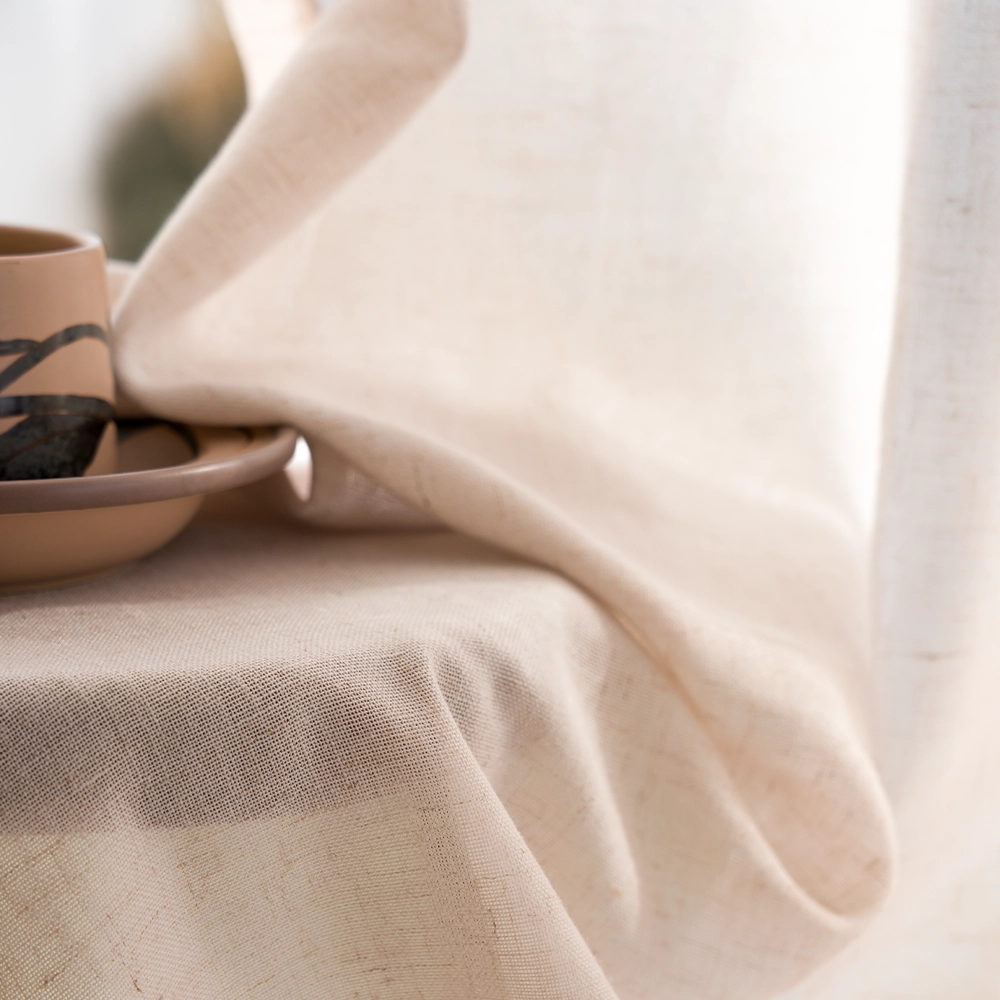
The strongest fabric trend for 2026 is the continued rise of linen and linen-look textiles. Real 100% linen still carries a premium — wholesale pricing typically lands in the $8–14 per panel range FOB Ningbo for standard sizes — so most retail-volume orders run on polyester-linen blends or pure polyester fabrics engineered to mimic linen’s slubby texture.
For DTC brands building 2026 collections, the practical question isn’t “linen or not.” It’s which weight class to commit to. Lightweight linen-look sheers sit in the 90–140 gsm range and read airy on camera. Mid-weight blends at 180–240 gsm hold a structured pleat without ironing — important for grommet and back tab styles that ship folded. Heavier 280–320 gsm linen-look fabrics are starting to replace traditional cotton drapery in hospitality lines because they survive industrial laundering cycles better.
2. The Layered Look Becomes the Default
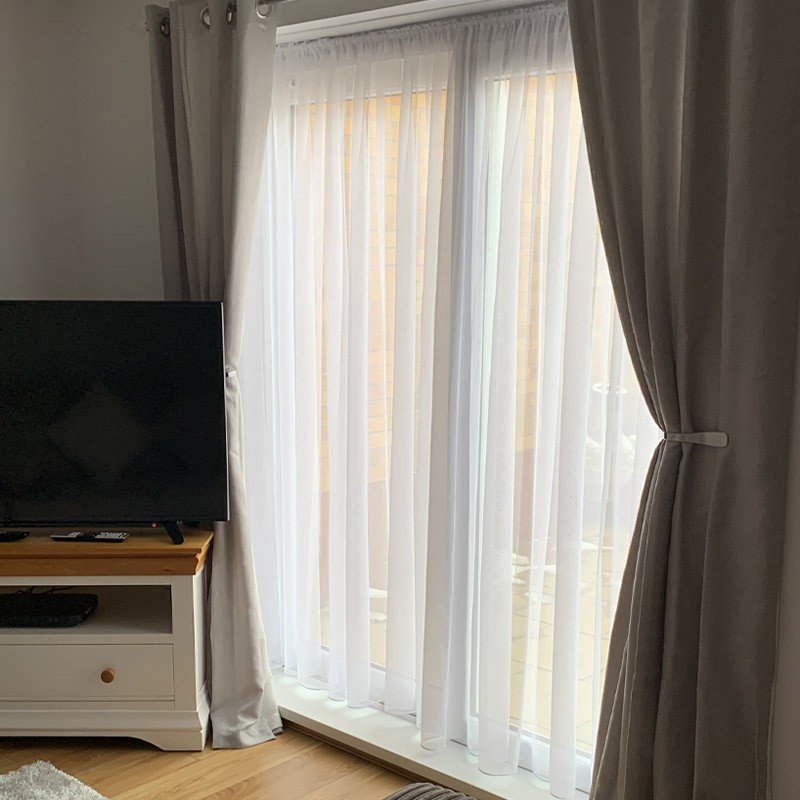
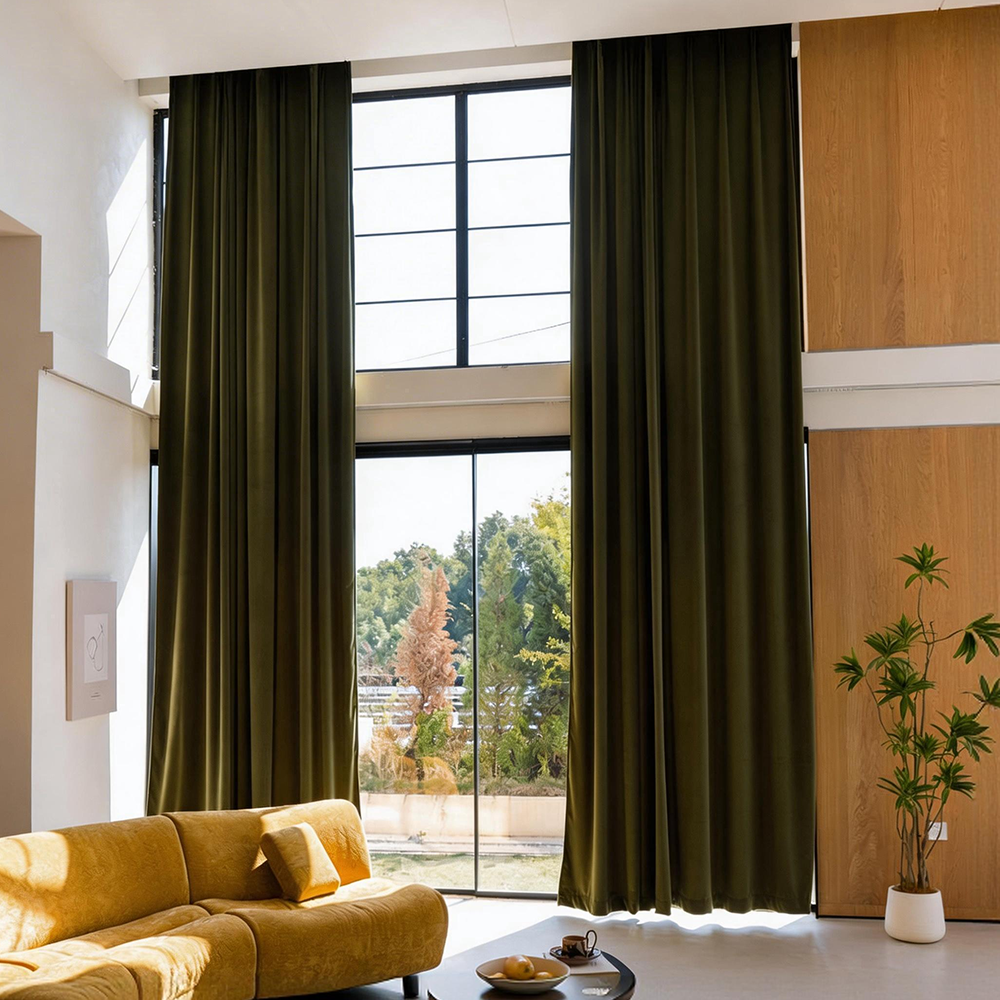
Layered window treatments — sheer panels under heavier blackout or decorative drapes — were a designer move in 2024 and a niche option in 2025. In 2026 they are the default specification for mid-tier and premium DTC bedroom lines.
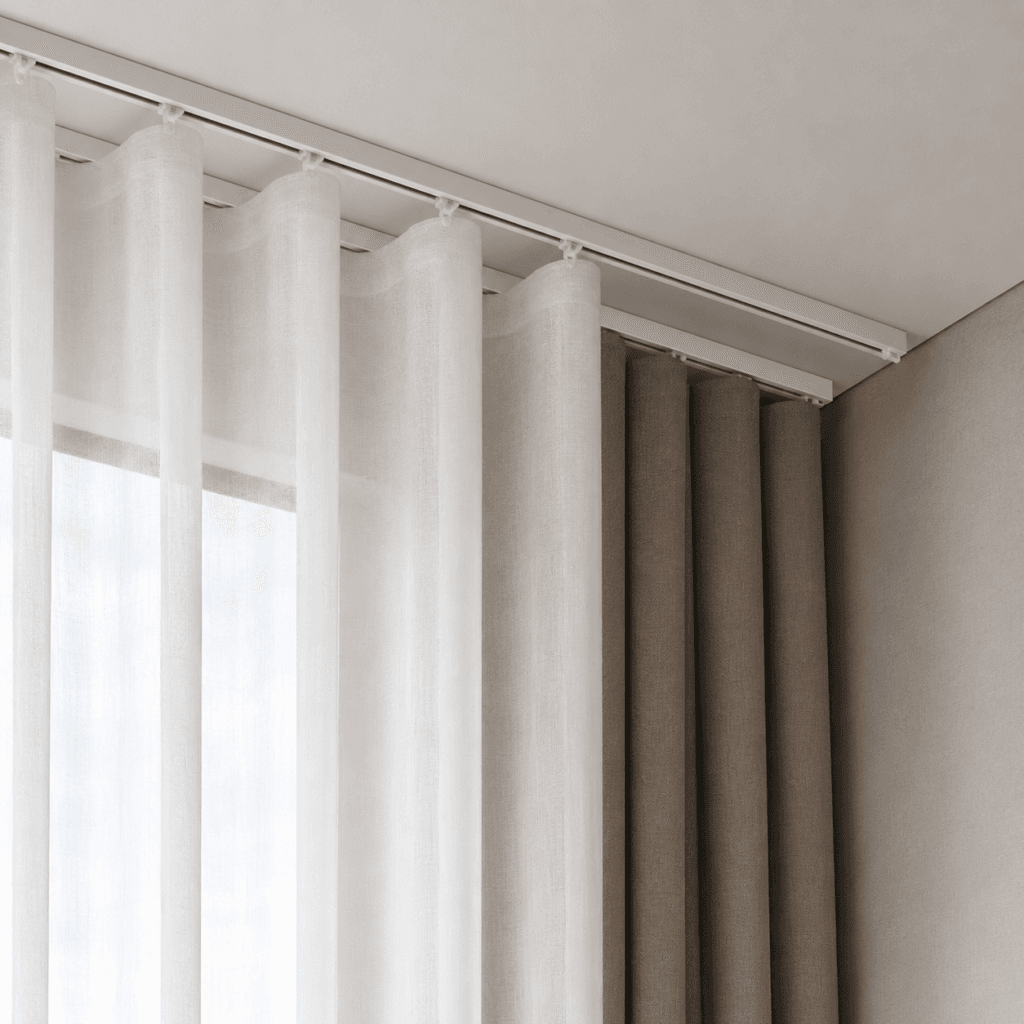
What changed: hardware. Dual-track curtain systems are no longer specialty items. They show up in standard product configurators on Shopify and Amazon listings. For brands sourcing layered sets, this means a single SKU now bundles two panels — typically a 90–120 gsm sheer plus a 240–280 gsm blackout — and the per-set production cost is roughly 1.6x a single panel rather than 2x because cutting and packaging combine into one run.
The hospitality market moved here first. A 600-room hotel project we shipped in Q3 2025 ran every guestroom on a sheer-plus-blackout dual track. Cost per window was higher upfront, but the room flexibility — and the photograph it generated for the hotel’s booking site — paid back inside a year.
3. Warm Neutrals Replace Cool Grays
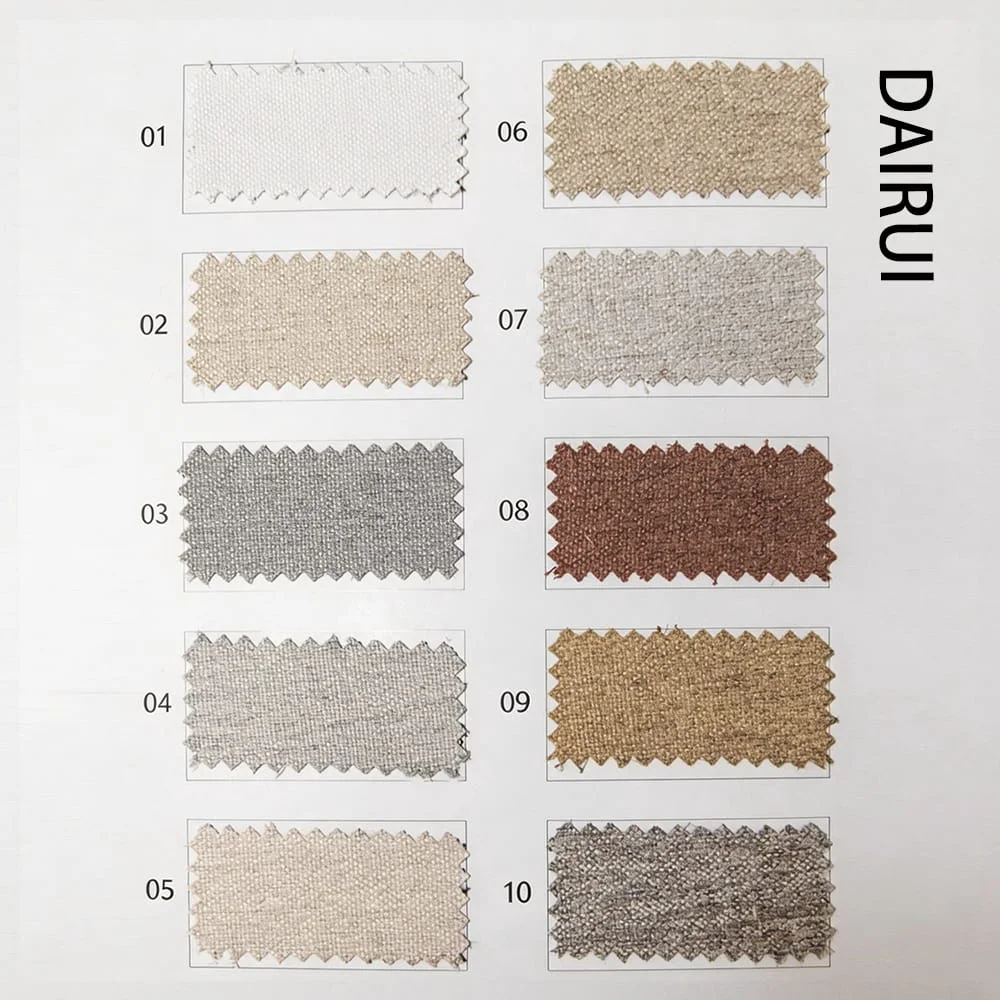
Cool gray neutrals dominated 2018–2023. They are now visibly aging on retail floors. The 2026 palette runs warmer: ivory, cream, oat, sand, putty, mushroom, and the warm taupes that read brown in some light and gray in others. Pantone’s 2026 Color of the Year, Cloud Dancer — a soft chalky off-white — sits inside this exact range.
For sourcing, the operational impact is real. Pantone color matching for a single neutral lab dip runs $50–80 and adds 3–5 working days to sample lead time. Brands launching a 2026 collection of 4–6 SKUs should batch all color approvals in one round to avoid sequential delays.
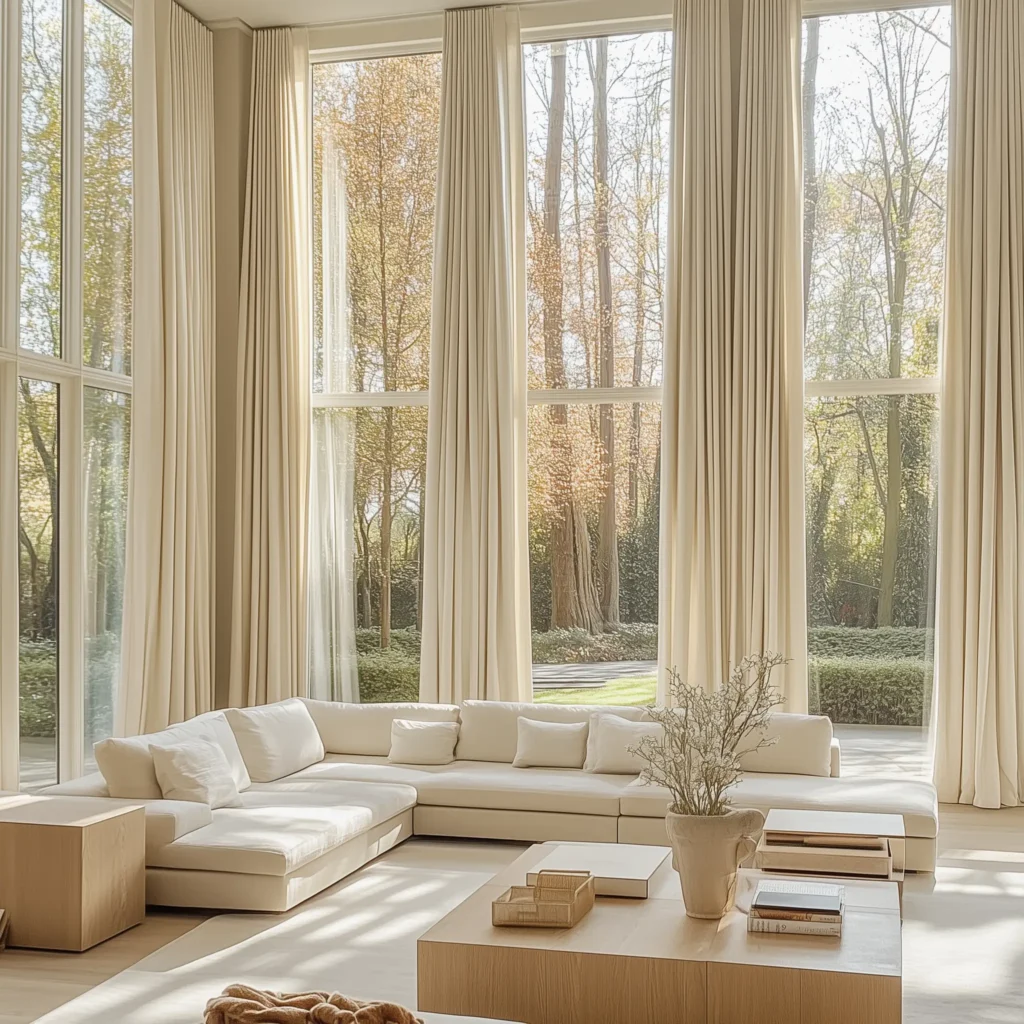
Terra tones — warm clay, terracotta, soft olive — are emerging as the 2026 accent palette. They sell well as a single SKU per collection rather than a full color story. Treat them as a 10–15% inventory bet, not a 30% one.
4. Subtle Patterns: Botanicals and Woven Texture
Bold prints lost their retail momentum in 2025. The 2026 pattern story is restrained: soft botanical prints, woven jacquards with tone-on-tone motifs, and subtle stripes in 2–3 cm widths. The visual rule is that the pattern should be visible from across a room but not legible — texture first, motif second.
For manufacturers, this trend favors woven solutions over printed ones. Printed patterns require digital print setup costs and minimum run lengths, typically 300–500 meters per pattern. Woven jacquards have higher per-meter cost but no setup fees and can run from 200 meters. For a DTC brand testing two pattern variants in their first 2026 drop, jacquard is usually the lower-risk route.
5. Decorative Trims and Contrast Borders Return
After a decade of clean-edge minimalism, decorative finishes are quietly returning to drapery edges. The 2026 versions are subtle: a 2–3 cm contrast band along the leading edge, a thin woven braid at the hem, or a tonal pleated header trim. None of these are statement details. All of them shift a curtain from “basic” to “considered” in product photography without changing the base fabric.
From a production angle, contrast trims add roughly $0.60–1.20 per panel in materials and labor depending on trim type and panel length. They also add 2–3 days to lead time because trim sourcing usually requires a separate fabric run. For Private Label brands looking to differentiate at modest cost, this is one of the highest-ROI design upgrades available.
6. Cafe Curtains and Partial-Window Styles
Cafe curtains — short panels that cover only the lower half of a window — kept appearing in 2025 design press but stayed niche in wholesale orders. In 2026 they are crossing into mainstream DTC offerings, particularly for kitchen and bathroom categories where full-length drapery is impractical.
The sourcing implication: smaller cut sizes (typically 24–36 inches in length versus 84–120 inches for standard panels), which means more curtains per square meter of fabric and lower per-piece freight cost. A 40HQ container that holds ~16,000 standard grommet panels at 132×213 cm can carry roughly 28,000–32,000 cafe-length panels at 132×91 cm. For sellers competing on Amazon shipping economics, this matters.
7. The Manufacturing Reality Behind 2026 Trends
Trend forecasts read clean on a moodboard. They run differently on a factory floor. Three operational realities shape what actually ships in 2026: The numbers behind these trends — market size, growth, demand — are collected in our curtain industry statistics 2026 roundup.
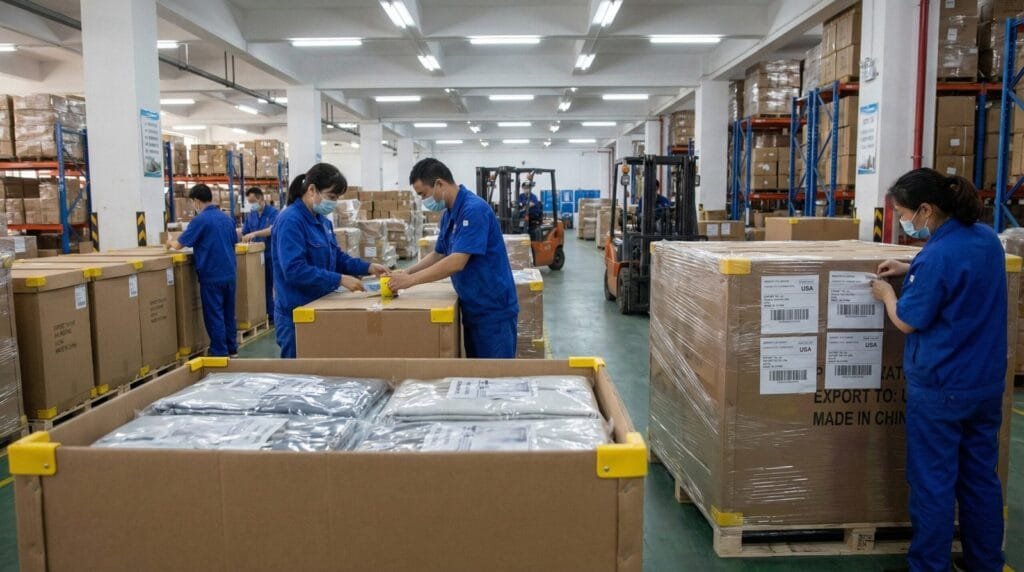
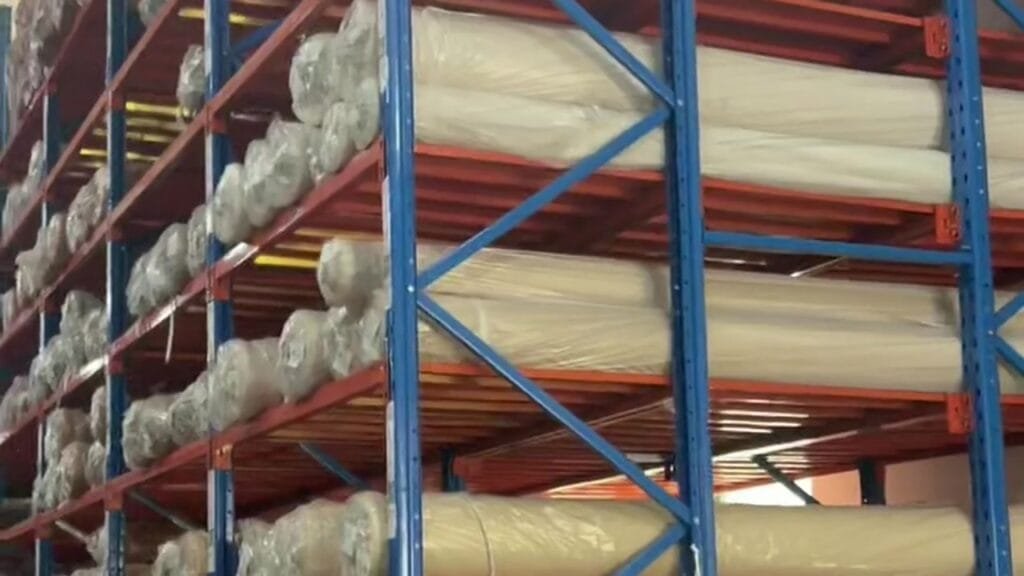
- Fabric inventory drives speed, not finished SKUs. Most curtain factories — including ours — stock fabric rolls in popular weights and colors, not finished panels in every heading style and size. An order for 200 cream-colored back tab panels at 52″ × 96″ pulls from the same fabric inventory as an order for 800 ivory grommet panels at 52″ × 108″. The fabric is held; the finished curtain is cut and sewn after the order lands.
- Heading style is where 2026 trends collide with production cost. Pinch pleat panels use 1.5x–2.5x fabric multipliers and require heat-setting, which slows throughput by roughly 25% versus grommet. A 40HQ container that ships 16,000 grommet panels ships only ~12,000 pinch pleat panels. Trend-forward brands often default to pinch pleat in marketing imagery but order grommet in volume because the unit economics work.
- Sample lead time gates the calendar. Bulk lead time is 30+ days from deposit confirmation. Sample lead time runs 3–5 working days excluding shipping. A 2026 collection launched in September should have all fabric and color approvals locked by early July. Brands that try to finalize designs in August routinely miss Q4 retail windows.
Retailers turning these trends into a product line often start with a private label curtain program under their own brand.
2026 Curtain Trends vs Production Specs at a Glance
| Trend | Typical GSM | Best Heading Style | Production Note |
|---|---|---|---|
| Linen-look fabrics | 180–240 | Back tab, S-fold | Polyester-linen blends carry the texture at lower cost than pure linen |
| Layered sheer + blackout | 90–120 + 240–280 | Dual track, grommet | Bundle as one SKU; ~1.6x cost of single panel |
| Warm neutrals | Any | Any | Batch Pantone matching to save lead time |
| Subtle patterns | 180–240 | Pinch pleat, back tab | Woven jacquard beats digital print for low-volume testing |
| Contrast trims | Base fabric weight | Any | Adds $0.60–1.20 per panel and 2–3 days lead time |
| Cafe curtains | 120–180 | Rod pocket, tab top | Higher container yield; lower per-unit freight |
Frequently Asked Questions
Which 2026 curtain trend has the strongest wholesale demand?
Linen-look fabrics in warm neutrals lead reorder volume across DTC and hospitality channels. Sheer-plus-blackout layered sets are the fastest-growing category but still smaller in absolute units. For 2026 collection planning, a base of 60–70% neutral linen-look panels with 20–30% layered sets and 10% accent colors is a balanced mix.
What is Pantone’s Color of the Year for 2026 and how does it apply to curtains?
Pantone named Cloud Dancer — a soft chalky off-white — as the 2026 Color of the Year. It sits inside the warmer neutral palette already trending in window treatments and pairs well with linen-look textures. For a curtain collection, treat Cloud Dancer as one anchor neutral rather than a single SKU, since soft whites read differently across fabric weights and weaves.
Are bold colors completely out for 2026 curtains?
Not entirely, but their inventory share has shrunk. Terra tones — warm clay, terracotta, soft olive — function as accent SKUs that round out a collection rather than carrying it. Treat bold colors as 10–15% of total inventory, not 30%, and keep MOQs lean on these styles to manage seasonal risk.
What GSM range works best for 2026 linen-look curtains?
For light-filtering panels, 90–140 gsm. For structured drapery that holds pleats without ironing, 180–240 gsm. For hospitality and high-traffic retail, 280–320 gsm — these survive industrial laundering and still carry the linen texture visually. Match GSM to end use, not to trend descriptions.
How early should I lock in a 2026 curtain collection design?
For a Q4 2026 retail launch, all fabric weights, colors, and heading styles should be approved by early July 2026. This accounts for 3–5 working day sample lead times across multiple iterations and 30+ days bulk lead time. Brands that compress this timeline often arrive late to peak holiday windows or compromise on color accuracy.
Do layered curtain sets cost twice as much as single panels?
No. A sheer-plus-blackout set bundled as one SKU runs roughly 1.6x the cost of a single panel, not 2x, because cutting, sewing, and packaging combine into one production run. The freight per set is slightly lower per panel for the same reason. For brands pricing layered sets at retail, this is meaningful margin headroom.
What This Means for Your 2026 Sourcing
The defensible 2026 curtain collection is built on linen-look mid-weight panels in warm neutrals, with a layered sheer-and-blackout option as the premium tier and 10–15% accent SKUs in terra tones or subtle patterns. The decorative details — trims, woven jacquards, contrast borders — add character without forcing a fabric-level commitment.
At Dairui Textile, we run 500,000 pieces annually out of a 10,000 m² facility in Shaoxing, with fabric inventory covering linen blends, blackout polyester, and sheer voile across the GSM ranges above. Our Private Label service handles full custom collections for DTC brands, our Dropshipping line covers per-order fulfillment in 5 countries, and our OEM/ODM and wholesale program serves project and bulk buyers. For a deeper look at how heading styles affect production cost, see our complete guide to curtain heading styles.
Contact us to discuss your 2026 collection, request fabric samples, or get quotes on layered set production.
Last reviewed: 2026-05 · DAIRUI Sourcing Desk
Related reading: kitchen curtain ideas and wedding curtain and backdrop ideas.