Bottom line: a blackout approval sample should prove the exact material identity and the buyer’s decision criteria: face, backing, handfeel, GSM, usable width, construction and light-control target. It should also state what it does not prove—such as installed edge leakage or the consistency of an unidentified future lot.
The goal is not to collect a visually attractive swatch. The goal is to create a reference that purchasing, product development, production and inspection can all interpret in the same way.
1. Prove the face
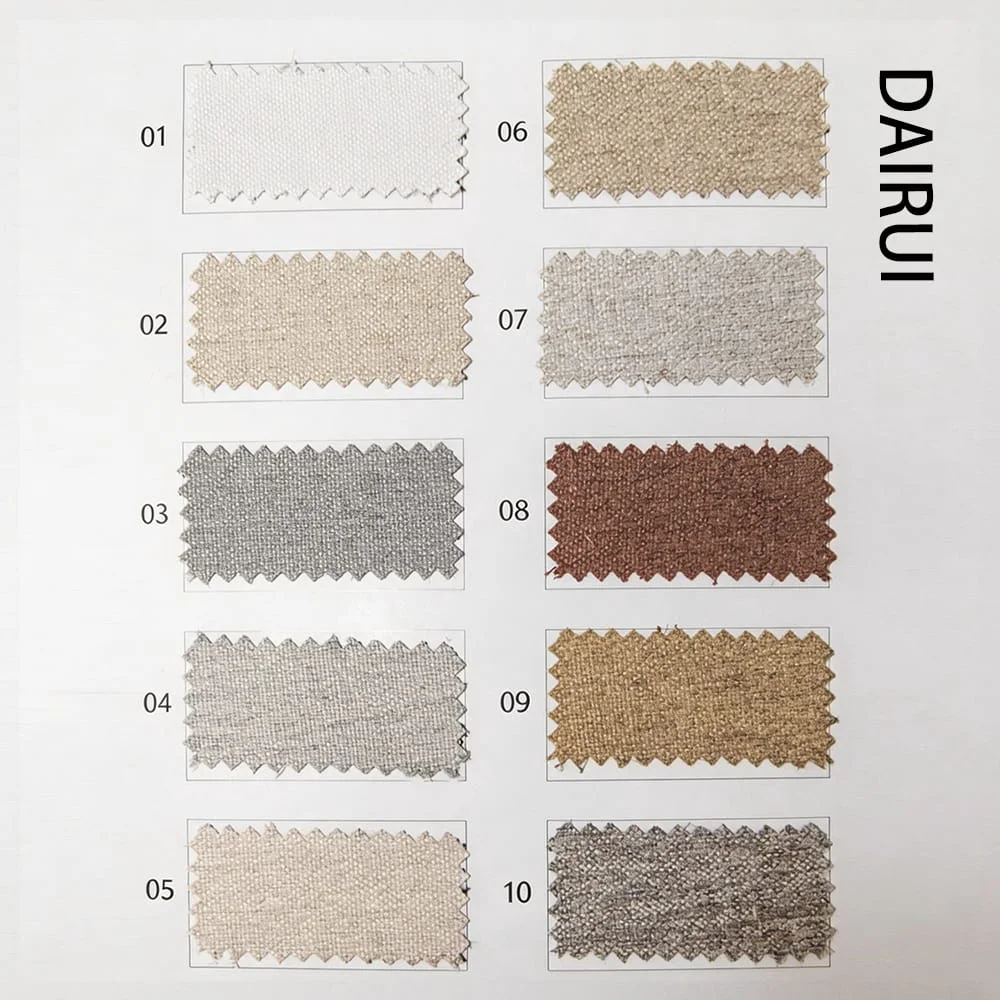
Approve the face in the intended color and orientation. Record the visual features that matter to the program: color, texture, sheen, pattern direction and acceptable variation. If two colorways are being purchased, do not assume that approving one automatically proves the same light-control result for the other.
The approval record should identify the sample code and color reference in writing. A loose image in a chat thread is not enough when the physical sample and the order specification can become separated.
2. Prove the backing
The reverse side is part of the product specification. State whether it is a woven reverse, coating, film/composite layer or separate lining. Approve its color, surface appearance and whether it will be visible from outside the building. Where the backing is functional, the approval must refer to the exact backed construction rather than only to the decorative face.
3. Prove handfeel and drape in context
Handfeel is not a single quality score. A buyer may prefer a softer textile hand for one retail line and a more structured body for another project. Record the desired outcome and compare candidate samples side by side. If the final product adds lining or another layer, a face-fabric swatch alone cannot demonstrate the finished drape.
A larger sample or a finished panel is useful when the decision depends on fold formation, body and movement. Small swatches are efficient for shortlisting but can hide how the fabric behaves at finished scale.
4. Verify GSM without treating it as a performance guarantee
GSM helps identify the material and compare candidates, but it does not independently prove blackout performance, quality or suitability. Two constructions with a similar weight can behave differently because their yarn, weave and backing differ. Record the GSM of the exact approved construction and use it with—never instead of—the other approval points.
5. Confirm width and usable-width assumptions
Width affects panel planning, seams, pattern placement and yield. The buyer should record the specified width for the chosen item and clarify whether production planning uses nominal or usable width. Do not transfer a width from a catalog family to every item in the range; confirm it for the selected construction.
If the fabric has a directional face, pattern or edge condition, the cutting orientation must also be recorded. A width number without orientation may not be enough for finished-panel planning.
6. Name the construction precisely
“Blackout fabric” is too broad for an approval record. Identify whether the route is woven black yarn, coating, film/composite, lining or a stated combination. Include the face/back relationship and the intended finished-panel construction. This is especially important when a decorative face is paired with a separate lining.
7. Define the light-control target and evaluation
The approval should state the buyer’s required outcome and how the exact sample was reviewed. Avoid replacing evidence with a fixed marketing percentage. If a formal result is required, the sample, construction, color, test scope and applicable document must match. If the check is a visual comparison, state the setup so future comparisons use the same conditions.
Also separate material transmission from installation leakage. A fabric sample can support a material decision; it cannot prove center overlap, side returns, track position or top and bottom coverage.
A compact blackout sample approval record
| Field | What to record | Common approval mistake |
|---|---|---|
| Sample identity | Item/code, color, revision, date and approver | Approving only a photo or an unnamed cutting |
| Face | Color, texture, sheen, pattern and direction | Ignoring orientation or colorway differences |
| Backing | Type, color, surface and visibility requirement | Reviewing only the decorative face |
| Construction | Woven, coated, film/composite, lined or combination | Using “blackout” as the complete spec |
| Handfeel/drape | Accepted tactile and hanging reference | Expecting a small swatch to prove full-panel behavior |
| GSM and width | Values tied to the exact approved item | Generalizing a family or catalog figure |
| Light control | Target, sample setup and result/reference | Confusing fabric performance with room darkness |
| Next-stage proof | Finished sample or PPS requirements | Releasing construction details from a swatch alone |
When the swatch is not enough
Move to a finished sample when heading, lining attachment, seam placement, side treatment, dimensions or overall drape affects the decision. Move to a PPS when the approved material and construction need to become the production-ready reference. Each stage should carry forward the accepted sample identity and any unresolved comments.
Questions worth resolving before sign-off
Does higher GSM prove better blackout?
No. GSM is one identification and planning field. Light control depends on the complete construction and must be checked on the exact sample.
Can a face-fabric swatch approve a lined blackout curtain?
It can approve aspects of the face, but not the combined weight, drape, attachment, edge construction or light-control behavior of the finished two-layer panel.
Request decision-ready evidence
Review material routes in the Blackout Curtain category, then use Sample Support to define the swatch, finished sample or PPS needed for approval. Buyers developing a wider curtain range can also review our curtain supplier programs.
DAIRUI Sourcing Desk
Last reviewed: 2026-08