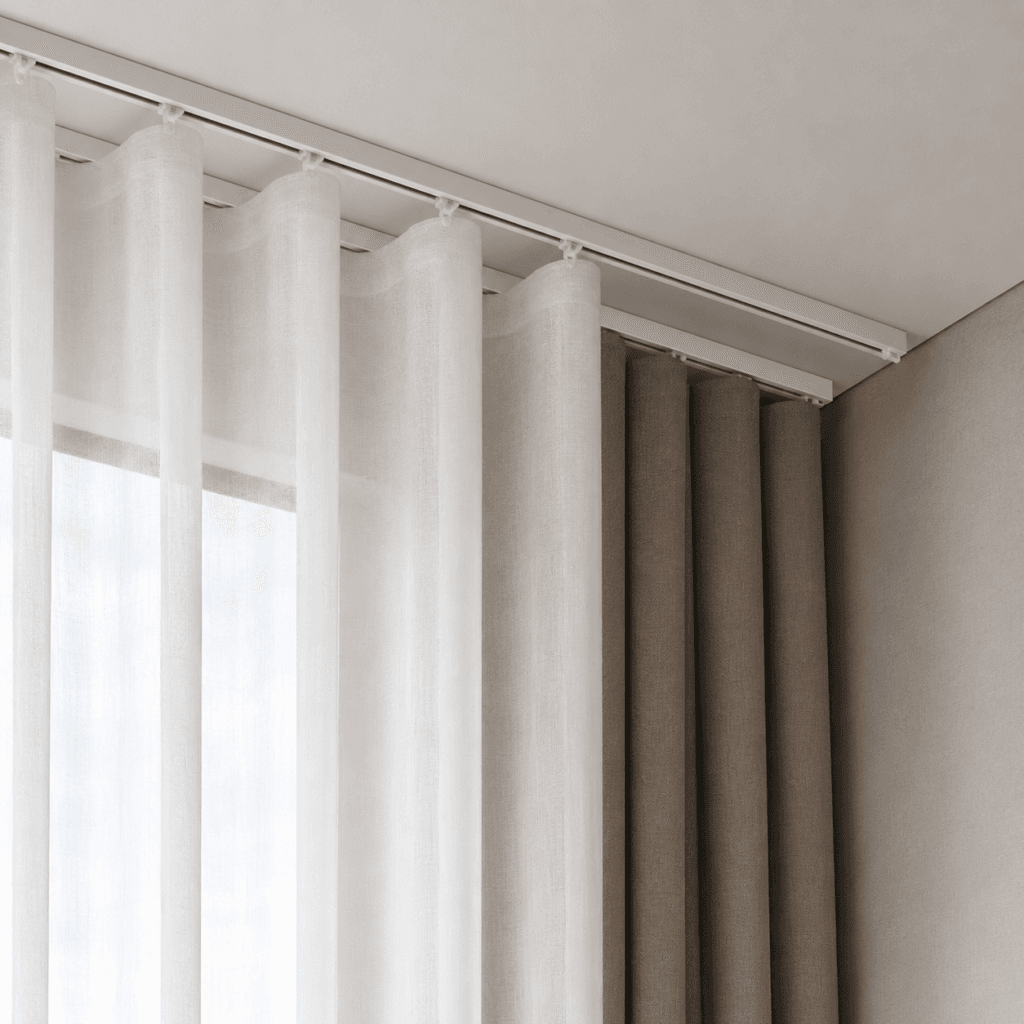
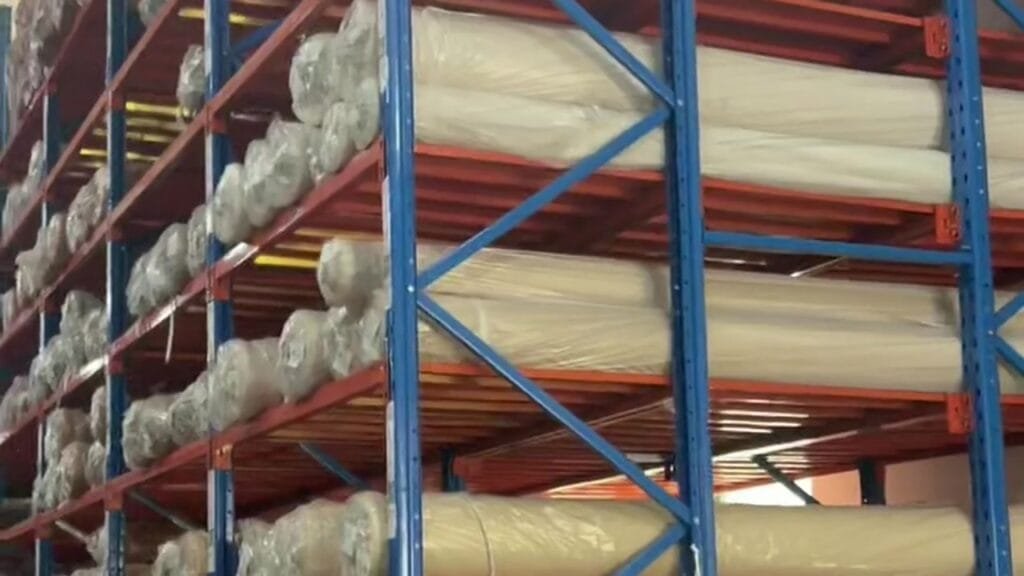
Bottom line: Choosing a curtain manufacturer comes down to what you can actually verify — a real production floor rather than a trading desk, capacity that matches your growth path, an MOQ that fits how you order, and a QC record you can check. Match your business model first: OEM/ODM for branded products, wholesale for volume importers, dropshipping for DTC stores that are already selling. Expect MOQ 200 per style (50–100 trial), factory-direct quotes around $4.50–5.20 per panel dropping to $4.10 at 2,000+ pieces, with successful DTC partners scaling to 4,000+ pieces/month within year one.
Last reviewed: May 2026 · DAIRUI Editorial Team
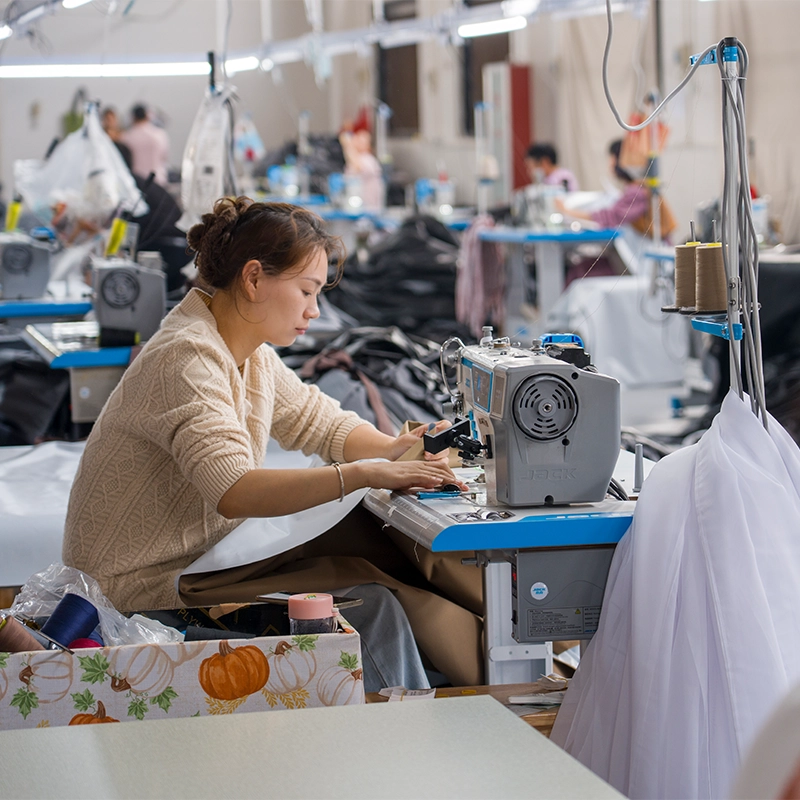
Most buyers who source curtains from China have a horror story. Missed deadlines. Sample colors that don’t match the bulk run. MOQ pushed from 200 to 1,000 mid-quote. A “factory” that turned out to be a trading desk in a coworking space.
Finding a reliable curtain manufacturing partner is the difference between a profitable product line and an expensive lesson. This guide walks through how B2B buyers — DTC brands, wholesale importers, hospitality buyers, dropshippers — actually evaluate manufacturers in 2026. We cover what type of partner fits your business model, the seven things to verify before signing, what really happens inside a curtain factory, and the red flags that should make you walk away. For shorter answers to specific questions, see our 30 frequently asked questions.
Why Manufacturing Curtains Beats Buying Ready-Made
Buying ready-made curtains from a wholesaler feels easier — until your second reorder. Stock runs out. Colors shift between batches. Your “exclusive” range shows up on three competitors’ Amazon listings. And every margin point you give to the middleman is a margin point you’ll never get back.
Manufacturing curtains directly with a factory partner gives you four things ready-made sourcing can’t: fabric control (specify the GSM, weave, and finish you want), size and heading flexibility (any combination of width, drop, and pleat style), private branding (your logo, your hangtags, your packaging), and repeatable cost structure (you know what 4,000 pieces cost in batch one, and what they cost in batch ten).
The cost math is less obvious than buyers expect. A “low MOQ in-stock” supplier may quote $4.50 per panel — but you’re paying for fabric they bought 18 months ago, in colors they over-ordered, with construction shortcuts you can’t see. A direct manufacturing partner often quotes $5.20 for the same look, then drops to $4.10 when your order hits 2,000 pieces because the fabric runs are dedicated to you. Most DTC brands we work with start at 50–100 pieces for product validation and scale to 4,000+ pieces per recurring monthly cycle within their first year.
Here’s the reframe: buying ready-made is renting a product line. Manufacturing is owning one.
What Type of Manufacturing Partner Do You Actually Need?
“Curtain manufacturer” covers four different business models, and choosing the wrong one wastes months of sample rounds and quote negotiations. Before you contact anyone, decide which lane you’re in.
OEM (Original Equipment Manufacturing) — You provide the design, specs, and brand. The factory produces. Best for buyers who already know exactly what they want and have technical drawings.
ODM (Original Design Manufacturing) — You pick from the factory’s existing designs and customize colors, sizes, or fabric weight. Faster to market because the patterns and tooling already exist.
Wholesale — You buy in container quantities, often unbranded or with light private labeling. Best for established wholesalers and importers running their own distribution.
Dropshipping — The factory ships individual orders directly to your end customers, so you hold no inventory. It works for stores with existing, steady order volume, and is only available from factories that have built out the per-order fulfillment system.
The right partner is the one whose business model matches yours:
| Partnership Model | Best For | MOQ | Lead Time | Customization Depth |
|---|---|---|---|---|
| OEM | Brands with original designs (DTC, retail chains, hospitality) | 200 pieces standard / 50–100 trial | 30+ days | Full — fabric, size, heading, packaging |
| ODM | Buyers who want speed-to-market on existing designs | 200 pieces standard | 25–30 days | Color, size, fabric weight, branding |
| Wholesale | Importers, distributors, container-level buyers | Full container loads | 30–45 days | Limited — usually pick from existing range |
| Dropshipping | Shopify and Amazon sellers with existing sales | Per order, for established stores | 7–10 days to door (US/CA/UK/EU/AU) | Semi-custom menu (sizes + heading styles) |
If you’re building a brand on Shopify or Amazon, you likely want a private label curtain manufacturing partner who can do OEM/ODM with packaging support. If you already run an e-commerce store with steady orders and don’t want to hold inventory, look for a dropshipping curtain supplier with real per-order fulfillment infrastructure. If you’re an importer moving full containers or supplying hospitality projects, the right path is direct OEM, ODM and wholesale manufacturing.
Brands that want their own labels and packaging should look specifically at private label curtain manufacturing, which follows a different workflow from standard OEM orders.
7 Things to Verify Before Signing with a Curtain Manufacturer
Once you know your model, the vetting begins. These are the seven checkpoints that separate factories that will deliver from factories that will disappoint. None of them require you to be a textile expert — they require you to ask specific questions and listen to the answers.
1. Real factory or trading desk?
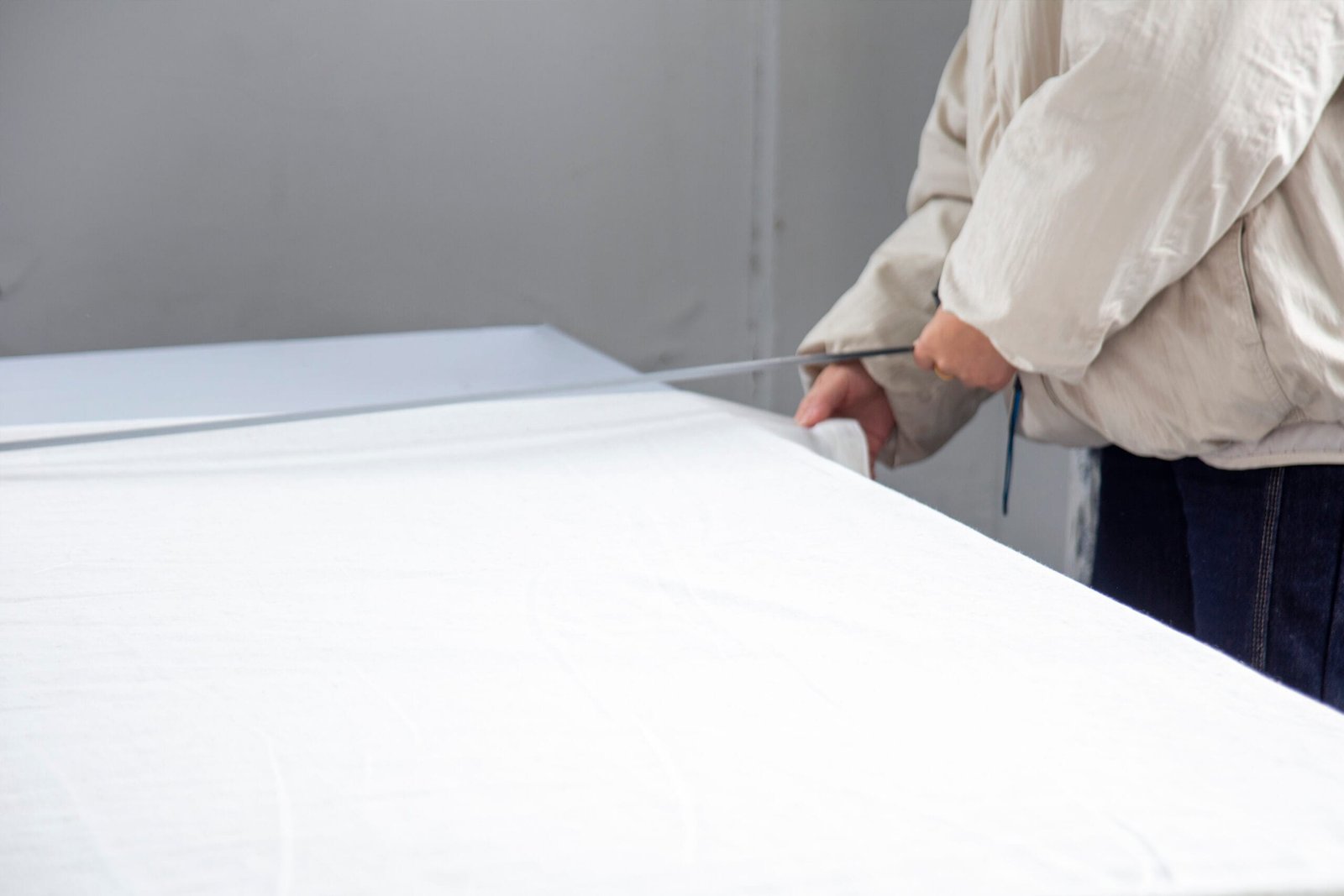
Roughly 60% of “manufacturers” listed on B2B platforms are trading companies that subcontract to actual factories. Trading companies aren’t always bad — some have strong QC oversight — but they add a margin and a communication layer. Ask three questions: What’s your factory address? Can you send a 30-second video walking through the cutting room? Who actually owns the sewing machines? A real manufacturer answers in minutes. A trading company stalls or sends generic photos.
2. Production capacity that matches your growth path
“Large capacity” is meaningless without numbers. A serious curtain factory should give you specifics: total facility area, monthly throughput, and how many simultaneous orders the production line can run. Our own facility in Shaoxing operates on 10,000 m² with 100+ employees and produces 500,000 pieces annually — roughly 41,700 pieces per month — across blackout, sheer, linen, and project curtain lines. Numbers like these tell you whether your 4,000-piece order is a meaningful job or a rounding error that gets pushed when bigger clients come in.
3. MOQ that fits how you actually order
A single MOQ number is a warning sign. Real factories operate tiered MOQs because different order types have different cost structures:
- In-stock fabrics, standard order: 200 pieces per style and per color
- In-stock fabrics, trial order: 50–100 pieces, subject to discussion for first-time partners
- Custom-woven fabrics: 800–1,000 meters minimum (because the loom has to be set up specifically for your specs)
- Per-order dropshipping fulfillment: for stores with existing sales
If a supplier quotes you “MOQ 200 pieces” without distinguishing between standard, trial, and custom-fabric orders, they either don’t run a real factory or they’re not being upfront.
4. Certifications that match your sales channel
Different markets demand different proof. OEKO-TEX Standard 100 is table stakes for European retail and any baby/nursery channel. BSCI compliance matters for buyers who need ethical-sourcing audits — major retailers ask for this routinely. NFPA 701 is non-negotiable for hospitality and institutional projects in North America; per NFPA 701 Test Method 1, fabrics must self-extinguish within 2 seconds of flame removal. Adding NFPA 701 flame-retardant treatment typically costs an extra $0.40–$0.80 per curtain panel and adds 5–7 days to lead time. Always ask to see the actual certificate covering the specific fabric you’ll order — a factory holding general certifications doesn’t mean every fabric is covered. See our full certifications page for what we hold and which products are covered.
5. Quality control track record (not just promises)
Anyone can claim “strict QC.” Ask for the data. In the past 12 months we recorded 98% on-time delivery and operate a Customer-Approved Replacement Policy for recurring partners — any panel a customer flags within 30 days gets remade and consolidated into the next shipment, no extra freight. This kind of policy is only sustainable if defect rates stay under control, so it’s a useful stress-test question: Do you offer free replacement on customer-flagged defects, and how is it shipped? Vague answers mean the factory either doesn’t track defect rates or doesn’t want to be on the hook for them.
6. Customization depth — fabric, sewing, heading
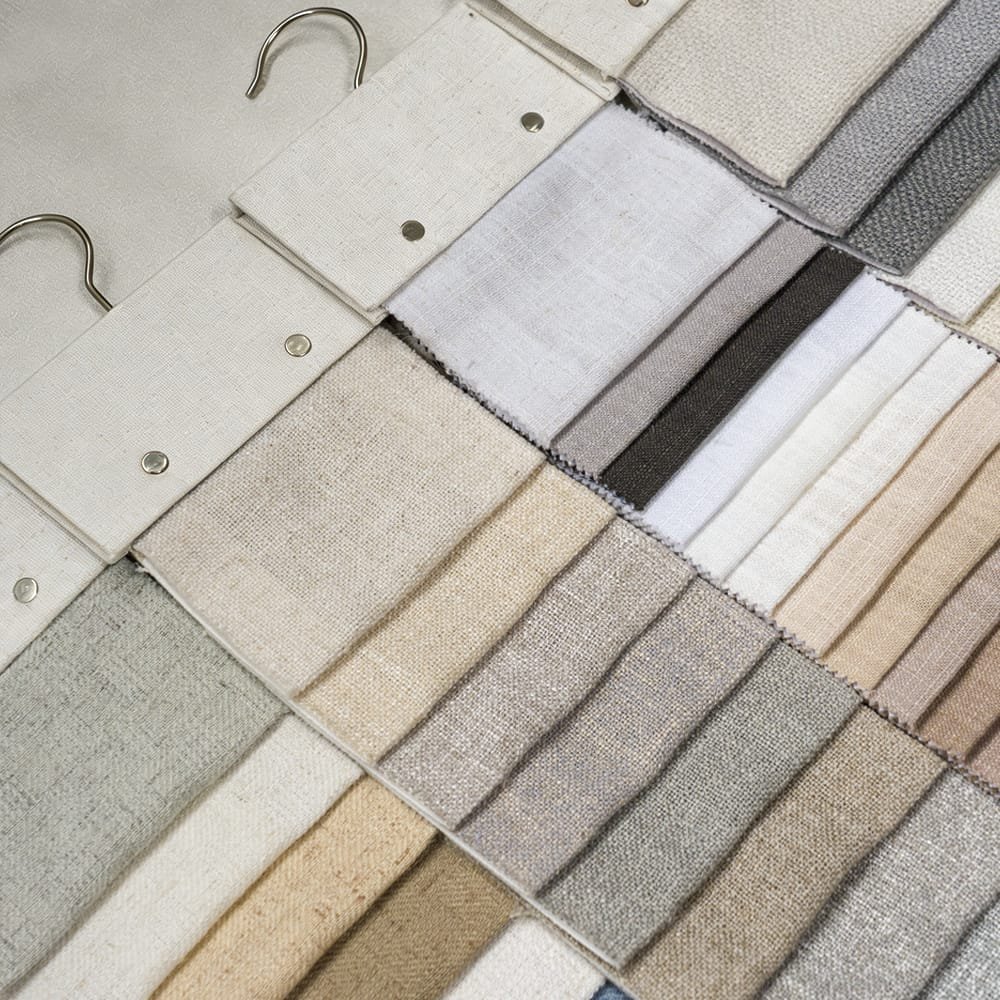
Real customization is the breadth of options a factory can produce without it being a “special project.” A curtain manufacturing partner should be fluent in at least seven heading styles — Ripplefold/S-fold, Pinch Pleat (single/double/triple), Wave Top, Pencil Pleat, Grommet/Eyelet, Back Tab, Tab Top — and be able to adjust spacing on each.
Ripplefold heading, for example, comes with 6 cm or 8 cm carrier-bead spacing and 10.7 cm or 12.5 cm webbing tapes; if a factory can’t tell you which they default to, they’re outsourcing that step.
Sewing standards matter equally. Industry default is a 3 cm side hem and 7 cm bottom hem; serious factories offer 4–5 cm side hems and 8–10 cm bottom hems on request, plus full-rolled side or bottom finishes for higher-tier programs. Blackout construction has five mainstream variants — coated 3-layer, coated 4-layer, TPU-laminated double-face, double-layer with inner coating, and physical (yarn-based) blackout — each with different hand-feel, drape, and cost. A partner who can walk you through the trade-offs is a partner who actually weaves the fabric.
7. Sample turnaround and communication discipline
The sample stage tells you what bulk production will feel like. Sample lead time should run 3–5 working days excluding international shipping. Communication response time should be under 12 hours during business days for any active project. If samples take three weeks and emails take three days now — when you’re a prospect they’re trying to win — production will be worse, not better.
One more useful test: ask for a sample of your design, not their stock swatch. A factory willing to make a custom 3-day sample for a small prospective buyer is a factory built for partnership.
What Each Production Stage Tells You About a Factory
Every stage between “deposit confirmed” and “container loaded” leaves evidence of how a factory really works. Below is what to ask at each point — and what a weak answer tells you. For the stage-by-stage mechanics themselves, see our full breakdown of the curtain manufacturing process; here we stay on what each stage reveals about the supplier, and how to plan an OEM curtain manufacturing program with realistic expectations.
Quotation: what a vague quote is hiding
The first inquiry sets the tone. To get a useful quote in your first email, send four things: fabric type or weight target (e.g. “300 GSM polyester blackout”), finished panel size (width × drop, in cm or inches), heading style, and target quantity range. Leave any of these blank and you’ll get a generic price band that means nothing.
Pricing depends on volume, destination, fabric source (in-stock vs custom-woven), and shipping terms (FOB Ningbo vs CIF vs DDP). Payment terms and final pricing are confirmed during inquiry based on order specifics — they’re not standardized line items, and any factory that quotes “fixed pricing” sight-unseen is either rounding up massively to be safe or planning to renegotiate later.
Sampling: how far they go before the order
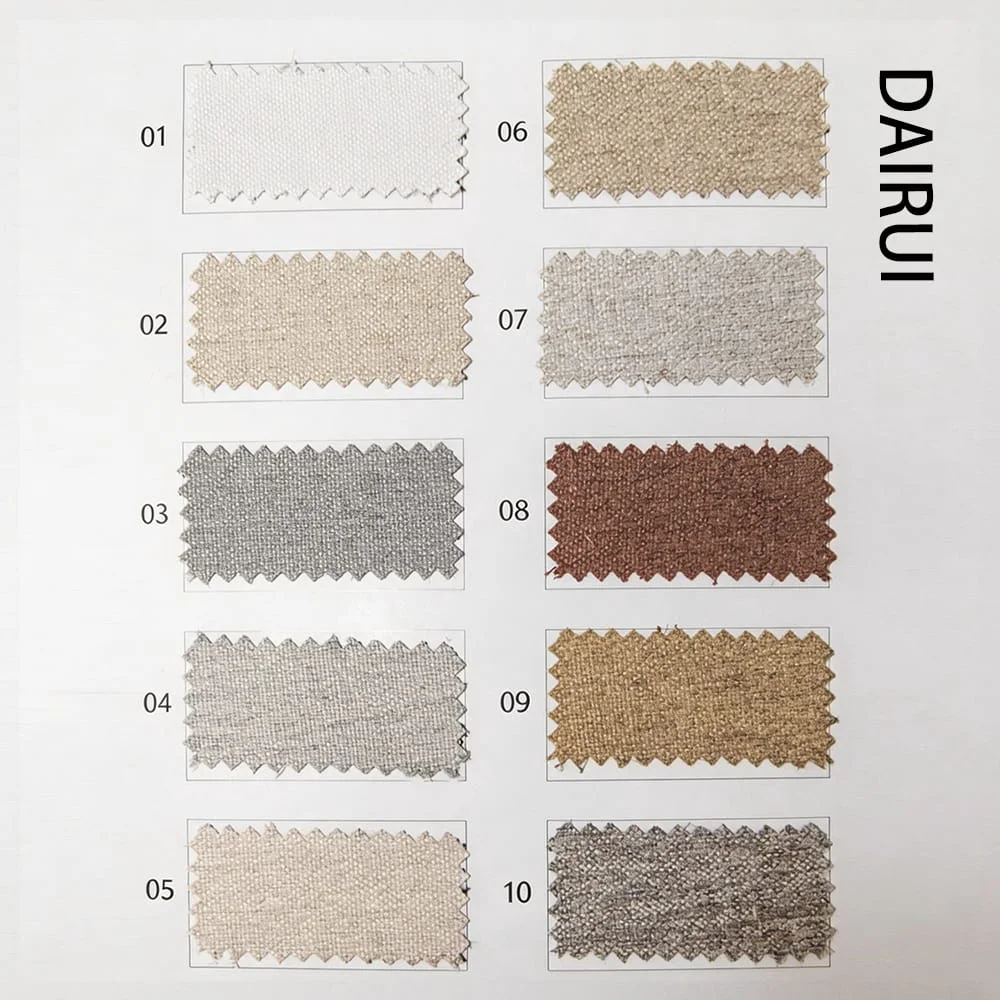
Sampling takes 3–5 working days plus international shipping (DHL/FedEx typically 3–7 days door-to-door). What gets sampled depends on what you need to validate: a fabric swatch tests color and hand-feel; a half-panel sample tests weight and drape; a full-panel finished sample tests construction, heading, and packaging. The further along the sample, the longer it takes — full finished samples sometimes need 7–10 days for custom heading styles. See our sample support process for what’s typically included and what’s chargeable.
Bulk production: where shortcuts hide
This is where shortcuts hide. Bulk lead time runs 30+ days from deposit confirmation, and inside that window, the production sequence is: fabric weaving (or pulling from stock) → dyeing/printing → 24-hour fabric relaxation → cutting → sewing → heat-setting → QC → packing.
The relaxation step is the one most factories quietly skip. Polyester fabrics shrink 2–3% within the first 24 hours after they come off the loom; if you cut before relaxation, the finished panel comes out 1–2 cm short across the drop. We let every roll rest 24 hours flat before our cutting room runs it through 4 industrial cutters in parallel for orders above 800 pieces. It’s invisible work that costs a day of throughput, and it’s the difference between panels that hang true and panels customers complain about.
Heat-setting is the other step worth understanding. Industrial heat-setting machines lock pleat geometry, wave shapes, and dimensional stability into polyester and blends — particularly for Ripplefold, Pinch Pleat, and Wave Top headings. Properly heat-set curtains keep their shape after washing and rehanging; un-heat-set curtains lose their pleats after the first laundry cycle. If a factory doesn’t list a heat-setting machine in their equipment, the panels will look great in the sample and disappointing in month three.
The full equipment list a real curtain factory operates includes cutting machines, sewing machines, pleating machines, eyelet punchers, height-fixing machines, and high-temperature heat-setting machines. If a supplier can’t name what they have, they don’t have it.
Quality control: three checkpoints, not one
QC happens at three points, not one. Raw fabric inspection checks GSM consistency and color match against the approved sample — our QC supervisor measures every roll with a calibrated scale before it goes to cutting. In-line inspection spot-checks stitching density, hem alignment, and heading uniformity during sewing. Pre-shipment inspection opens a percentage of finished cartons for final review against the spec sheet.
We learned the importance of pre-shipment QC the hard way. In 2019 a project order failed flame-retardant testing on arrival in Canada — the treatment had degraded during a longer-than-expected port hold. Now we test FR-treated panels from every batch before sealing the carton, not after. This is the kind of process discipline that comes from failure, not from marketing copy.
Packing and loading: the detail that exposes experience
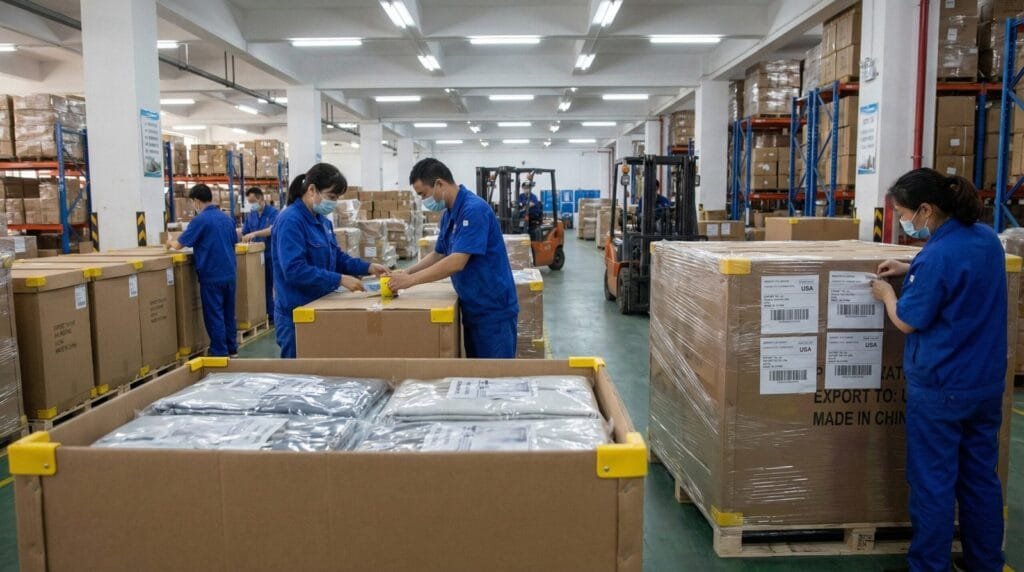
Packing varies by destination and order type. Standard panels go into individual polybags inside master cartons. Memory-shape curtains (S-fold, Pinch Pleat, Wave Top) get wrapped with paper rings to preserve the pleats during transit. Container loading depends on product density: sheer fabrics fold denser than velvet, so the same container ships more sheer panels than blackout.
Most exports leave through Ningbo Port (about 1 hour from our Shaoxing facility) or Shanghai Port (about 2 hours). FOB, CIF, and DDP terms are all available. For dropshipping, we run dedicated 7–10 day lanes to the US, Canada, UK, EU, and Australia with end-to-end tracking. Peak shipping season runs August through October as buyers stage inventory for Northern Hemisphere winter.
China vs India vs Turkey: Where Should You Source Curtains in 2026?
The three countries dominate global curtain export, and each has a real strength buyers should weigh against their priorities.
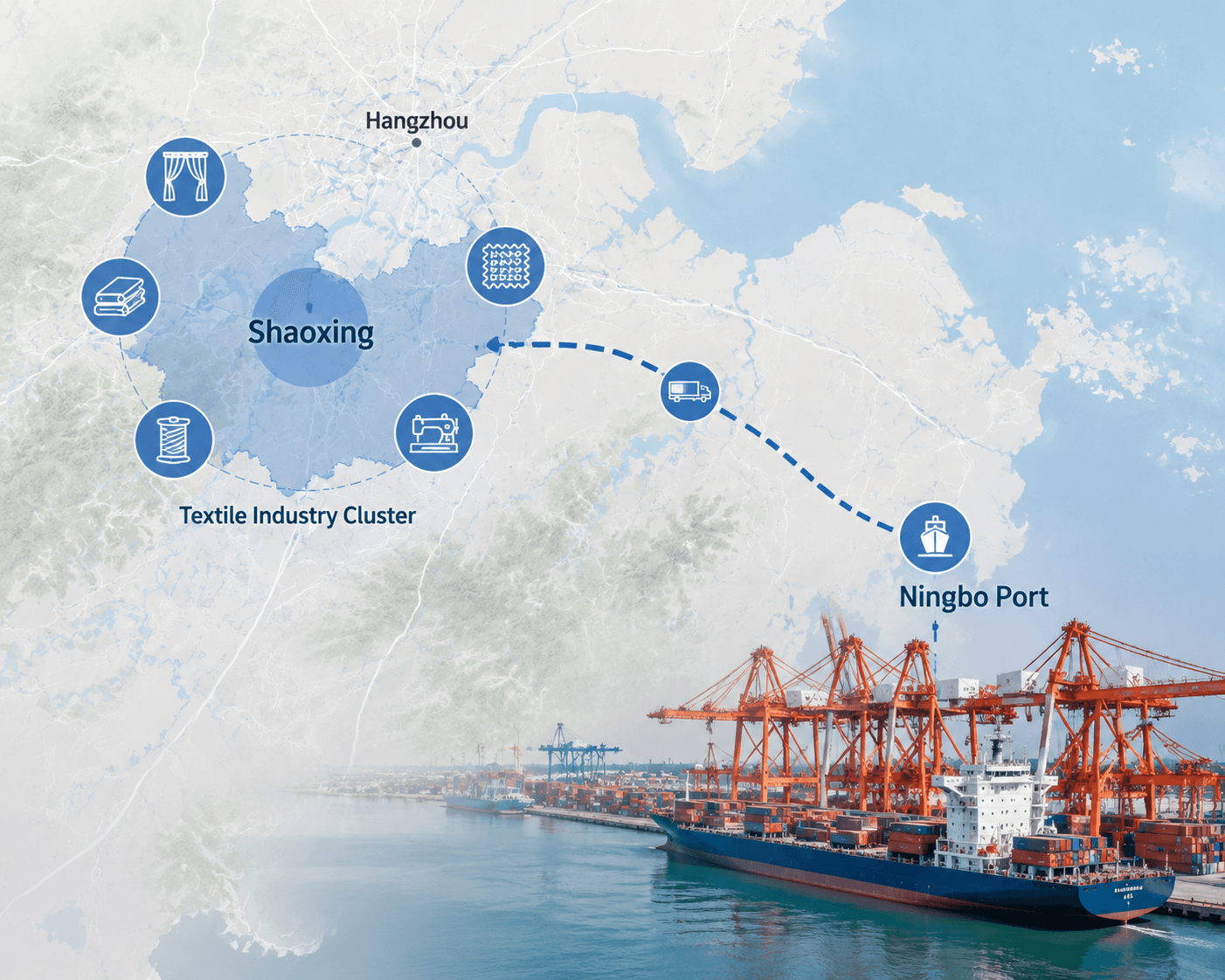
China has the deepest supply chain. The Shaoxing region in Zhejiang province — China’s textile capital — concentrates fabric mills, dye houses, and finishing plants within a 50 km radius. That density means a polyester blackout panel can go from yarn to finished carton without leaving a single industrial cluster, which is why lead times stay at 30+ days even on complex specs. The trade-off is that competition is brutal at the bottom end of the market, so picking carefully matters more than in other regions. For most importers, starting with a China curtain manufacturer that controls the full process is the most direct path to consistent production.
India leads on linen, cotton, and embroidered work. Labor cost is meaningfully lower than China for handwork-intensive products, and the country’s strength in natural fibers shows up in textured linen drapes and decorative woven curtains. The trade-off: synthetic blackout and large-volume polyester production are less mature, and lead times often run 45–60 days because the supply chain isn’t as vertically integrated.
Turkey wins on shipping time to Europe. Istanbul to Hamburg is 7–10 days by truck or short sea — a fraction of the 30–35 day ocean transit from China. Turkish factories also have strong jacquard and woven decorative ranges. The trade-offs: factor costs are higher than both China and India, MOQs tend to be larger because the regional cost structure can’t support small runs profitably, and product breadth is narrower outside decorative categories.
For buyers prioritizing breadth of capability and supply chain depth, China remains the most versatile choice — particularly for blackout, polyester blends, and any program that mixes multiple curtain types. For higher-end linen-only programs, India is worth a look. For European buyers needing 10-day delivery on decorative ranges, Turkey is hard to beat. The right answer depends on your product mix, not on a generic ranking.
Red Flags: When to Walk Away from a Manufacturer
Not every bad partner reveals itself early, but most send signals. These are the ones we’d walk away from immediately, drawn from a decade of watching buyers get burned:
- Communication takes more than 24 hours during business days. Reputable B2B factories run sales teams that answer within hours. If pre-sale response is slow, post-sale response will be slower.
- Refusal to share factory video or accept a video call. Real factories are happy to show you the production line. Trading desks are not.
- MOQ that keeps moving. If the quote starts at 200 pieces, then becomes 500 pieces “to be efficient,” then 1,000 pieces “for the better price,” the factory is probably brokering your order to a third party.
- Vague answers on certifications. “Yes, we can do OEKO-TEX” is not the same as “Here’s the certificate covering the polyester base fabric you’ll be ordering.”
- Sample-bulk mismatch. The classic horror story. It happens when factories sample on one fabric batch and produce on another, or when QC misses dye-lot variation. The protection is requiring photo approval of bulk fabric before cutting starts.
- Resistance to written agreements. A real partner will sign a PI (proforma invoice) and a sales contract specifying fabric, dimensions, MOQ, lead time, and payment milestones. “Just trust me” is not a contract.
- Pricing that’s significantly below the market. If two suppliers quote $5.00 and one quotes $3.20 for the same spec, the cheap one is either using inferior fabric, skipping the relaxation step, or planning to substitute materials mid-production.
Frequently Asked Questions
Can I order a small trial batch before committing to bulk?
Yes. For in-stock fabrics, trial orders from 50–100 pieces are available subject to discussion. This is especially common for first-time DTC partners who want to validate a product on Shopify or Amazon before scaling to 4,000+ pieces per recurring cycle. Custom-woven fabrics still need the 800–1,000 meter minimum because the loom setup cost is fixed regardless of run length.
Do Chinese curtain manufacturers handle private label?
The serious ones do. Full private label includes custom hangtags, wash labels with your brand and care instructions, branded poly bags, custom retail packaging, and barcode/SKU integration for Amazon FBA shipments. Trading companies usually can’t deliver this end-to-end because the label printing and packaging often happens at the factory, not the trading desk.
What certifications matter for hospitality projects?
For North American hotels, NFPA 701 flame-retardant compliance is the baseline, often required by local fire marshals before installation. For European hospitality, BS 5867 Part 2 Type B and DIN 4102 B1 are the equivalents. OEKO-TEX Standard 100 is increasingly requested even on commercial projects to confirm chemical safety. Always ask for the actual certificate covering the specific fabric, not a general factory-level certification.
How does shipping work — FOB, CIF, or DDP?
FOB (Free on Board) means the factory delivers to Ningbo or Shanghai port and the buyer arranges and pays for ocean freight, insurance, import duty, and last-mile. CIF adds ocean freight and insurance to the factory’s responsibility. DDP (Delivered Duty Paid) is door-to-door — the factory handles everything including import customs and duty, and the buyer just receives the goods. DDP is most common for smaller buyers and dropshipping; FOB is standard for established importers with their own freight forwarders.
What’s the minimum custom-fabric order?
800–1,000 meters minimum for custom-woven fabric, regardless of finished panel count. The reason is loom economics: setting up a loom for a custom weave, color, or specification is a fixed cost that the run has to absorb. Below 800 meters, the per-meter price climbs sharply — usually high enough that buyers default back to in-stock fabrics with custom finishing.
How do you handle defects after delivery?
For recurring partners, our Customer-Approved Replacement Policy covers any panel a customer flags within 30 days of delivery. The replacement is remade and consolidated into your next shipment — no extra freight cost, no separate dispute process. The policy doesn’t cover transit damage from international couriers (that goes through shipping insurance) or one-time trade orders, but for any partner running monthly or weekly cycles, it’s a working safety net.
Can I visit the factory before ordering?
Yes, and you should if your order is meaningful. Our facility is in Shaoxing, Zhejiang — about 90 minutes by high-speed train from Shanghai Hongqiao Station, or 1 hour by car from Ningbo Port. Many buyers combine a factory visit with the Canton Fair (April and October) or Intertextile Shanghai (March and August). For buyers who can’t travel, a live video walkthrough of the cutting room, sewing line, and finished-goods warehouse is the standard alternative.
Bottom Line: How to Move Forward
Finding a reliable curtain manufacturing partner comes down to four moves: match the partnership model to your business (OEM/ODM/Wholesale/Dropshipping), verify the seven checkpoints before signing anything, understand what really happens during production so you can spot corners being cut, and watch for the red flags early enough to walk away cheaply.
Dairui Textile has been manufacturing curtains in Shaoxing since 2014, with a 10,000 m² facility, 100+ employees, and 500,000 pieces of annual capacity across blackout, sheer, linen, and project ranges. We work with DTC brands on Shopify and Amazon, container-level wholesalers, hospitality buyers, and established online stores using per-order fulfillment with 7–10 day delivery to five countries.
If you want to talk specifics, the fastest path is sending us your spec — fabric type, panel size, heading style, and target quantity — through our contact page. We’ll come back with a real quote, not a price band. To explore which manufacturing model fits your business, browse our OEM, ODM and wholesale services, private label manufacturing program, or dropshipping fulfillment lanes.