Bottom line: a blackout fabric can control light through the panel and still leave a room visibly bright because light travels around the curtain. Buyers should approve two separate things: the fabric assembly and the installed window system. A fabric sample cannot prove side coverage, top gaps, center overlap, bottom clearance or track geometry.
This distinction matters for hotel, project, retail and private-label programs. If a specification simply says “blackout curtain,” different parties may assume different scopes. The mill may be discussing fabric construction, the curtain maker may be discussing the finished panel, and the installer may be responsible for the remaining light paths.
The three layers of a blackout decision
- Fabric layer: how much light passes through the approved fabric or fabric-plus-backing construction.
- Finished-panel layer: whether seams, needle holes, joins, headings and side treatments create visible transmission paths.
- Installed-system layer: whether the track, overlap, returns, recess and mounting position cover the window opening.
A useful approval process keeps these layers separate. If the room result fails, the team can identify whether the cause is transmission through the cloth, a panel-construction detail or an uncovered path around the curtain.
What fabric approval can prove
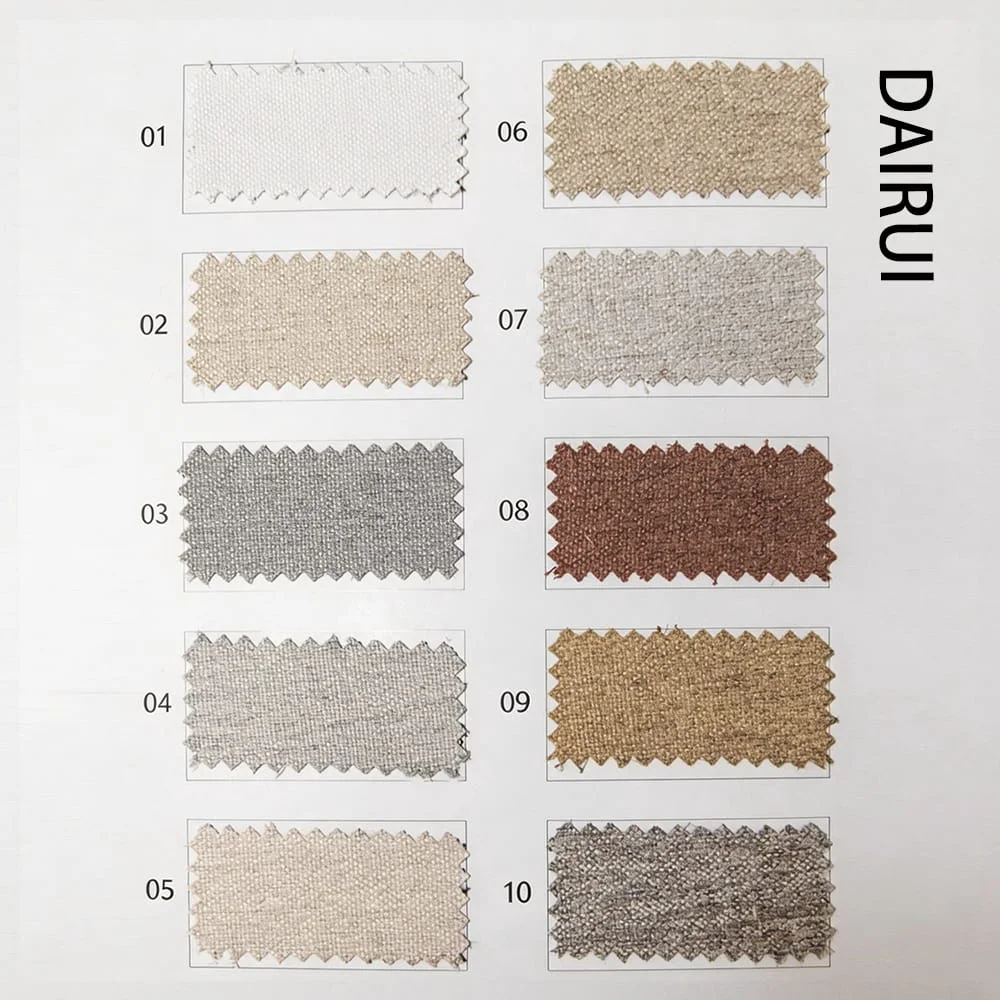
An approved blackout fabric sample can establish the face and backing, construction route, handfeel, GSM, width and light-control result under the agreed sample conditions. It can also show whether the chosen face color or backing changes the observed result. For a lined curtain, the relevant test piece should represent the proposed layer combination.
What it cannot prove is how the curtain will sit in a real opening. A small swatch has no track, center closure, wall return or floor clearance. Treating fabric performance as a guarantee for the room is therefore a scope error.
Where installation leakage usually appears
At the sides
If the panel stops near the edge of the opening, light can pass between the curtain and the wall. A side return or another approved coverage detail may be needed when edge darkness is part of the brief. The required geometry depends on the opening, track position and project design; it should not be assumed from a generic curtain size.
At the top
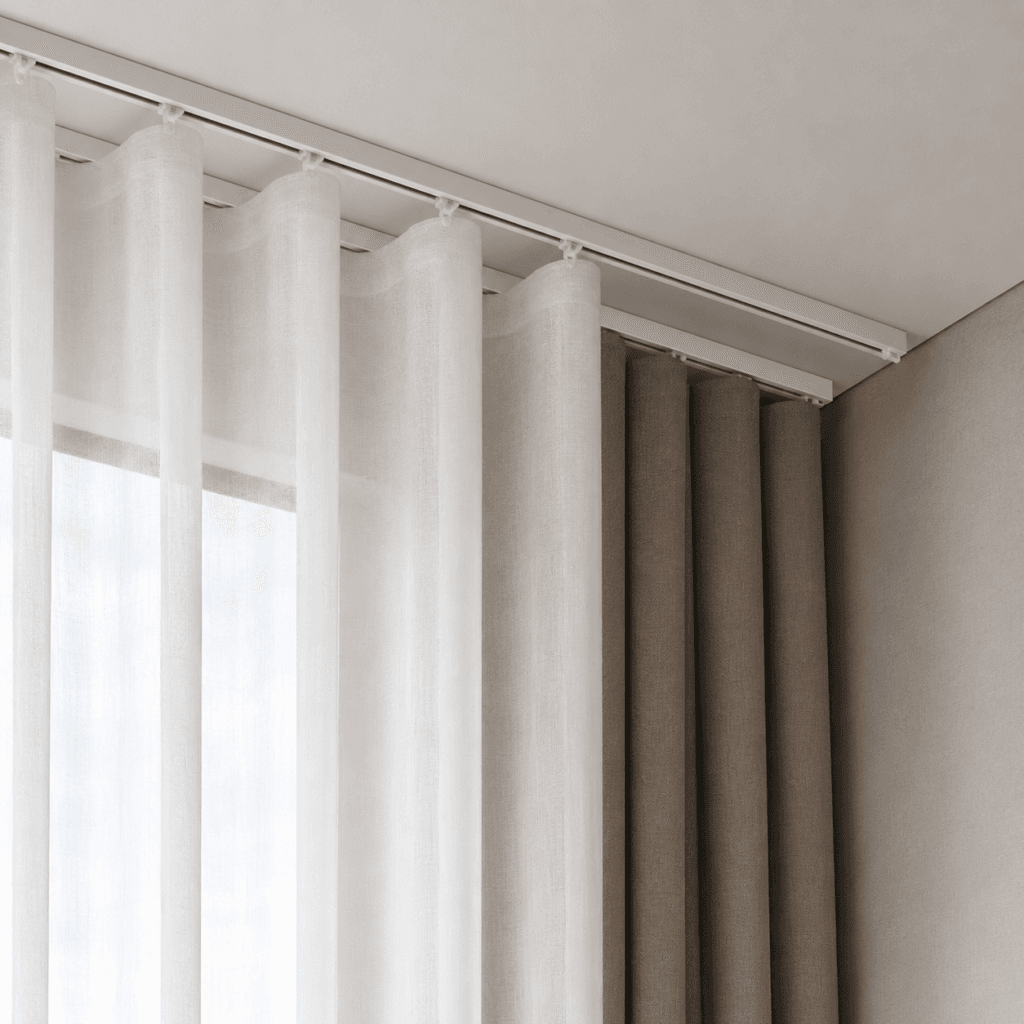
Light can pass above or behind the heading when the track or pole sits away from the wall or ceiling. The heading style and carrier position also affect how the panel hangs beneath the track. Buyers should review the top condition as a drawing or mock-up, especially where room darkness is a project requirement.
At the center
Two panels that only meet edge-to-edge can open a bright vertical line. Center overlap must be designed into the system and checked in the closed position. Motorized or hand-drawn operation can also affect how consistently the panels return to the intended closure.
At the bottom
A visible gap can remain when the finished drop, installation height or floor condition differs from the approved assumption. The correct bottom relationship is a project choice; the specification should state the intended clearance or finish instead of relying on the word “blackout.”
Through seams and construction details
Where panels are joined, or where a heading and side treatment create multiple layers and needle lines, the finished sample should be reviewed for visible light paths. This is a panel-manufacturing check, distinct from testing the base cloth.
Diagnose leakage before changing the fabric
| What you observe | Likely scope to inspect first | Useful evidence |
|---|---|---|
| Glow across the body of the curtain | Fabric or fabric-layer construction | Approved fabric identity, face/back sample and agreed light evaluation |
| Bright line at the meeting point | Center closure and overlap | Closed-system photo, plan detail and operating check |
| Light around the outside edges | Track position, width and side returns | Opening measurements and installed coverage drawing |
| Light above the heading | Top mounting geometry | Section detail showing ceiling/wall, track and heading |
| Light below the panel | Finished drop and installation height | Verified site dimensions and installed clearance |
| Pinpoints or lines at joins | Finished-panel workmanship | Full-size finished sample viewed under agreed conditions |
Blackout system approval checklist
- A named fabric or fabric-layer construction with face, backing and orientation recorded.
- The agreed light-control target and evaluation conditions for the material.
- A finished sample showing heading, side treatment, seams and lining attachment where applicable.
- Opening measurements and a drawing showing track location, panel coverage, center overlap and returns.
- A clear statement of who approves the fabric, finished panel and installation.
- A room mock-up or first-install review when whole-room darkness is critical to the project.
Useful clarification for RFQs
Can a buyer specify one blackout percentage for the whole room?
Only if the scope and evaluation method are defined for the complete installed system. A material result should not be presented as a room-performance guarantee.
Should the buyer reject the fabric when light appears at the sides?
Not before isolating the source. Side leakage normally points to coverage or installation geometry, while a uniform glow through the panel points back toward the fabric assembly.
Specify the full light-control system
Begin with the available constructions in the Blackout Curtain category. For hotel or contract work, coordinate the fabric and installation brief through Solutions Support and review relevant room-system options in the Hotel Curtain category.
DAIRUI Sourcing Desk
Last reviewed: 2026-08