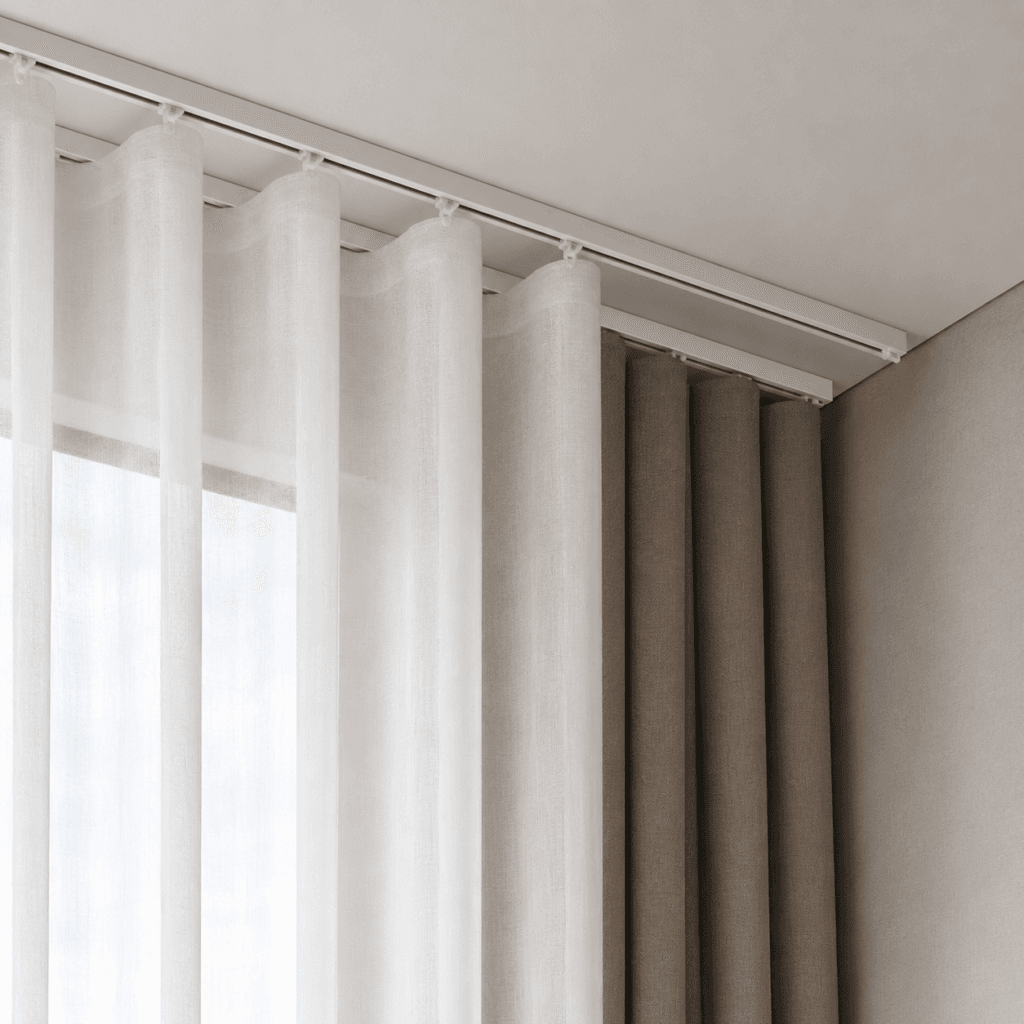
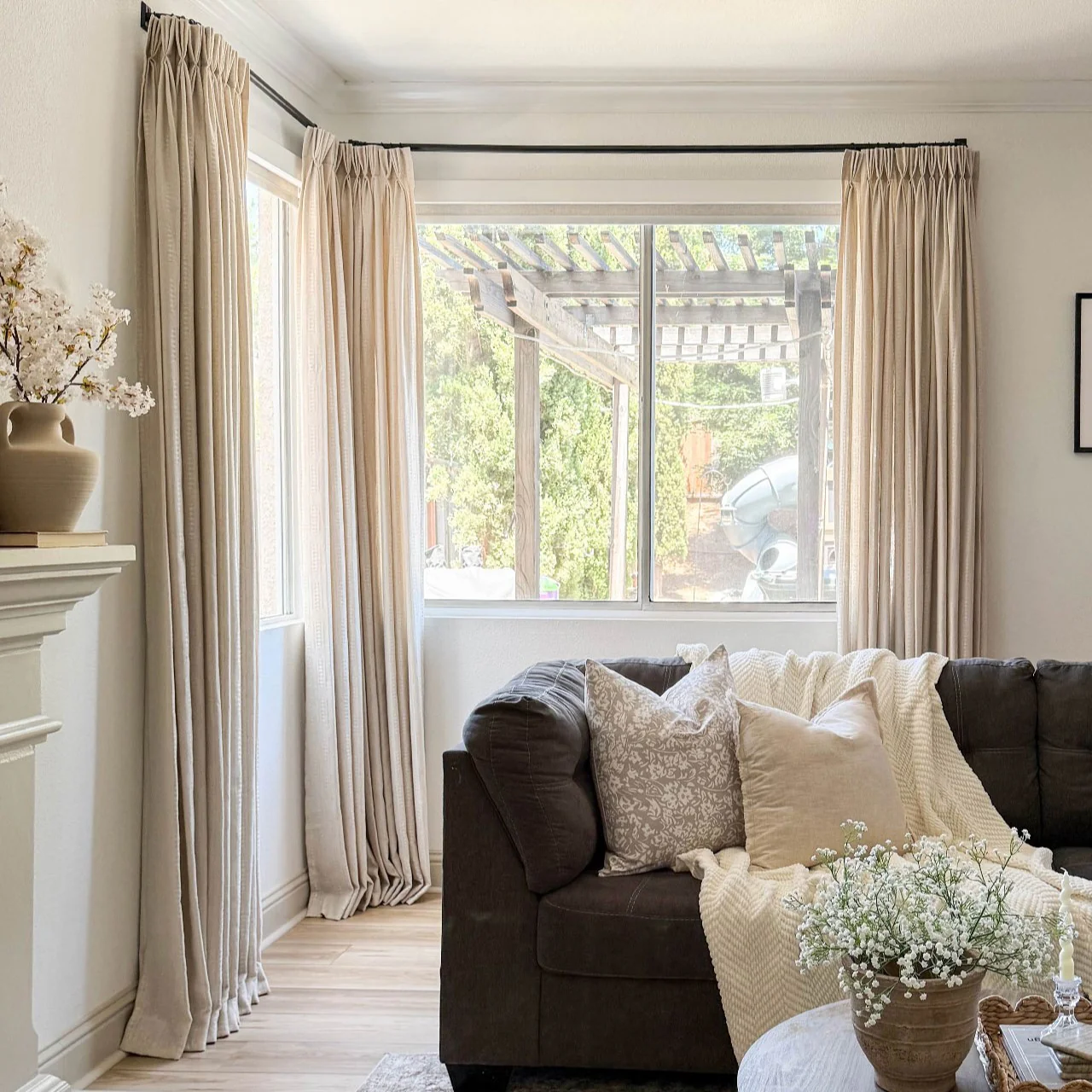
Bottom line: There are three ways to put a pattern on a curtain. Jacquard weaves the design into the cloth (most durable, premium hand, often reversible). Printing lays it on the surface (cheapest at volume, unlimited designs). Embroidery stitches it on (artisanal, raised texture, highest cost). For wholesale, jacquard wins on longevity, print on design freedom and price, embroidery on craft. Trial from ~50 pcs, custom MOQ from ~200 pcs, samples in 3–5 days, bulk in 25–30 days. Browse our jacquard woven curtains range.
When a buyer asks for “patterned curtains”, they could mean three completely different products with very different cost, durability and lead-time profiles. The pattern can be woven into the fabric (jacquard), printed onto it (digital, screen or transfer print), or stitched onto it (embroidery). Choosing the wrong method for the end use is one of the most common and expensive mistakes in a curtain program. This guide explains how each is made, how they compare on the factors that matter to wholesale and project buyers, and the MOQ, sampling and lead-time realities of ordering patterned curtains from China.
Three Ways to Put a Pattern on a Curtain
Before comparing them, it helps to be precise about what each technique actually is, because the words are often used loosely: All three start from the same base cloth — our guide to curtain fabric from China covers how that layer is sourced mill-direct.
- Jacquard — the pattern is created during weaving, on a jacquard loom, by raising and lowering individual warp threads so the design is built from the yarn structure itself. The motif is part of the cloth, not a layer on top.
- Printed — a finished base fabric is decorated on the surface using digital, screen or heat-transfer printing. The pattern sits on the face of the fabric.
- Embroidered — a separate decorative thread is stitched onto a finished base fabric, usually sheer or light cotton/poly, creating a raised, tactile motif.
Jacquard Curtains: Pattern Woven Into the Cloth
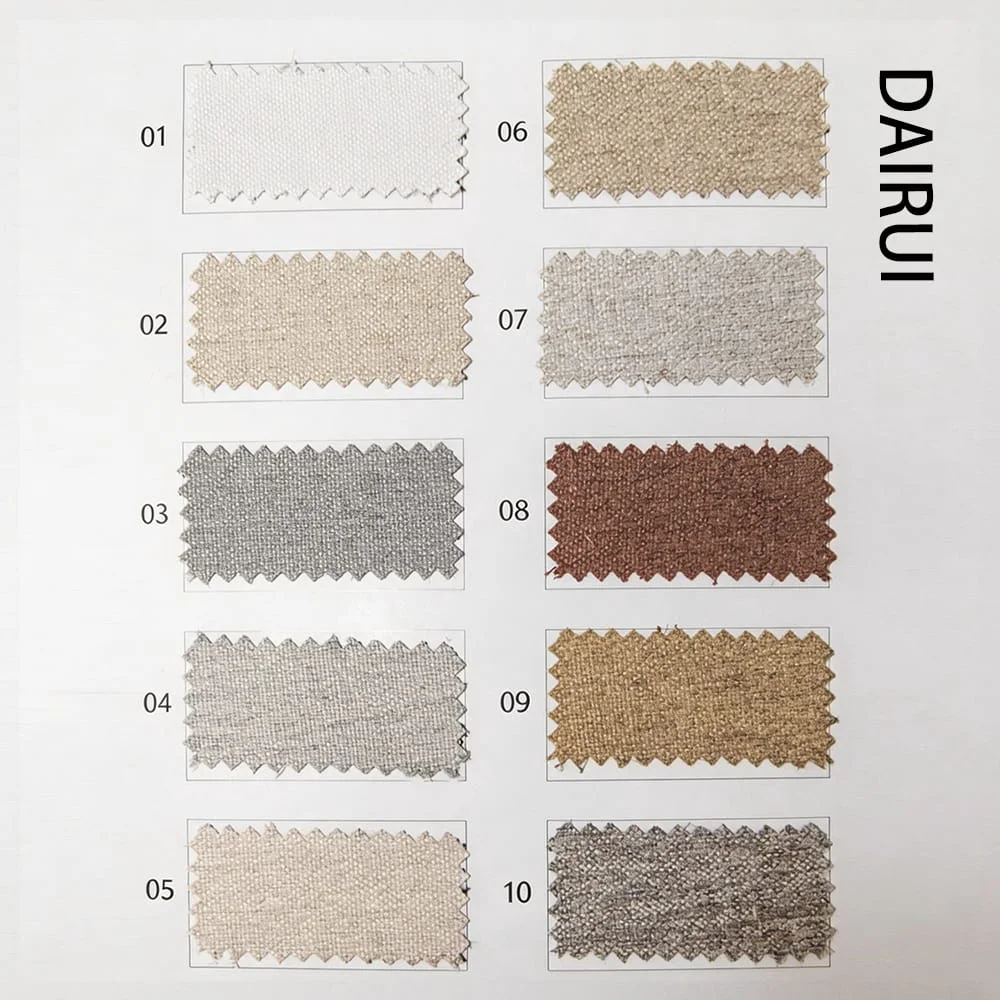
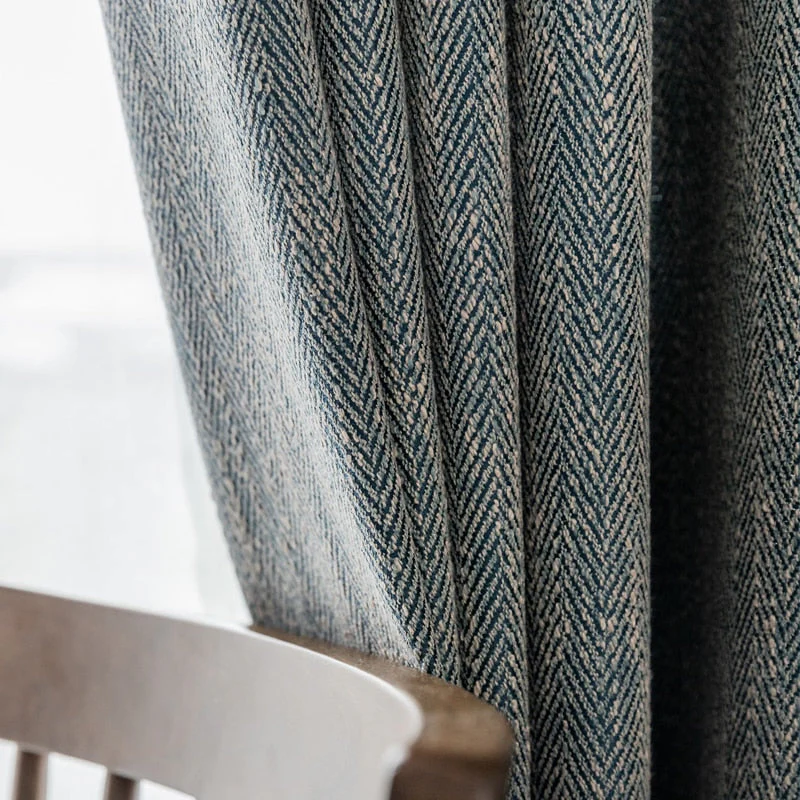
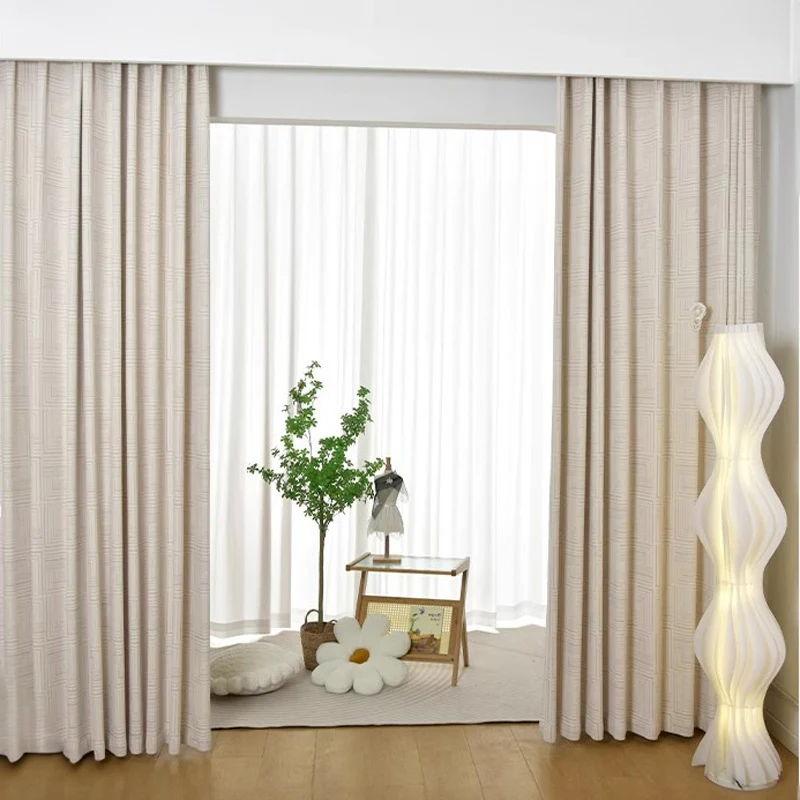
Jacquard is the premium, most durable way to pattern a curtain. Because the design is woven from the yarn — think herringbone, geometric, damask or chenille-textured motifs — it cannot peel, crack or wash off, and it usually reads on both sides of the cloth. The trade-off is that jacquard patterns are tonal and textural rather than photographic; you get sophistication and depth, not full-colour imagery.
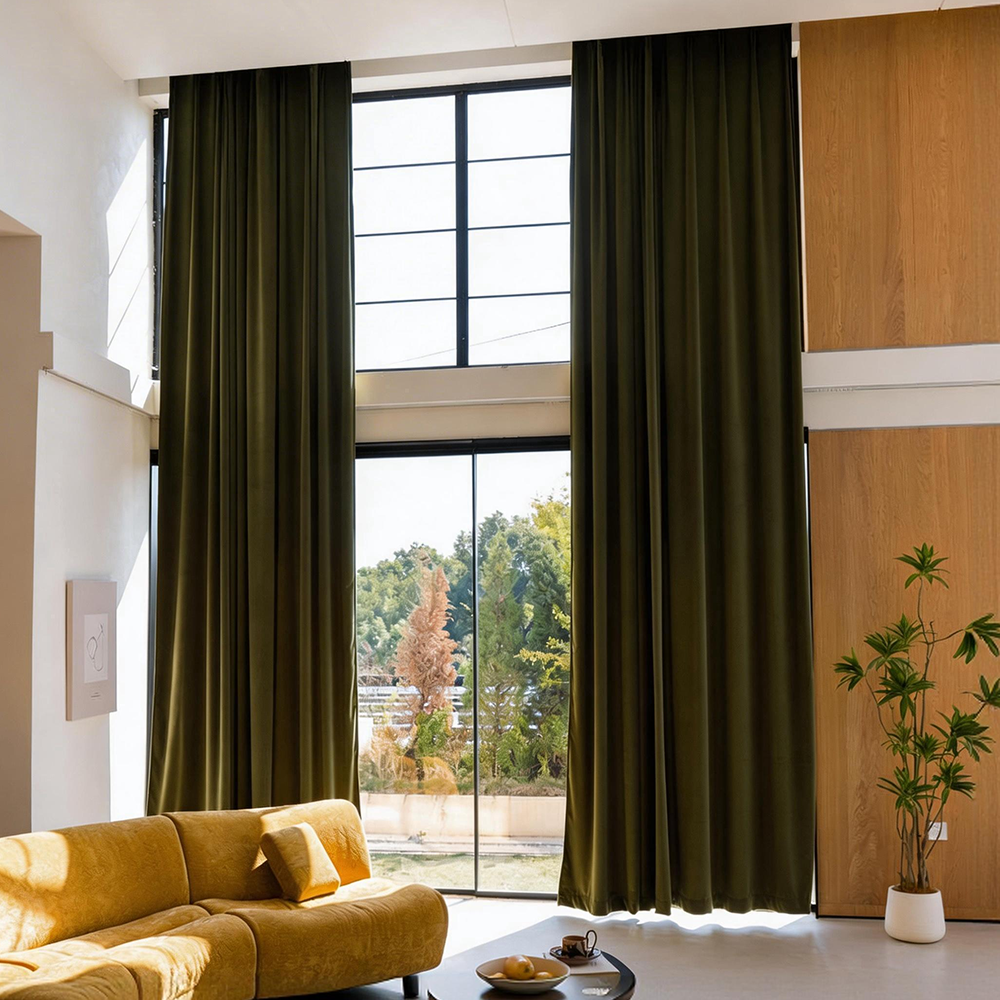
For wholesale and hospitality buyers, jacquard is the natural choice when the curtain has to look and feel upscale and survive years of use and laundering — hotel rooms, premium retail ranges, private-label “luxury” lines. It can also be engineered for performance: a chenille or densely woven jacquard can be built as a blackout, so you keep the woven texture on the room side while still blocking light. If you are also weighing other premium textures, our velvet curtains wholesale guide covers the parallel decisions.
The main sourcing consideration with jacquard is setup. A bespoke woven pattern requires the mill to set up the loom for that specific design, which is why custom jacquard carries a higher MOQ and a longer first-run lead time than printing the same motif. For stock jacquard designs the economics are much friendlier, so ask your supplier which woven patterns are already in their library before commissioning a fully custom weave.
Printed Curtains: Design on the Surface
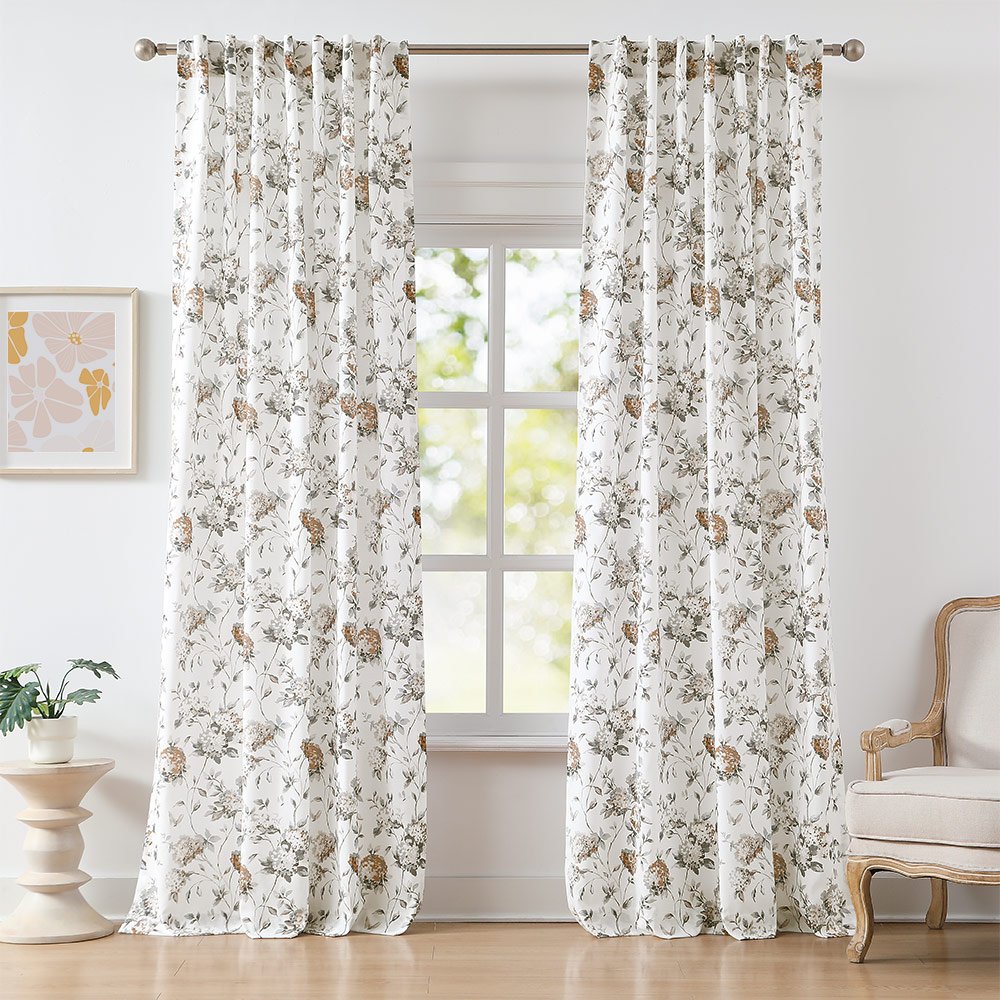
Printing is the most flexible and, at volume, the most affordable way to pattern a curtain. Digital printing in particular can reproduce photographic florals, gradients, brand artwork and unlimited colours with low setup cost and fast turnaround, which makes it ideal for trend-led retail ranges, seasonal collections and custom DTC designs. The pattern lives on the surface, so it is a face-side effect rather than a through-the-cloth one.
The questions to ask on printed goods are about durability and hand: confirm the print method (digital vs screen vs foil/transfer), colour-fastness to light and washing, and whether the print stiffens the fabric hand. Done well on the right base, modern prints are durable and vivid; done cheaply they can fade or crack. For a full breakdown of print methods and when each makes sense, see our guide to custom printed curtains wholesale.
Embroidered Curtains: Stitched Texture
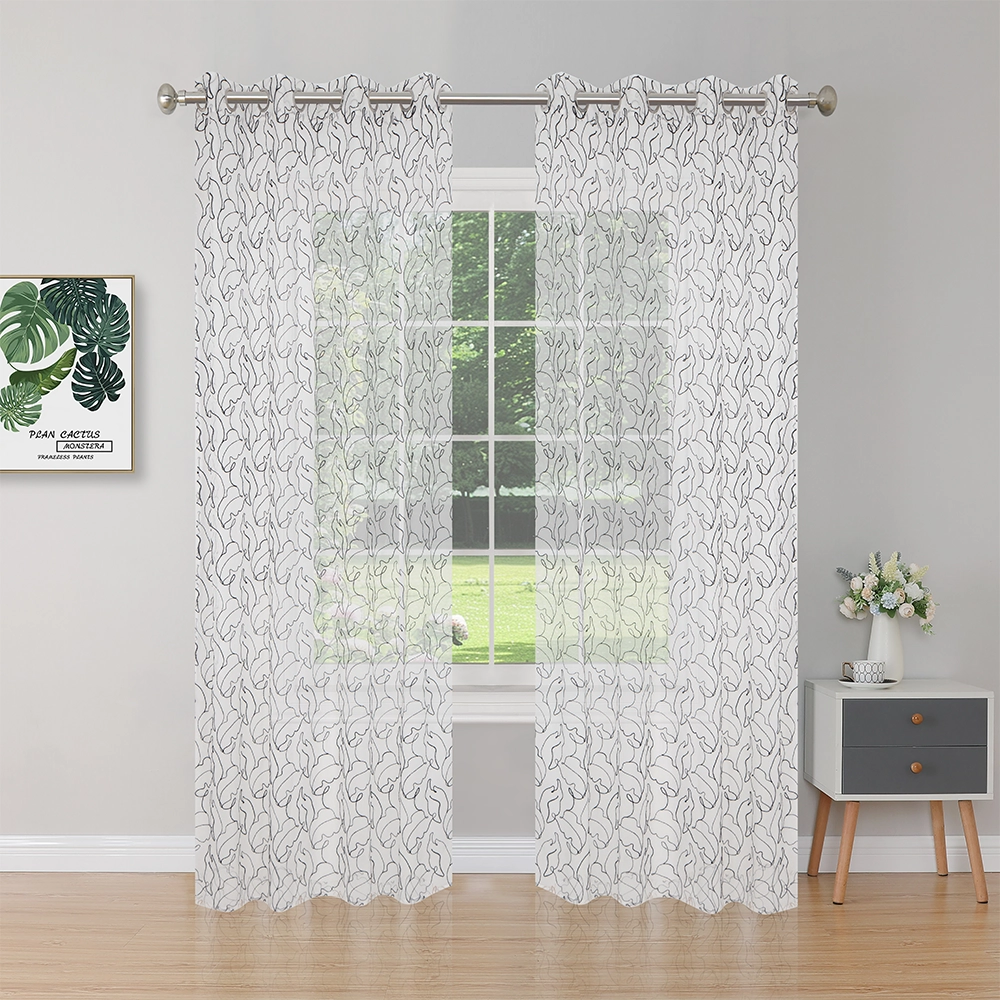
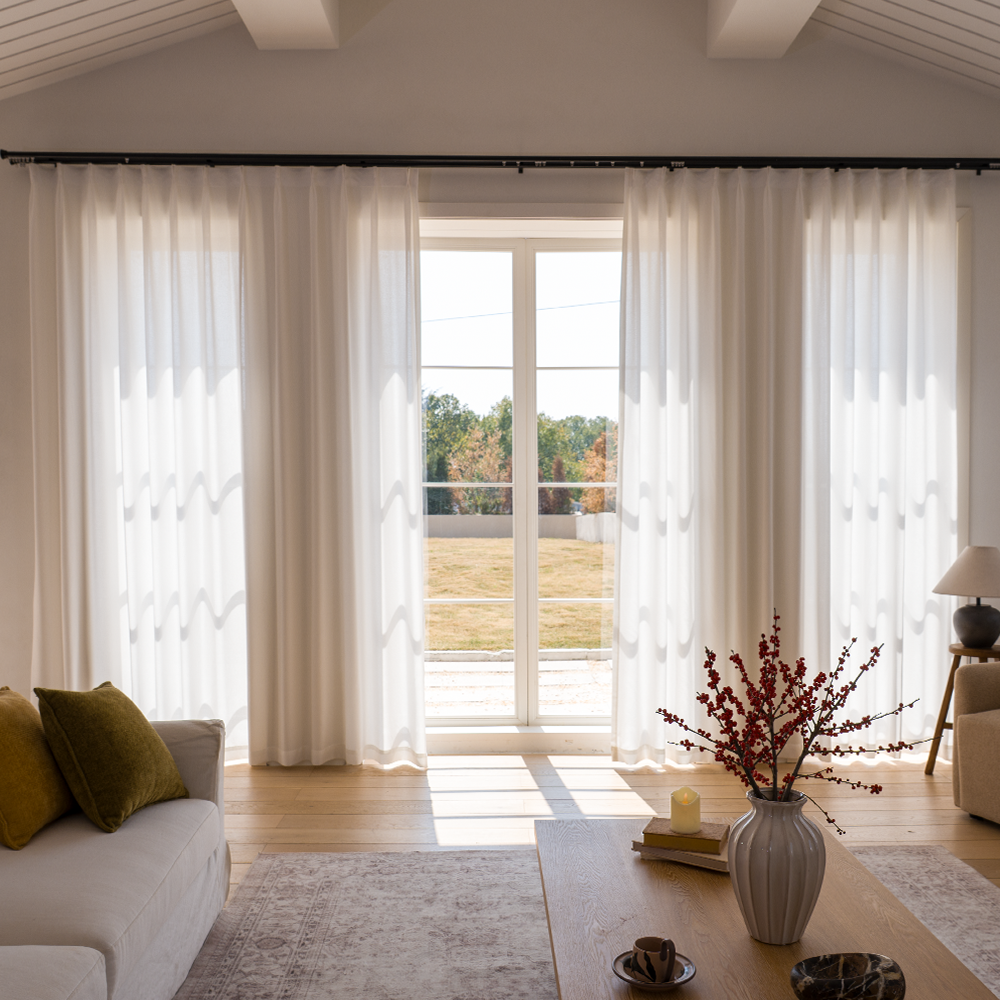
Embroidery stitches a decorative thread onto a finished base — most often a sheer or voile — to create a raised, hand-crafted motif. It is the most tactile and artisanal of the three, and it carries a clear “premium detail” signal: think embroidered sheers with delicate line work, dots or botanical motifs that catch the light. It is widely used on sheer ranges and feature panels rather than full blackout drapes.
Embroidery is generally the most expensive per panel because it adds a separate stitching operation and thread cost, and stitch density drives both price and lead time. For wholesale it shines as an accent or a higher-tier SKU in a range rather than the workhorse line. Confirm backing stability (so the stitched area does not pucker), thread fastness, and whether the motif is placed or all-over, because placement embroidery needs careful panel-cut alignment.
Jacquard vs Printed vs Embroidered: How to Choose
There is no single “best” method — the right call depends on the look you want, the price point, and how hard the curtain has to work. Use this at-a-glance comparison to match technique to program:
| Factor | Jacquard (woven) | Printed (surface) | Embroidered (stitched) |
|---|---|---|---|
| How pattern is made | Woven into the cloth | Printed on the face | Stitched onto the face |
| Look & hand | Tonal, textural, often reversible | Full-colour, photographic possible | Raised, tactile, artisanal |
| Durability & wash | Highest; cannot wash off | Good if specced well; can fade if cheap | Good; watch puckering and thread fastness |
| Design flexibility | Tonal motifs, not photographic | Unlimited designs and colours | Motif and accent work |
| Relative cost | Mid to high | Lowest at volume | Highest per panel |
| MOQ & setup | Higher for custom weave | Low setup, fast | Mid; stitch density drives cost |
| Best for | Hotels, premium & long-life ranges | Trend, seasonal, custom DTC | Accent SKUs, premium sheers |
A simple way to decide: if the curtain must look and feel upmarket and last for years of laundering, lead with jacquard. If you need design freedom, fast colours and the lowest unit cost at volume, print. If you want a high-perceived-value accent or a premium sheer, embroider. Many ranges mix all three — a jacquard hero, printed seasonal options, and an embroidered sheer at the top of the line.
Spec and Sourcing Notes for Patterned Curtains
Sampling. Always approve a physical sample before bulk — a woven swatch for jacquard, a printed strike-off for prints, a stitched sew-out for embroidery. Budget roughly 3–5 days for sampling on stock fabrics and designs, longer for a fully custom weave or print. The sample is the reference your bulk is judged against.
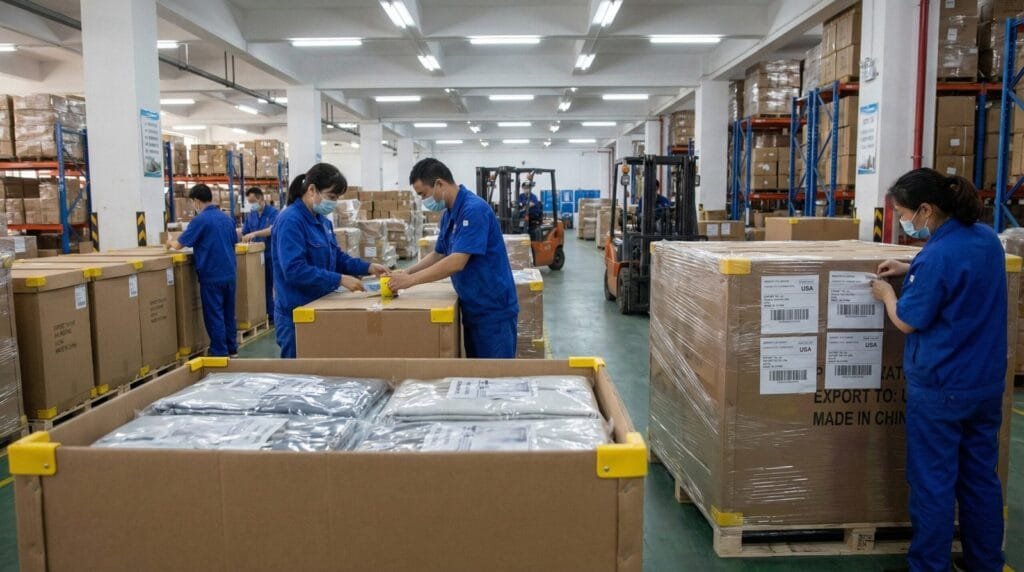
MOQ and lead time. Stock designs can start with trial orders around 50 pcs; fully custom patterns generally carry an MOQ from about 200 pcs per design/colour, with custom jacquard at the higher end because of loom setup. Standard bulk production runs about 25–30 days after sample approval, longer for heavily customised orders. Sea freight is on top (roughly 15–25 days to the US West Coast and Australia, 30–40 to the US East Coast and Europe). For the end-to-end order process, see how to source curtains from China.
Colour, dye lot and quality. Lock colours against an approved standard and require a single dye lot per order (or documented lab-dips) so panels match across a wall. Build a pre-shipment inspection into the order to check pattern registration, colour, stitching and dimensions before the balance is paid. Compliance: certifications such as OEKO-TEX and BSCI are available on a supplier-authorised basis, and flame-retardant constructions can be produced to meet common hospitality standards with documentation available on request — confirm the exact scope and standard your market needs at the quoting stage. For more on the mill side, see working with a China curtain fabric manufacturer, and use our fabric weight (GSM) guide to spec the base cloth. You can browse representative woven designs in our jacquard curtains range.
What is the difference between jacquard and printed curtains?
Jacquard patterns are woven into the fabric on a jacquard loom, so the design is part of the cloth, durable and often reversible, but tonal rather than photographic. Printed patterns are applied to the surface of a finished fabric, allowing unlimited colours and photographic designs at lower cost, but as a face-side layer rather than a through-the-cloth structure.
Are jacquard curtains more expensive than printed?
Usually yes for custom work, because a bespoke jacquard requires loom setup, which raises MOQ and first-run lead time. Printing has low setup cost and is typically the cheapest method at volume. Stock jacquard designs are far more economical than custom weaves, so ask which woven patterns are already in the supplier library.
Do printed curtain patterns fade or wash out?
Quality prints on the right base are durable and colour-fast; cheap prints can fade or crack. The variables are the print method (digital, screen or transfer), the base fabric, and colour-fastness to light and washing. Specify these and approve a strike-off, and confirm the print does not stiffen the hand more than your customer will accept.
Can jacquard curtains be blackout?
Yes. A densely woven or chenille jacquard can be engineered as a blackout, or a jacquard face can be paired with a blackout lining or coated back. You keep the woven texture on the room side while achieving full light blocking, which is why jacquard blackouts are popular in hotels and premium bedrooms.
What is the MOQ and lead time for custom patterned curtains?
Stock designs can start with trial orders around 50 pcs; fully custom patterns generally carry an MOQ from about 200 pcs per design or colour, with custom jacquard at the higher end. Sampling runs roughly 3–5 days and standard bulk about 25–30 days after approval, plus sea freight. Always confirm against a live quote for your exact spec.
Which is best for hotels and high-traffic projects?
Jacquard is usually the best fit for hotels and high-traffic projects because the woven pattern survives heavy laundering and reads as premium, and it can be built as a blackout. Printing suits trend-led or budget-sensitive ranges, and embroidery works as an accent or premium sheer rather than the main workhorse panel.
Bottom Line
Jacquard, print and embroidery are not interchangeable — they are three different products that happen to share the word “patterned”. Woven jacquard gives you durability and a premium hand for hotels and long-life ranges; printing gives you unlimited design and the lowest cost at volume; embroidery gives you artisanal accents and premium sheers. Decide the method by look, price point and how hard the curtain must work, approve a physical sample, lock colour and dye-lot, and match your MOQ and lead-time expectations to the technique. Get that right and a patterned range becomes a reliable, profitable part of your line.
Author: DAIRUI Sourcing Desk. Last reviewed: 2026-06.