Bottom line: The track decides the heading, not the other way around. Ripplefold runs on snap carriers at 8 cm spacing, S-Fold and Wave run on 60–80 mm carrier or cord systems, and the two are not interchangeable. Confirm carrier spacing, fullness, and control method before the panels are cut — a heading made for the wrong track cannot be corrected after production.
The Track Decides the Heading, Not the Other Way Around
Most buyers approach this backwards. They pick a heading style because a client liked the look in a showroom photo, then discover at installation that the carriers on site will not accept the panels they just imported.
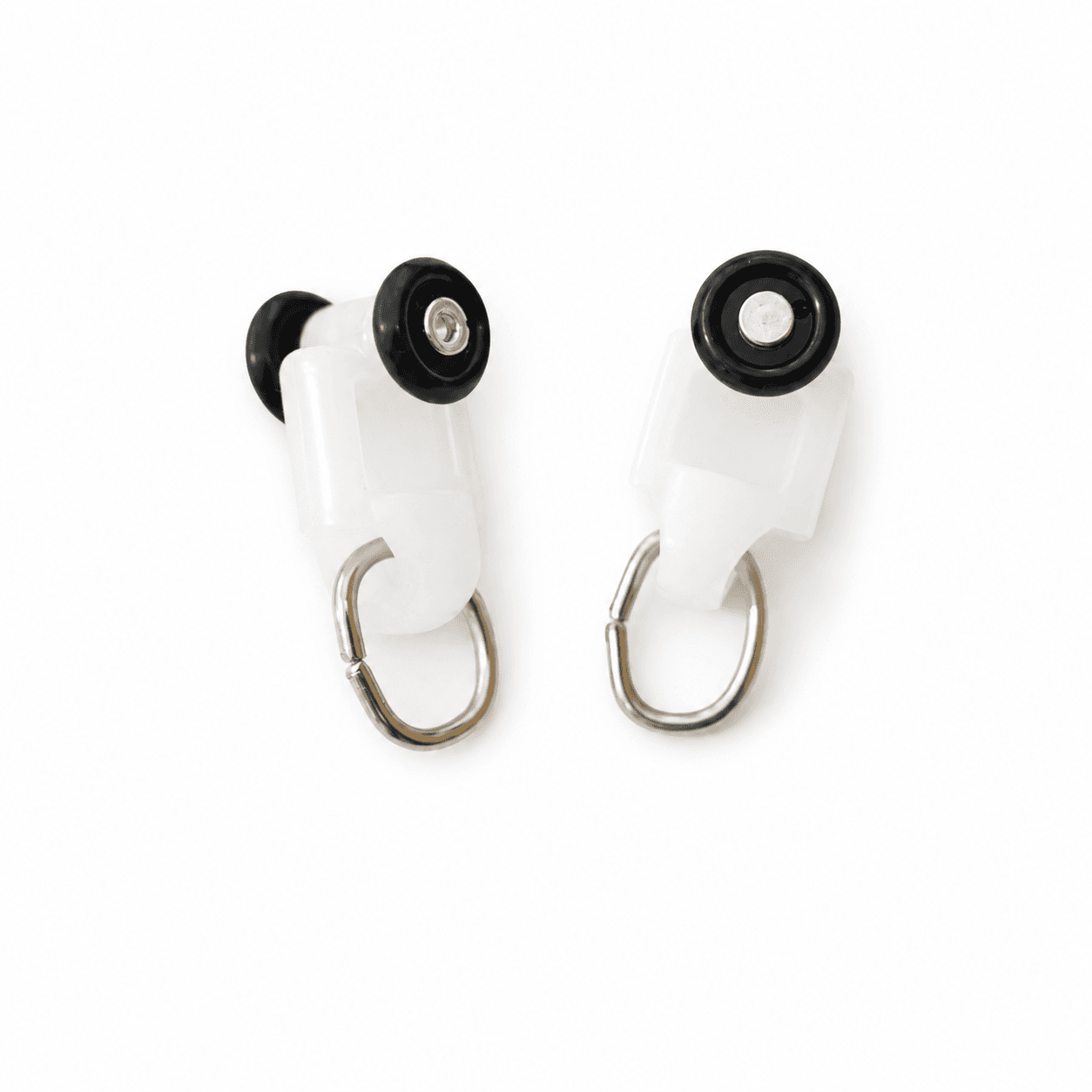
Wave-style headings — Ripplefold, S-Fold, Wave Top, S-wave, memory fold, whatever the local trade name is — do not hang on rings or hooks. Each fold is held open at a fixed interval by a carrier or a cord pocket. That interval is a hardware property. It lives in the track, not in the curtain. The panel is simply manufactured to match it.
So the sequence on any made-to-measure order is: confirm the track first, then specify the heading tape, then calculate fabric. If your client already has tracks installed — in a hotel, a showroom, a completed residential project — the heading is already decided for you. If the project is new build and nothing is installed yet, you get to choose, and that choice should be made on the purchase order rather than left to a local fit-out contractor who has never seen the fabric.
Carrier Spacing: The One Number That Has to Match
If you take one number away from this page, take this one. Carrier spacing determines how deep each wave sits, how much fabric the panel consumes, and whether the heading tape you ordered will physically clip on.
| Heading | Typical carrier / pocket spacing | How the panel attaches | Dominant market |
|---|---|---|---|
| Ripplefold | 8 cm snap-carrier spacing (12.5 cm snap tape) | Snap tape clips onto carriers | North America |
| S-Fold | Tighter spacing than Ripplefold, typically 6–8 cm | Gliders or clips into a channel track | Europe, Australia, NZ |
| Wave Top | 60 mm or 80 mm cord/pocket spacing | Wave tape on cord-drawn or snap track | Australia, Canada, UK |
| Pinch pleat | Not fixed — hooks into any glider | Pin hooks into gliders or rings | Global, contract projects |
Ripplefold and S-Fold carriers are not compatible with each other. A Ripplefold panel will not clip correctly onto an S-Fold track, and an S-Fold panel hung on Ripplefold spacing will show shallow, uneven waves. This is the single most common reason a made-to-measure order gets rejected on site, and it is entirely preventable on the purchase order.
Pinch pleat is the exception. Because it attaches with pin hooks, it works on almost any track or rod with gliders — which is why it remains the default for contract projects where the hardware is specified by someone else. If you are still weighing the look, our comparison of Ripplefold vs S-Fold covers the visual and cost differences in detail.
Ripplefold: Snap Carriers on a Channel Track
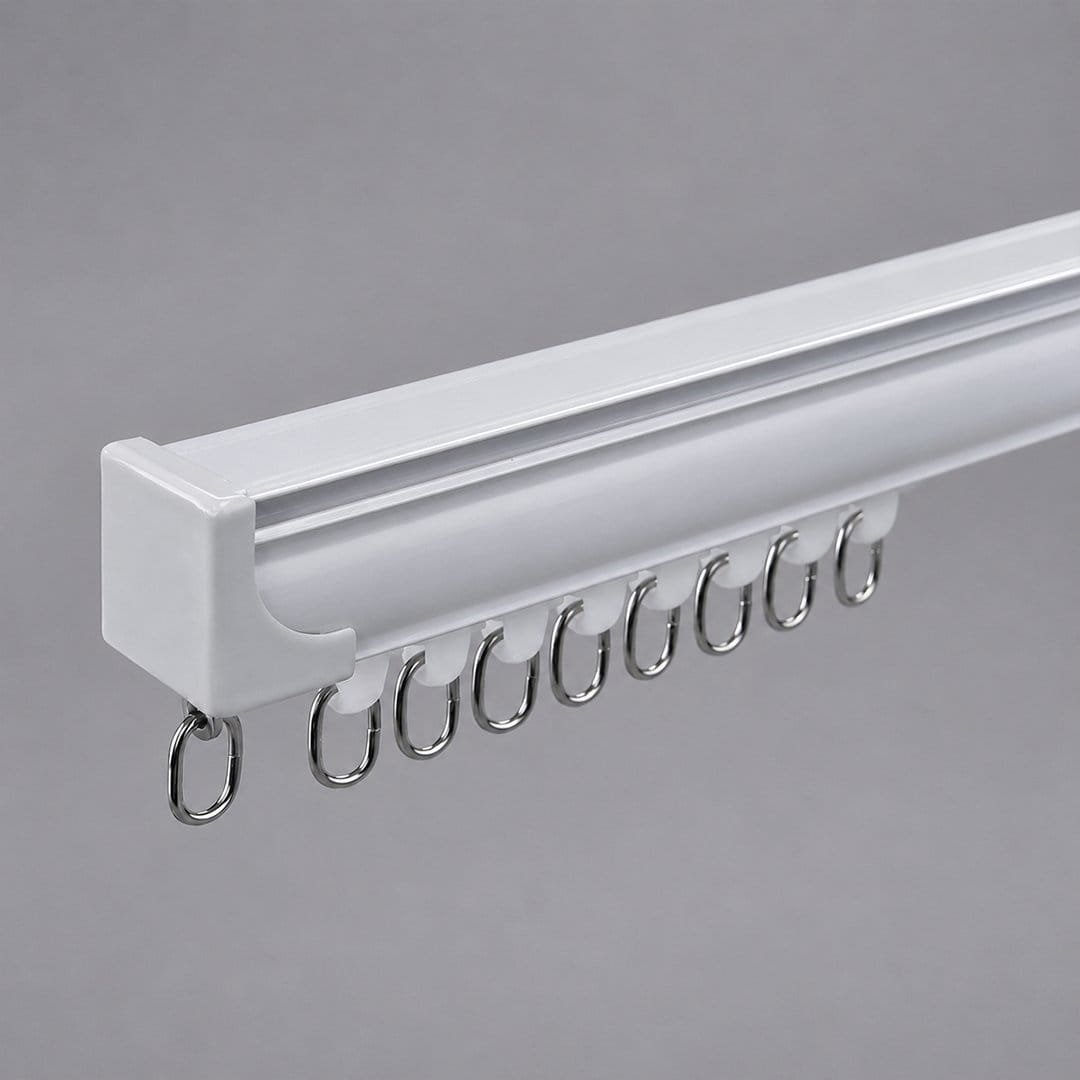
Ripplefold is the North American standard, popularised by Kirsch and now carried by most major track manufacturers in that market. The panel has no pleats sewn into it at all. Instead it carries a snap tape along the top, and the snaps clip directly onto carriers that are permanently spaced along the track.
Because the carriers are fixed, the fold depth is fixed. You cannot adjust it after the fact by moving hooks — which is exactly why it looks so consistent, and exactly why the track has to be right the first time. Snap spacing on the tape has to correspond to the carrier spacing on the rail.
For wholesale and OEM programs, Ripplefold has a real operational advantage: the panel is simpler to sew (no pleat construction), and the same fabric can be run at different fullness ratios just by changing the tape and carrier count. That makes it efficient for repeat retail programs where the same SKU serves several window sizes.
S-Fold and Wave: Cord and Glider Systems
S-Fold dominates Europe and Australia, and Wave Top is the common name for the same family in Australia, Canada and the UK. The folds are held by a stiff woven or non-woven tape with pockets at a set interval — most commonly 60 mm or 80 mm — combined with either a cord run through the pockets or gliders inserted into them.
The tighter the spacing, the deeper and more frequent the wave, and the more fabric per linear metre of track. That is why S-Fold typically consumes roughly 10–15% more fabric than Ripplefold across the same window — a real line item when you are quoting a hotel floor rather than a single room. Our guide to wave top curtains works through fabric consumption and stack-back in more depth.
One practical warning for importers: “wave” is a look, not a standard. Two suppliers can both say “wave heading” and deliver 60 mm and 80 mm pocket spacing respectively. Always put the number on the purchase order, not just the word.
Fullness to Runner Count: The Calculation That Prices the Job
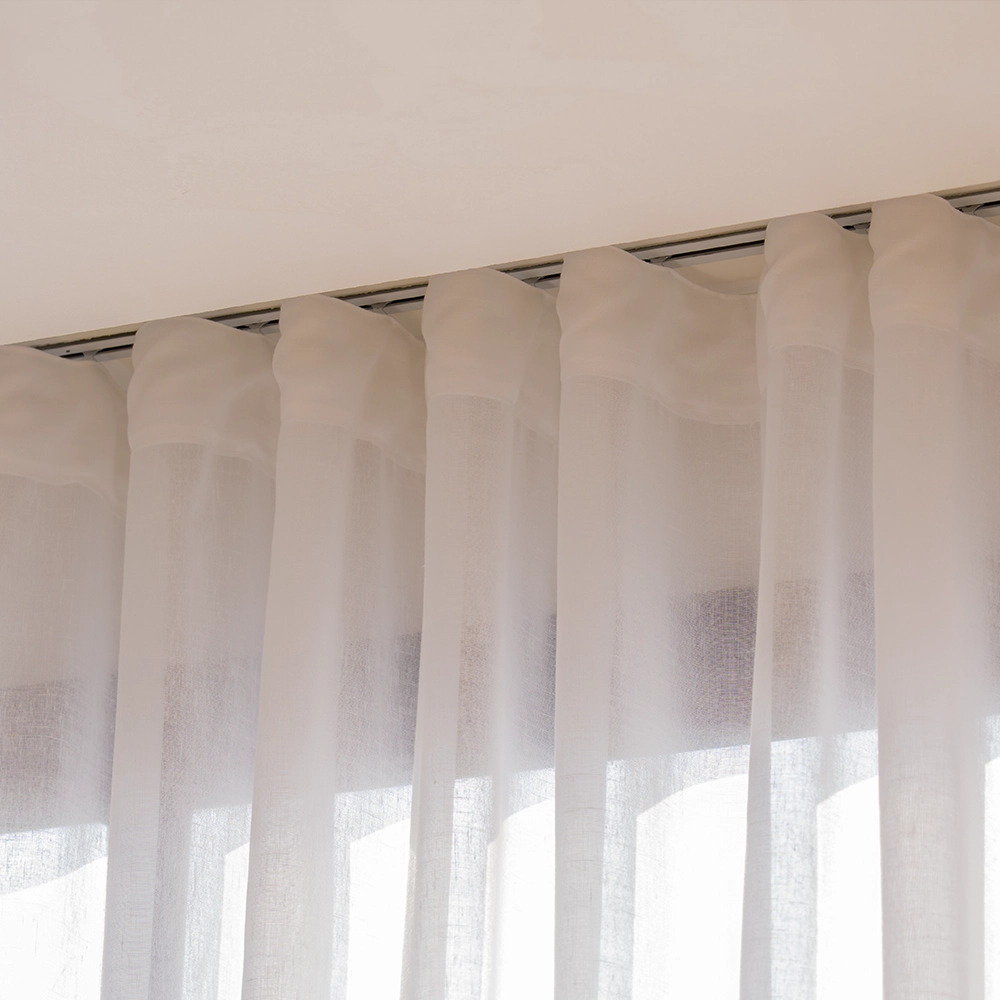
Runner count should follow the fabric width and heading style, not the wall width. Under-order runners and the waves sag between carriers; over-order and you have paid for hardware nobody installs.
| Fullness | Typical effect | Runner spacing | Best fit |
|---|---|---|---|
| 1.5x | Economical, flatter folds | 15 cm | Budget projects, rentals, utility rooms |
| 1.8x | Balanced and practical | 12 cm | Everyday residential, value programs |
| 2.0x | Standard full drape | 10 cm | Mainstream retail, hotel, private label |
| 2.2x | Rich folds, stronger depth | 9 cm | Premium rooms, heavy fabrics |
The arithmetic is simple enough to run in a quotation email. Required fabric width = track length × fullness. Runner quantity = required fabric width ÷ runner spacing.
Worked example: a 3 m track at 2.0x fullness needs 6 m of fabric width. At 10 cm runner spacing that is 6 ÷ 0.10 = about 60 runners, plus master carriers, end stops and brackets. Run the same window at 2.2x and you are at roughly 73 runners and noticeably more fabric — which is why fullness has to be agreed before anyone quotes a price per panel.
Manual, Corded or Motorised — Decide Before Production
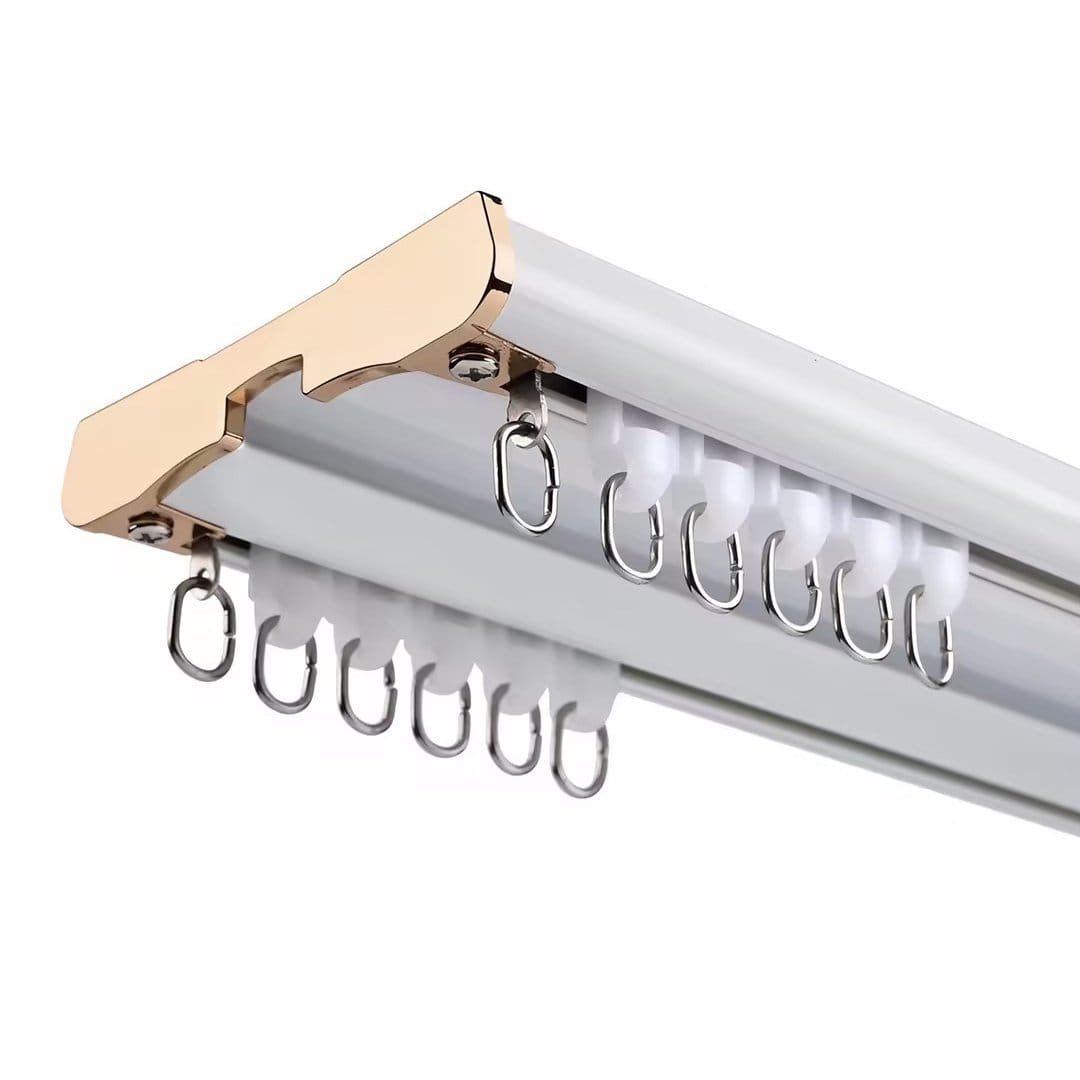
Control method is not an accessory decision bolted on at the end. It changes the track profile, the carrier type, and in some cases the heading itself.
Hand-drawn is the simplest and suits shorter residential windows, usually with a wand at the leading edge. Cord-drawn keeps hands off the fabric, which matters for sheers and light-coloured panels in hospitality. Motorised adds a motor, transmission case, synchronous belt and positioning pieces, and requires clearance at the motor end that eats into the finished track length.
Wave headings work well on motorised systems because the carriers keep the folds even through repeated cycling. But motorisation has to be designed in — power supply position, control type, and curtain box depth all have to be confirmed before the track is cut, and adding it late is the single most common cause of schedule slip on hotel jobs.
Curved and bendable profiles are their own case. Bay windows, L-shaped rooms and room dividers need a track that can take the radius without cracking or whitening at the bend, and carriers that still run smoothly through it.
Stack-Back: The Wall Space Every Heading Needs
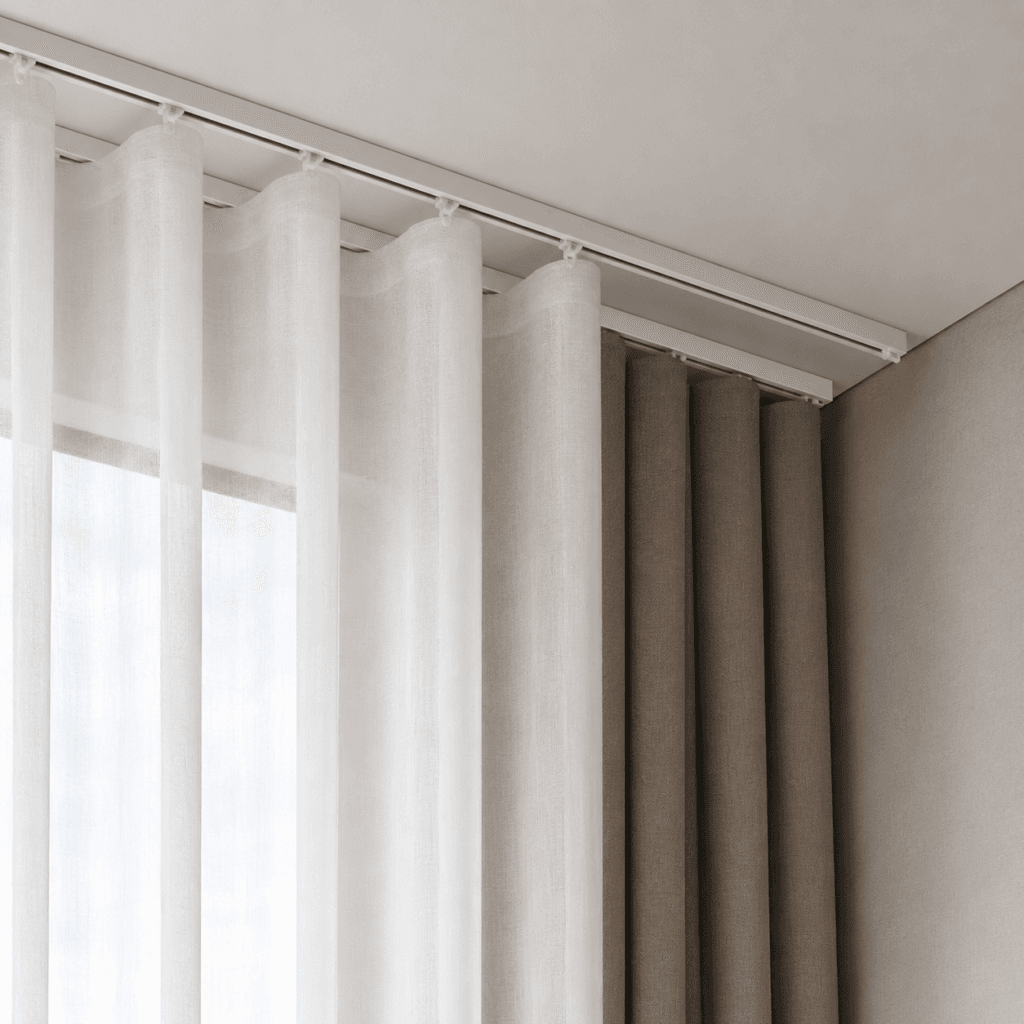
Stack-back is the bundle of fabric that sits at the side of the window when the curtain is fully open. It is the part of the specification buyers most often skip, and the part end clients complain about first — because a curtain that covers a third of the glass when open reads as a mistake, not a design choice.
Wave-family headings stack relatively compactly for their fullness, because the folds are already trained into even waves rather than gathering randomly. But compact is not the same as zero, and the heavier the fabric, the deeper the bundle. Two rules cover most orders:
- Window-only tracks — extend the track beyond the glass by 15–20 cm on each side for standard curtains, and 20–25 cm each side when heavy blackout panels need more room to stack. This keeps the open curtain off the glass and preserves the daylight the client is paying for.
- Wall-to-wall tracks — do the opposite. Do not add side extension; the track is deducted from the wall width instead, and the stack simply lives at the ends of the run. Applying window-only logic to a wall-to-wall track is a classic way to order a track that physically does not fit.
Stack-back also interacts with fullness. Going from 2.0x to 2.2x makes the drape richer but the open bundle noticeably deeper — worth flagging to a client who has a narrow return wall or a balcony door they need to walk through. For hotel work, where the same window schedule repeats across hundreds of rooms, getting this wrong once means getting it wrong everywhere.
What to Put on the Purchase Order
Nine lines prevent almost every heading-versus-track dispute. Copy them into your next enquiry:
- Heading name and system — Ripplefold, S-Fold, Wave, pinch pleat (and the trade name your client used)
- Carrier or pocket spacing in mm — 60 mm, 80 mm, 8 cm snap; do not rely on the word alone
- Fullness ratio — 1.5x / 1.8x / 2.0x / 2.2x
- Track length and mounting — ceiling or wall, and the substrate (concrete, timber, drywall)
- Control method — hand-drawn, cord-drawn, or motorised (and motor side if motorised)
- Whether track is included — curtains only, or curtains plus hardware on one order
- Runner and accessory count — runners, master carriers, brackets, end covers, connectors
- Fabric weight — heavier blackout needs closer bracket spacing and a stronger profile
- Spare parts — spare runners and brackets for project maintenance
On profile quality, aluminium thickness is the practical proxy. Industry practice treats 1.0 mm or above as a working benchmark for projects, while motorised profiles commonly list 1.1–1.9 mm. Bracket spacing is usually planned around 50–60 cm, closer for heavy blackout drapery.
FAQ
Can Ripplefold panels hang on an S-Fold track?
No. Ripplefold uses snap carriers at roughly 8 cm spacing, while S-Fold uses tighter glider or clip spacing with different geometry. The panel will either not attach or will hang with shallow, uneven waves. Confirm which system the installed track uses before specifying the heading.
Do wave curtains need a special track?
Yes. Wave headings require a compatible cord-drawn wave track or a snap-carrier track that holds each wave pocket at the correct interval, usually 60 mm or 80 mm. Hung on a standard rod or pole, the folds collapse into an uneven gather.
How many runners do I need per metre of track?
Work from fabric width, not wall width. Required fabric width = track length × fullness, then divide by runner spacing. At 2.0x fullness and 10 cm spacing, a 3 m track needs about 60 runners. Always add master carriers and a few spares for maintenance.
Which heading is best for hotel projects?
Wave-family headings (Ripplefold or S-Fold) are common in upper-upscale rooms because they stack neatly and stay even through daily cycling. Pinch pleat remains widely used in contract work because it hooks onto whatever gliders the property already has. The deciding factor is usually the installed hardware, not the aesthetic.
Can Dairui supply the track with the curtains?
Yes. Tracks, runners, brackets, connectors and motor options can be quoted on the same order as the curtains, so carrier spacing and heading are matched before production rather than sourced from two suppliers. See our wholesale curtain track range for the profiles and accessories available.
What if my client already has tracks installed?
Then the heading is already determined. Ask for the track brand and model, or a photo of the carriers, and measure the spacing between two adjacent carriers. Send that measurement with the order and the panels will be manufactured to fit the existing system.
Bottom Line
Heading style and track are one specification, not two purchases. Fix the carrier spacing first, then the fullness, then the control method — and put all three on the purchase order in numbers rather than trade names. Ripplefold at 8 cm snap spacing, S-Fold at tighter glider spacing, Wave at 60 or 80 mm pockets: get that line right and the rest of the order is straightforward.
If you are still choosing between heading styles for a program, start with our complete guide to curtain heading styles, then match the hardware from the curtain track range. For hospitality specifications, the hotel curtain supplier guide covers fire compliance and blackout levels alongside hardware.
DAIRUI Sourcing Desk — curtain and track manufacturing for importers, wholesalers, private label brands and hospitality projects. Pricing, MOQ and lead times quoted per order.
Last reviewed: 2026-08