Bottom line: 100% linen, linen blend and polyester linen-look curtains are three different sourcing routes. The correct choice depends on the fiber-content claim, visual target, handfeel, drape, care expectations and the level of variation the buyer is prepared to approve. “Linen-look” describes an appearance; it must not be used as proof that a fabric contains flax.
For importers, wholesalers, brands, retailers and hospitality buyers, the first control is simple: separate the marketing name from the composition specification. Then approve the exact cloth and finished sample against the intended program.
Three routes, three different product promises
| Route | What the name should mean | Main buyer decision | Evidence to approve |
|---|---|---|---|
| 100% linen | The declared fiber composition is linen/flax, subject to the applicable labeling basis and supporting specification. | Whether authentic fiber content and the accepted natural-looking variation fit the brand or project brief. | Composition documentation for the exact item, face and handfeel, color, width, GSM, care route and finished-panel sample. |
| Linen blend | Linen is combined with one or more other stated fibers. | Which blend and construction give the intended appearance and operating requirements. | Exact percentage composition, yarn/weave description, color, handfeel, width, GSM, care and finished behavior. |
| Polyester linen-look | A polyester fabric is designed to reproduce linen-like texture or visual irregularity without being sold as natural linen. | Whether the visual target and program requirements matter more than natural-fiber identity. | Accurate polyester labeling, approved texture/slub effect, shade, width, GSM, care and finished sample. |
Choose 100% linen when fiber identity is part of the brief
Use the 100% linen route when the specified natural fiber is itself part of the product story or project requirement. The purchase specification must identify the exact composition and the approved fabric rather than rely on the word “linen” in a collection name.
Natural-looking variation should be discussed during approval, not discovered after production. Buyers should define what appearance is intentional, how color and texture will be reviewed and whether a small swatch is sufficient to represent the finished curtain. Fiber content alone does not prove shrinkage, color consistency, care behavior, light control or finished dimensions; those remain separate specification and sample questions.
Choose a linen blend when the combination is deliberate
A linen blend should be bought as a specified composition, not as a vague midpoint between “real” and “faux.” Different companion fibers and constructions can create different handfeel, sheen, drape and care outcomes. The buyer therefore needs the exact fiber percentages for the selected item and a sample that demonstrates the intended result.
This route can be useful when the design brief wants some linen content while also targeting other construction characteristics. But no universal performance claim should be inferred from the word “blend.” The final decision belongs to the exact yarn, weave, finish and finished-panel construction.
Choose polyester linen-look when appearance is the product target
Polyester linen-look fabric can reproduce a slubbed, textured or matte direction associated with linen while remaining a polyester product. It is a legitimate B2B category when labeled accurately. It becomes a sourcing risk when “linen-look,” “linen-style” or a collection name is shortened into a false natural-fiber claim.
Buyers should approve the texture from the face and at hanging distance, because an attractive close-up does not always predict the full-panel appearance. Record the exact composition, width, GSM, color, handfeel and care specification for the selected item.
Do not use one comparison to answer every performance question
Composition is only one layer of the specification. The following outcomes require their own evidence:
- Light control: depends on the fabric construction and any lining, coating or film; “linen” does not define blackout performance.
- Drape: review the exact GSM, weave, finish and finished scale rather than using fiber name as a shortcut.
- Width and seam planning: confirm the selected item’s usable width and direction.
- Care and dimensional behavior: approve the applicable care route and any project-specific performance evidence for the exact fabric.
- Compliance: match any requested document to the precise material, finish, color, scope and responsible legal entity.
A sourcing sequence that protects the composition claim
- Write the market claim. Decide whether the program must be sold as 100% linen, a named linen blend or polyester linen-look.
- Request the exact composition. Put the percentages in the RFQ and approval record.
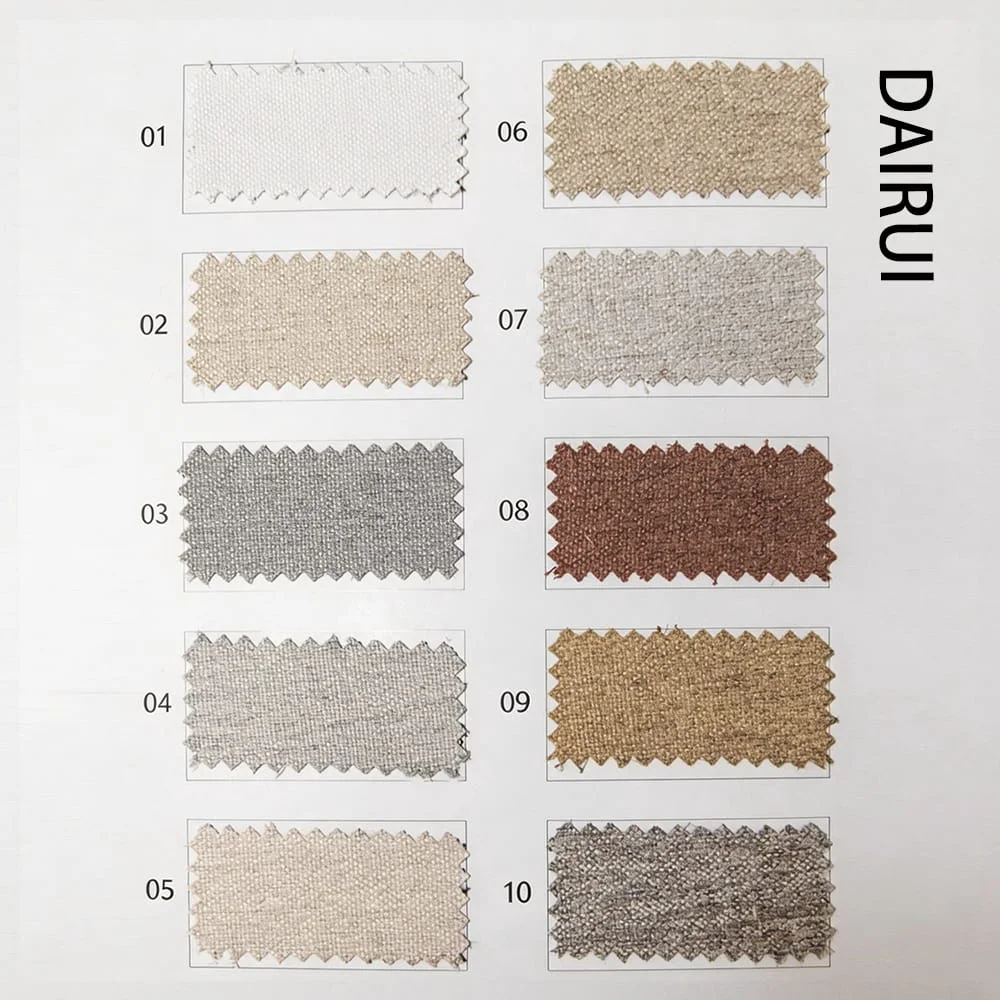
- Shortlist by swatch. Compare color, texture, handfeel, opacity, GSM and width on named samples.
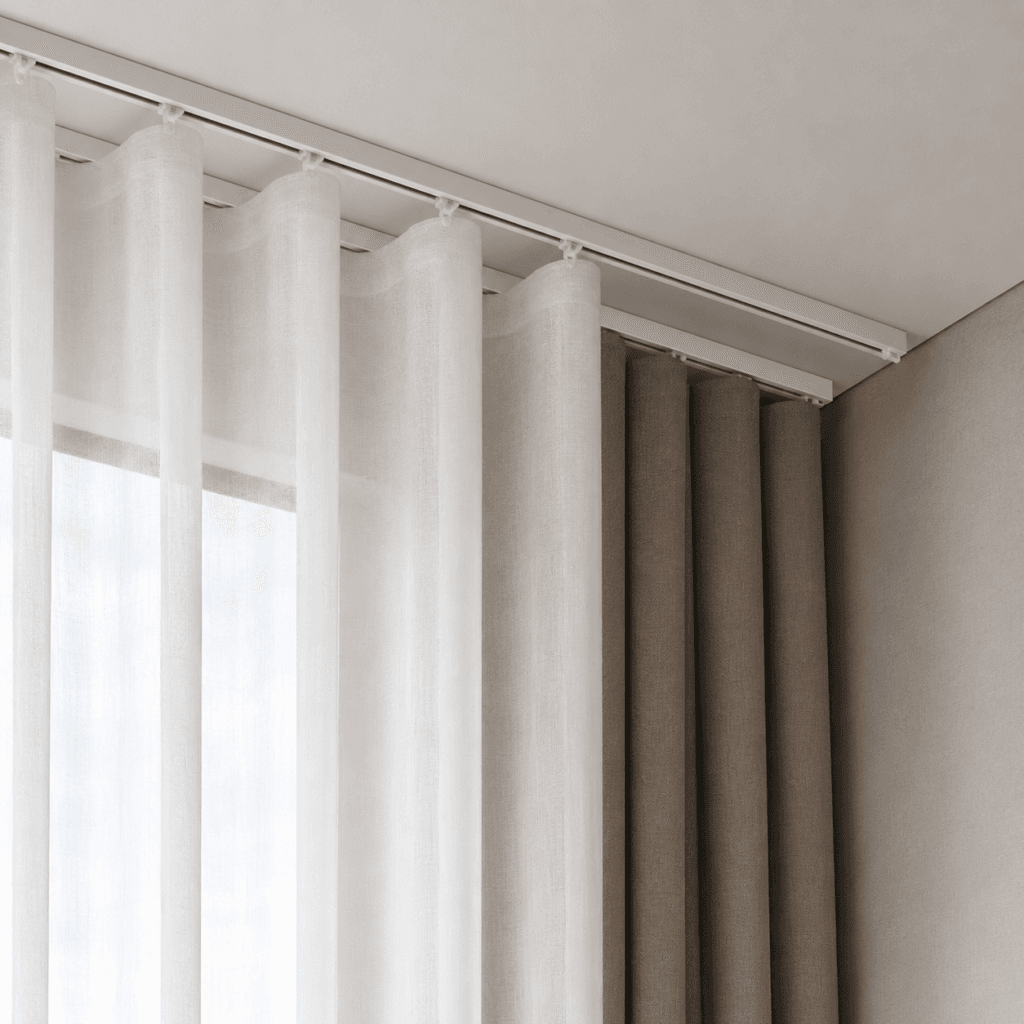
- Check the finished use. Add lining, heading and panel dimensions to a finished sample when they affect drape or light control.
- Align product copy and labels. Ensure packaging, care/fiber labels, invoices and online descriptions use the same approved composition language.
- Keep the reference traceable. Attach the sample identity, revision and approved copy to the purchase specification.
Red flags in a linen-curtain quotation
- The quote says only “linen” but gives no fiber composition.
- A linen-look item is described as natural linen without supporting item-level information.
- The fiber claim changes between the swatch label, quotation, online copy and packaging.
- A composition name is used to promise shrinkage, blackout or other performance without specific evidence.
- Width or GSM is copied from a family catalog but not confirmed for the selected construction.
Buyer FAQs
Is faux linen the same as a linen blend?
Not necessarily. A linen blend contains a stated proportion of linen with other fibers. A faux or linen-look fabric may contain no linen. The exact composition must be declared.
Can any of the three routes be made into a light-control curtain?
Potentially, depending on the exact face construction and any lining, coating or film. Approve the resulting fabric or finished-panel system; do not infer the result from the fiber name.
Which route is best for a B2B program?
The one that matches the intended composition claim, visual direction, approved sample and operating requirements. There is no universal ranking independent of the buyer’s market and specification.
Compare named materials, not labels
Explore the available directions in the Linen Curtain category. Use Sample Support to compare composition, handfeel and finished behavior, or work with a curtain supplier when building a multi-style B2B range.
DAIRUI Sourcing Desk
Last reviewed: 2026-08