Bottom line: velvet panels cut in different nap directions can appear to be different colors even when they come from the same specified shade. The pile reflects light differently when its direction changes. Buyers should lock one top-to-bottom orientation, mark it on the approved sample and verify full panels under consistent viewing conditions.
This is a specification and cutting-control issue, not simply a color-matching issue. Reordering dye, changing a shade reference or judging folded fabric may not solve a panel-to-panel difference caused by reversed pile.
Why the same velvet can show two color impressions
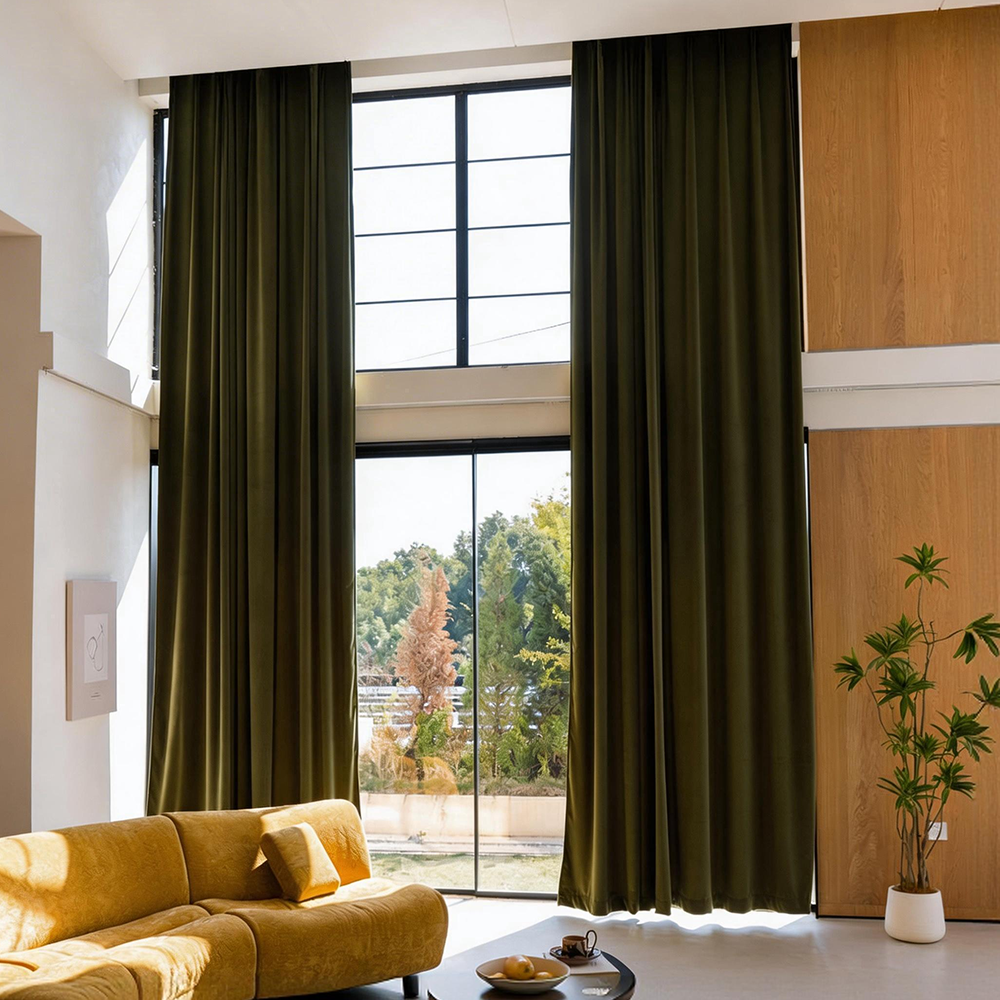
Velvet has a raised pile. When the pile points in one direction, the surface can reflect and absorb the room’s light differently than it does when the pile points the opposite way. Longer pile and more visible sheen can make the effect more obvious, but the actual appearance must be judged on the selected fabric.
The result changes with viewing direction and lighting. A panel can look deeper from one side and lighter from another without the underlying shade reference having changed. This is why a small folded cutting, photographed once, is weak evidence for finished-panel consistency.
Decide the orientation before marker planning and cutting
The buyer and supplier should agree which edge is the top of the finished curtain and how the pile runs from top to bottom. Mark that direction on the approved fabric sample, finished sample and production specification. The decision should carry through marker planning, cutting, sewing, replacement panels and future reorders.
Mixing orientations inside one room set or one packaged pair can create a visible mismatch. Even when the material identity is correct, one reversed panel can reflect light differently from its neighbor.
Use directional controls that survive handoffs
| Control point | What to record | Why it matters |
|---|---|---|
| Swatch | A clear arrow and “top” reference on the face | Prevents the approved color impression from losing its orientation |
| Specification | One written pile direction for all panels in the set | Connects design approval to cutting instructions |
| Marker/cutting | Directional layout requirement | Prevents rotation for yield convenience when appearance would change |
| Finished sample or PPS | Hanging orientation, side treatment, dimensions and visual reference | Shows the complete panel rather than only the roll surface |
| Inspection | Panels viewed together, facing the same way under consistent light | Separates nap reversal from actual shade variation |
| Reorder record | Approved sample identity and direction retained with the SKU | Helps replacement panels follow the original visual logic |
How to review perceived color consistently
Hang candidate or approval panels side by side with all tops aligned. Observe them from the same position under an agreed lighting condition, then change the viewing angle deliberately to understand the directional effect. Photographing the setup can help document orientation, but the physical approved reference should remain identified.
If two panels appear different, rotate or brush only as part of a controlled diagnosis—without changing the approved reference—and check the direction marks. Then separate three possible causes:
- Nap direction: the surface changes when the panel orientation changes.
- Pile disturbance: pressure or handling has temporarily changed the surface appearance.
- Shade or material difference: the panels remain different after orientation and surface direction are aligned.
The acceptance process should define how these observations are handled for the specific velvet. Do not publish a universal numerical color tolerance or inspection frequency when none has been agreed for the order.
Nap direction is connected to other velvet approvals
Direction is not the only variable. Pile length, sheen, knit or woven structure, stretch, GSM and backing can affect the finished appearance and construction. GSM is useful for identifying and planning the product, but it does not alone establish quality, light control or market position.
For stretch-knit velvet, the material’s extension can influence cutting and side treatment. Check this at PPS rather than applying one fixed side-hem value to every velvet. Approve the exact edge construction and finished dimensions on the selected material.
A buyer’s velvet panel-consistency checklist
- Exact fabric, color and construction identified
- Face and pile direction clearly marked
- One top-to-bottom orientation agreed for the SKU or room set
- Full panel viewed under consistent light and from relevant angles
- Heading, side treatment and finished dimensions approved on the exact velvet
- Stretch behavior considered where applicable
- Panels reviewed together rather than as isolated folded pieces
- Approved sample and direction retained for reorders or replacements
Focused FAQs
Does a directional color shift mean the dye is wrong?
Not necessarily. Reversed nap can change reflected light and create a different color impression. Check orientation under consistent light before concluding that the shade differs.
Can panels be rotated during cutting to improve fabric yield?
Only if the buyer has approved that approach for the exact fabric and appearance. Where nap is visibly directional, rotating pieces can create inconsistent finished panels.
Is GSM enough to select a velvet program?
No. Compare pile, sheen, direction, stretch, backing, handfeel, drape and the finished-panel result together.
Approve velvet at finished-panel scale
Use the Velvet Curtain category to shortlist constructions, then request a direction-marked finished sample or PPS through Sample Support. Project buyers can coordinate panel and room requirements through Solutions Support.
DAIRUI Sourcing Desk
Last reviewed: 2026-08