Bottom line: Tab Top curtains use 5–7 fabric loops per meter sewn directly to the top edge — no header tape, no pleat hardware, lower production cost than pleated styles. They fit casual cottage, farmhouse, coastal, and Scandinavian interiors. Standard MOQ 200 per color/size (50–100 trial, 800–1,000m for custom-woven fabric); finished spec runs 5cm-wide tabs at 10–14cm length with 3cm side hems, and a 24-hour fabric relaxation step preventing 2–3% post-wash shrinkage.
Last reviewed: 2026-05
Tab Top curtains use fabric loops sewn directly to the panel’s top edge — the curtain rod slides through these loops, creating a clean, exposed-rod look. They are one of the seven heading styles produced at scale, and a steady choice for casual interior styles like cottage, farmhouse, coastal, and Scandinavian.
This guide covers what Tab Top curtains are, how they’re manufactured, when they outperform other heading styles, and what B2B buyers should ask before placing an order.
What Are Tab Top Curtains?
A Tab Top curtain has a row of fabric loops — usually 5 to 7 loops per meter of finished width — sewn flat across the panel’s top hem. The rod passes through these loops directly. There is no header tape, no pleating mechanism, no grommet hardware.
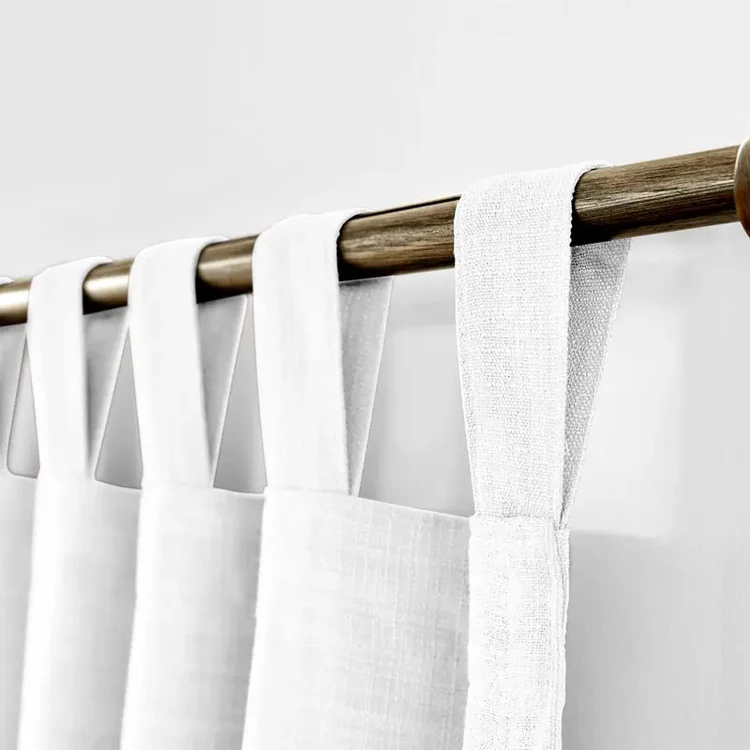
The result is a relaxed, slightly informal drape with visible space between each loop. Light gathers fall naturally between tabs, and the curtain rod stays partially visible as part of the visual composition. This contrasts with Pinch Pleat or Ripplefold, where the heading is engineered to hide the rod.
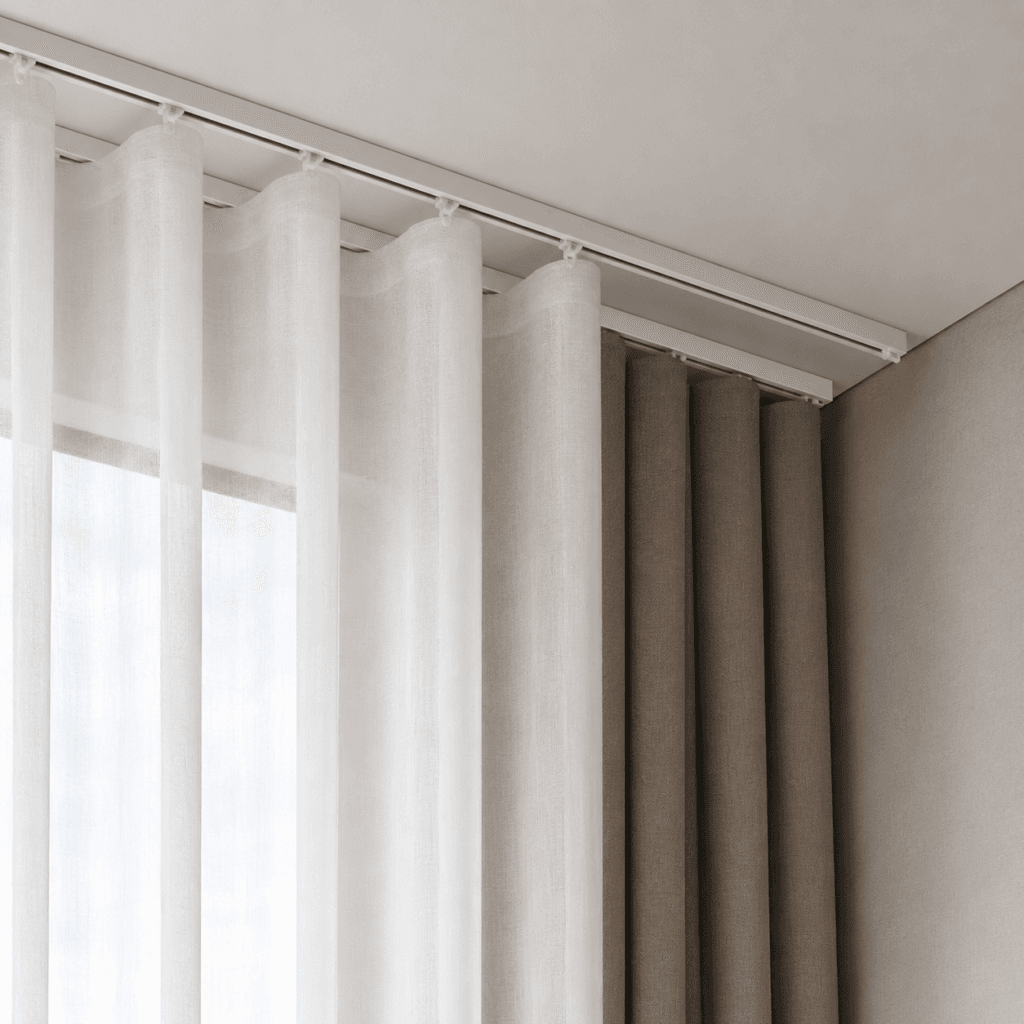
Tab Top sits in a distinct category from the other six heading styles we produce: Ripplefold/S-fold, Pinch Pleat (single/double/triple), Wave Top, Pencil Pleat, Grommet/Eyelet, and Back Tab. Where most pleated styles aim for tailored uniformity, Tab Top leans into casual texture.
How Tab Top Curtains Are Made (A Factory View)
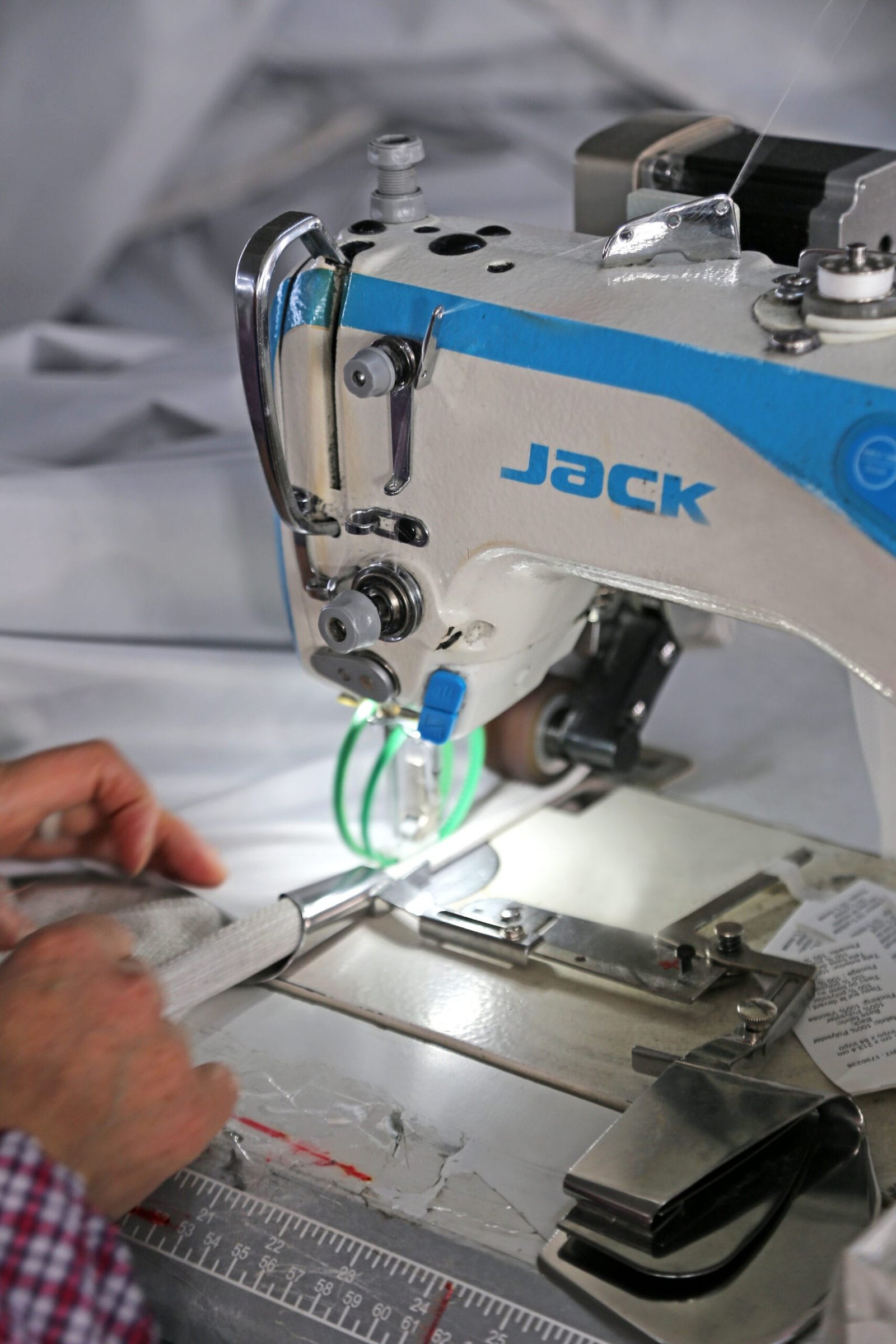
A common misconception is that curtain manufacturers stock finished curtains by the SKU. We don’t — and most factories at our scale don’t either. The reason: with 7 heading styles, dozens of standard sizes, and color variants, finished-goods inventory becomes dead stock fast.
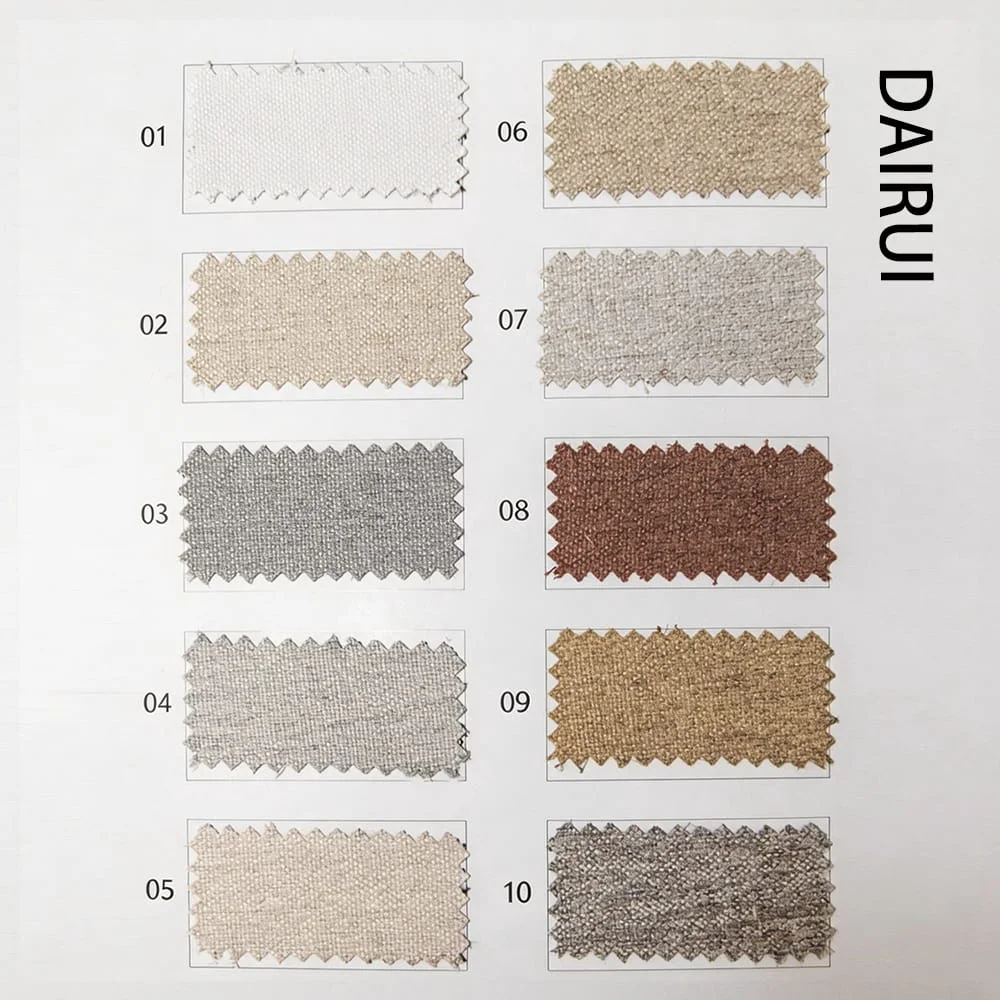
What we actually stock is fabric. Our 10,000 m² facility holds rolling fabric inventory across linen, polyester, blackout, sheer, and blend constructions in multiple colors and GSM weights. When an order comes in — whether for Tab Top, Pinch Pleat, or Grommet — we pull from that fabric inventory and manufacture to the customer’s specified heading style and size.
This is what makes flexible MOQ structures possible:
- In-stock fabrics, standard MOQ: 200 pieces per style and per color
- Trial orders: 50–100 pieces, subject to discussion
- Custom-woven fabrics: 800–1,000 meters
- Dropshipping: : per-order fulfillment for stores with existing sales
For Tab Top specifically, the production sequence runs like this:
- Fabric pull and relaxation — fabric rolls rest 24 hours after unrolling, before cutting. Skipping this step causes 2–3% shrinkage variance after the first wash. We learned to standardize this around 2019 after a Canadian retailer’s order came back with inconsistent finished lengths.
- Cutting to size — width allows for the standard 3 cm side hems (4 cm or 5 cm available on request) and 7 cm bottom fold (8 cm or 10 cm available).
- Tab construction — each tab is a folded fabric strip, typically 5 cm wide finished, 10–14 cm long depending on rod diameter. Tab spacing is calculated from the panel’s finished width: 5–7 tabs per meter is standard.
- Tab attachment — tabs are sewn to the front and back of the top hem with reinforced bartack stitching. This is the load-bearing seam; it carries the panel’s full weight on the rod.
- Heat-setting — finished panels run through industrial heat-setting machines to lock dimensional stability. For Tab Top this is less about pleat memory (it has no pleats) and more about fabric flatness across the top edge.
- QC and packing — inspection covers tab spacing, seam integrity, and panel squareness. Our QC supervisor checks every batch’s tab pull-strength against a calibrated standard before packing.
Lead time runs 30+ days from deposit confirmation for bulk orders. Sample lead time is 3–5 working days, excluding international shipping.
Tab Top vs Other Heading Styles
This is the most common question from buyers comparing options. Each heading style serves a different aesthetic, opening behavior, and price point. If your project runs on tracks rather than rods, also compare wave top curtains before settling on a heading.

| Heading Style | Look | Opening Action | Rod Visibility | Best For | Production Complexity |
|---|---|---|---|---|---|
| Tab Top | Casual, exposed loops | Manual slide, slight friction | Fully visible | Cottage, farmhouse, coastal, kids’ rooms | Low — simplest construction |
| Rod Pocket | Soft gathered top | Manual slide, more friction | Hidden inside pocket | Casual, traditional, light fabrics | Low |
| Grommet / Eyelet | Modern, metal rings | Smooth slide on rod | Fully visible | Contemporary, modern, masculine interiors | Medium — requires hardware |
| Pinch Pleat | Tailored, structured | Smooth on rings or track | Hidden | Formal, traditional, hospitality | High — pleat hand-sewing |
| Ripplefold / S-fold | Continuous wave folds | Smooth on track | Track-mounted, hidden | Modern, minimalist, hospitality | High — track-specific |
| Wave Top | Soft consistent waves | Smooth on track | Track-mounted, hidden | Modern residential, Australian/Canadian markets | Medium-High |
| Back Tab | Clean front, hidden back loops | Manual slide on rod | Hidden behind panel | Modern, minimalist (Tab Top look without exposed rod) | Low-Medium |
A few practical notes from selling all seven globally:
- Tab Top and Rod Pocket are the lowest-cost heading styles to manufacture — no hardware, no pleating jigs. This makes Tab Top a margin-friendly choice for retailers competing on price points under $60 per panel.
- Grommet sells strongest in North American DTC channels. Tab Top sells stronger in farmhouse-styled retailers and cottage-rental categories.
- Pinch Pleat and Ripplefold dominate hospitality projects — most hotel procurement specs require one of these for the tailored look.
- Back Tab is often the answer when a buyer wants the Tab Top aesthetic without the visible rod. It’s worth offering Back Tab as an alternative when a customer asks for Tab Top in a more contemporary setting.
When Tab Top Works Best (And When It Doesn’t)
Tab Top is not a universal heading style. Knowing where it underperforms saves returns.
Where Tab Top works well
- Casual interior styles — cottage, farmhouse, coastal, Scandinavian, boho. The exposed loops are part of the aesthetic, not a compromise.
- Decorative curtains that stay open — windows where panels frame the view rather than function as daily light control.
- Lightweight to mid-weight fabrics — linen (200–280 GSM), cotton-linen blends, lightweight polyester. The tabs carry the load comfortably.
- Decorative rods with visible finishes — wood rods, antique brass, brushed nickel. Tab Top frames the rod as a design element.
- Kids’ rooms and casual bedrooms — the relaxed look reads as approachable; the simple construction tolerates more handling.
Where Tab Top struggles
- Heavy blackout panels (4-layer composite, velvet) — tabs get pulled hard with each open/close cycle. Stitching strain becomes visible after 6–12 months of daily use. We recommend Grommet or Back Tab for blackout drapery in master bedrooms.
- High-frequency open/close use — Tab Top has friction against the rod. Each tab catches slightly. For windows opened multiple times daily, customers report fatigue with the manual slide.
- Formal interiors — boardrooms, executive offices, formal living rooms, hospitality lobbies. Tab Top reads informal in these settings; Pinch Pleat or Ripplefold are the safer specifications.
- Floor-to-ceiling drama — Tab Top breaks the visual line at the top with each loop. For 9-foot-plus drops where you want a continuous fabric wash, Wave Top or Ripplefold deliver better.
A reorder pattern we’ve watched closely: a Canadian home retail chain with 100+ stores carries both Tab Top (linen, multiple colors) and Grommet (blackout) in the same catalog. Their Tab Top SKUs sell strongest March–August (cottage and rental season). Grommet sells year-round but peaks October–February. Same retailer, same fabric supplier, two heading styles solving two different customer needs.
Fabric Choices for Tab Top Curtains
Heading style and fabric weight need to be specified together. The wrong combination either looks limp (heading too heavy for fabric) or strains the construction (fabric too heavy for heading).
| Fabric Type | Typical GSM | Tab Top Suitability | Notes |
|---|---|---|---|
| Linen | 180–280 | Excellent | The natural texture pairs visually with the casual heading style. Most-requested Tab Top fabric. |
| Cotton-Linen Blend | 200–260 | Excellent | Softer drape than pure linen; better wrinkle recovery for retail packaging. |
| Lightweight Polyester | 150–220 | Good | Strong DTC option for color consistency and easy care. Tab pull-strength holds well. |
| Sheer / Voile | 60–120 | Acceptable | Possible but rare — Tab Top reads heavier than the sheer aesthetic typically wants. |
| Mid-weight Blackout | 280–340 | Acceptable | Functional but tab strain shows over time. Reinforced bartack required. |
| Heavy Blackout (4-layer composite) | 400–500+ | Not recommended | Tabs fail under repeated load. Switch to Grommet or Back Tab. |
| Velvet | 350–500 | Not recommended | Same load issue, plus visual weight overwhelms casual heading style. |
For DTC brands building a Tab Top capsule, linen and cotton-linen blends are the safest combinations. Most repeat orders we ship in this category fall in the 200–260 GSM linen range across natural, ivory, sage, charcoal, and warm earth tones.
Sizing and Hardware Considerations
Tab Top sizing follows the same standard panel dimensions used across heading styles. For North American dropshipping orders, the menu is built around:
- 52″ × 84″ (132 × 213 cm)
- 52″ × 96″ (132 × 244 cm)
- 52″ × 108″ (132 × 274 cm)
- 52″ × 120″ (132 × 305 cm)
Other sizes are available on request, adding 1–2 days to lead time for cutting setup.
A few sizing considerations specific to Tab Top:
Tab inner diameter and rod thickness. Tabs need to slide smoothly over the rod without binding. For a 1.25″ (32 mm) rod, tab inner length should be at least 14 cm finished. For a 1″ (25 mm) rod, 12 cm works. If a buyer specifies a rod diameter above 1.5″, we add finished tab length to maintain smooth motion.
Drop measurement starts at the top of the rod, not the top of the panel. Because Tab Top adds 2–4 cm of visible loop above the panel’s fabric edge, finished drop calculations need to account for this. A 96″ drop with Tab Top heading lands roughly 4 cm higher than the same 96″ drop with Pinch Pleat — a detail buyers sometimes miss when specifying.
Tab count. Standard is 5–7 tabs per meter of panel width. Wider tab spacing creates deeper natural gathers between loops. Tighter spacing creates a flatter top line. We default to 6 tabs per meter unless the buyer specifies otherwise.
Hardware fit. Tab Top reads best on a single rod with decorative finials. It is not recommended for double-rod systems or track installations — the loop construction is rod-specific by design.
Sourcing Tab Top Curtains: What B2B Buyers Should Know
Heading style is one specification line in a larger sourcing decision. Buyers placing meaningful orders care about MOQ structure, lead time, certification, and packaging — and Tab Top should fit cleanly into whichever business model the buyer operates.
For wholesale and bulk import
20ft FCL containers carry roughly 6,000–8,000 finished panels depending on fabric weight. 40ft and 40HQ containers run 12,000–16,000 and 14,000–19,000 respectively. Tab Top panels fold compactly because the heading adds minimal bulk compared to pleated constructions, so volume utilization tends to land at the higher end of these ranges.
For wholesale buyers carrying mixed heading-style assortments, our standard process consolidates production across a single fabric color batch. This means Tab Top, Grommet, and Back Tab variants of the same linen color ship from the same dye lot, eliminating color-matching issues across a retail display.
For private label and DTC brands
The 200-piece standard MOQ applies per color and per heading style. A buyer launching a Tab Top linen capsule in five colors orders 1,000 pieces minimum (200 × 5). For first-time partners, trial orders of 50–100 pieces per color are negotiable to validate the product before scaling.
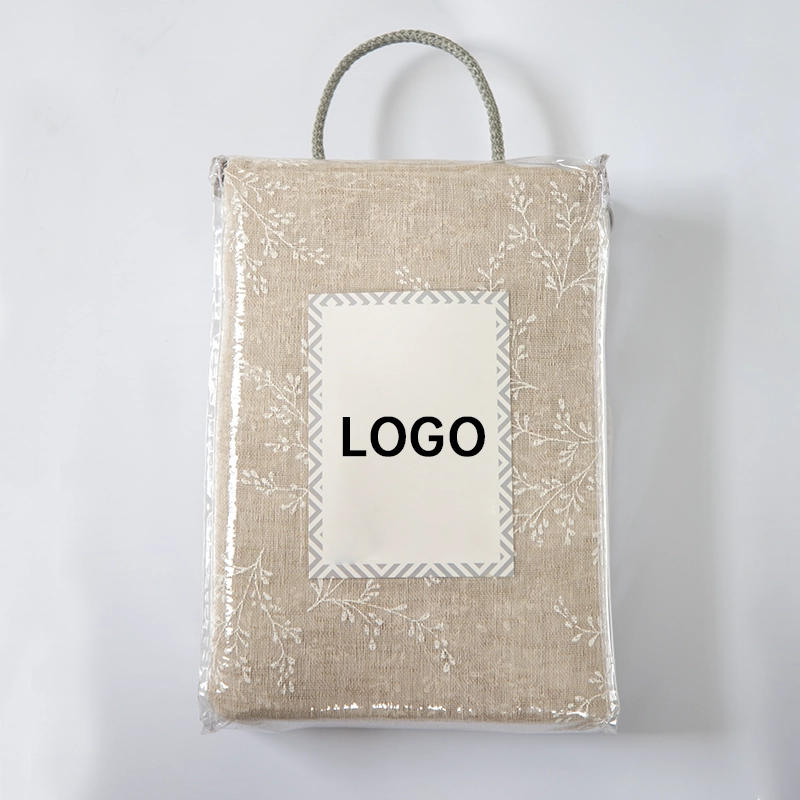
Custom packaging — branded sleeves, hangtags, retail-ready folding — adds 3–5 days to lead time and is included in the per-unit cost above 500 pieces. Packaging samples can be produced alongside the product sample for review.
For dropshipping and e-commerce fulfillment
Tab Top fits the per-order fulfillment model cleanly. Production runs from the same fabric inventory that serves bulk orders; the only difference is order quantity and packaging. Fulfillment timing for the 5 main markets:
- US: 7–10 days
- Canada: 8–10 days
- UK: 7–10 days
- EU: 8–10 days
- Australia: 7–10 days
Other regions: 14–21 days on request.
Certifications
For projects requiring compliance documentation, our Tab Top range can be produced with:
- OEKO-TEX Standard 100 — applicable across all our fabric inventory by default
- NFPA 701 — flame-retardant treatment available for hospitality and institutional projects, adding roughly $0.40–0.80 per curtain depending on fabric type
- BSCI — covering manufacturing facility compliance
Per NFPA 701 Test Method 1, treated fabrics must self-extinguish within 2 seconds of flame removal. We test every FR batch before packing.
Payment terms and pricing are confirmed during inquiry based on order volume, destination, and product specification.
Frequently Asked Questions
What’s the difference between Tab Top and Back Tab curtains?
Tab Top has loops sewn to the front of the top hem, fully visible above the panel. Back Tab has loops sewn to the back of the top hem, hiding both the loops and the rod behind the panel for a cleaner front view. Both use the same construction principle but produce opposite visual effects.
Are Tab Top curtains good for blackout?
Tab Top works for light to mid-weight blackout fabrics (around 280 GSM). For heavier 4-layer composite blackout or premium velvet blackout, the tab construction strains under repeated load. We recommend Grommet or Back Tab for those fabric weights.
Can Tab Top curtains be motorized?
Not directly. Motorized curtain systems run on tracks, and Tab Top is a rod-based heading style. If a buyer needs motorization, Ripplefold or Wave Top on a motorized track is the better specification.
What’s the minimum order for Tab Top curtains from China?
Our standard MOQ is 200 pieces per style and per color from our in-stock fabric range. Trial orders of 50–100 pieces are available subject to discussion for first-time customers. Custom-woven fabrics carry an 800–1,000 meter minimum. Dropshipping is available for stores with existing sales.
How long does Tab Top production take?
Bulk orders ship 30+ days from deposit confirmation. Sample production runs 3–5 working days, excluding international shipping. Custom packaging adds 3–5 days to bulk lead time.
Which fabric works best for a Tab Top capsule collection?
For DTC brands and retailers building a coordinated capsule, linen at 200–280 GSM consistently outperforms other fabrics. The natural texture matches the casual heading style, and color consistency across reorders is straightforward to maintain from a single dye lot.
Bottom Line
Tab Top curtains are a casual, low-construction heading style that pairs well with linen and lightweight fabrics in cottage, farmhouse, and coastal interior categories. They are not the right choice for heavy blackout, formal interiors, or high-frequency-use windows, where Grommet, Back Tab, or Pinch Pleat will outperform.
For B2B buyers, Tab Top offers a margin-friendly entry into casual-styled assortments, with flexible MOQ structures whether you’re ordering by container, by 200-piece standard runs, by 50-piece trial batches, or through per-order dropshipping for established stores.
If you’re working through heading style decisions for a specific market or product line, our services page covers OEM/ODM and wholesale models, and our private label and dropshipping pages cover those fulfillment paths in detail. For specification questions or to request a sample, contact our sourcing desk.
Related heading styles: compare ripplefold vs S-fold heading, grommet vs pinch pleat headers.