Introduction
In modern living and working environments, unwanted noise has become a common issue. Traffic, neighboring conversations, building noise, and background sounds can all affect comfort, focus, and rest. Soundproof curtains are often promoted as a simple solution—but how do they actually work, and what level of noise control can buyers realistically expect?
This article explains what soundproof curtains are, how they reduce noise, and when they are an effective option for residential and project-based applications.
What Are Soundproof Curtains?
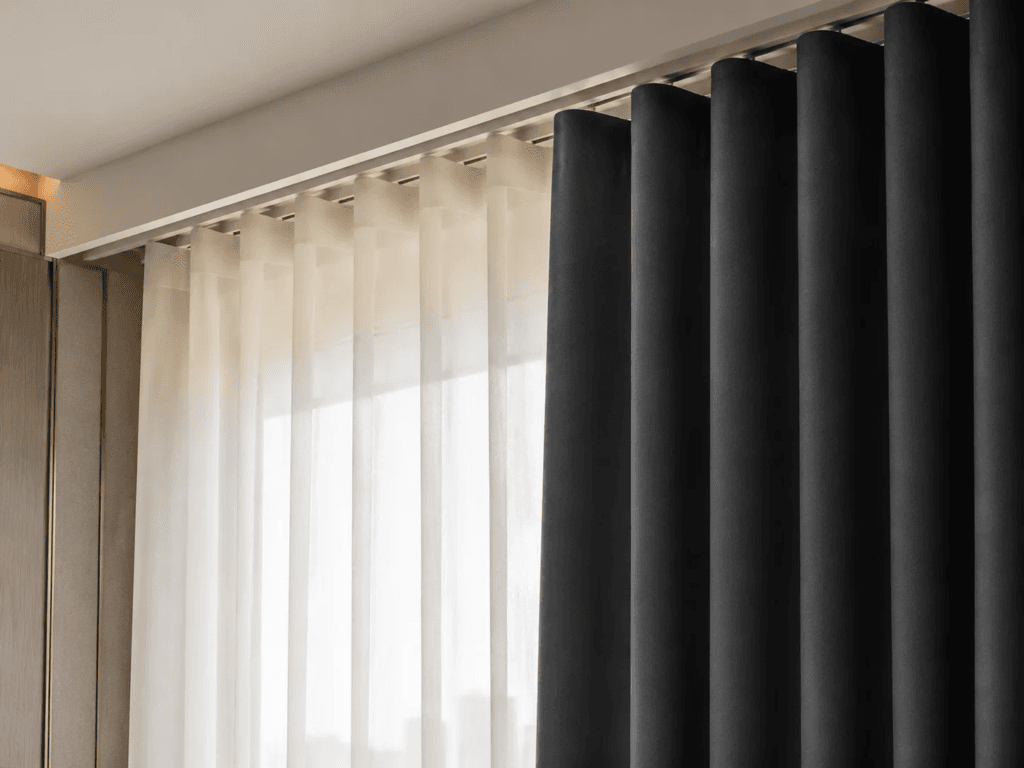
Soundproof curtains—also referred to as noise-reducing curtains, acoustic curtains, or sound-dampening curtains—are window coverings made from heavy, dense, and layered fabrics designed to improve acoustic comfort in a space.
Unlike standard decorative curtains, soundproof curtains focus on:
Reducing sound transmission through windows
Absorbing reflected noise inside a room
Minimizing echo and reverberation
It is important to note that soundproof curtains are not structural soundproofing systems. They do not completely block all sound, but they can significantly reduce perceived noise levels when used correctly.
How Do Soundproof Curtains Reduce Noise?
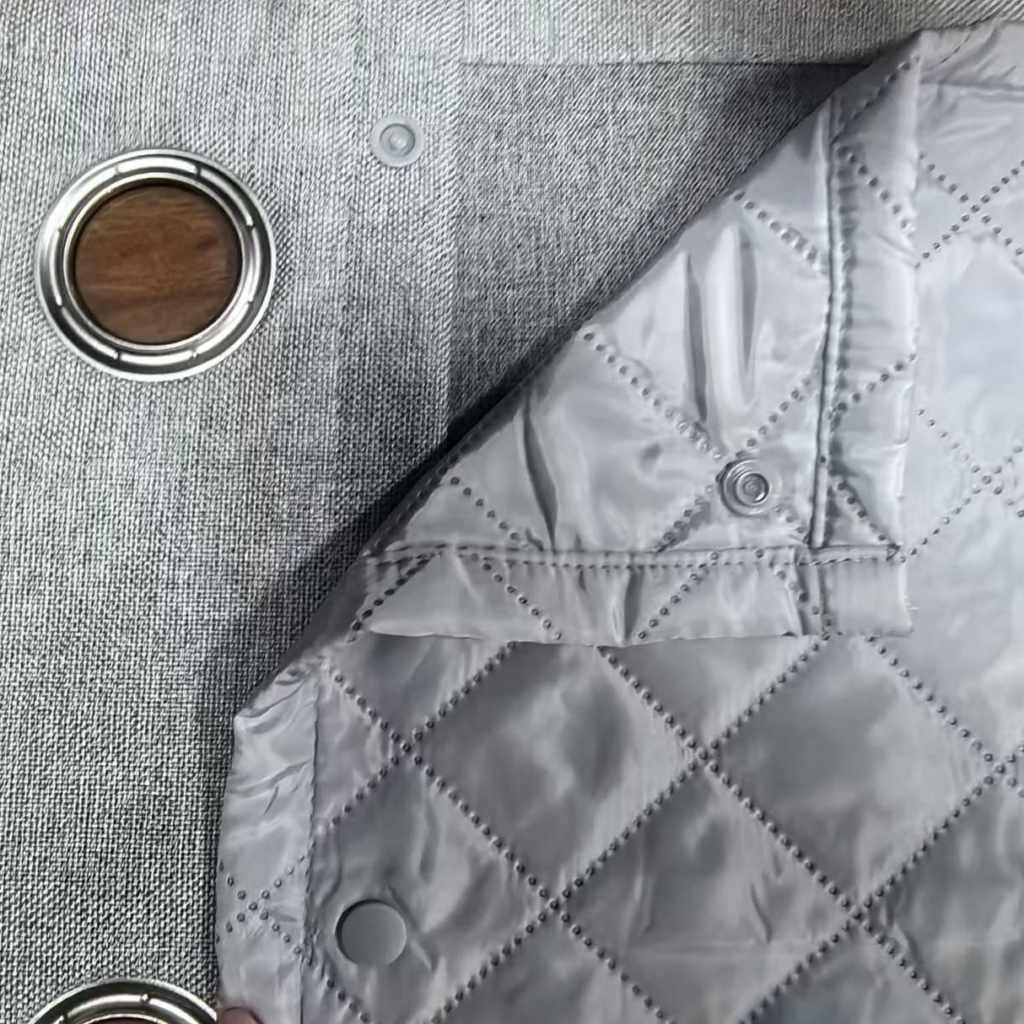
Soundproof curtains reduce noise through a combination of mass, absorption, and coverage.
1. Added Mass
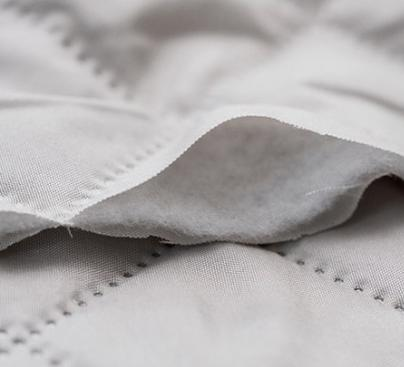
Thick and heavyweight fabrics help slow down sound waves as they pass through the curtain. The greater the fabric weight and density, the more resistance sound encounters.
2. Sound Absorption
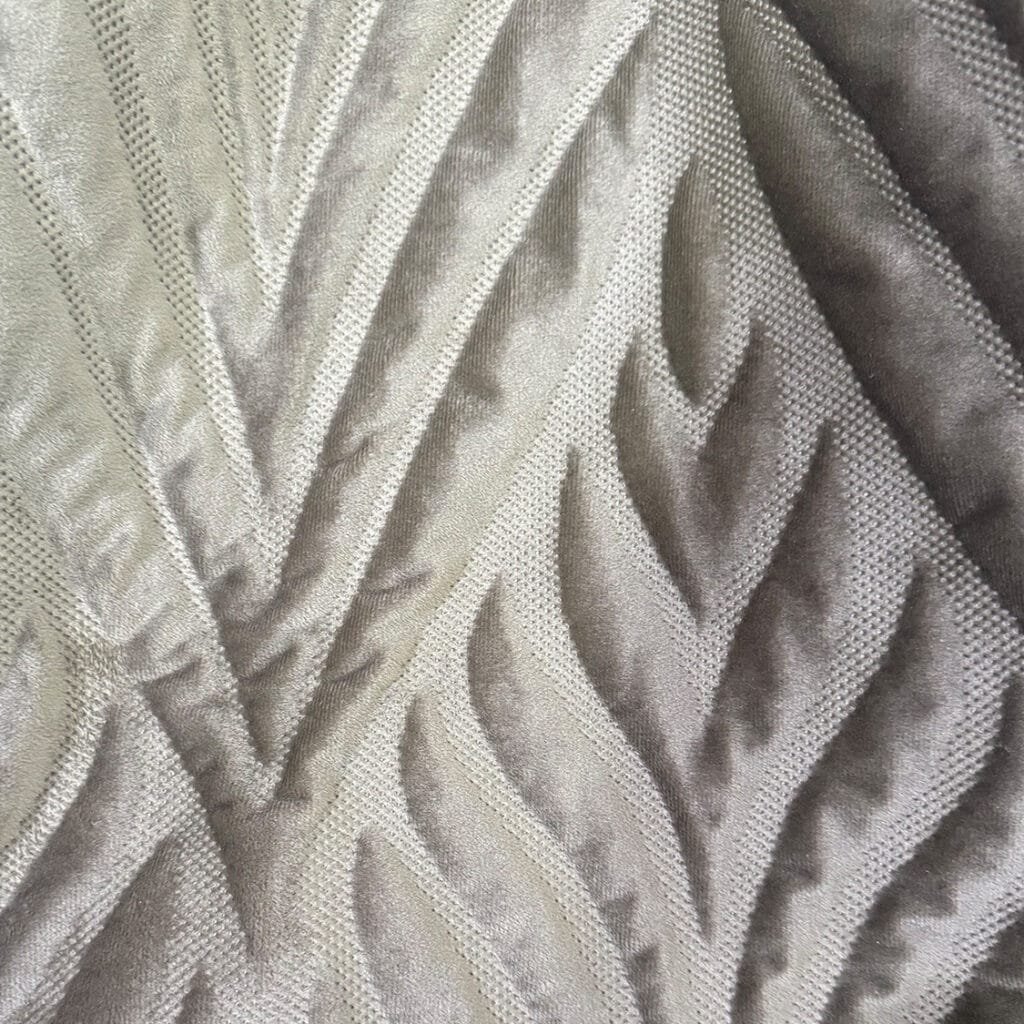
Soft, fibrous surfaces absorb sound energy rather than reflecting it back into the room. This helps reduce echo and background noise, especially in spaces with hard surfaces like glass, tile, or concrete.
3. Full Coverage
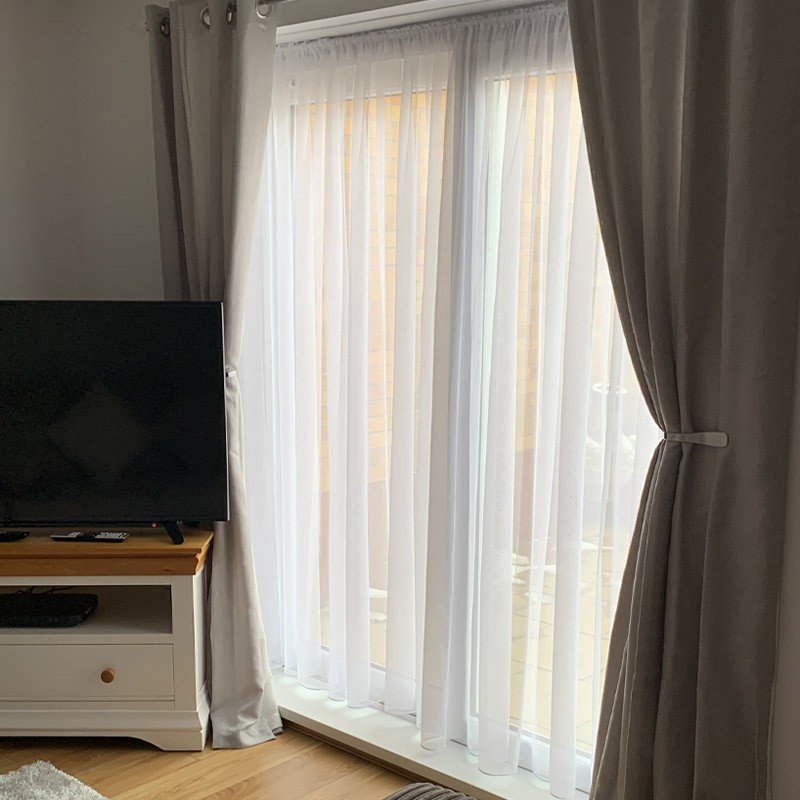
Sound travels through gaps. Curtains that extend from ceiling to floor and overlap window edges perform better by limiting sound leakage around the frame.
Together, these factors help lower overall noise perception, particularly for mid- to high-frequency sounds such as traffic, voices, and general urban noise.
How Effective Are Soundproof Curtains?
Soundproof curtains do work—but with realistic expectations.
In most residential and light commercial settings, well-designed soundproof curtains can reduce incoming noise by approximately 20%–50%, depending on:
Fabric thickness and weight
Multi-layer construction
Installation method and window coverage
Type and frequency of the noise source
They are generally more effective against:
Traffic and street noise
Voices from nearby rooms or buildings
Echo and reverberation within a space
They are less effective against:
Low-frequency vibration noise
Heavy industrial machinery
Structural noise transmitted through walls or floors
Do Soundproof Curtains Work in Large Spaces?
In larger rooms, soundproof curtains are especially useful for improving acoustics rather than fully blocking noise. They help absorb reflected sound, reduce echo, and soften harsh acoustics in open or minimally furnished spaces.
For large commercial or hospitality projects, soundproof curtains are often used in combination with other acoustic solutions, such as wall panels or insulated windows, to achieve balanced noise control.
Key Benefits of Soundproof Curtains
Improved Acoustic Comfort
By reducing echo and background noise, soundproof curtains create a calmer, more controlled environment.
Enhanced Privacy
Dense fabrics limit sound transmission, making conversations less audible between rooms or through windows.
Better Sleep and Focus
Reducing nighttime or ambient noise can improve sleep quality and concentration, especially in urban settings.
Added Insulation
Many soundproof curtains also provide secondary thermal benefits, helping stabilize indoor temperatures.
What Buyers Should Look For
When sourcing soundproof curtains, buyers should focus on:
Fabric weight and density
Multi-layer construction
Full window coverage
Custom sizing for proper fit
Suitable heading styles for sealing and drape
Customization plays an important role in achieving consistent performance across different spaces and project requirements.

Soundproof curtains are a practical, flexible solution for improving acoustic comfort in everyday environments. While they do not eliminate noise completely, they can significantly reduce unwanted sound, improve privacy, and create calmer interior spaces when used appropriately.
For residential use, hospitality projects, and light commercial applications, soundproof curtains offer an effective balance between performance, flexibility, and ease of installation—making them a valuable option for noise-sensitive spaces.
Sourcing Soundproof Curtains: What the Specs Look Like
Acoustic performance in curtains correlates directly with fabric weight and construction. The minimum effective GSM for noise reduction in residential and light commercial applications is 280–320 gsm — below this threshold, the mass is insufficient to meaningfully attenuate mid-frequency sound. For serious acoustic applications (recording studios, home cinemas, hotel rooms on busy streets), 350–400 gsm with a dense woven construction or multi-layer composite is the specification range. Triple-weave blackout fabric at 300–350 gsm is the most common wholesale specification — it delivers both 100% light blocking and meaningful sound absorption in a single panel.
Frequently Asked Questions
How much noise do soundproof curtains actually reduce?
Well-specified acoustic curtains reduce incoming noise by approximately 20–50% depending on fabric weight, installation coverage, and sound frequency. Mid-to-high frequencies (traffic, voices, general urban noise in the 500 Hz–4 kHz range) see the most reduction. Low-frequency bass below 200–300 Hz passes largely unaffected through fabric — structural soundproofing is required for bass control. In practical terms: a 280 gsm blackout panel in a well-covered window installation reduces perceived loudness noticeably but does not eliminate outdoor noise.
What GSM is needed for soundproof curtains?
Minimum effective GSM for residential noise reduction is 280–320 gsm. For hotel rooms on busy streets and home studio applications, 350–400 gsm with multi-layer construction is the standard spec. Below 240 gsm, acoustic performance is negligible — the fabric primarily functions as a light blocker rather than a sound absorber. Triple-weave polyester at 300–350 gsm is the most common wholesale specification because it delivers blackout and acoustic benefits simultaneously.
What is the difference between NRC and STC ratings for curtains?
NRC (Noise Reduction Coefficient) measures how much sound a material absorbs within a room — relevant for reducing echo and reverberation in large spaces. STC (Sound Transmission Class) measures how much sound a material blocks from passing through — relevant for reducing noise entering from outside. Most curtain specifications reference NRC because curtains are better at absorbing sound than blocking it. A curtain with NRC 0.65 absorbs 65% of incident sound energy in the mid-frequency range.
What heading style works best for soundproof curtains?
Pinch pleat and grommet both work at 280–400 gsm fabric weights. For maximum acoustic performance, the installation matters more than the heading: curtains should extend 15–20 cm beyond the window frame on each side, reach from ceiling to floor, and be hung close to the wall to minimize sound leakage around the edges. Ceiling-mounted track systems that allow the curtain to sit flush against the wall outperform rod-mounted systems by reducing the gap at the top where sound leaks through.
What is the MOQ for wholesale soundproof curtains?
Standard MOQ for in-stock triple-weave or heavy blackout polyester fabrics is 200 pieces per style per color. Trial orders from 50–100 pieces are available for first-time buyers. Custom-woven acoustic fabric composites with mass-loaded layers require 800–1,000 meters minimum. Sample lead time is 3–5 working days excluding shipping; bulk production 30+ days from deposit confirmation.
At Dairui Textile, we produce heavy blackout and acoustic curtains for wholesale, hospitality, and institutional programs. Our triple-weave and coated polyester options at 280–400 gsm cover the main acoustic performance range. See our OEM/ODM and wholesale program for volume pricing, or our Private Label service for branded collection development. Contact us to request fabric samples.
Last reviewed: 2026-05 · DAIRUI Sourcing Desk