Bottom line: China leads for blackout and coated curtains, complex customization, OEM and private-label programs, and one-stop fabric-to-finished supply, with sampling in 3-5 days and bulk lead times of 25-30 days. India and Pakistan win on low-cost cotton and printed panels; Vietnam offers tariff advantages but a thinner curtain ecosystem; Turkey suits European buyers who need fast shipping, sheers and embroidery. Match the country to your product type, target market, order volume and customization depth – not to headline labor rates alone. See our cotton curtains wholesale guide for natural-fiber ranges.
Why the Sourcing Country Matters More Than the Price List
Two factories in two countries can quote the same price per panel and still deliver completely different outcomes. Curtains are deceptively complex to manufacture at wholesale scale: a single program can involve specific fabric weights (GSM), blackout coatings, dye-lot matching across reorders, header construction, custom sizing, and retail-ready labeling. The country you source from determines which of these a supplier can actually do in-house – and what they quietly outsource, which is where lead times slip and quality drifts.
Before comparing countries, anchor your decision on four buyer priorities: product type (synthetic blackout vs. cotton/printed vs. sheer), target market (which import certifications and shipping lanes you need), order volume and reorder frequency, and customization depth (stock styles vs. full OEM/private label). The right answer changes depending on which of these dominates your business. For a deeper walkthrough of the buying steps once you pick a country, see our guide on how to source curtains from China.
Curtain Sourcing Countries at a Glance
The table below summarizes how the five main curtain-exporting countries compare across the factors B2B buyers ask about most. Use it as a shortlist filter, then read the country notes for the trade-offs behind each line.
| Country | Strongest for | Customization / OEM depth | Lead time (bulk) | Relative cost | Main watch-out |
|---|---|---|---|---|---|
| China | Blackout, coated, jacquard, full programs | High – fabric to finished in-house | 25-30 days | Mid | Tariffs into some markets |
| Vietnam | Tariff-sensitive US orders, simple panels | Low-medium | 30-45 days | Mid | Often imports fabric from China |
| India | Cotton, printed, handloom, eyelet panels | Medium | 35-50 days | Low | QC variance, longer sampling |
| Turkey | Sheers, tulle, embroidery, EU shipping | Medium-high | 30-40 days | Mid-high | Higher MOQ and price for non-EU buyers |
| Pakistan | Low-cost cotton and basic panels | Low | 35-55 days | Lowest | Reliability and communication gaps |
Lead times exclude sampling and ocean freight, and assume a confirmed sample. MOQ, pricing and timelines vary by order – treat the above as directional and request a quote for your exact spec.
China: The Default for Complex, High-Mix Curtain Programs
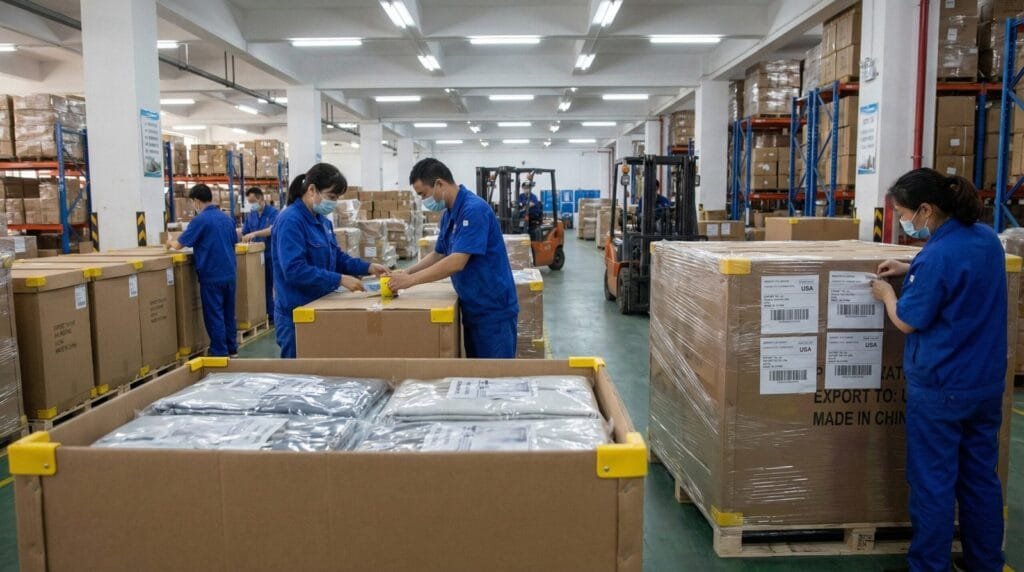
China remains the deepest curtain manufacturing base because the entire supply chain sits close together: weaving and knitting mills, dye houses, coating lines, hardware makers and finished-goods sewing factories are often within the same industrial clusters. That density is why a Chinese factory can run blackout coating, triple-weave construction, jacquard, printing and custom headers under one roof, and why sampling is typically 3-5 days rather than weeks.
For buyers, the practical advantages are speed on customization, consistent dye-lot control across reorders, and the ability to consolidate a mixed program – sheers, blackouts, printed panels and labeling – with one supplier instead of three. China is also the most mature base for private-label and OEM programs, including custom packaging and retail-ready tagging. The honest trade-off is import duties into certain markets and the need to vet factories carefully, since the market ranges from large vertically integrated plants to small trading-only middlemen. Knowing the difference between a true fabric manufacturer and a finished-goods factory is the single most useful filter when you shortlist Chinese suppliers.
Vietnam: Tariff Relief, but a Thinner Curtain Ecosystem
Vietnam has grown fast as a textiles exporter and is often raised by US buyers looking to reduce tariff exposure. For simple, high-volume panels it can be very competitive, and many buyers use it as a second source alongside China.
The caveat that catches first-time buyers: Vietnam’s curtain ecosystem is shallower than China’s, and a large share of the technical fabric – especially blackout and coated material – is still imported from China and cut-and-sewn locally. That can erase part of the expected saving and lengthen lead times to 30-45 days. Customization depth and in-house finishing options are generally narrower, so Vietnam fits best when your product is straightforward and your priority is landed cost into the US rather than complex specs.
India: Cotton, Prints and Handloom at Low Cost
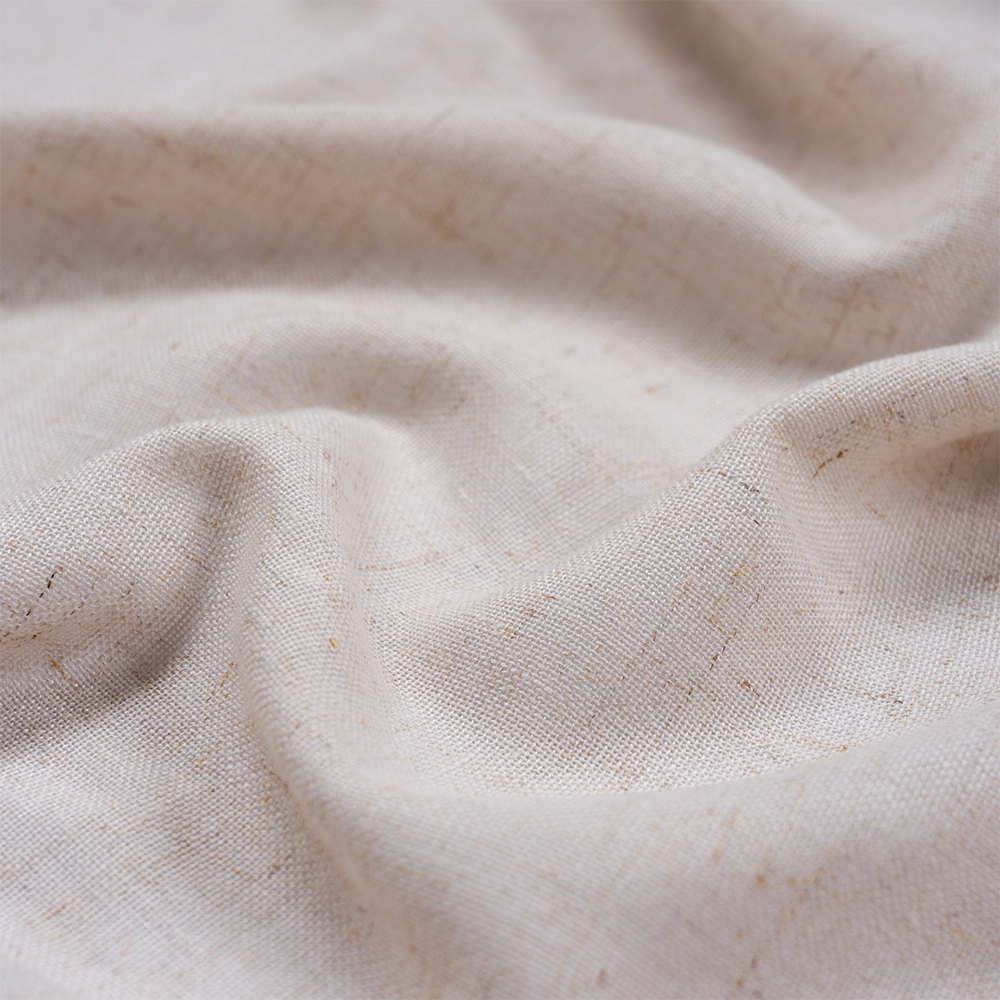
India is the natural choice when your range centers on cotton, linen-look, printed or handloom curtains. Labor and natural-fiber costs are low, the printing and embroidery craft base is genuine, and eyelet/grommet cotton panels for retail are a regional specialty.
Where India is weaker is synthetic and high-performance curtains: blackout coating, flame-retardant treatments and tight technical tolerances are less consistently available than in China, and quality control can vary more between factories. Sampling and bulk lead times also tend to run longer, around 35-50 days. For cotton-led wholesale ranges sold on price, India is strong; for spec-driven hospitality or blackout programs, it is usually a compromise.
Turkey: Sheers, Embroidery and Speed Into Europe
Turkey has a long textile heritage and excels at sheers, tulle, voile and embroidered curtains. For European buyers, its biggest advantage is logistics: trucking into the EU is far faster and simpler than ocean freight from Asia, which shortens replenishment cycles and reduces inventory risk.
The trade-offs are cost and minimums. Turkish pricing sits above China, India and Pakistan, and MOQs for custom work can be higher, especially for buyers outside Europe who lose the shipping edge. If you sell decorative sheers into European markets and value short transit times, Turkey is compelling; for synthetic blackout volume or lowest landed cost, it rarely wins.
Pakistan: Lowest Cost on Basic Cotton Panels
Pakistan is a major cotton and home-textile producer, and for basic cotton curtains it can offer the lowest unit price of the five. Buyers chasing entry-price panels for value retail sometimes start here.
The honest picture is that reliability, communication and consistency are the recurring risks reported by buyers, and customization plus technical-fabric capability are limited. Lead times of 35-55 days are common. Pakistan can work for simple, price-first cotton programs with a buyer who manages QC tightly, but it is rarely the right base for customized or performance curtains.
How to Choose by Your Priority

Rather than asking which country is “best” in the abstract, map the decision to what dominates your business:
- Blackout, coated or jacquard curtains: China first; the in-house coating and weaving base is hard to match elsewhere.
- Cotton, printed or handloom panels on price: India or Pakistan, with India ahead on customization and Pakistan on raw cost.
- Decorative sheers into Europe: Turkey, for craft plus fast trucking into the EU.
- Tariff-sensitive simple panels into the US: Vietnam as a second source, knowing the fabric may still originate in China.
- Full OEM / private-label program with mixed SKUs: China, for one-stop fabric-to-finished supply and 3-5 day sampling.
Whichever country you shortlist, confirm the certifications your destination market requires before you place an order – they differ by region and are easy to overlook. Our breakdown of curtain import certifications by country covers the US, UK, EU and Australia. And if you want a vetted starting list, see our roundup of wholesale curtain suppliers for bulk purchases.
Beyond Unit Price: The Hidden Costs That Change the Ranking
The country with the lowest quote on a spec sheet is often not the cheapest once the order actually lands in your warehouse. Four hidden costs routinely reshuffle the ranking, and experienced buyers price them in before they commit.
- Duties and tariffs: these vary by destination country and HS code and can swing landed cost by double digits. A higher factory price in one country can still win after duties versus a “cheaper” origin that carries a steeper tariff into your market.
- Fabric origin and country-of-origin rules: if a factory imports its fabric and only cuts-and-sews locally, the curtain may not qualify for the tariff treatment you expected. This matters most for Vietnam, where blackout and coated fabric is frequently sourced from China – confirm where the cloth is actually woven, not just where it is stitched.
- Quality control and rework: a lower unit price loses its appeal fast if a batch arrives with uneven dye lots, loose headers or sizing out of tolerance. Budget for pre-shipment inspection and factor a realistic defect rate into countries with higher QC variance.
- Freight and carrying cost of time: longer lead times tie up working capital and raise the risk of stockouts on reorders. Faster sampling and shorter, more predictable production windows have real cash value even when they do not show up on the per-panel quote.
When you re-rank the five countries on total landed and reliable cost rather than headline price, the gaps narrow sharply – and for any curtain that involves coating, customization or tight tolerances, the deepest supply chain usually wins on the metric that actually hits your margin.
Frequently Asked Questions
Which country is cheapest for wholesale curtains?
On raw unit price for basic cotton panels, Pakistan is usually lowest, followed by India. But “cheapest” by panel is misleading once you add QC, rework, longer lead times and shipping. For blackout, coated or customized curtains, China often delivers the lowest landed and reliable cost despite a higher headline price, because the work is done in-house in one place.
Is Vietnam really cheaper than China for curtains?
Sometimes, for simple panels and when US tariffs are the deciding factor. But much of Vietnam’s technical curtain fabric is imported from China and cut-and-sewn locally, which can erase the saving and add time. For complex or coated curtains, China is usually more cost-effective overall.
Why is China still the leader for curtain manufacturing?
Because the full supply chain – mills, dye houses, coating lines, hardware and sewing – sits in tight clusters. That density enables blackout, jacquard, printing and custom headers under one roof, dye-lot consistency on reorders, and sampling in 3-5 days, which lighter ecosystems cannot match.
What is the typical lead time difference between these countries?
From a confirmed sample, China bulk runs about 25-30 days, Turkey 30-40, Vietnam 30-45, India 35-50 and Pakistan 35-55. Sampling and ocean freight are additional and vary by destination. Always confirm timelines against your exact spec.
Can I get OEM and private-label curtains outside China?
Yes, but depth varies. China offers the most mature OEM/private-label base, including custom packaging and retail labeling. Turkey and India can support some customization, while Vietnam and Pakistan are generally limited to simpler programs.
Should I dual-source across two countries?
Many established buyers do – for example, a China primary for blackout and customized lines plus a secondary in India or Vietnam for cotton or tariff-sensitive volume. Dual-sourcing adds management overhead but reduces risk and improves negotiating leverage as your volume grows.
Bottom Line for Your Sourcing Decision
There is no single best country to wholesale curtains – there is a best country for your product, market and volume. China is the default for blackout, coated and customized programs and for one-stop OEM supply; India and Pakistan compete on low-cost cotton and prints; Turkey serves European buyers needing sheers and speed; Vietnam offers tariff relief on simpler panels. Decide what dominates your range, confirm the right certifications for your market, and request a quote on your exact spec rather than comparing headline rates. MOQ, pricing and lead times are subject to your final specification and confirmed sample.
Author: DAIRUI Sourcing Desk | Last reviewed: 2026-06