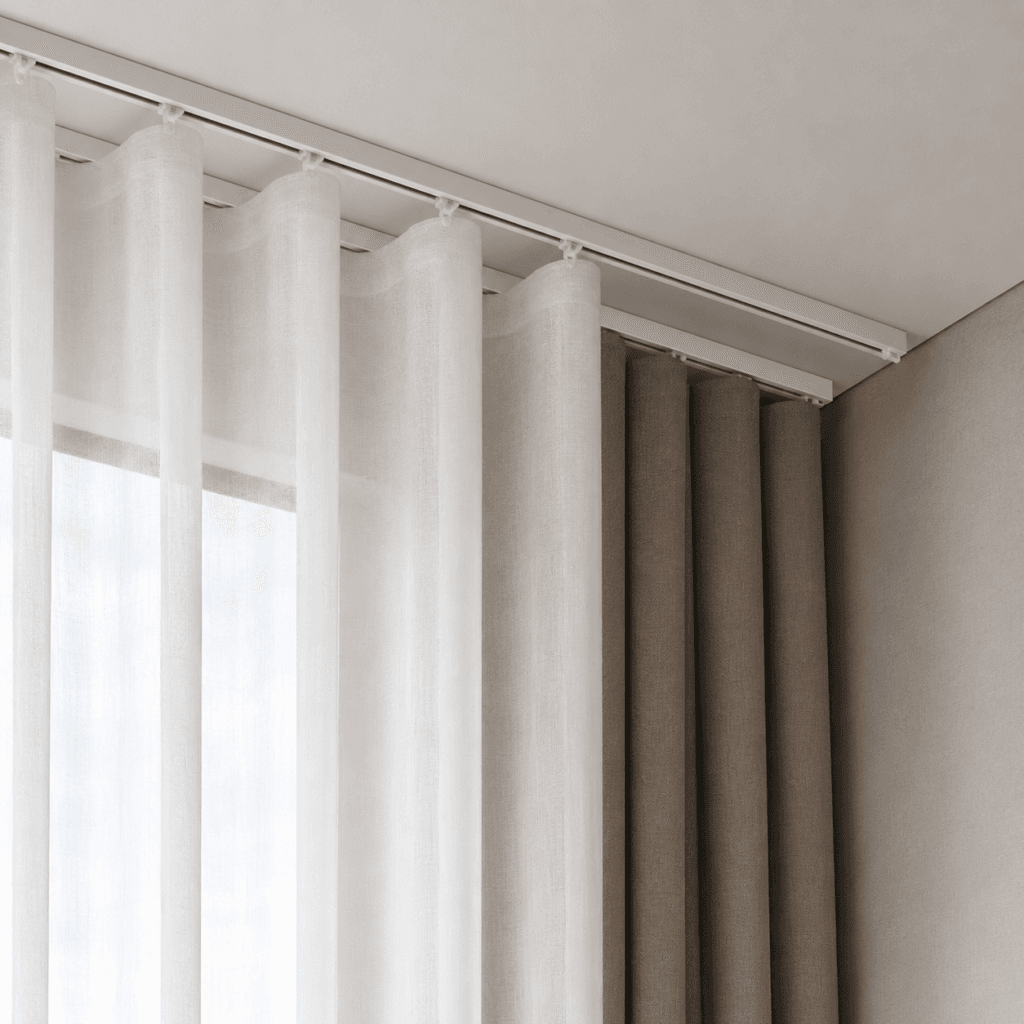
Bottom line: Dimout curtains block roughly 70-90% of light for soft room-darkening, while blackout curtains block 99-100% for true darkness. Dimout suits living spaces, retail and offices that want glare control without total blackness; blackout suits bedrooms, hotels, healthcare and AV rooms that need full darkness. Blackout costs a little more because of the extra coating or weave. Choose by use case and required light level, then confirm the exact block rate, GSM and MOQ with your supplier before ordering. For removable installs, hook-and-loop top blackout curtains simplify mounting.
Dimout vs Blackout: What the Terms Actually Mean
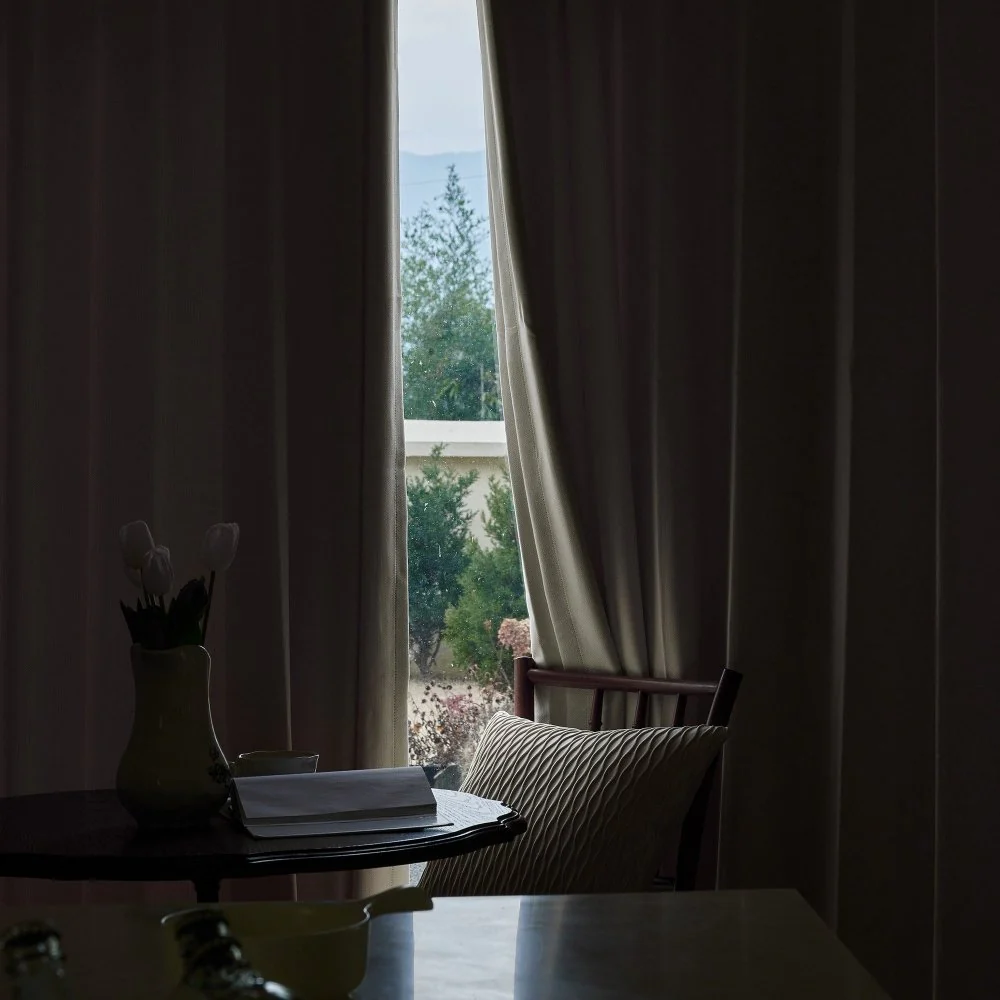
“Dimout” and “blackout” describe how much light a curtain blocks, not a single fixed standard, so buyers and factories sometimes mean slightly different things. In practice the industry uses them as two tiers. Blackout means near-total light exclusion – around 99-100% – so a room can be made dark in daytime. Dimout (sometimes written “dim-out” or sold as room-darkening) means heavy light reduction, typically 70-90%, that cuts glare and softens daylight without making the room pitch black.
The distinction matters commercially because it changes the fabric construction, the price and the right end use. Ordering blackout when a client only needs dimout wastes margin; ordering dimout when the spec calls for full darkness generates complaints. This guide defines each tier, shows where each fits, explains how the light blocking is actually built into the fabric, and covers the wholesale details – GSM, MOQ and lead time – that decide what you order. For the product overview of the softer tier, see our page on room-darkening curtains.
Dimout vs Blackout at a Glance
Use this table as a quick filter, then read the sections below for the trade-offs behind each tier.
| Factor | Dimout (room-darkening) | Blackout |
|---|---|---|
| Light blocked | ~70-90% | ~99-100% |
| Effect | Soft darkening, glare control | Full daytime darkness |
| Typical use | Living rooms, offices, retail, restaurants | Bedrooms, hotels, healthcare, AV/cinema |
| Construction | Tight weave or single coat, often 1-pass | 2-3 pass coating or triple weave / lining |
| Hand/feel | Softer, more drapeable | Heavier, denser |
| Relative cost | Lower | Slightly higher |
Block-rate ranges are typical, not fixed standards. Confirm the measured light-block percentage, GSM and MOQ for your exact fabric and order – request a quote rather than assuming a tier.
Dimout Curtains: Glare Control Without Total Darkness
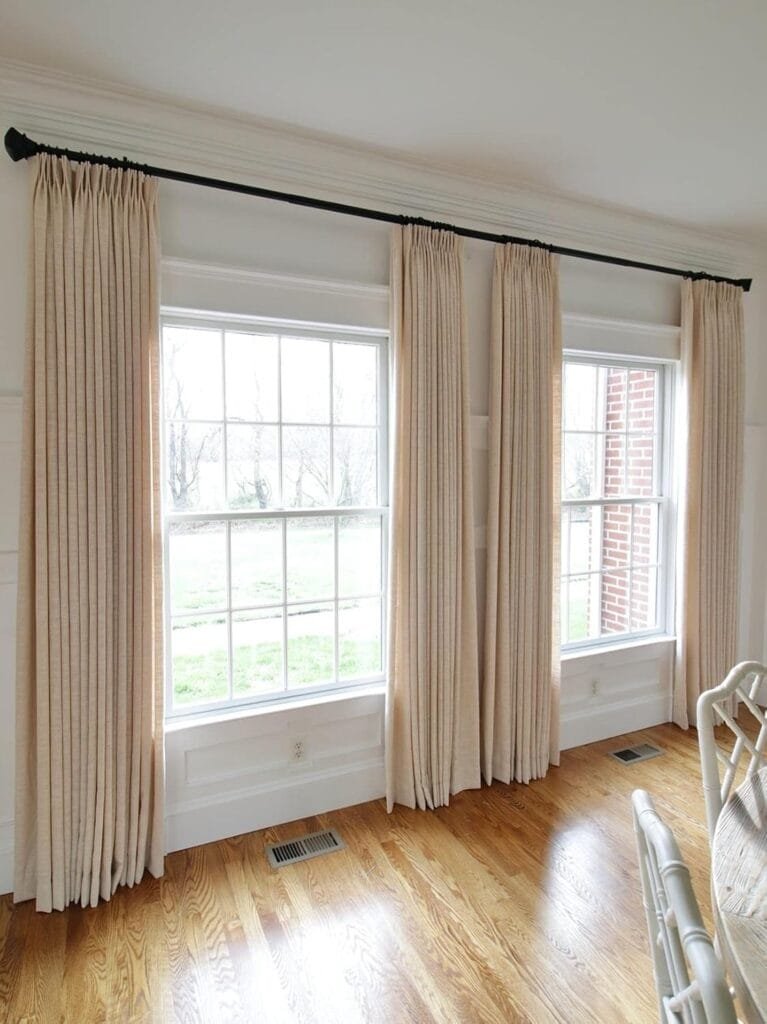
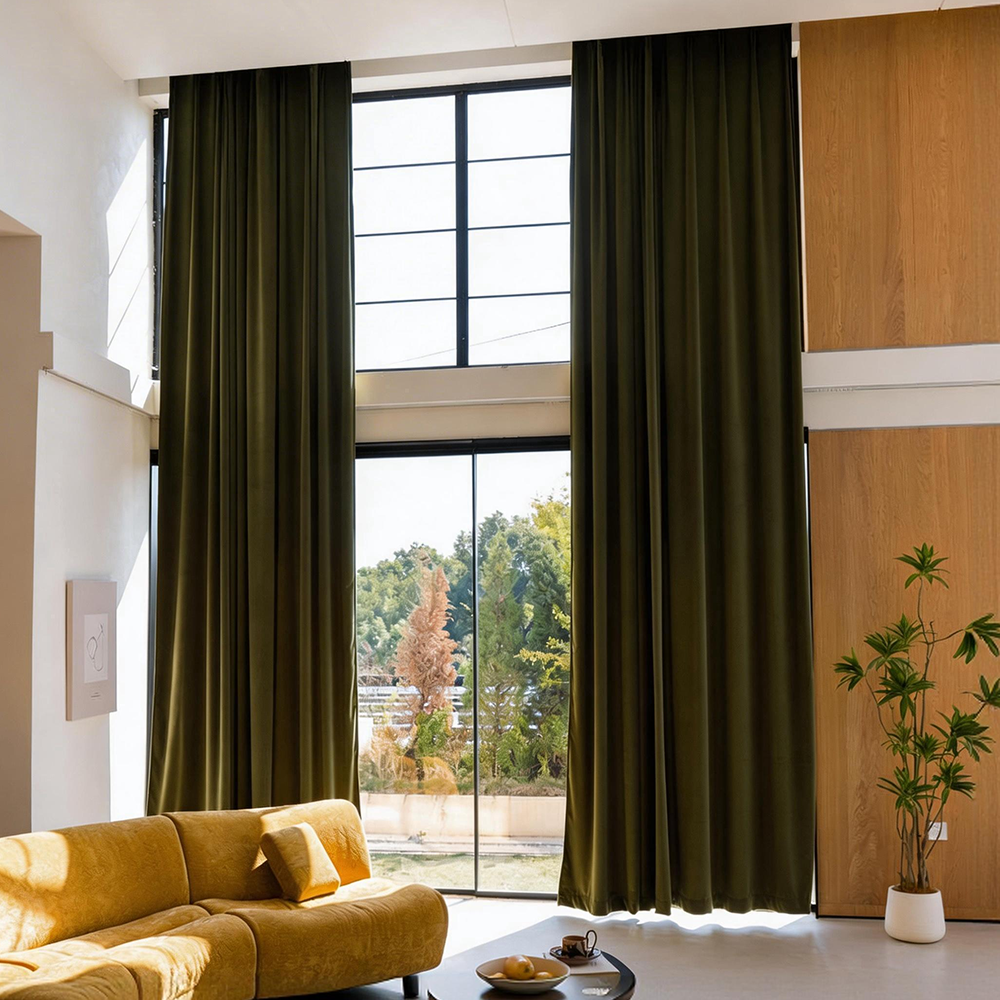
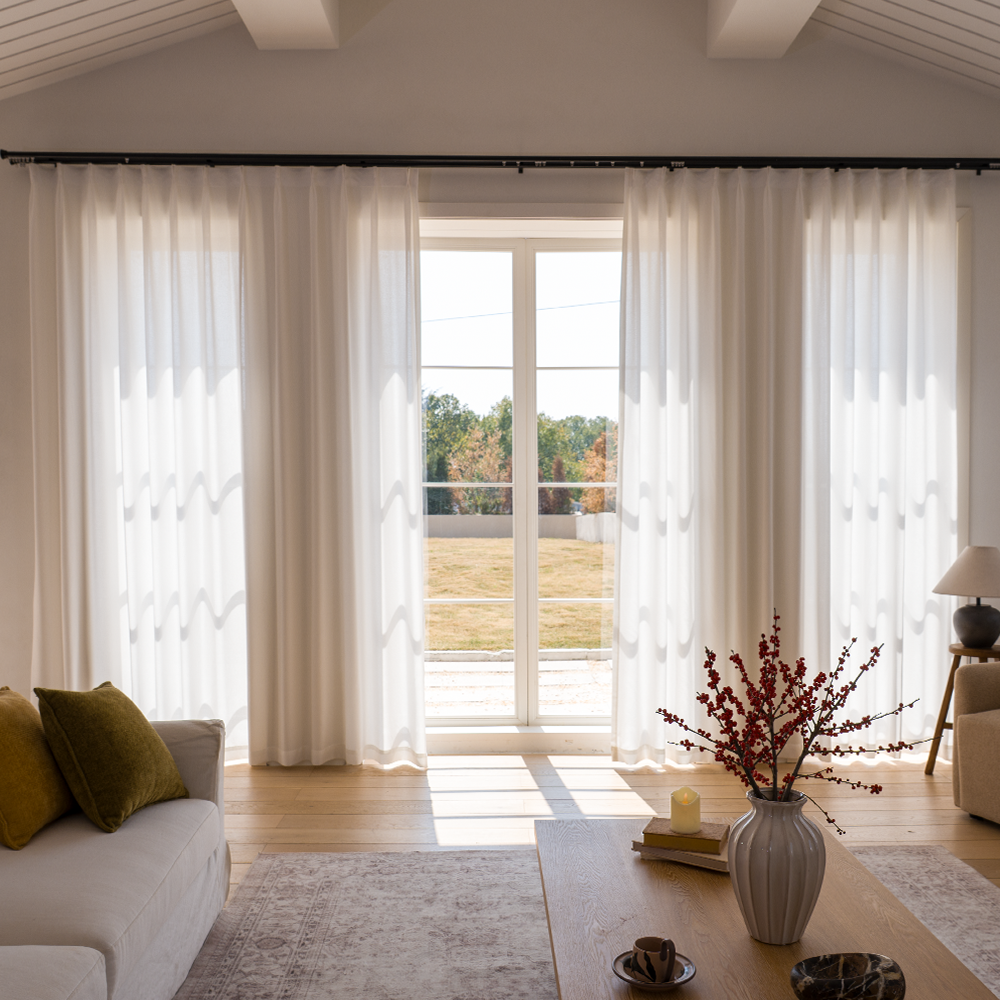
Dimout curtains are the practical middle ground. They cut a large share of incoming light, reduce glare on screens and protect furnishings from fading, while still letting a room feel daylit rather than sealed. That makes them the default for spaces people occupy during the day: living rooms, offices, conference rooms, restaurants and many retail fit-outs.
Because dimout fabric does not need the heaviest coating, it tends to drape more softly and costs less than blackout, which is attractive for large-volume residential and commercial ranges. The trade-off is obvious – it will not make a bedroom dark for a day sleeper or black out a projection room. When your buyer describes wanting to “take the edge off” strong sun or reduce glare rather than achieve total darkness, dimout is almost always the right specification, and it is frequently the higher-margin choice at volume.
Blackout Curtains: Full Darkness for Sleep and Spec Projects
Blackout curtains are built to exclude essentially all light, so a room can be darkened in the middle of the day. That capability is non-negotiable in bedrooms, hotels, hospitals, shift-worker housing, nurseries and any audiovisual or cinema space where stray light ruins the result. For these uses, “almost dark” is a failure, which is why blackout is specified by light-block performance rather than appearance.
The performance comes from construction – extra coating passes or a dense triple-weave – which adds weight and a small cost premium over dimout. Blackout is also where buyers most often add related specifications such as thermal insulation and flame retardancy (for contract and hospitality, where FR compliance can be required; treatments that meet or have compliance available should be confirmed per market). Blackout remains the strongest category for many curtain wholesalers, so getting the construction and block rate right is worth the extra diligence. Our breakdown of coated vs woven vs triple-weave blackout explains exactly how each method reaches 100%.
How the Light Blocking Is Actually Built In
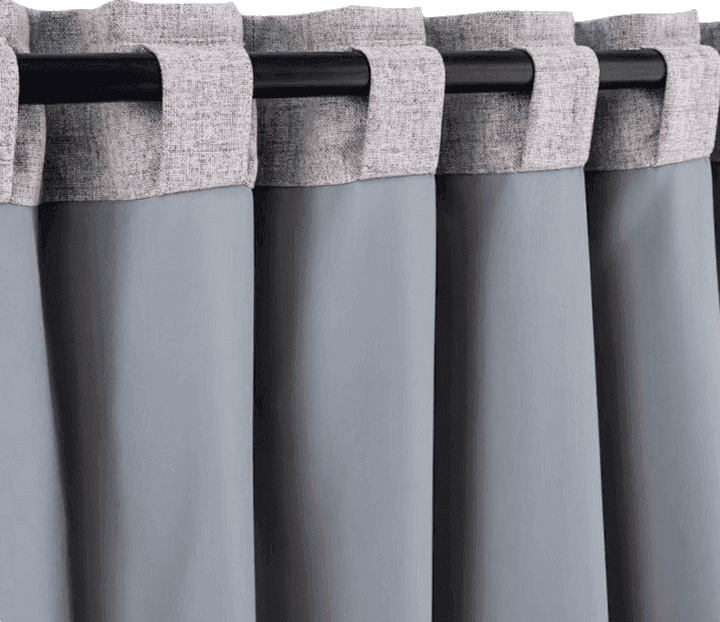
Both tiers achieve their light control through some combination of three levers, and understanding them helps you order the right block rate instead of trusting a label:
- Coating passes: an acrylic or foam coating is applied to the back of the fabric. One pass gives dimout-level reduction; two to three passes push toward full blackout.
- Weave density: a tightly woven or triple-weave construction blocks light through the structure itself, often with a black or dark yarn core, giving blackout without a heavy surface coating.
- Lining: a separate blackout lining can be added behind a decorative face fabric to upgrade its light control, useful when the show fabric cannot itself be made blackout.
Construction also drives fabric weight, so GSM is a useful proxy when you compare quotes: blackout fabrics generally run heavier than dimout. For how weight maps to performance and price across the range, see our curtain fabric weight (GSM) guide. Always confirm the actual measured block rate, because “blackout” on a label without a percentage can mean anything from genuine 100% to optimistic dimout.
Which to Choose by Use Case and Market
Rather than asking which is better, match the tier to the room and the buyer:
- Bedrooms, hotels, healthcare, nurseries, AV rooms: blackout, for genuine darkness and sleep quality.
- Living rooms, offices, restaurants, daytime retail: dimout, for glare control while keeping the space bright.
- Mixed residential ranges: offer both tiers as a good/better line, letting the same buyer cover every room.
- UK, Australia and contract markets: note “dimout” is the common trade term there, while US buyers often say “room-darkening” for the same tier.
A practical sales tactic for wholesalers is to carry both tiers in the same colorways, so a retail or project client can specify blackout for bedrooms and dimout for living areas from one coordinated range – simplifying their buying and increasing your order size.
Wholesale Sourcing Notes: GSM, MOQ and Lead Time
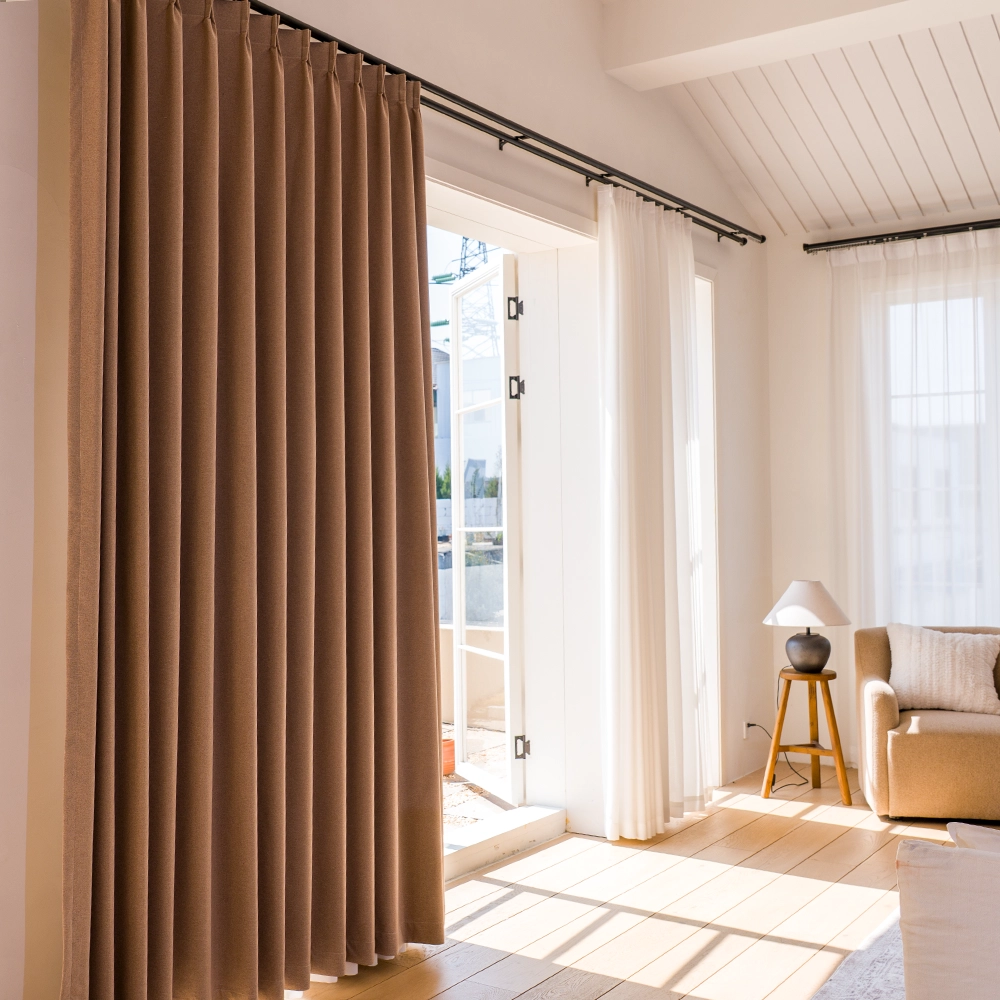
When you move from choosing a tier to placing an order, a few specifications keep the result predictable. Pin down the measured light-block percentage (not just the word “blackout”), the GSM, the coating or weave method, and any added thermal or FR requirements for the destination market. These determine both price and compliance. See our buyer guide to thermal insulated curtains for cold-climate ranges.
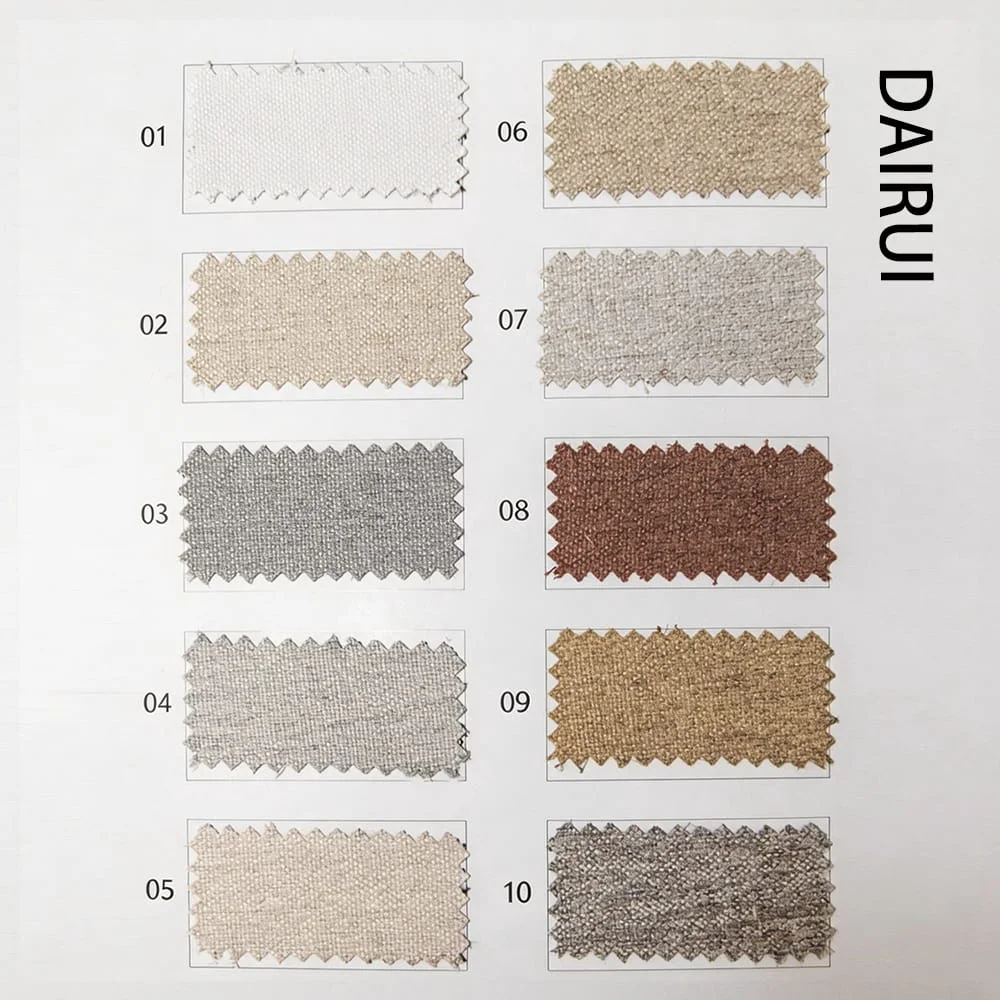
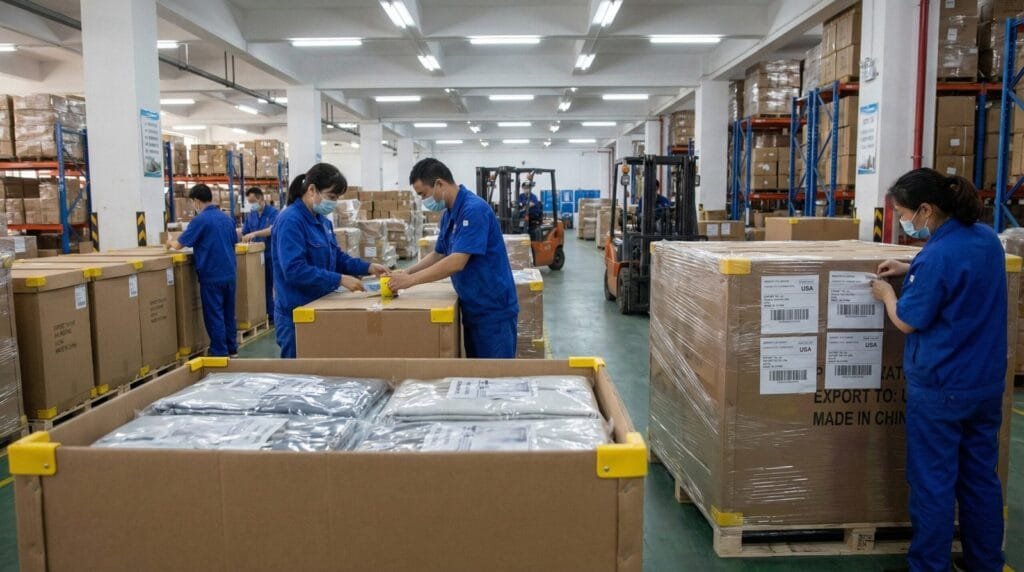
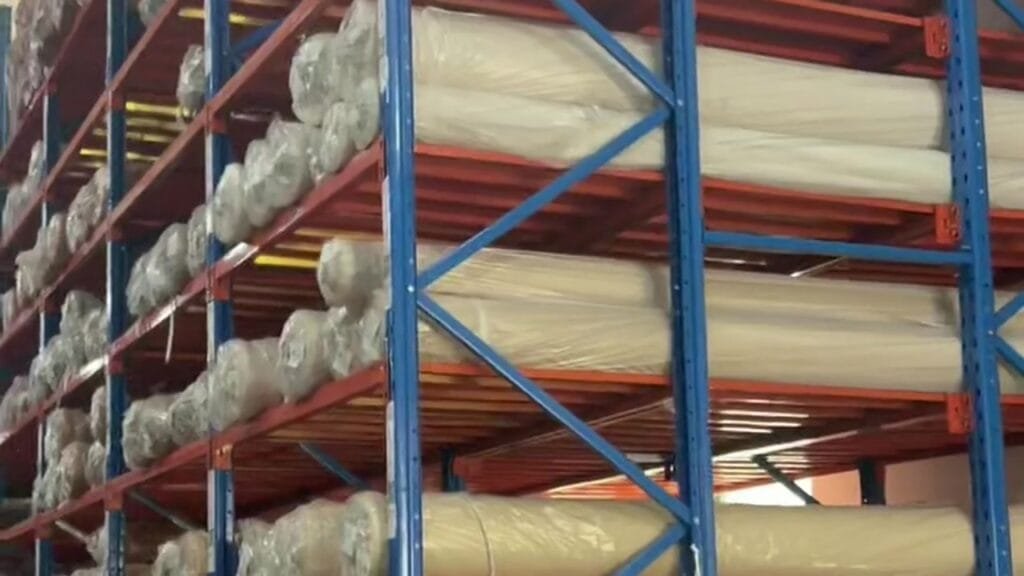
On commercials, sampling typically runs about 3-5 days and bulk production around 25-30 days after sample approval, plus ocean freight. MOQ and pricing depend on fabric, color count and customization, so treat figures as directional and request a quote for your specification. Both tiers can be made to custom size, header and color, and produced under private label. For where to source these and how the main manufacturing countries compare, see our guide to the best country to wholesale curtains, and browse our blackout curtain range for current constructions.
Beyond Light: The Thermal and Acoustic Side Benefits
Light control is the headline reason buyers choose dimout or blackout, but the same heavier construction delivers two bonuses that are easy to upsell. Because both tiers use denser fabric – and blackout adds coating or extra weave – they slow heat transfer through the window and absorb some sound, which matters more to commercial and residential buyers every year as energy costs rise.
On thermal performance, a coated blackout or a lined dimout panel reduces heat loss in winter and heat gain in summer by adding a still-air barrier at the glass. For buyers in cold-climate or high-energy-cost markets, framing curtains as an insulation product as well as a light product widens the appeal and justifies a better fabric. A dedicated thermal lining can push this further; our guide on thermal curtain lining covers how that is built and specified.
On acoustics, heavier curtains will not soundproof a room, but they do dampen echo and soften outside noise, which is a genuine comfort benefit in apartments, offices and hospitality. The honest framing is “noise reduction,” not “soundproofing” – overpromising here generates complaints. Used accurately, though, the thermal and acoustic story turns a light-control purchase into a multi-benefit one, helping wholesale buyers sell through at a stronger price.
Frequently Asked Questions
What is the difference between dimout and blackout curtains?
Dimout curtains block roughly 70-90% of light for soft room-darkening and glare control, while blackout curtains block about 99-100% for full daytime darkness. Blackout uses heavier coating or a denser weave and costs slightly more. Choose dimout for daytime living spaces and blackout for bedrooms, hotels and AV rooms.
Is dimout the same as room-darkening?
Effectively yes. “Dimout” is the common term in the UK, Australia and contract markets, while “room-darkening” is the typical US term for the same tier – heavy light reduction that is not full blackout. Both describe roughly 70-90% light blocking.
Do blackout curtains really block 100% of light?
Good blackout fabric blocks around 99-100% through the material itself, but a small amount of light can still enter around the edges of the panel unless the installation overlaps the window. For critical uses, pair blackout fabric with wider panels or side channels. Always confirm the measured block rate rather than relying on the label.
Are blackout curtains more expensive than dimout?
Usually slightly, because blackout requires extra coating passes or a denser triple-weave construction, which adds material and weight. The gap is modest, and at wholesale volume both tiers are cost-effective. Offering both in matching colorways often increases order value more than the price difference costs.
Can dimout and blackout curtains be customized and private-labeled?
Yes. Both tiers can be made to custom size, header style and color, and produced under private label with custom packaging. Customization, MOQ and lead time depend on the specification, so request a quote for your exact fabric, colors and volume.
What GSM should I expect for blackout versus dimout?
Blackout fabrics generally run heavier than dimout because of the extra coating or weave, though exact GSM varies by construction. Use GSM as a comparison proxy when reviewing quotes, but confirm the measured light-block percentage as the primary spec, since weight alone does not guarantee a given block rate.
Bottom Line for Your Light-Control Range
Dimout and blackout are not competing products but two tiers of the same decision: how much light does the room need to lose. Specify dimout at roughly 70-90% for daytime living, retail and office spaces, and blackout at 99-100% for bedrooms, hospitality, healthcare and AV rooms. Confirm the measured block rate, GSM and construction rather than trusting a label, and carry both tiers in matching colorways to capture more of each buyer’s range. MOQ, pricing and lead times are subject to your final specification and confirmed sample, so request a quote on your exact fabric and volume.
Author: DAIRUI Sourcing Desk | Last reviewed: 2026-06