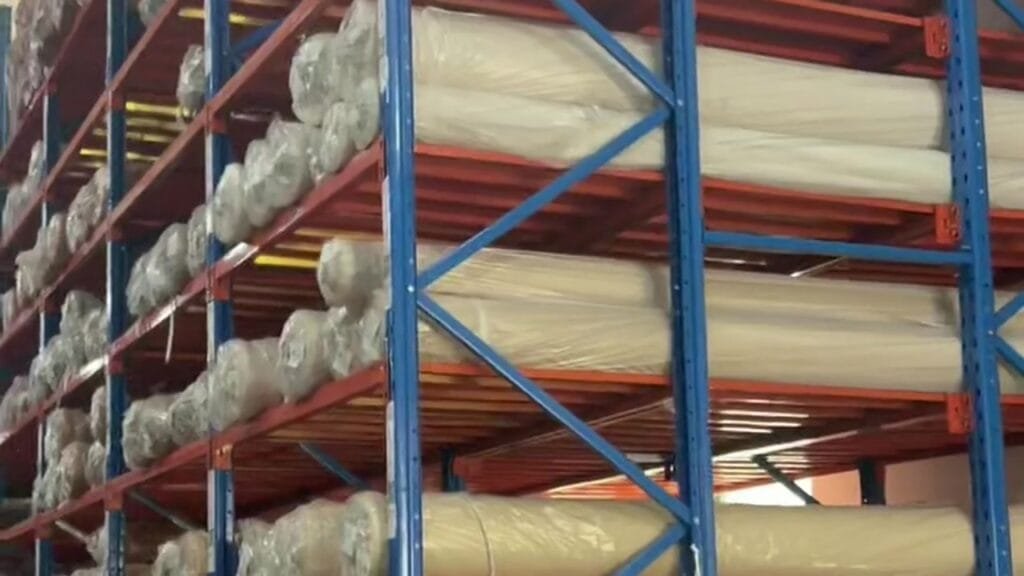
Bottom line: Most wholesale “linen” curtains are faux linen — polyester or poly-blend yarns woven to copy flax’s slubby texture and matte drape, at lower cost and with far better dimensional stability. Real flax linen and linen blends run on custom OEM. Expect samples in 3–5 days, trial orders from ~50 pcs, custom MOQ from ~200 pcs, and 25–30 day bulk lead times after approval. Price moves with weight, width, lining and heading — confirm on a live quote. See our dedicated guide to cost-effective faux linen curtains for retail ranges.
Linen is one of the most requested looks in the curtain trade, but “linen curtains” almost never means a panel cut from pure flax. For wholesale buyers — retailers, interior brands, hotels and private-label sellers — the practical question is not “is this real linen?” but “does this fabric give my customer the linen aesthetic, at a price and consistency I can build a program around?” This guide breaks down what you are actually buying when you order linen curtains at wholesale, how to specify them, and the MOQ, sampling, lead-time and compliance realities of running a linen curtain program from China.
Real Linen vs Faux Linen: What You Are Actually Buying
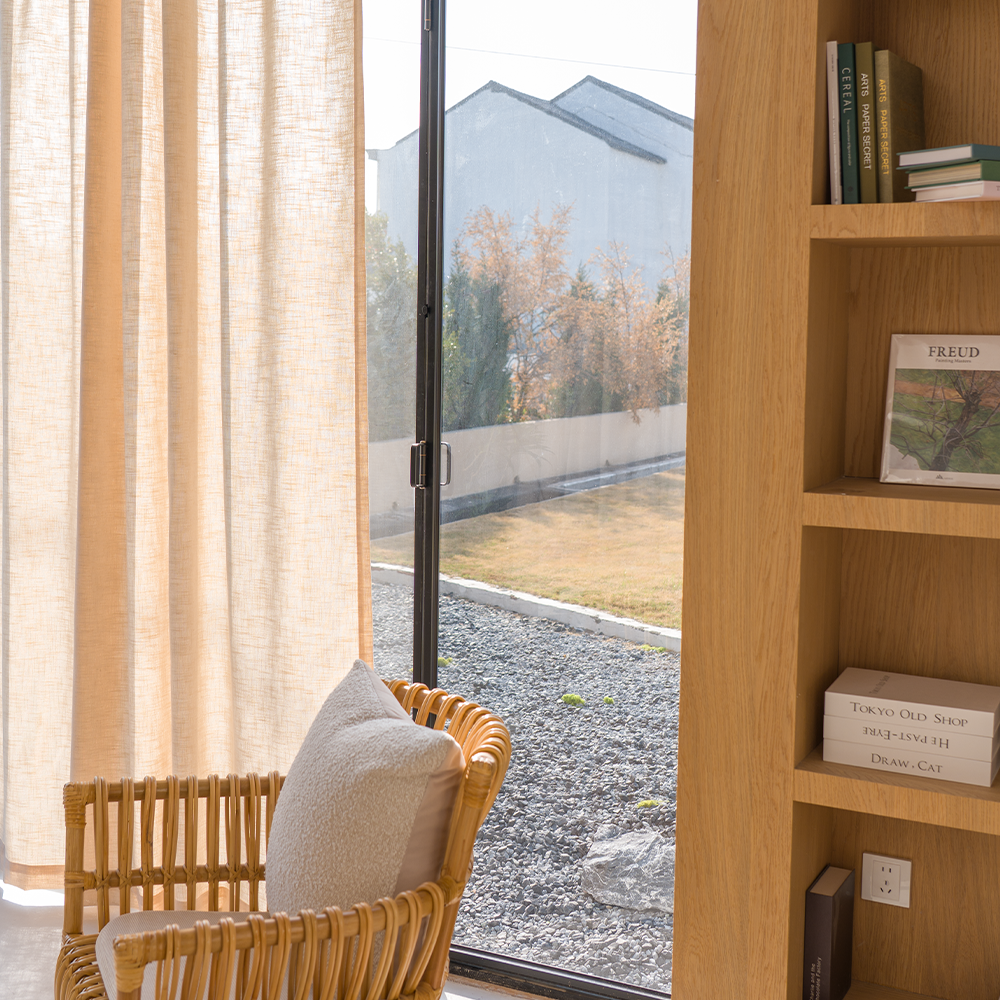
Real (flax) linen is spun from the flax plant. It has a beautiful irregular slub, a crisp hand and excellent breathability — but it also wrinkles aggressively, can shrink 3–5% if not pre-treated, frays at the cut edge, and costs several times more per metre than synthetics. For a single bespoke residential job that is fine. For a repeatable wholesale SKU sold by the hundreds, pure linen’s price swing and dimensional movement are hard to standardise. If you plan to buy the cloth by the roll rather than finished panels, our guide to sourcing curtain fabric from China walks through the mill-direct options.
Faux linen (also called “linen-look” or “linen-texture”) is woven from polyester — or a poly/viscose or poly/linen blend — engineered to reproduce the slub and matte finish of flax while staying stable, fade-resistant and affordable. The vast majority of stock linen curtain ranges on the market are faux linen for exactly these reasons. If your customer wants the look and an easy-care, consistent product, faux linen is usually the right call. If they specifically want natural fibre content for sustainability or feel, a linen blend (commonly poly/linen or linen/cotton) is the middle path, available on custom OEM subject to MOQ and quotation.
The honest framing to give your own buyers: faux linen wins on price, colour consistency and durability; real and blended linen win on natural-fibre story and hand-feel, at a higher cost and with more care required. Set that expectation up front and you avoid returns driven by a “this isn’t real linen” surprise.
| Factor | Real (flax) linen | Linen blend | Faux linen (poly) |
|---|---|---|---|
| Look & slub | Authentic, most character | Natural, slightly cleaner | Linen-look, very consistent |
| Price | Highest | Mid | Lowest |
| Shrink & creasing | 3–5% shrink, creases easily | Reduced | Stable, minimal |
| Colour consistency | Harder to match across lots | Good | Excellent |
| Care | Most demanding | Moderate | Easy-care |
| Best for | Bespoke / natural-fibre story | Premium ranges wanting some natural content | Repeatable wholesale SKUs |
The Linen Curtain Types Buyers Order

“Linen curtains” is a finish, not a single product. The same linen-look yarn can be built into very different panels depending on density and backing:
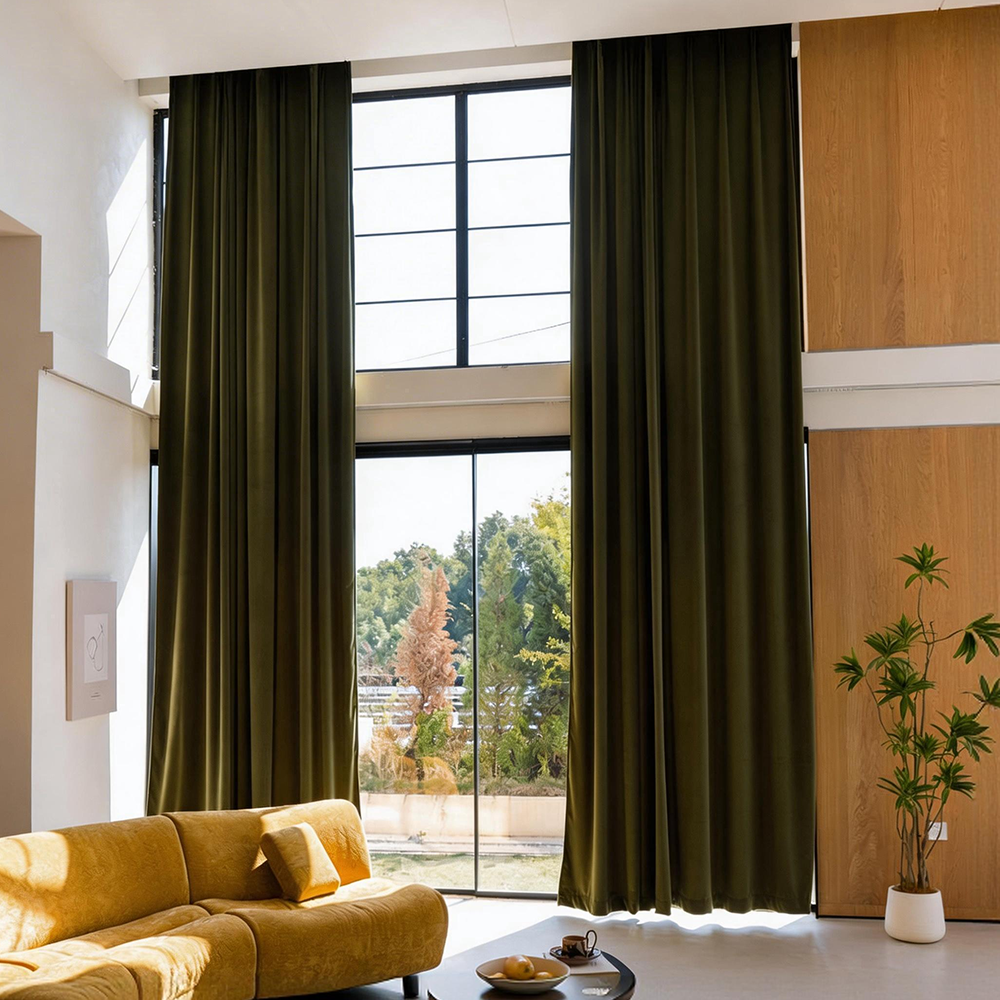
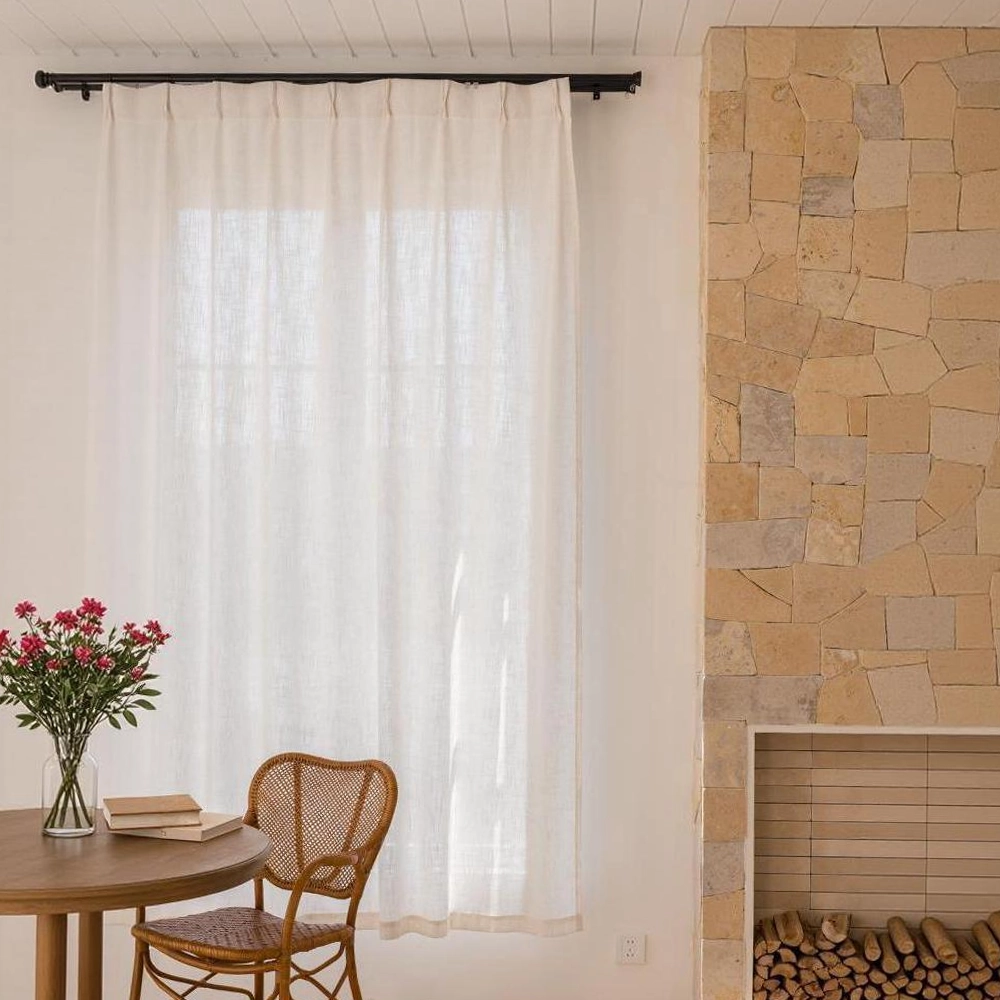
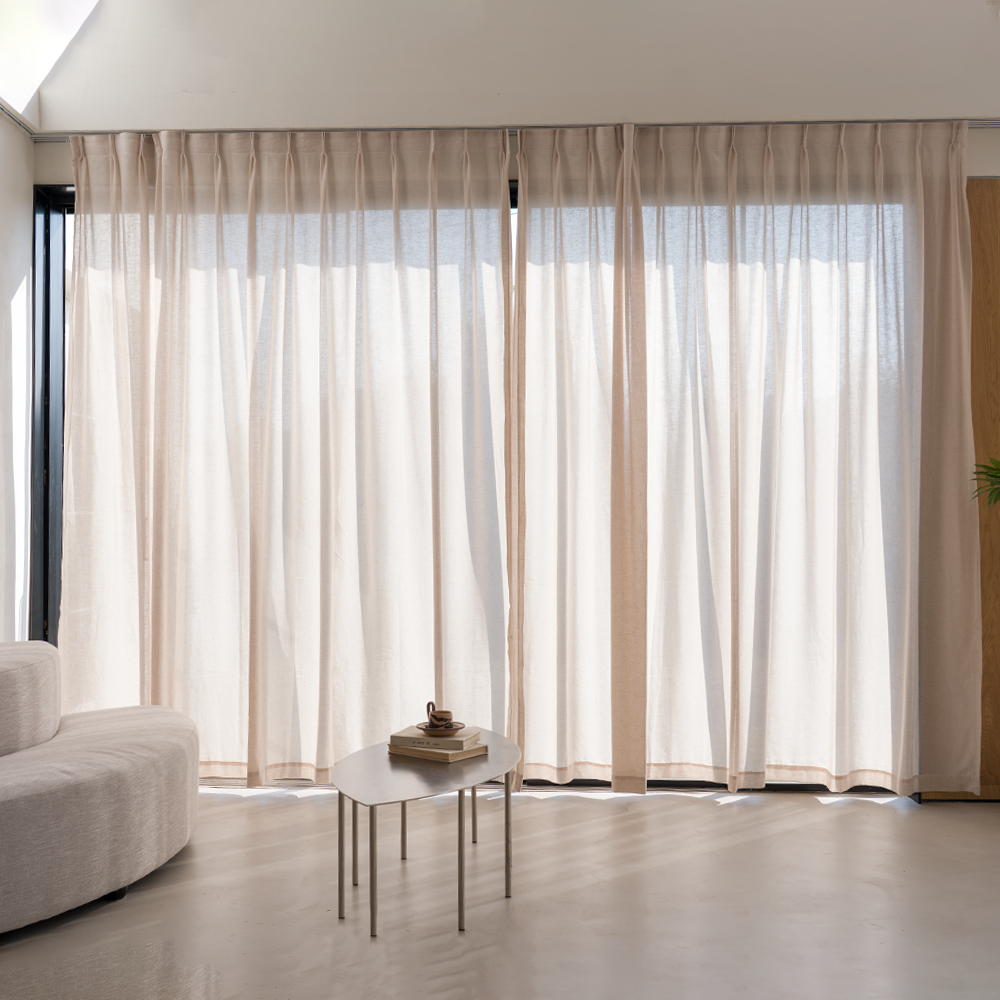
- Linen-look sheers / light-filtering panels — loosely woven faux linen that softens daylight and gives privacy without full block-out. The most popular linen format for residential and hospitality common areas.
- Heavyweight faux linen drapes — denser, with more body and a fuller fold; reads as a “proper” drape while keeping the casual linen texture.
- Faux linen blackout — a linen-look face bonded to a coated back or triple-weave construction for 100% light blocking. Common in hotels and bedrooms that want texture plus darkness.
- Lined linen drapes — a linen-look face with a separate dimout or blackout lining, giving the premium two-layer hang luxury and hospitality projects expect.
Knowing which of these your customer actually needs is the first spec decision, because it drives weight, width and price. A linen-look sheer and a lined faux-linen blackout share a “linen” label but are completely different cost lines. If you are also weighing this against other textures, our velvet curtains wholesale guide and sheer curtains wholesale guide cover the parallel decisions for those fabrics.
How to Spec Linen Curtains for a Wholesale Order

Fabric weight (GSM). Weight is the single biggest driver of how a linen curtain looks, hangs and prices. Linen-look sheers typically run light; heavyweight faux-linen drapes are much denser. Weight is not the same as quality or opacity, so spec it to the end use rather than chasing a number — our curtain fabric weight (GSM) guide walks through how to match weight to product.
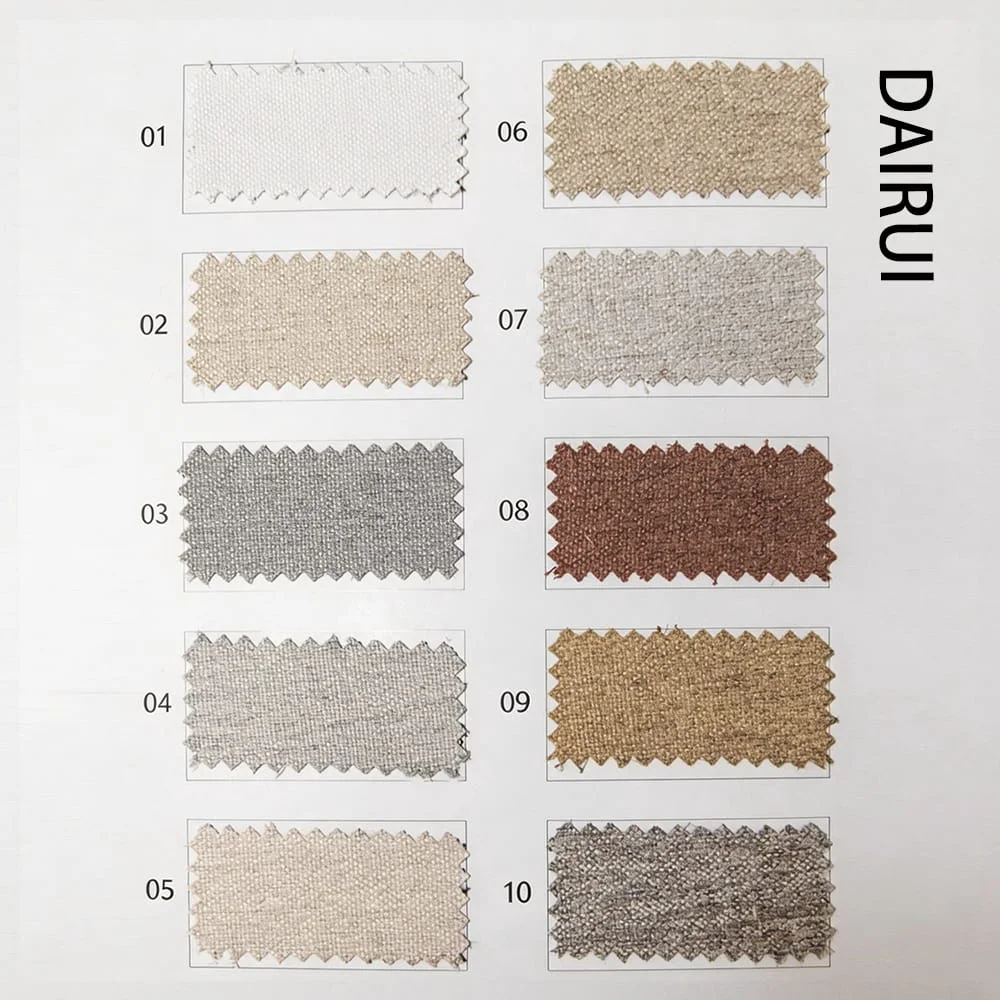
Weave and slub. The character of faux linen lives in the slub — the irregular thick-thin yarn that mimics flax. Ask for the specific weave (plain linen-look, cross-slub, grid-texture) and approve it on a physical swatch, because two fabrics with the same GSM can read very differently in person.
Width, height and fullness. Confirm finished panel width and drop, and the fullness ratio (commonly 2.0–2.5x the track width for a proper gather). Fullness changes how much fabric each panel consumes, which directly affects your unit cost.
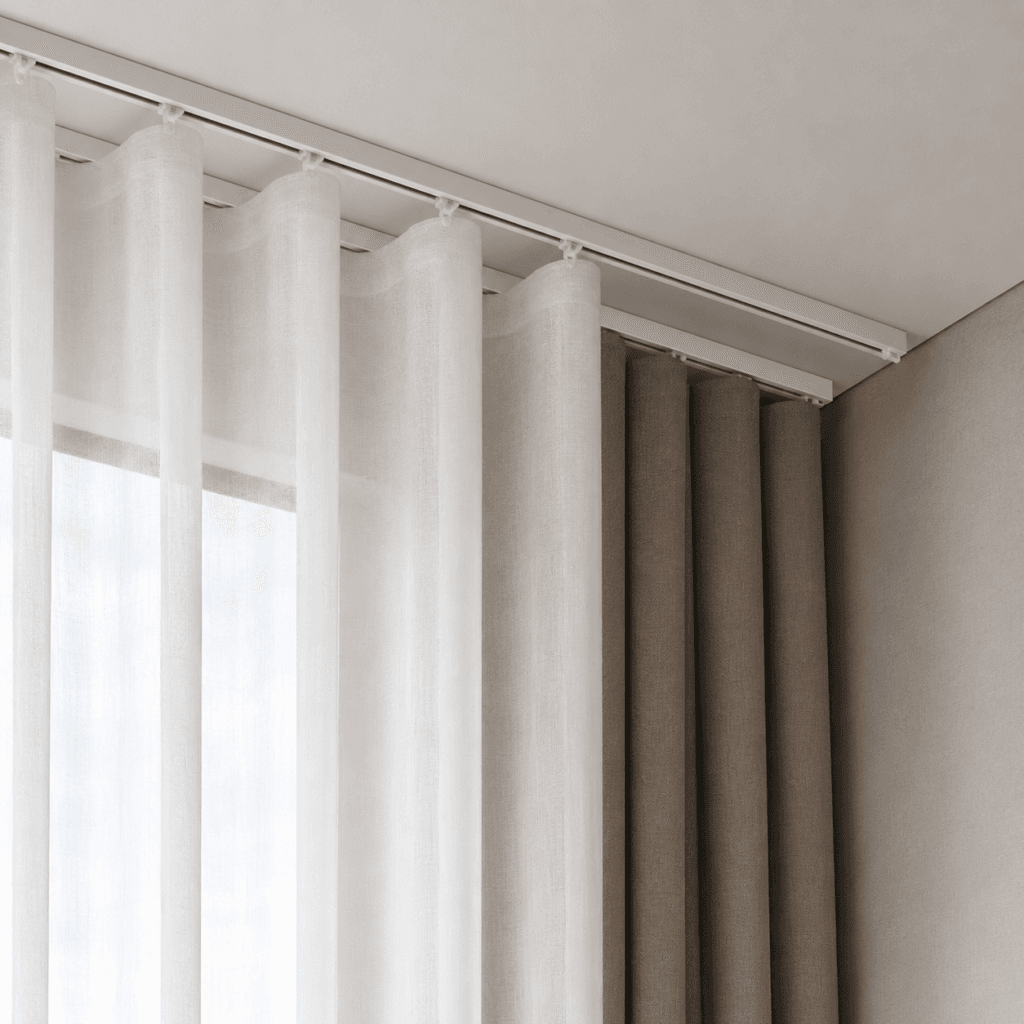
Heading style. Grommet/eyelet, pinch pleat, rod pocket, tab top, or a track-based wave/ripplefold — the heading is both an aesthetic and a hardware decision. Lining. Decide unlined, dimout-lined, or blackout-lined. Colour and dye lot. Lock colours against an approved standard and require that a full order ships from a single dye lot (or with documented lab-dips) to avoid panel-to-panel colour drift on a wall of curtains.
MOQ, Sampling, Lead Time and Pricing
Sampling. Before any bulk run, approve a physical sample. Swatch cards and lab-dips turn around quickly; a full sewn pre-production sample (PPS) in your exact spec takes longer but is the reference your bulk is judged against. Budget roughly 3–5 days for sampling on stock fabrics, longer if a custom weave or colour is involved.
MOQ. For stock faux-linen fabrics, trial orders can start around 50 pcs so you can test sell-through. Fully custom production — bespoke weave, bespoke colour, private-label finishing — generally carries an MOQ from about 200 pcs per style/colour, because the mill has to set up a dedicated run. Pooling colours or SKUs against the same base fabric is often possible to help you reach MOQ; see how to source curtains from China for the full order workflow.
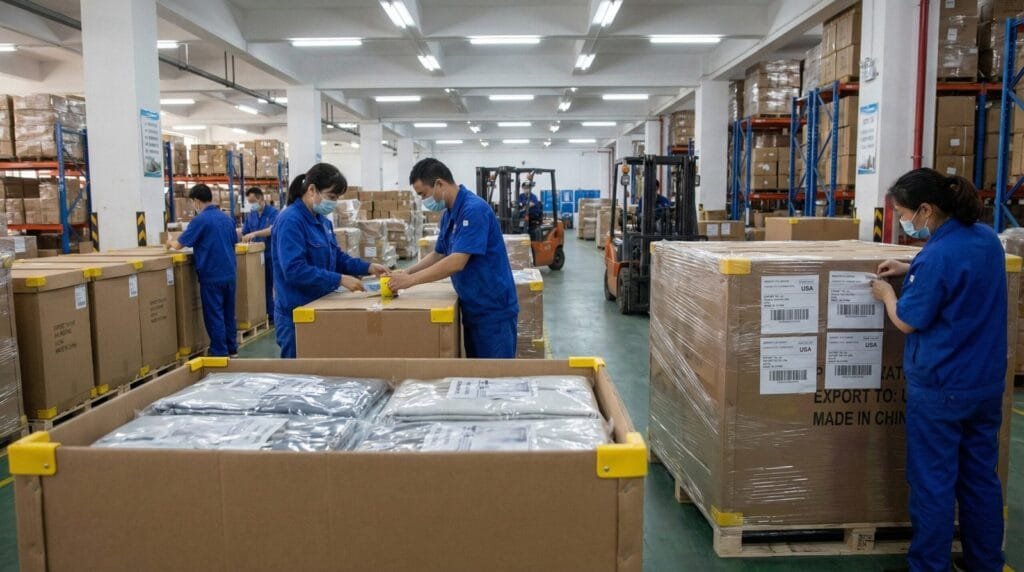
Lead time. Standard bulk production runs about 25–30 days after sample approval for in-range specs; heavily customised orders can run longer, which is normal. Sea freight is on top of that (roughly 15–25 days to the US West Coast and Australia, 30–40 to the US East Coast and Europe). Pricing is a function of weight, width, lining, heading and order size, so any number quoted in a guide is indicative only — always work from a live quotation tied to your exact spec.
Quality, Shrinkage and Compliance
Shrinkage and stability. This is where faux linen earns its place in a wholesale range. Polyester faux-linen is dimensionally stable and resists the 3–5% shrink and heavy creasing that pure flax can show after washing. If you are selling a blend with natural-fibre content, confirm the pre-shrink treatment and publish realistic care instructions to your customers.
Inspection. Build a pre-shipment inspection into the order — checking colour against the approved standard, dye-lot consistency, stitching, hem and dimensions to an agreed AQL before the balance is paid. This is your main lever for catching problems while they are still the factory’s to fix.
Compliance. For contract and hospitality work, two things come up repeatedly. Certifications such as OEKO-TEX and BSCI are available on a supplier-authorised basis — ask for the specific scope and documentation that applies to your order rather than assuming blanket coverage. Flame-retardant linen-look fabrics can be produced to meet common hospitality standards, with compliance documentation available on request; confirm the exact standard your market requires (for example the relevant US, UK/EU or Australian code) at the quoting stage. For a deeper view of the mill side, see working with a China curtain fabric manufacturer.
Who Buys Wholesale Linen Curtains
Linen curtains sit in the sweet spot between “designer look” and “everyday price”, which is why they sell across very different channels:
- Online and big-box retailers stocking linen-look sheers and drapes as a core texture alongside solids and blackout.
- Interior and home brands building a curated natural-texture range, often as private label.
- Hotels and hospitality projects using lined or blackout faux-linen for a warm, textured room that still meets darkness and FR requirements. If your work is project-based, our block-out and sheer linen sourcing guide for ANZ goes deeper on spec for that market.
- DTC and marketplace sellers who want a differentiated, on-trend fabric story without the cost and care headaches of pure flax.
Whichever channel you serve, the winning approach is the same: decide real, blend or faux up front; spec weight, weave, heading and lining to the end use; approve a physical sample; and lock colour and dye-lot before bulk. Do that and a linen range becomes one of the most reliable, repeat-friendly lines you can carry. You can browse representative constructions on our linen curtains range.
Are wholesale linen curtains real linen or polyester?
Most are faux linen — polyester (or a poly blend) woven to reproduce the slub and matte drape of flax. It is cheaper, more colour-consistent and far more dimensionally stable than pure linen, which is why it dominates stock ranges. Real flax linen and linen blends are available as custom OEM, subject to MOQ and quotation.
What is the MOQ for custom linen curtains?
Stock faux-linen fabrics can start with trial orders around 50 pcs so you can test sell-through. Fully custom production — bespoke weave, colour or private-label finishing — generally carries an MOQ from about 200 pcs per style/colour. Pooling colours or SKUs against one base fabric can help you reach MOQ. Confirm against a live quote.
Do faux linen curtains shrink?
Polyester faux-linen is dimensionally stable and resists the 3–5% shrinkage and heavy creasing that untreated pure flax can show after washing. If you order a linen blend with natural-fibre content, ask about the pre-shrink treatment and publish realistic care instructions to your customers.
Can linen-look curtains be made blackout?
Yes. A linen-look face can be bonded to a coated back or built as a triple-weave for 100% light blocking, or paired with a separate blackout lining. You keep the linen texture on the room side while getting full darkness — a common request for hotels and bedrooms.
How long do linen curtain samples and bulk orders take?
Sampling on stock fabrics is roughly 3–5 days (longer for custom weaves or colours). Standard bulk production runs about 25–30 days after sample approval, with heavily customised orders taking longer. Sea freight is additional — about 15–25 days to the US West Coast and Australia, 30–40 to the US East Coast and Europe.
Are your linen curtains OEKO-TEX or fire-retardant certified?
OEKO-TEX and BSCI are available on a supplier-authorised basis — ask for the specific scope and documents that apply to your order. Flame-retardant linen-look fabrics can be produced to meet common hospitality standards, with compliance documentation available on request. Confirm the exact standard your market requires at the quoting stage.
Bottom Line
Wholesale “linen” curtains are mostly faux linen, and that is a feature, not a compromise: you get the flax aesthetic with the price, colour consistency and stability a repeatable program needs, plus blend and real-linen options on custom OEM. Decide real/blend/faux up front, spec weight and weave to the end use, approve a physical sample, and lock colour and dye-lot before bulk. Match that discipline with realistic MOQ, lead-time and compliance expectations and a linen line becomes one of the easiest textures to scale.
Author: DAIRUI Sourcing Desk. Last reviewed: 2026-06.