Bottom line: Most curtain importers buy on FOB Ningbo or Shanghai — you control the ocean freight through your own forwarder and pay duties at your port. CIF adds supplier-arranged sea freight and insurance to your destination port, but you still clear customs and pay duty. DDP is door-to-door with the supplier fronting freight and duties — the simplest option but typically priced 15–30% higher. First-time buyers without a forwarder lean DDP to cut risk; once you have a forwarder, FOB almost always lands cheaper.
Why Incoterms Decide Your Real Curtain Landed Cost
Two suppliers can quote the same per-panel price and still leave you with very different landed costs. The reason is the Incoterm — the three-letter trade term (FOB, CIF, DDP) that defines exactly where the seller’s responsibility ends and yours begins. It sets who books and pays the ocean freight, who insures the cargo, who clears customs, and who pays import duty.
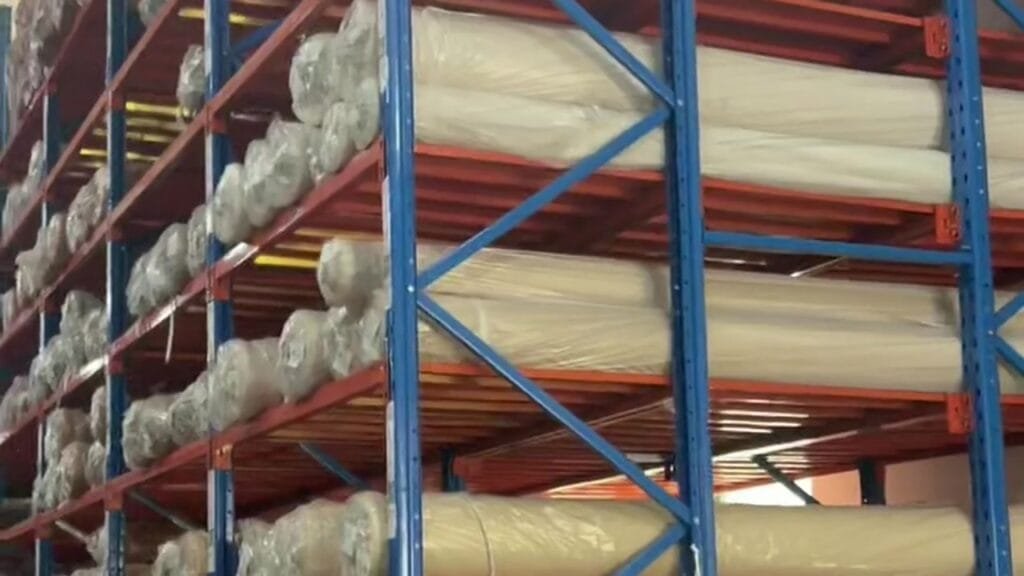
For curtains specifically, freight matters more than for dense goods. Finished panels and made-up drapery are bulky and light, so you often fill volume before weight — an order can cube out a container while still being well under the weight limit. That makes the freight term a real line item, not an afterthought. Before you compare quotes, make sure every supplier is quoting on the same Incoterm, or you are comparing apples to oranges.
The three terms below cover well over 90% of curtain shipments out of China. Air freight and EXW (ex-works) exist but are rare for wholesale curtain orders, so we focus on FOB, CIF and DDP.
FOB (Free On Board): The Default for Curtain Imports
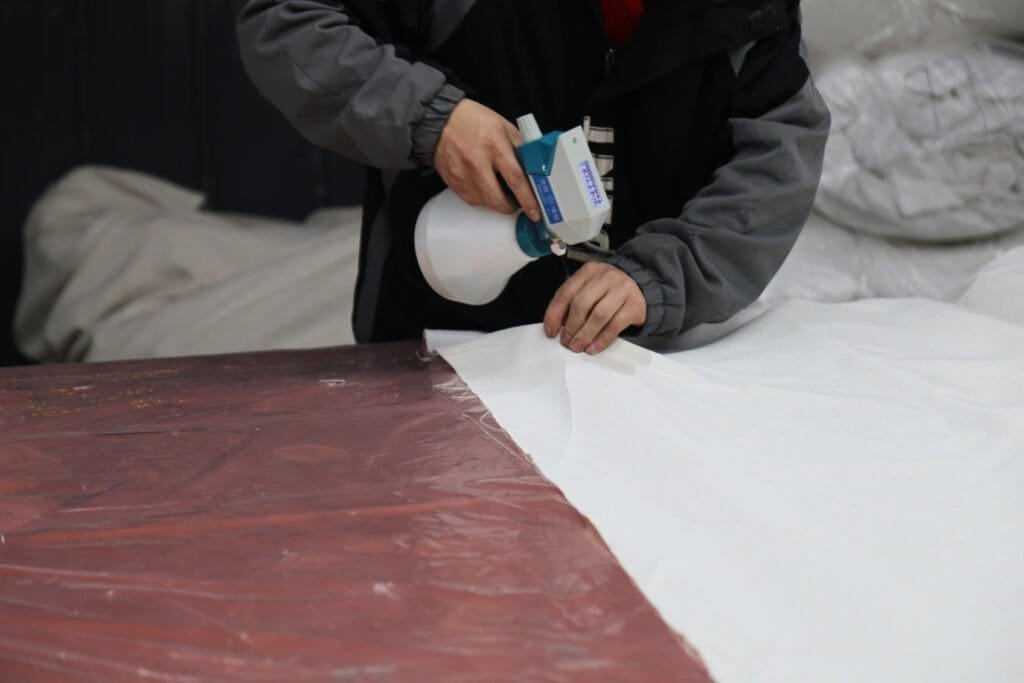
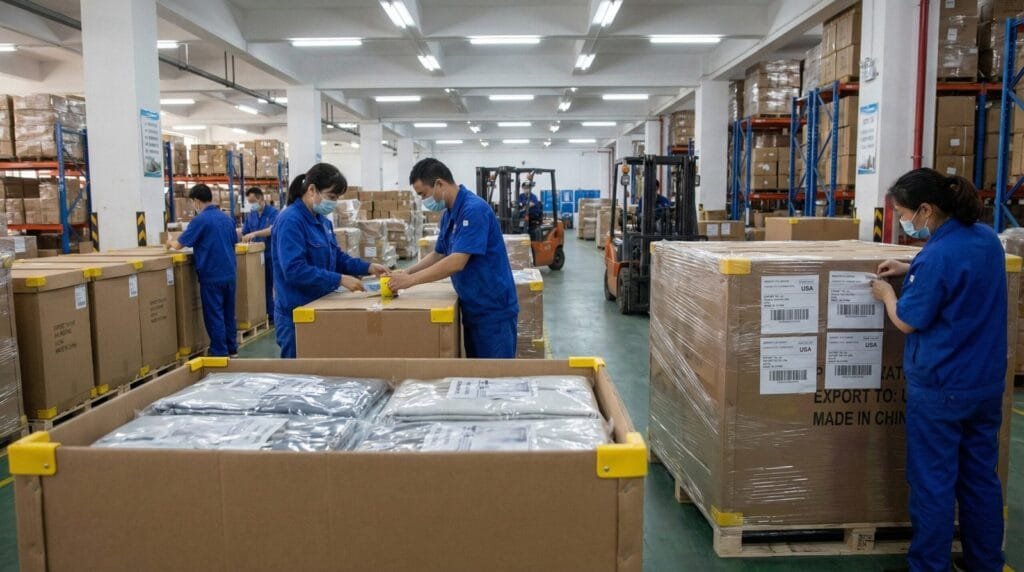
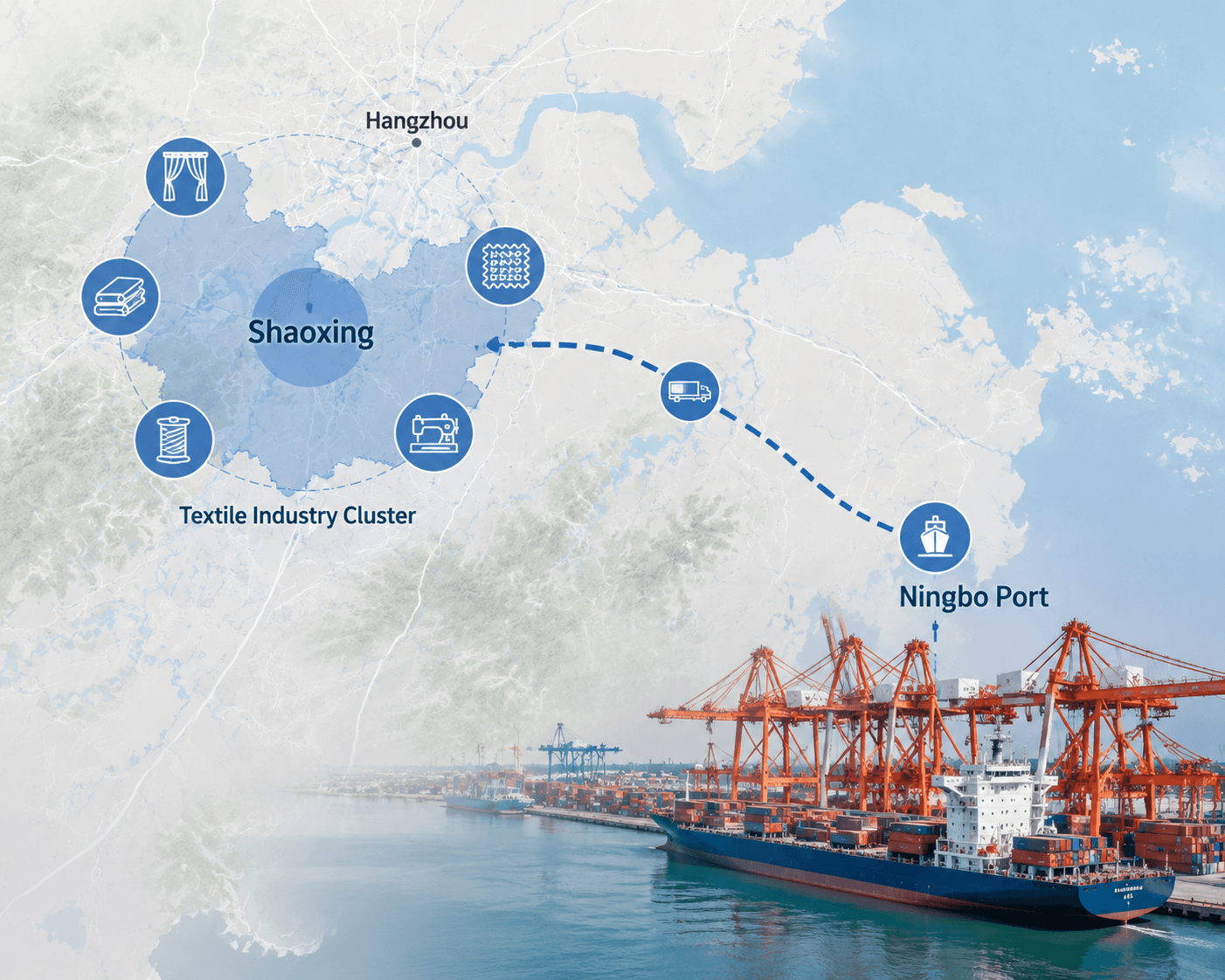
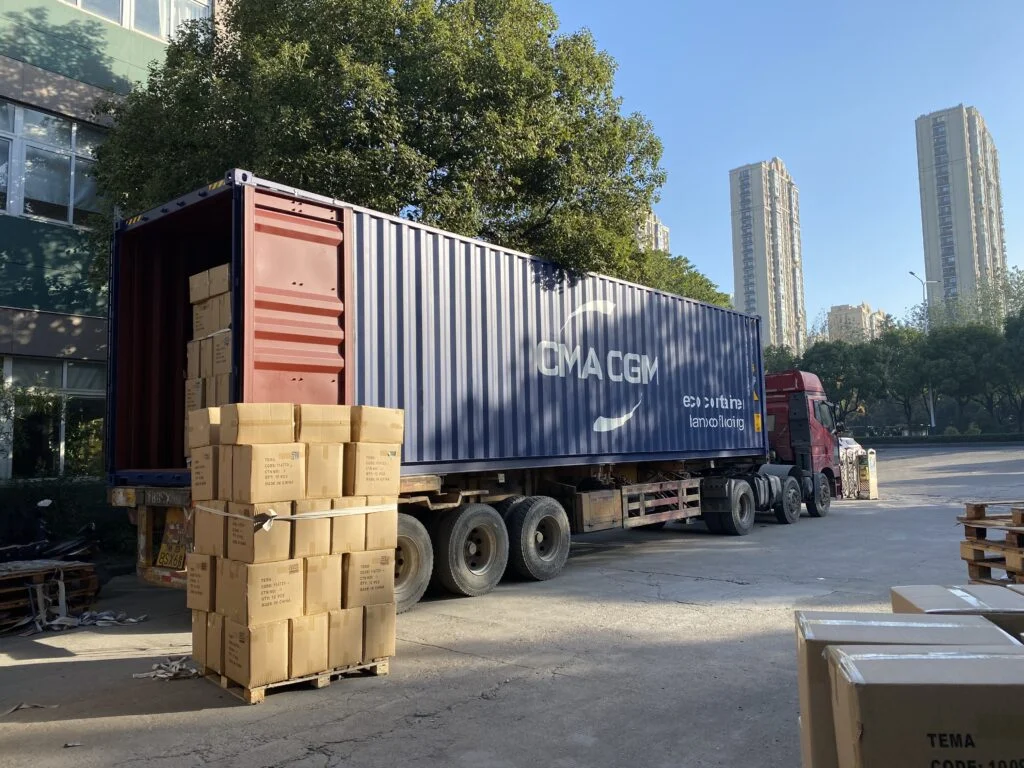
Under FOB, the supplier delivers your curtains, cleared for export and loaded onto the vessel at the origin port (almost always Ningbo or Shanghai for our shipments). From the moment the goods are on board, the cost and risk are yours: ocean freight, marine insurance, destination charges, customs clearance and duty.
FOB is the default for a reason. You (or your freight forwarder) negotiate the ocean rate directly, so you see the true freight cost instead of a marked-up number buried in the goods price. Buyers shipping regularly almost always save on FOB because forwarders give them better rates than a one-off supplier booking. Typical transit from Ningbo runs roughly 15–25 days to the US West Coast and 30–40 days to the US East Coast, Europe and Australia, though actual schedules and rates move with the market — always confirm with your forwarder.
The trade-off: FOB needs you to have a forwarder and be comfortable managing customs at your end. If you do, it is the most transparent and usually the cheapest way to import curtains.
CIF (Cost, Insurance, Freight): Supplier Handles the Ocean Leg
Under CIF, the supplier arranges and pays the ocean freight plus marine insurance to your named destination port. Risk still transfers at the origin port (same as FOB), but the supplier pre-pays the sea leg and insurance — commonly around 0.3–0.5% of cargo value for the insurance — and rolls it into the quote.
CIF feels convenient because one number covers goods plus sea freight to your port. But you still clear customs and pay import duty yourself once the container lands, and you lose visibility into the real freight rate. It suits buyers who want the supplier to handle the ocean booking but who can still manage customs clearance at destination. For curtain orders, CIF is most common with mid-size buyers who do not yet have a strong forwarder relationship but want to control clearance.
DDP (Delivered Duty Paid): Door-to-Door, Highest Price
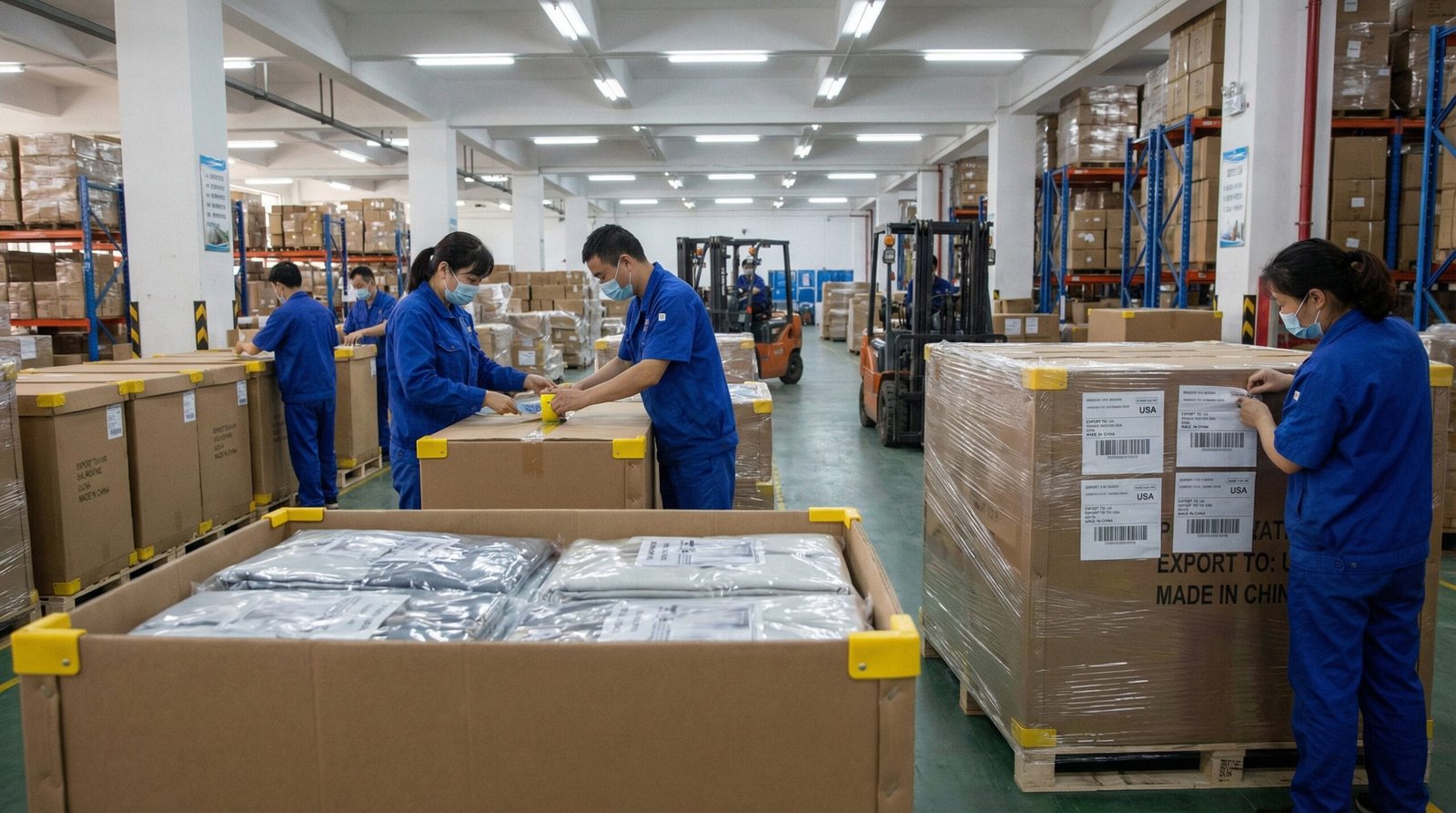
Under DDP, the supplier delivers the curtains all the way to your door, having paid everything along the way: export clearance, ocean freight, insurance, destination charges, import customs clearance and import duty. You receive the goods with nothing left to arrange. It is the simplest term to buy on, full stop.
That simplicity is priced in. DDP quotes typically run 15–30% above an equivalent FOB price, because the supplier is fronting freight and duties and carrying the risk and cash-flow cost of doing so. You also rely on the supplier (and their agent) to declare the goods correctly in your country — a misdeclared HS code or undervaluation can come back on you. DDP is genuinely useful for first-time importers, small trial orders, or buyers who simply want a fixed all-in number without touching logistics.
One caution specific to DDP: confirm the quote truly includes destination duty and taxes (some “DDP” offers quietly exclude VAT/GST). Get it in writing on your proforma invoice and order terms.
FOB vs CIF vs DDP: Side-by-Side
| Responsibility | FOB | CIF | DDP |
|---|---|---|---|
| Export clearance & loading | Seller | Seller | Seller |
| Ocean freight | Buyer | Seller | Seller |
| Marine insurance | Buyer | Seller | Seller |
| Risk transfers at | Origin port | Origin port | Your door |
| Import customs clearance | Buyer | Buyer | Seller |
| Import duty & taxes | Buyer | Buyer | Seller |
| Relative price | Lowest | Middle | Highest (+15–30%) |
| Best for | Buyers with a forwarder | Want supplier on sea leg | First-timers / trial orders |
Note that under both FOB and CIF, import duty is always your cost — only DDP shifts it to the supplier. To estimate that duty before you commit, check the rates for your market in our guide to curtain import duties and HS codes by country, and the paperwork side in import certifications by country.
Which Incoterm Fits Your Curtain Order?
Choose FOB if you import regularly and have a freight forwarder. You get the real freight rate and the lowest landed cost, and you keep control of clearance. This is where most established wholesalers and DTC brands end up.
Choose CIF if you want the supplier to handle the ocean booking but you can still clear customs — a reasonable middle step while you build a forwarder relationship.
Choose DDP for your first order, a small trial run, or when you simply want one fixed number and zero logistics work. Just budget for the 15–30% premium and confirm duty and local taxes are genuinely included. Many buyers start on DDP for the first one or two orders, then switch to FOB once they have a forwarder and know their real freight cost. For the full order workflow including payment terms and Incoterm selection, see how to place a wholesale curtain order from China, and for sourcing basics start with our guide to sourcing curtains from China.
Curtain Incoterms FAQ
Which Incoterm is cheapest for curtain imports?
FOB is normally the cheapest landed cost if you have a freight forwarder, because you negotiate the ocean rate directly instead of paying the supplier’s marked-up freight. DDP looks simplest but carries a 15–30% premium for that convenience.
Does FOB include loading curtains into the container?
Yes. Under FOB the supplier covers export clearance and getting the goods loaded on board at the origin port (Ningbo or Shanghai). Your cost and risk begin once the cargo is on the vessel.
Who pays import duty under CIF?
You do. CIF only covers the supplier-arranged ocean freight and insurance to your destination port. Import customs clearance and duty remain the buyer’s responsibility — the same as FOB. Only DDP shifts duty to the seller.
Is DDP worth the extra cost for first-time buyers?
Often yes for a first or trial order. DDP removes all logistics and customs work for a fixed price, which lowers risk when you have no forwarder yet. Once you import regularly, switching to FOB usually saves more than the DDP premium.
What is the difference between CIF and CFR for curtains?
CFR (Cost and Freight) is CIF without the insurance — the supplier pays ocean freight but not marine insurance, leaving you to insure the cargo. For low-value bulky goods like curtains the insurance is small (around 0.3–0.5% of value), so most buyers prefer CIF for the added cover.
Can I switch from DDP to FOB on reorders?
Yes, and many buyers do. Start on DDP to keep your first order simple, then move to FOB once you have appointed a forwarder and know your true freight and duty costs. The supplier quote simply drops the freight and duty components.
Bottom Line
The Incoterm is not paperwork trivia — it decides who controls freight, who carries risk, and who pays duty on your curtain order. FOB gives the lowest cost and most control if you have a forwarder; CIF hands the supplier the ocean leg; DDP buys total simplicity at a 15–30% premium. Match the term to where you are: DDP to start, FOB once you scale. Whatever you choose, make every supplier quote on the same Incoterm so you are comparing real landed cost, not headline price.
Need an FOB or DDP quote on a curtain order? Dairui ships FOB Ningbo/Shanghai as standard and can quote DDP for first or trial orders. Freight and duty figures above are typical ranges only — confirm live rates with your forwarder and final pricing with your quote.
DAIRUI Sourcing Desk
Last reviewed: 2026-06