Bottom line: A typical 200-room hotel needs roughly 900–1,100 curtain panels once you count both a sheer and a blackout layer per window and add public areas — about 4–6 panels per room. The real number depends on windows per room, layering, and curtain fullness (2.0–2.5x for hospitality). Work it out per room type, not by guessing a flat multiplier. All figures below are planning estimates; confirm against measured window sizes before you order.
The one formula behind every hotel curtain order
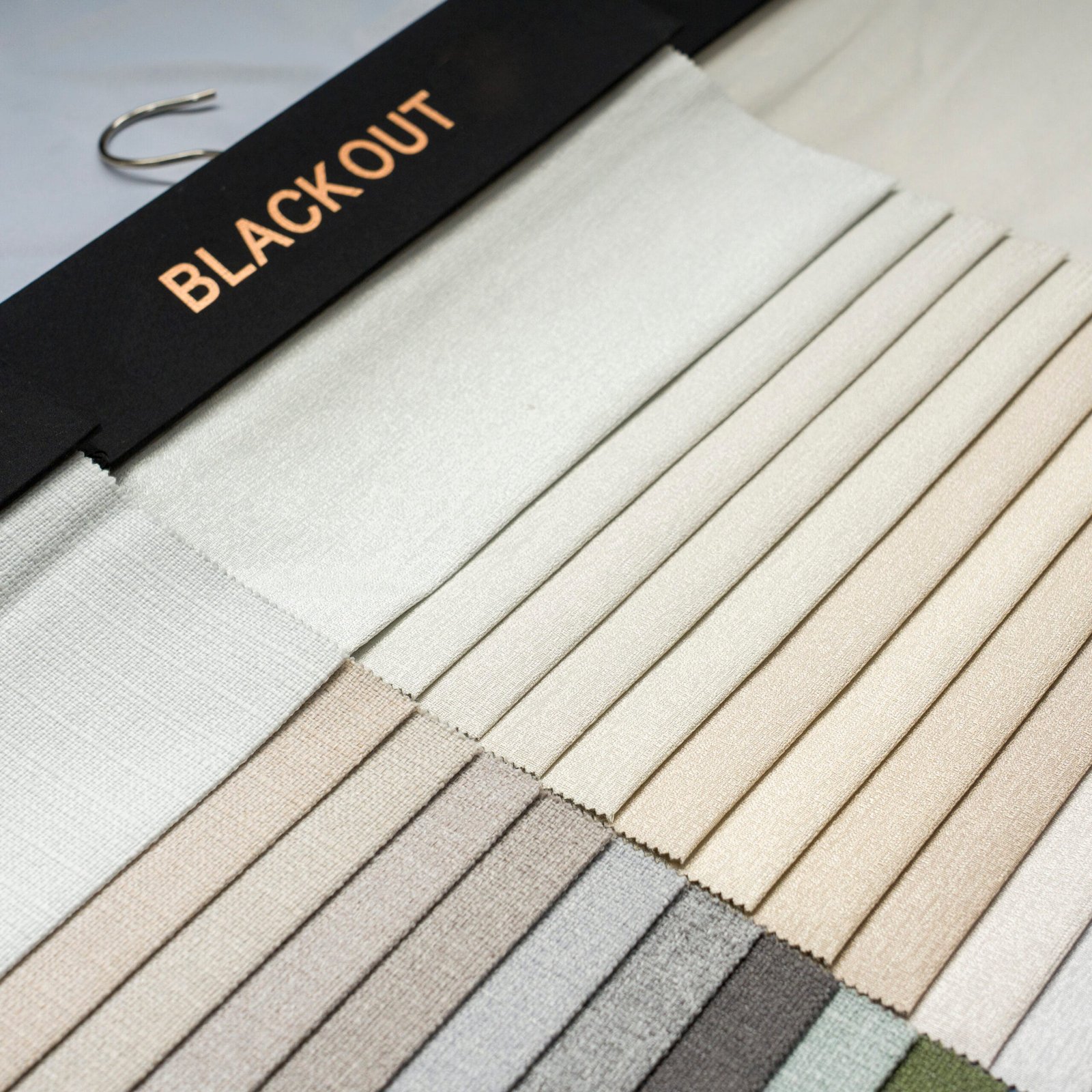
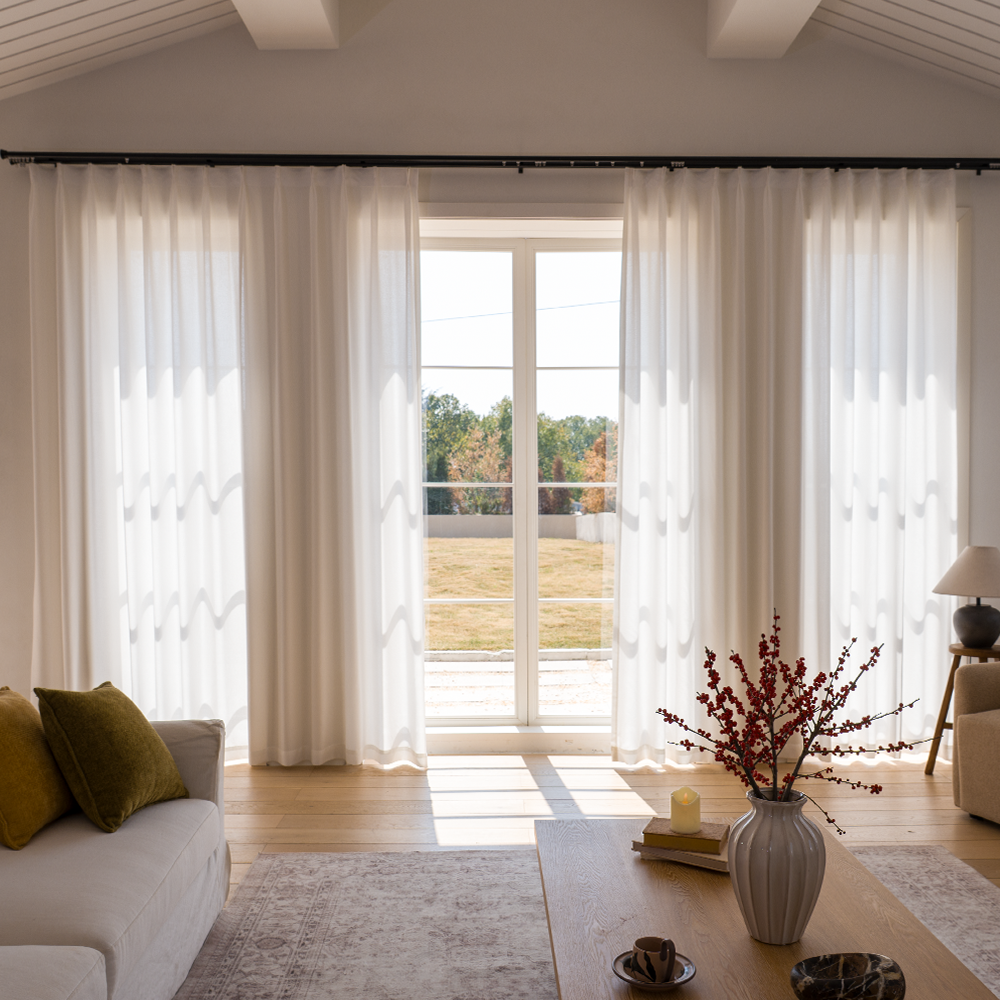
Every panel count starts from the same idea: panels = windows × layers × panels-per-treatment. Hotels almost never run a single curtain. Guestrooms use a two-layer system — a sheer for daytime privacy and a blackout for sleep — so each window already carries two treatments before you count a single panel.
Each treatment is then made of one or two panels depending on whether it draws to one side or splits in the middle. Most hotel windows use a centre-split pair, which means 2 panels per layer, or 4 panels per window when sheer and blackout are both included.
That “4 panels per window” figure is the anchor for the rest of this guide. Get your window count right and the panel total falls out of it. The mistakes happen when planners forget the sheer layer, ignore suites, or leave out public areas — we’ll close each of those gaps below.
Step 1 — Count windows by room type
A flat “one window per room” assumption is where most quantity errors begin. Standard rooms usually have one window or sliding door; suites, corner rooms, and accessible rooms often have two or three. Break the property down by room type first, then multiply.
| Room type | Typical windows | Layers | Panels per room |
|---|---|---|---|
| Standard king/twin | 1 | Sheer + blackout | 4 |
| Corner / deluxe | 2 | Sheer + blackout | 8 |
| Suite | 2–3 | Sheer + blackout | 8–12 |
| Accessible room | 1 | Sheer + blackout | 4 |
If your blackout is a lined drape rather than a separate layer, the per-window count drops to 2 panels — but most 4-star-and-above properties keep the sheer for daytime use, so plan for the two-layer system unless the brand standard says otherwise.
Step 2 — Turn window width into panels and fabric
Panel count answers the headline question, but FF&E budgets are built on fabric meters, and that depends on fullness — how much wider than the window the gathered fabric is. Hospitality drapery runs 2.0–2.5x fullness for a full, professional look; sheers often go to 2.5x. A flat 1.5x reads cheap and is the fastest way to make a new-build look budget.
The working formula is simple: fabric width needed = window width × fullness. A 2.4 m window at 2.2x fullness needs about 5.3 m of gathered fabric width per layer. Divide by your fabric’s usable width (commonly 2.8–3.0 m for wide-width drapery) to get the number of fabric “widths,” then multiply by the finished drop plus header and hem allowance (~0.4 m).
You don’t have to run this by hand for every room — your supplier should return a fabric schedule once you send window sizes. But knowing the formula lets you sanity-check a quote and catch a fullness that’s been quietly cut to hit a price. For the heading mechanics behind fullness, see our guide to curtain heading styles.
Step 3 — Add public areas (the line everyone forgets)
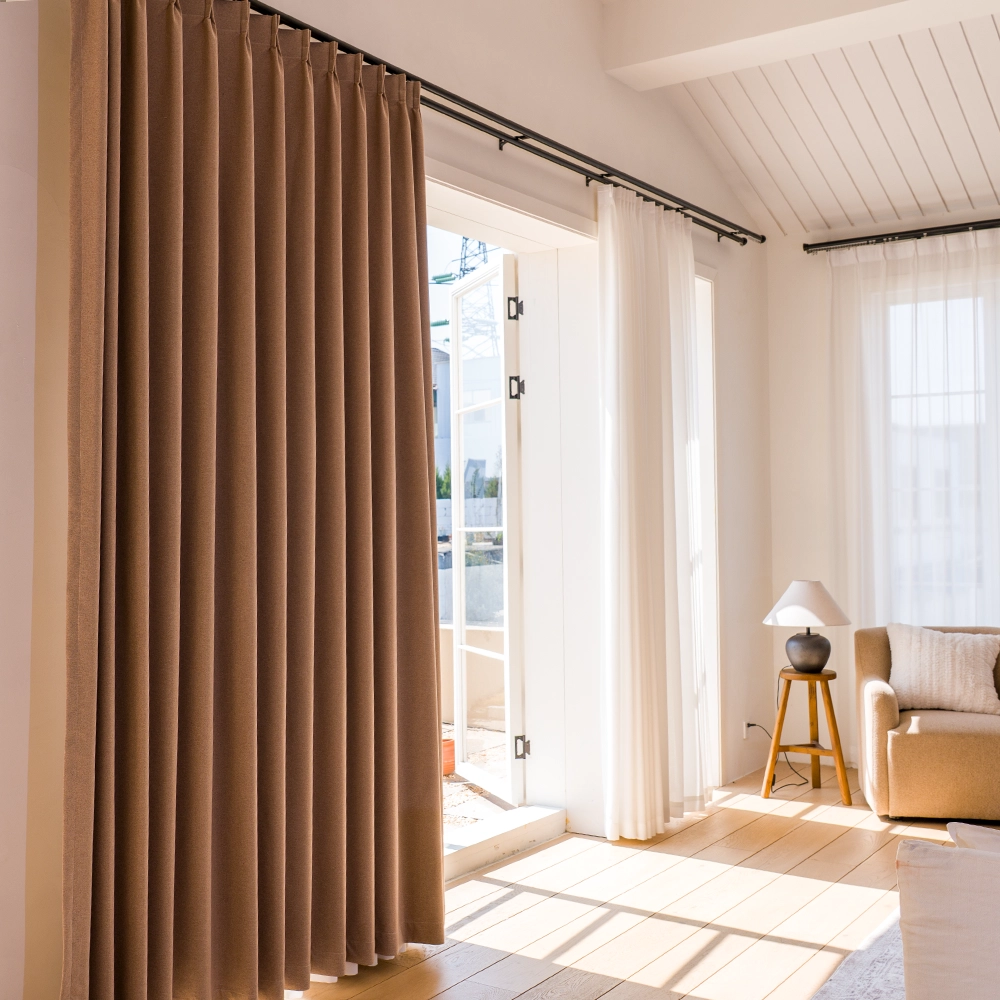
Guestrooms are the bulk of the order, but lobbies, restaurants, ballrooms, meeting rooms, the spa, and corridor ends all carry drapery — often in larger, taller, more expensive treatments than a standard room. As a planning rule, add 8–15% on top of your guestroom panel total for public areas, then refine once the FF&E drawings are final.
Public-area drapery also tends to carry stricter flame-retardant requirements than guestrooms, because it sits in assembly spaces. That can change fabric choice and cost, so flag it early — see our reference on curtain import certifications by country for the FR standards that apply in your market.
Worked example — a 200-room hotel
Here is the full calculation for a mixed-inventory 200-room property, using the two-layer (sheer + blackout) standard and a centre-split pair per layer.
| Segment | Count | Windows each | Panels (×4/window) |
|---|---|---|---|
| Standard rooms | 160 | 1 | 640 |
| Deluxe / corner | 30 | 2 | 240 |
| Suites | 10 | 2.5 avg | 100 |
| Guestroom subtotal | 200 | — | 980 |
| Public areas (+10%) | — | — | ~98 |
| Project total | — | — | ≈ 1,080 panels |
So a 200-room hotel of this mix lands near 1,080 panels — about 5.4 per room. Strip out the sheer layer and you’d halve it to ~540; that’s why the “how many curtains does a hotel need” answer swings so widely online. Always state your layering assumption when you brief a supplier, or you’ll be comparing quotes built on different counts.
FF&E budget math: from panels to a number
Once panels are settled, budgeting is a stack of line items, not a single price. For a mid-tier hospitality spec (FR sheer + FR blackout, fabricated, on track, installed), indicative planning ranges are:
- Fabric + make, per window (both layers): roughly $90–200, depending on drop height and fabric grade
- Track / hardware: $15–40 per linear meter; motorized track adds $120–300 per window
- Installation: often 10–20% of the fabricated cost, project-dependent
For our 200-room example (~230 windows), fabric and make alone land near $21,000–46,000 before hardware, motorization, freight, and install. These are planning figures only — fabric grade, drop height, motorization, and your shipping terms move them substantially, so treat any single number as a starting point and confirm with a measured quote. To plan the freight side, our container loading & CBM guide shows how many curtains fit a 20ft or 40ft container.
Common counting mistakes that blow the budget
- Dropping the sheer layer on paper but specifying it in the design — the single biggest source of mid-project change orders.
- Averaging windows across the whole property instead of counting suites and corner rooms separately.
- Forgetting public areas, which are low in count but high in cost per treatment.
- Cutting fullness to hit a price — it shows immediately and is hard to fix after install.
- No attic stock — order a small spare allowance (commonly 2–5%) for damage and future replacements in the same dye lot.
Getting the count and spec right up front is also what lets a supplier quote accurately and pass inspection. For the sourcing and QC side of a hospitality order, see our hotel curtain supplier guide, or browse our hotel curtains range.
Frequently asked questions
How many curtains does a 100-room hotel need?
Using the same two-layer, four-panels-per-window standard, a 100-room hotel typically needs 450–550 panels including public areas. Halve that if you run a single blackout layer with no sheer. Always count suites and corner rooms separately rather than applying a flat per-room figure.
How many panels does one hotel window need?
A standard hotel window with a sheer and a blackout layer, each as a centre-split pair, needs 4 panels. A single-layer window drawing to one side needs just 1; a single blackout pair needs 2. The layering and draw style decide the number, not the room.
What curtain fullness do hotels use?
Hospitality drapery runs 2.0–2.5x fullness — the gathered fabric is roughly twice the window width. Sheers often go to 2.5x for a soft, full look. Anything near 1.5x reads as budget and is a common quiet cost-cut to watch for in quotes.
Should I order spare curtains for a hotel?
Yes. Order a small attic-stock allowance of 2–5% in the same production run so replacements match in color and dye lot. Reordering later from a new batch risks visible shade variation against curtains that have aged in daylight.
Do hotel curtains need to be flame retardant?
In most markets, yes — especially in public assembly areas like lobbies, restaurants, and ballrooms. FR requirements vary by country (NFPA 701, BS 5867, EN 13773 and others), so confirm the standard for your jurisdiction before specifying fabric. Guestroom requirements are often lighter than public areas but should still be checked.
How do I give a supplier the right quantity?
Send a window schedule — room type, window count, each window’s width and drop, and your layering and fullness standard. With that, a supplier returns a fabric schedule and firm panel count. A panel total alone isn’t enough to quote accurately, because fabric depends on width, drop, and fullness.
Bottom line for your project
Count windows by room type, decide your layering (sheer + blackout is the hospitality default), multiply by panels per window, then add 8–15% for public areas and 2–5% attic stock. For a 200-room property that lands near 1,080 panels; for 100 rooms, around 500. Then convert to fabric meters at 2.0–2.5x fullness to budget. Send a measured window schedule to your supplier and the estimate becomes a firm quote. Choosing which layers to run? Our guide to the best curtains and drapes for hotels compares sheer, blackout, and velvet options.
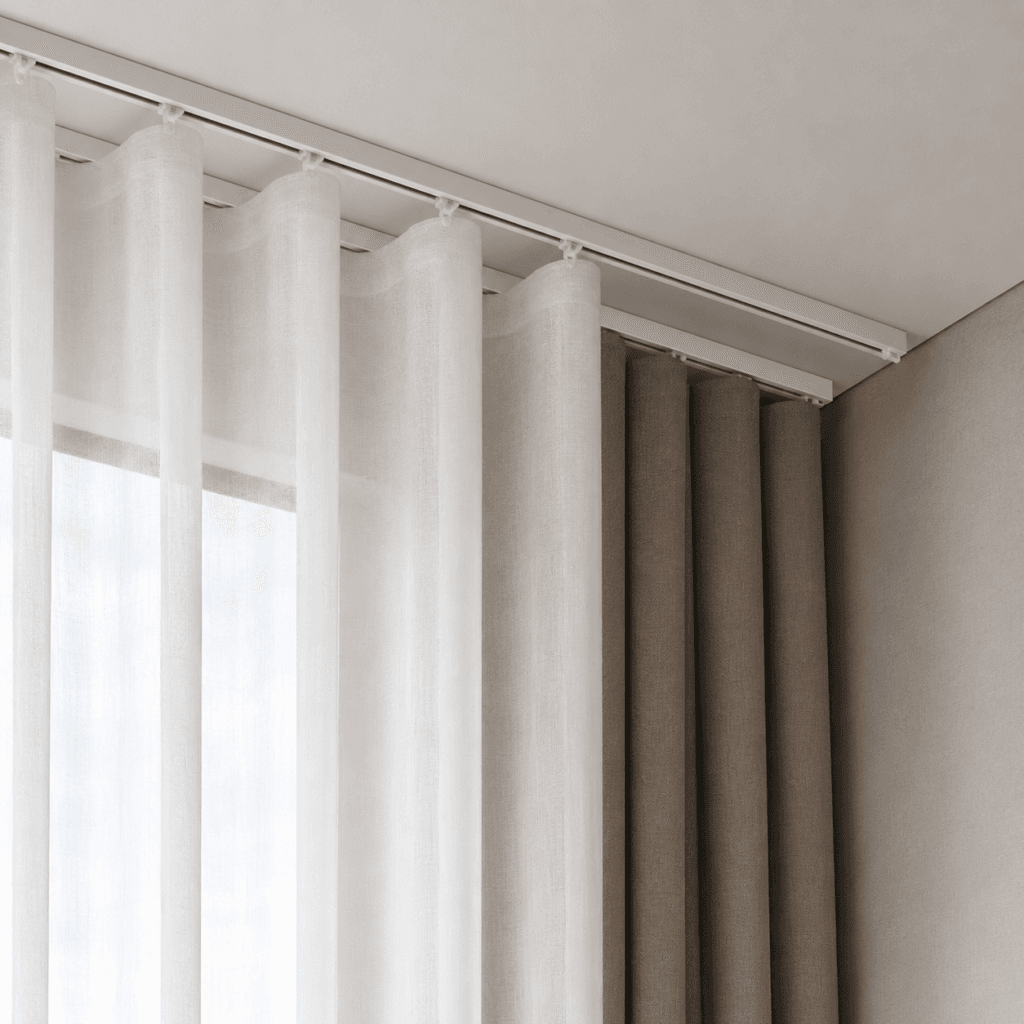
Hotel orders usually need the hardware counted too. Dairui can quote curtain tracks, runners, and brackets against the same window schedule, including motorized systems for suites and public areas.
DAIRUI Sourcing Desk — hospitality drapery manufacturing and project sourcing. Last reviewed: 2026-06.
Related reading: curtain size guide and extra long curtains.