Once you have two or more curtain manufacturers under consideration, the next step is not to compare marketing claims. Put each quotation, sample, and production proposal into the same specification framework so you can evaluate like for like.
Bottom line: a useful manufacturer comparison is an evidence-normalization exercise. The lowest quoted price, shortest stated lead time, or broadest product catalog does not mean much until every candidate is responding to the same fabric, construction, finished size, packaging, quantity, testing, and delivery requirements. This guide gives wholesale, private-label, and project buyers a practical framework for making that side-by-side decision after a shortlist already exists.
Editorial note: This buyer-focused procurement checklist does not list or score named suppliers and contains no paid placements. Order-specific facts should be verified against the quotation, approved sample, applicable document, and written order terms. Last reviewed: August 2026.
Start With One Common Specification
Do not ask several manufacturers to “quote a blackout curtain” and assume the answers are comparable. One quotation may use an in-stock polyester fabric, another may assume a custom fabric, and a third may include retail packaging or testing that the others have excluded. The numbers look comparable only because the missing details are hidden.
Create one written specification before requesting the final comparison quotation. It should define:
- curtain type and intended application;
- fabric reference, composition, construction, usable width, and weight where relevant;
- finished curtain size and the method used to measure it;
- heading style, tape, hooks, rings, or track compatibility;
- face color, lining, coating, backing, or functional finish where relevant;
- sewing details, hems, seams, joins, and acceptable finished-size tolerance;
- wash label, woven label, hangtag, barcode, insert, bag, and carton requirements;
- quantity by SKU, color, and finished size;
- target market and any mandatory documentation or testing requirement;
- sample stage, approval authority, inspection plan, Incoterm, and requested delivery window.
Issue the same revision to every candidate and give the document a version number and date. If a specification changes, send a change notice to all candidates. Otherwise, one manufacturer may be pricing revision two while another is still pricing revision one.
This step is what separates a comparison framework from a general supplier-selection article. The shortlist has already been created; the task now is to control the inputs so the commercial and production proposals can be evaluated side by side.
Compare Product and Manufacturing Fit for the Selected Program
Start with the exact SKU rather than a company-wide claim. A supplier may be highly relevant for finished curtains but not for fabric rolls, or strong in fabric development without providing the sewing, labeling, and retail packing required for a finished-panel program.
For a finished-curtain order, confirm who is responsible for fabric sourcing, cutting, sewing, header construction, finishing, inspection, and packing. For a fabric-only order, usable width, roll format, shade control, coating or finishing, and lot consistency may matter more than sewing capacity. A hotel program may require different approval, documentation, and installation inputs from a retail-ready private-label range.
Not every process must be in-house. What matters is that the quoted supplier clearly identifies which processes it controls, which are completed by an approved production partner, and who is accountable for specification consistency and corrective action. Ask only about processes that affect the selected SKU instead of rewarding the longest generic factory-capability list.
Use Dairui’s curtain wholesale program to see how finished-curtain requirements differ from a roll-goods quotation, and review OEM and ODM curtain manufacturing support when the program includes product development rather than a standard item.
Normalize the Sample Comparison
Samples can be misleading when the candidates are not asked to make the same thing. A free swatch, a showroom panel, and a paid pre-production sample serve different purposes. Record the sample type and decide which stage is binding before comparing workmanship or performance.
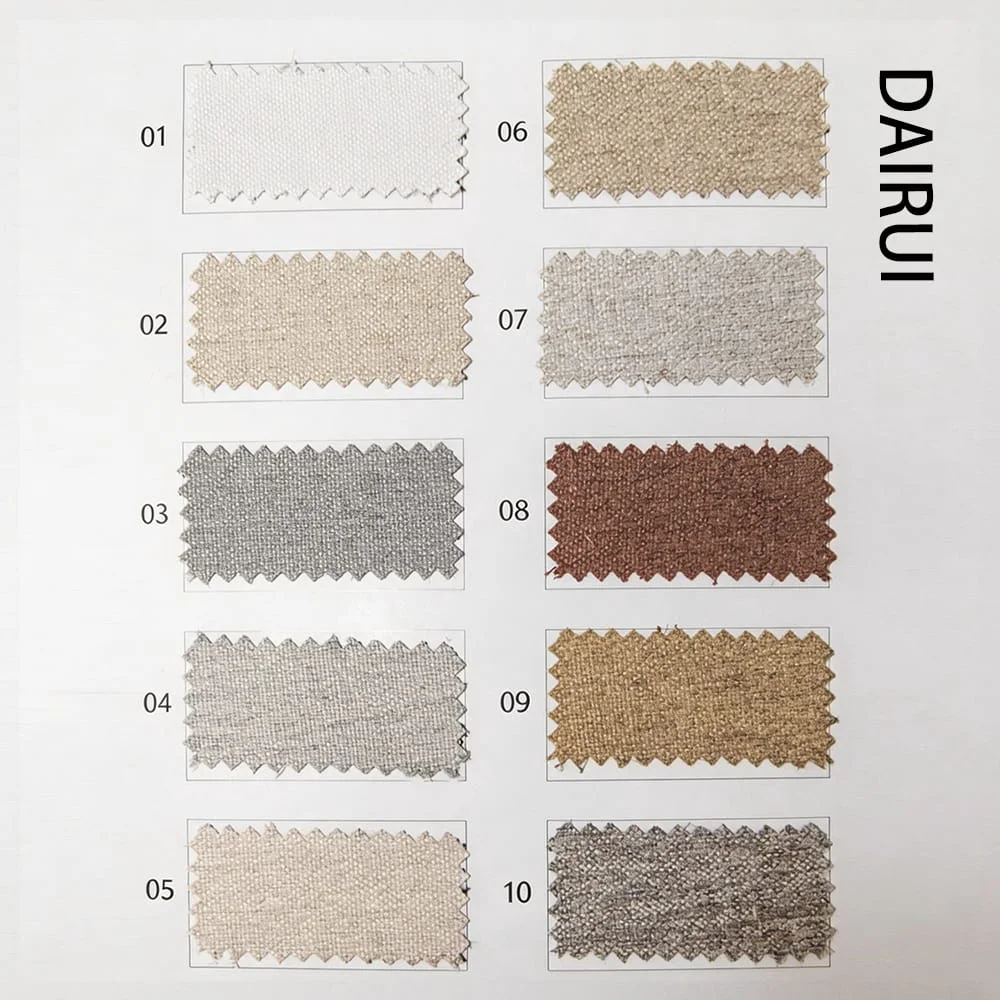
For each candidate, check the fabric reference, composition, construction, shade, hand feel where relevant, finished measurements, seam and hem dimensions, heading construction, hardware compatibility, labels, and packaging. For blackout curtains, also record the selected construction and how the finished panel is evaluated. Photograph measurement points and note any approved exception.
The approval sample should be identified in writing. Record the approval date, sample code, specification revision, approved color, and any signed comments. Decide who keeps the reference sample and how bulk production will be compared with it. A verbal “sample approved” message is not enough when the order contains multiple sizes, colors, or packaging versions.
Dairui’s sample support process explains the difference between fabric and finished samples. Whatever supplier you use, compare the same specification to the same specification and make the approved reference part of the order record.
Break MOQ Into Its Real Components
A single line reading MOQ: X pieces hides the structure that usually drives the minimum. Ask each candidate to separate:
- stock-fabric MOQ from custom-fabric MOQ;
- minimum per SKU, color, and finished size;
- whether colors or sizes can be mixed and under what conditions;
- label, hangtag, barcode, insert, bag, and carton-printing minimums;
- trial quantity from normal repeat-order quantity;
- minimums imposed by dyeing, coating, printing, or weaving;
- any surcharge or production limitation attached to a lower trial quantity.
Two manufacturers can quote different minimums and both be correct because they are pricing different fabric routes or packaging configurations. A small trial using existing material is not evidence that the same minimum applies to custom color, custom weaving, or printed retail packaging. Compare the MOQ structure, not only the headline number, and request a new confirmation when the fabric or pack changes.
Compare QC and Sample-to-Bulk Controls
Quality-control language becomes useful only when it is tied to the selected product. Ask who checks incoming material where relevant, cutting, sewing, finished dimensions, shade, header construction, finishing, and packing. For fabric programs, GSM, usable width, coating consistency, or dimensional change may also need defined checkpoints.
The comparison should state:
- which characteristics are inspected;
- when the checks occur;
- who performs and records them;
- which approved sample or specification is used as the reference;
- how nonconforming items are separated and corrected;
- who authorizes packing and shipment.
Do not assume every factory uses the same sampling standard, that every order receives third-party inspection, or that every production batch automatically has an independent report. If buyer-appointed inspection is required, agree the scope, timing, access, sampling method, acceptance criteria, responsibility, and reinspection process before production begins.
The curtain manufacturing process guide provides process context. For the commercial comparison, convert each relevant production stage into a measurable control and place it against the approved sample.
Compare Documentation and Testing by Scope
A certificate logo is not proof that a document covers the legal entity, fabric, finish, color, or order being quoted. Request the actual document and compare:
- document holder and issuing body;
- document or report number;
- issue date, expiry date, and current validity;
- standard and test method;
- covered material, construction, finish, and color;
- product class or market scope where applicable;
- whether the report covers a supplier material, a specific test sample, or the finished order;
- whether new testing is needed for the project.
For flame-retardant or other project requirements, define the target standard before material approval. A report for another construction or finish may not apply. If a fabric certificate is offered, confirm the selected material is inside its scope. Record any buyer-arranged inspection separately from material or performance testing.
See Dairui’s fabric documentation and project testing page for the evidence boundaries that should be confirmed at order level.
Compare Lead Time as a Sequence
A marketing lead time is not a production schedule. Ask each candidate to separate material readiness, sample production, sample approval, custom fabric development, testing, packaging approval, bulk production, final inspection, packing, and shipping preparation.
Identify which date starts the clock. A proposal may count from deposit confirmation, approved sample, material arrival, or completed artwork. Record the dependencies and ask what happens if the buyer changes a color, label, size assortment, or test requirement after approval.
The final comparison should show a realistic milestone schedule and name the responsible party for each approval. It should also distinguish production completion from cargo-ready date and requested delivery date. Treat the schedule as order-specific and confirm it in the quotation or purchase terms rather than converting a typical estimate into an absolute guarantee.
Compare Private Label and Packaging Line by Line
Private-label scope should be visible in the quotation and approved sample. Compare the wash label, woven or printed brand label, hangtag, barcode, SKU reference, insert, bag, retail box where applicable, carton marks, assortment, and carton quantity.
Ask which artwork format is required, who checks spelling and barcode data, what packaging component minimums apply, and whether a physical or photographed packaging sample will be approved before bulk packing. Confirm whether label application, folding method, accessory placement, and carton data are included in the price.
For multi-SKU orders, create a packing matrix that connects finished size, color, label, barcode, pack, and carton mark. This reduces the risk of approving a correct curtain with the wrong retail identity. Buyers developing a branded range can review Dairui’s private-label curtain manufacturing program for the inputs commonly agreed before bulk production.
Compare Export and Order Execution
Normalize the commercial scope as carefully as the product. Each quotation should identify the Incoterm and named place, included packing, carton data, inspection timing, export-document responsibility, requested cargo-ready date, and any excluded charge.
Confirm who issues the packing list and commercial documents, when carton dimensions and gross weight become final, and how changes are approved. A quotation under one Incoterm should not be compared directly with a proposal under another without separating freight, insurance, duty, destination handling, and service scope.
Use a written change-control process once the sample and order are approved. Each revision should show what changed, who approved it, whether cost or timing changed, and which version controls production. Do not assume one universal payment method or delivery service applies to every supplier or destination; use the terms in the current quotation.
Curtain Manufacturer Comparison Matrix
Use this matrix for each candidate. Attach the relevant evidence reference instead of writing only “confirmed.”
| Comparison Criterion | What to Compare | Evidence to Request | Decision Note |
|---|---|---|---|
| Product fit | Finished curtain, fabric-only, retail, hotel, or project scope | Quotation tied to the selected SKU and process responsibilities | Does the production route match the program? |
| Fabric / construction | Composition, construction, width, weight, coating or lining where relevant | Specification sheet and identified sample | Are all candidates quoting the same material route? |
| Sample | Type, measurements, shade, sewing, heading, labels, pack | Approved coded sample and signed comments | Is there one binding bulk reference? |
| MOQ | Stock/custom, SKU, color, size, label and pack minimums | Itemized MOQ schedule | Which minimum drives the order? |
| Customization | Size, heading, color, finish, artwork and packaging scope | Revision-controlled specification and artwork list | Are exclusions visible? |
| QC | Checkpoints, timing, responsibility and acceptance criteria | Order-specific QC plan or checklist | Are controls measurable for this SKU? |
| Sample-to-bulk control | Retained reference, lot/shade and dimension controls | Approved-sample record and bulk comparison method | Who resolves variation? |
| Testing / documentation | Holder, scope, validity, standard and exact material | Current document or order-specific testing plan | Does the evidence cover this order? |
| Lead time | Material, approval, testing, production and packing milestones | Dated production schedule | What starts the clock? |
| Packaging | Labels, barcode, insert, bag, assortment and carton marks | Approved packaging sample or artwork pack | Are component minimums included? |
| Inspection | Buyer, factory or third-party scope and timing | Written inspection terms and report format | Who authorizes shipment? |
| Export preparation | Incoterm, carton data, packing list and document responsibility | Itemized quotation and document checklist | Are landed-scope differences separated? |
Use an Evidence Status Score, Not a Quality Score
A simple evidence-status score can help organize missing information:
0 = Not provided1 = Partially confirmed2 = Confirmed for this specific program
This is not a manufacturer quality score. It only shows whether the buyer has enough order-specific evidence to make a decision. Do not convert it into a percentage. A candidate with a lower evidence status may simply need to answer an open question; a candidate with complete paperwork still needs its sample and commercial terms reviewed.
Candidate Comparison Worksheet
| Criterion | Candidate A | Candidate B | Candidate C | Evidence Confirmed? |
|---|---|---|---|---|
| Common specification revision | ||||
| Approved sample reference | ||||
| MOQ structure | ||||
| QC and sample-to-bulk controls | ||||
| Documentation / testing scope | ||||
| Packaging approval | ||||
| Production milestones | ||||
| Quotation / Incoterm scope | ||||
| Open risks and owner |
Complete the worksheet only after clarifying assumptions. An empty cell is more useful than an unsupported claim because it shows exactly what must be resolved before an order decision.
Applying the Checklist to a Dairui Program
Dairui supports B2B programs covering finished curtains, fabric selection, OEM/ODM development, custom finished sizes, heading options, samples, bulk production, and selected private-label packaging. A comparison quotation can confirm which of these elements applies to the selected program and identify the approved fabric, construction, sizing, labels, packing, and production responsibilities. MOQ depends on the fabric and program rather than one universal number. Documentation availability depends on the selected material, and any testing requirement should be agreed before approval. Production timing also depends on material readiness, customization, testing, packaging, quantity, and order terms. Buyers can review Dairui’s China curtain manufacturer overview and blackout curtain programs before requesting a specification-based comparison quotation.
Frequently Asked Questions
What should I compare first between curtain manufacturers?
Compare one common specification first. Define the curtain type, fabric, construction, finished size, heading, color, lining or coating, packaging, quantity, target market, and testing requirement. Quotations received against different assumptions are not a valid side-by-side comparison.
Why can two curtain manufacturers quote very different MOQs?
They may be pricing different stock or custom fabrics, color minimums, SKU and size mixes, labels, or packaging components. Ask for the minimum by fabric route, SKU, color, size, label, and pack instead of comparing one headline piece quantity.
How should I compare curtain samples?
Request the same sample type and specification, then compare fabric, construction, measurements, shade, sewing, heading, labels, and packaging. Identify one approved sample with a code, revision, date, and written comments so bulk production has a clear reference.
How should buyers compare blackout curtain claims?
Compare the construction, selected fabric and color, finished panel, evaluation method, and installation conditions. Side gaps, header construction, coating uniformity, face color, and batch variation can affect the installed result. Avoid treating one unsupported percentage as a complete system guarantee.
How should compliance documents be compared?
Check the document holder, issuing body, number, issue and expiry dates, standard, test method, and exact material or product scope. Confirm whether the evidence covers the ordered fabric and finish or whether new project testing is required.
Should the lowest quotation automatically win?
No. First normalize the specification, Incoterm, included processes, packaging, testing, inspection, and production schedule. A lower number may exclude a component or use a different material route. Compare the complete order scope and evidence before making the procurement decision.
What This Means for the Final Decision
The comparison is ready when every candidate has responded to the same specification, important gaps are visible, the approved sample is identifiable, and the commercial scope can be normalized. Record unresolved items, assign an owner and deadline, and do not approve bulk production until the controlling specification, sample, packaging, testing, inspection, and schedule are written into the order documents.
Author: DAIRUI Sourcing Desk
Last reviewed: August 2026