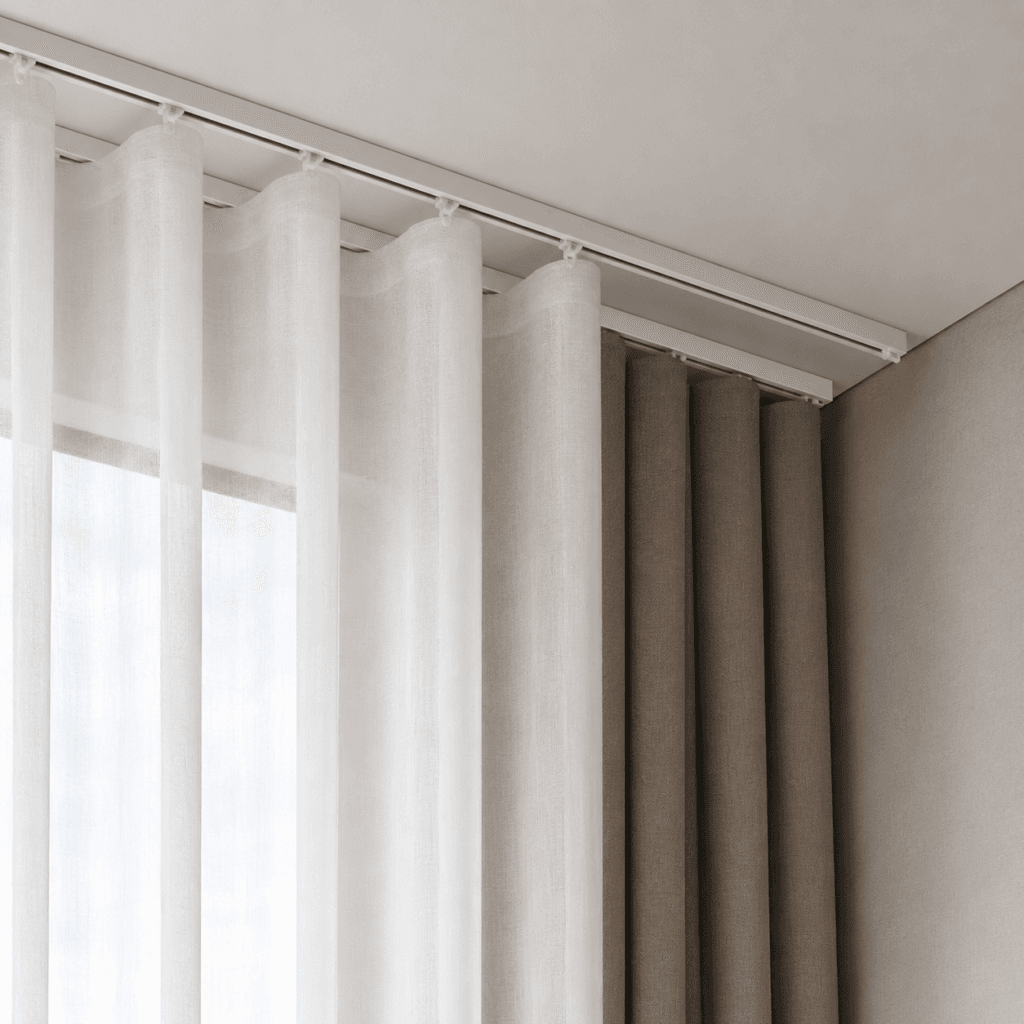
Bottom line: Chinese curtain fabric manufacturers operate on two business models — fabric-by-the-roll supply (typically 800 meters MOQ per color, the standard dye-vat batch) and full OEM finished curtain service (200 pcs custom MOQ, 50 pcs trial). DTC brands and workshops that cut and sew in-house should buy by the roll; retailers and wholesalers wanting finished, packaged panels should go OEM. A growing number of mid-size brands use both — fabric for hero SKUs, finished panels for the long tail. This guide walks fabric types, MOQ math, lead times, QC, and certifications so you pick the model before your first quote.
Two Ways to Buy Curtain Fabric from China — Roll Supply vs OEM Finished
When buyers search for a curtain fabric manufacturer from China, they fall into two camps with very different needs.
The first group is DTC brands, interior designers, and curtain workshops who already have their own cutting tables, sewing teams, and quality control. They want fabric by the roll — meters of textile they can transform into custom panels in their own facilities. Their decision criteria are weight (GSM), composition, color accuracy, and roll-to-roll consistency.
The second group is retailers, wholesalers, and hospitality buyers who need finished curtain panels ready to display, ship, or install. They don’t want to handle fabric inventory or cut-and-sew — they want OEM service covering fabric sourcing, manufacturing, branding, and packaging. Their decision criteria are MOQ, lead time, finishing quality, and labeling support.
At Dairui we run both lines from the same 10,000 m² Shaoxing factory. The fabric line supplies brands and workshops with rolls — often the exact same fabrics used in our own OEM production. The OEM line takes orders for branded, finished panels at 200-piece custom MOQ (or 50-piece trial). Some buyers, particularly mid-size DTC brands, use both: fabric for hero SKUs, finished panels for slower-moving long-tail items.
Mill-Direct vs Trading Company vs Market Vendor — Where Dairui Sits
Most overseas buyers searching for curtain fabric from China land on one of four channels: B2B marketplaces like Alibaba (largely trading companies), the domestic 1688 platform, the physical Keqiao Textile Market in Shaoxing, or direct mills. They are not interchangeable — the channel you pick decides your price, your minimum order, and who actually answers your technical questions.
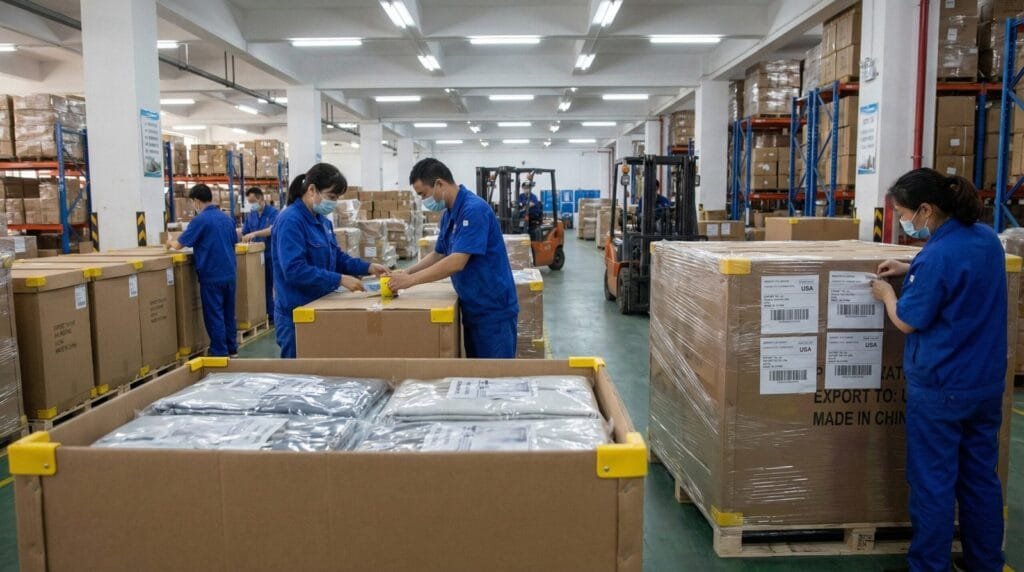
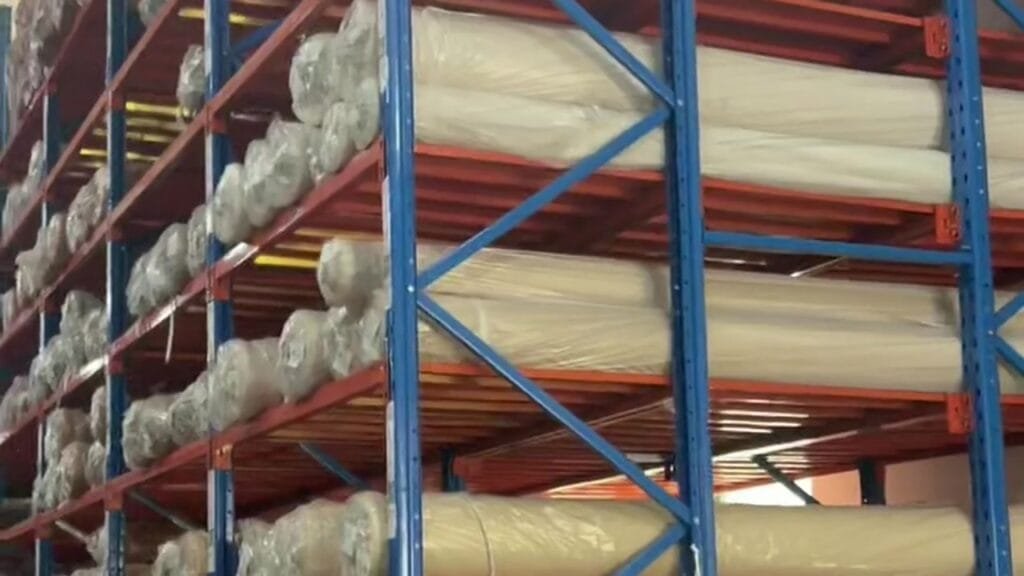
A look inside our Shaoxing facility:
Dairui is a direct curtain manufacturer based in Shaoxing, Zhejiang — the region at the center of China’s curtain-fabric industry, anchored by the Keqiao textile cluster. We weave, coat, dye, and finish in our own 10,000 m² facility and supply fabric mill-direct by the roll, rather than reselling another mill’s goods the way a trading company or market stall does. For a roll-supply buyer that means three concrete differences: you order at the true factory MOQ of 800 meters per color (one dye-vat batch, not a marked-up split lot); your color, GSM, weave, and coating are made to your spec rather than picked off a shelf; and the person quoting you can answer dye-lot, 4-point inspection, and FR-treatment questions because the production line is in the same building.
Curtain Fabric Types We Manufacture in Shaoxing
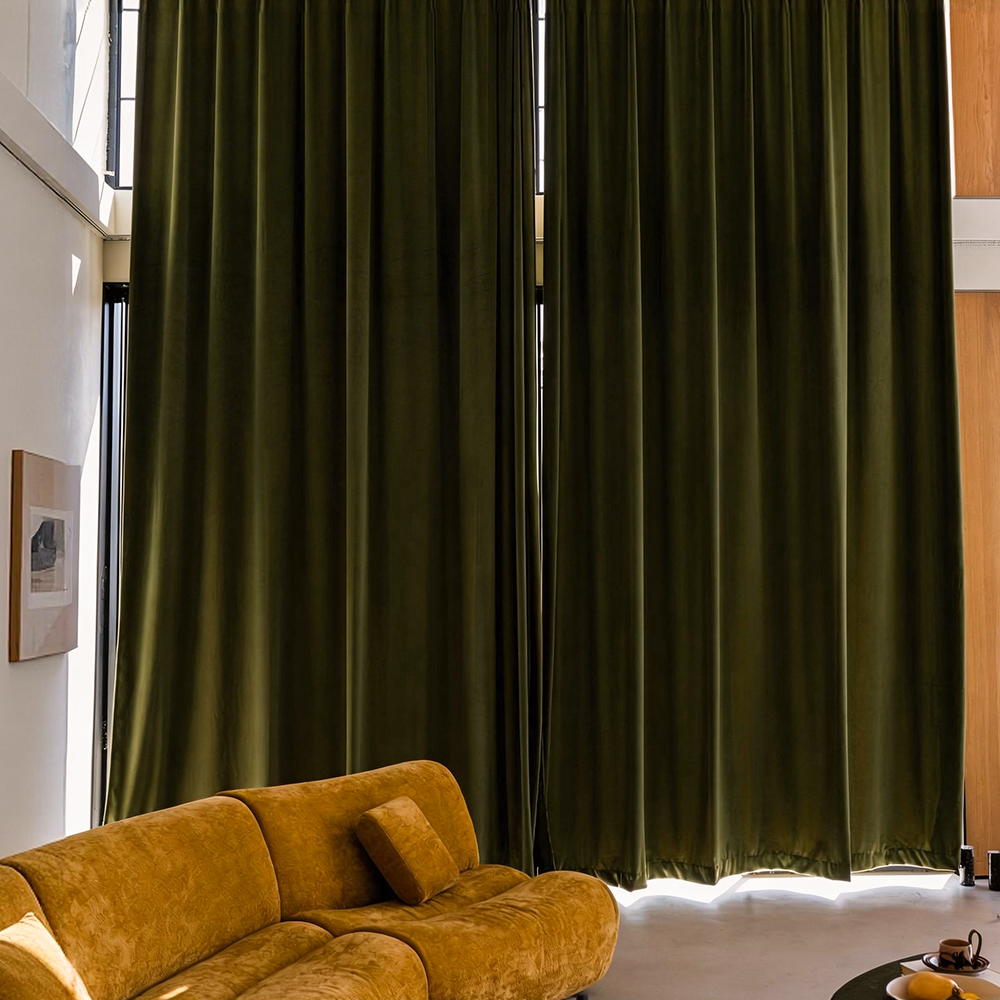
We manufacture six fabric categories at our 10,000 m² Shaoxing facility, all available by the roll or as finished panels. Weights below are confirmed against our May 2026 production specs.
- Plain Polyester Voile (60–90 GSM) — Sheer, light-diffusing fabric typically supplied to retail platforms and supermarkets at high volume. Translucent, drapes loosely.
- Linen-Look Polyester (80–110 GSM) — Polyester with a linen texture and hand-feel, popular with DTC brands wanting natural aesthetics at synthetic-fabric prices and durability.
- Linen-Blend / 100% Linen (110–150 GSM) — Premium natural-fiber fabrics, used mostly by high-end DTC labels in Canada, Australia, and the US Pacific Northwest.
- Velvet Series (180–400 GSM) — Three sub-categories: single-layer velvet (50–60% light-blocking, 180–240 GSM fixed), woven black-yarn velvet (80–90% blackout, GSM custom), and coated/composite velvet (100% blackout, up to 400 GSM).
- Blackout Coated Fabric (1-pass / 2-pass / 3-pass) — Polyester base with acrylic foam coating in graduated layers. 3-pass coating delivers 100% light blocking; 1-pass at roughly 80% is lighter and softer.
- FR-Treated Fabric (NFPA 701, BS 5867 Part 2 Type B/C) — Any of the above fabrics can be flame-retardant treated for hospitality, hotel, and public-space projects. Inherently FR yarn is also available on quote.
Custom weaves, prints, and constructions outside these six categories are quoted case by case. Send us a swatch or specification, and we’ll come back with feasibility, MOQ adjustment, and sampling cost within two business days.
MOQ, Pricing & Why “800 Meters per Color” Is Industry Standard
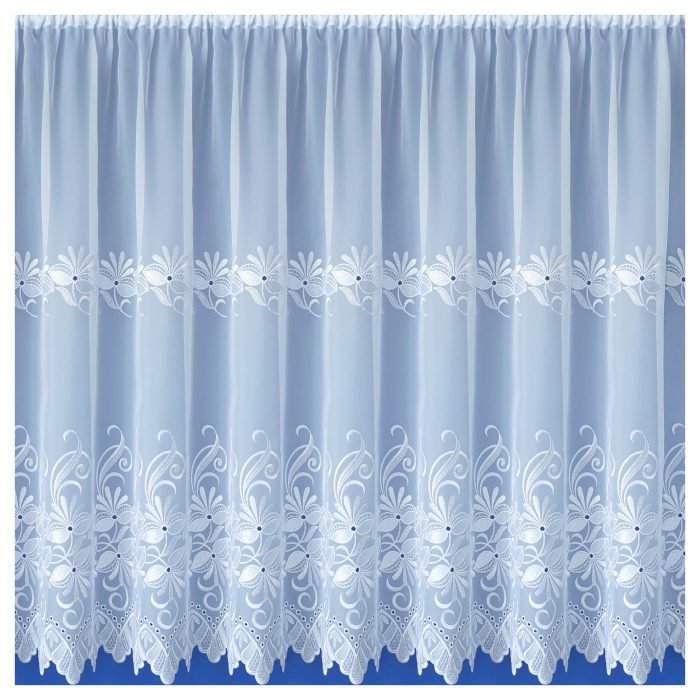
The single most important number for fabric buyers is 800 meters per color, our MOQ for roll supply.
This isn’t an arbitrary commercial decision — it’s the physical capacity of one dyeing vat. Chinese textile mills dye fabric in batches; a standard industrial vat holds approximately 800 meters of fabric, and re-using the same vat for a smaller run risks dye-lot inconsistency. Going below 800m means either splitting a vat (and paying for unused capacity) or accepting a color blended from a prior batch.
For buyers needing less than 800m of one color, we offer two paths:
- Stock-color rolls drawn from existing inventory (limited palette, immediate ship, no MOQ)
- Multi-color combined orders — for example, 200m red + 200m beige + 400m grey = 800m total, dyed in scheduled sequence (longer lead time, but unlocks small-quantity custom colors)
Indicative FOB Ningbo pricing for 800m+ orders at mid-quality finishing:
- Plain voile: ~$1.20–$1.80/m
- Linen-look polyester: ~$2.50–$4.00/m
- 100% linen: ~$6.00–$10.00/m
- Coated blackout (2-pass): ~$3.50–$5.50/m
- Velvet (single-layer): ~$4.00–$7.00/m
For trial-quantity OEM finished panels (50 pcs minimum), pricing shifts to per-panel — typically $4–$12 per blackout panel and $6–$18 per linen panel, depending on size, header, lining, and labeling.
L/C at sight & DDP also available
Approve a physical sample before any bulk run
Buyer-appointed third-party inspection accepted
Provided on request
See live FOB price ranges and MOQ tiers for every fabric line on our curtain fabric wholesale page.
Lead Times — Sample, Roll Supply, and OEM Finished
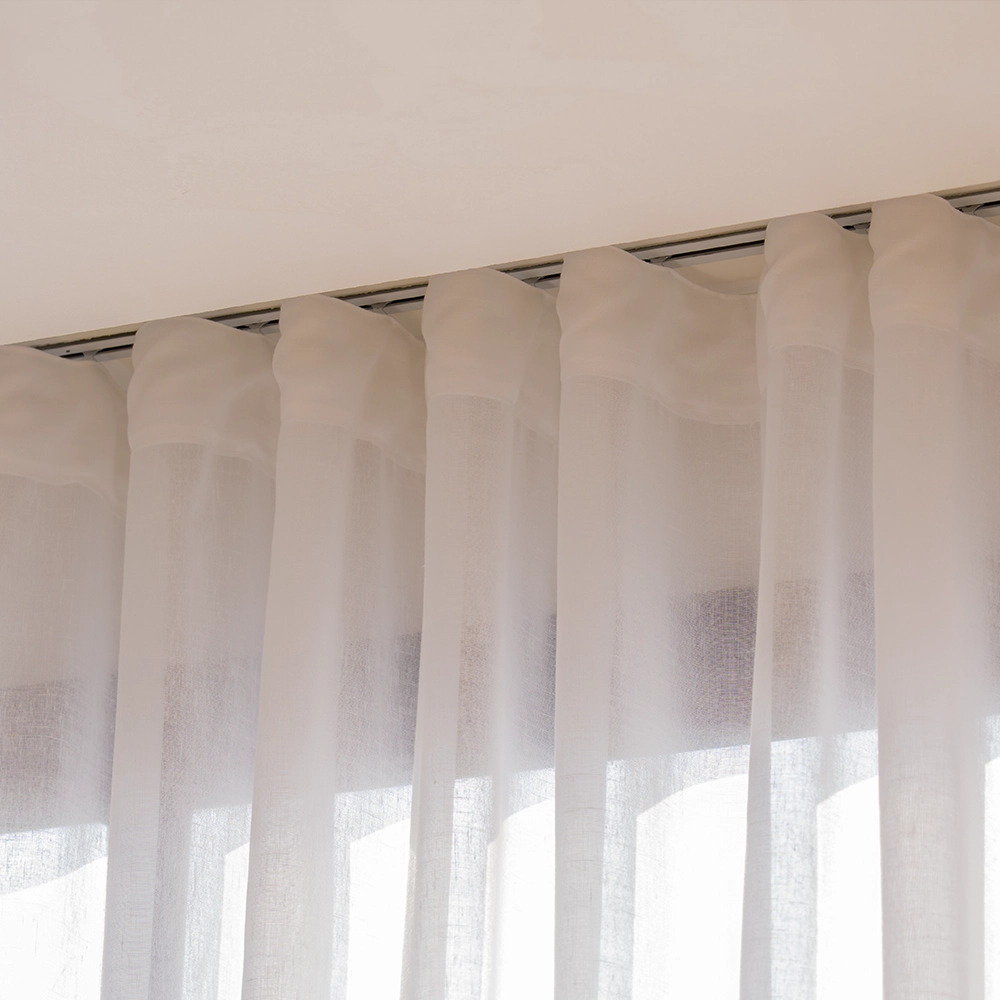
Lead time depends on what you’re ordering and whether the fabric color is in stock.
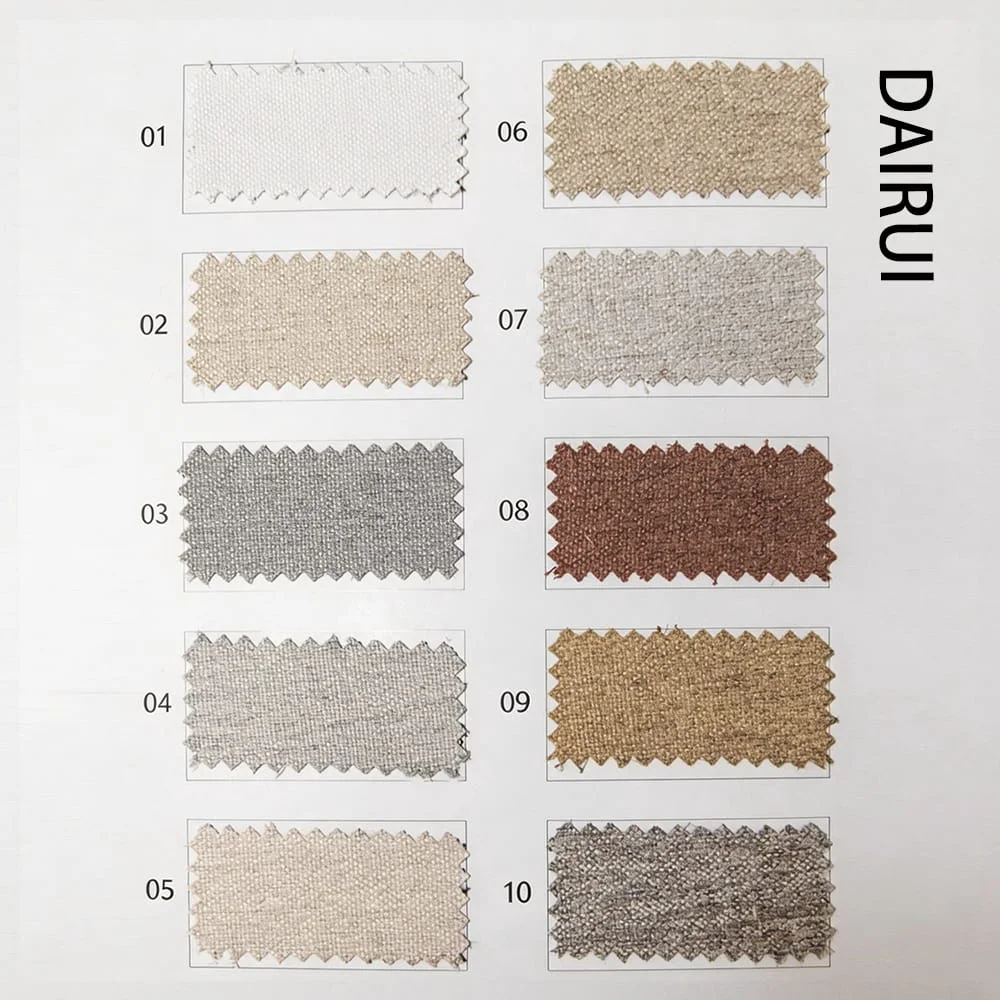
Samples: 3–5 days for swatches drawn from our color card; 7–10 days for custom color matching (you send a reference swatch, we dye-match and return a sample for approval). Custom color samples are charged per color and credited against bulk orders above 800m. Confirmed samples are held for 6 months for batch reference on reorders.
Roll supply (fabric by the roll, 800m+ MOQ per color):
- Standard stock colors: 5–10 days from order confirmation
- Custom dyed colors: 25–35 days (dye-matching, vat scheduling, finishing)
- FR-treated rolls: add 7–10 days for chemical treatment
OEM finished curtain panels (200 pcs custom MOQ, 50 pcs trial):
- Trial orders (50 pcs, stock fabric): 18–25 days
- Custom OEM orders (200+ pcs, custom fabric and finishing): 35–45 days
- Hotel project orders (1,000+ panels, FR-certified, full labeling): 45–60 days from deposit
Sample-to-bulk approval typically adds 5–10 business days to either lead time, depending on revision rounds. We confirm production scheduling once your approval signature is on the sample report.
Quality Control for Fabric vs Finished Curtains
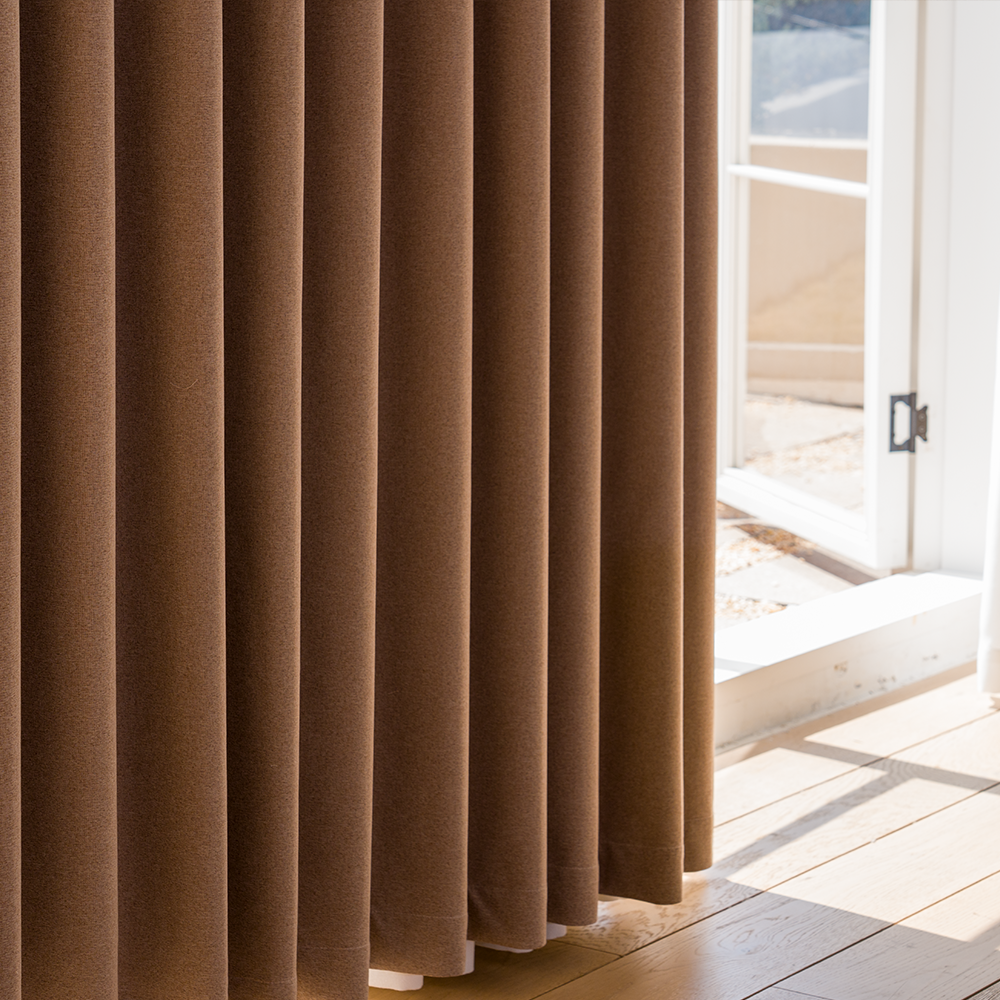
Our QC differs between the two product lines.
Fabric roll supply is inspected on the 4-point system for weaving defects (broken weft, slubs, pulls, stains). Each roll passes a Class A inspection band before shipment, with defect points tallied per 100 square yards. Buyers can specify stricter thresholds at quote stage — premium DTC brands often request ≤8 points per 100 sq yards versus the industry-standard 20.
Finished curtain panels go through one of three QC tiers:
- Volume orders (1,000+ pcs): Statistical AQL sampling at 1.5 — we randomly inspect ~3% of finished panels for stitching, hem alignment, header consistency, color uniformity, and finishing defects.
- DTC and custom orders (50–500 pcs): 100% panel-by-panel inspection — every single panel goes under a lighted inspection table before packing.
- Hotel and FR-certified projects: Add SGS test reports for the required standard, plus 100% inspection regardless of order size.
Third-party pre-shipment inspection (BV, SGS, Intertek) is supported for any order tier; cost is typically buyer-paid at ~$300–$500 per inspection.
Roll supply and OEM production run 30+ days, plus 30–40 days ocean freight to the US, UK, and Australia. To have stock ready for the Q4 retail season, place orders by early September. We dispatch expedited samples in as little as 3 days, with an average reply time under 2 hours.
Get a fabric quote & sample →When to Choose Roll Supply, OEM, or Both
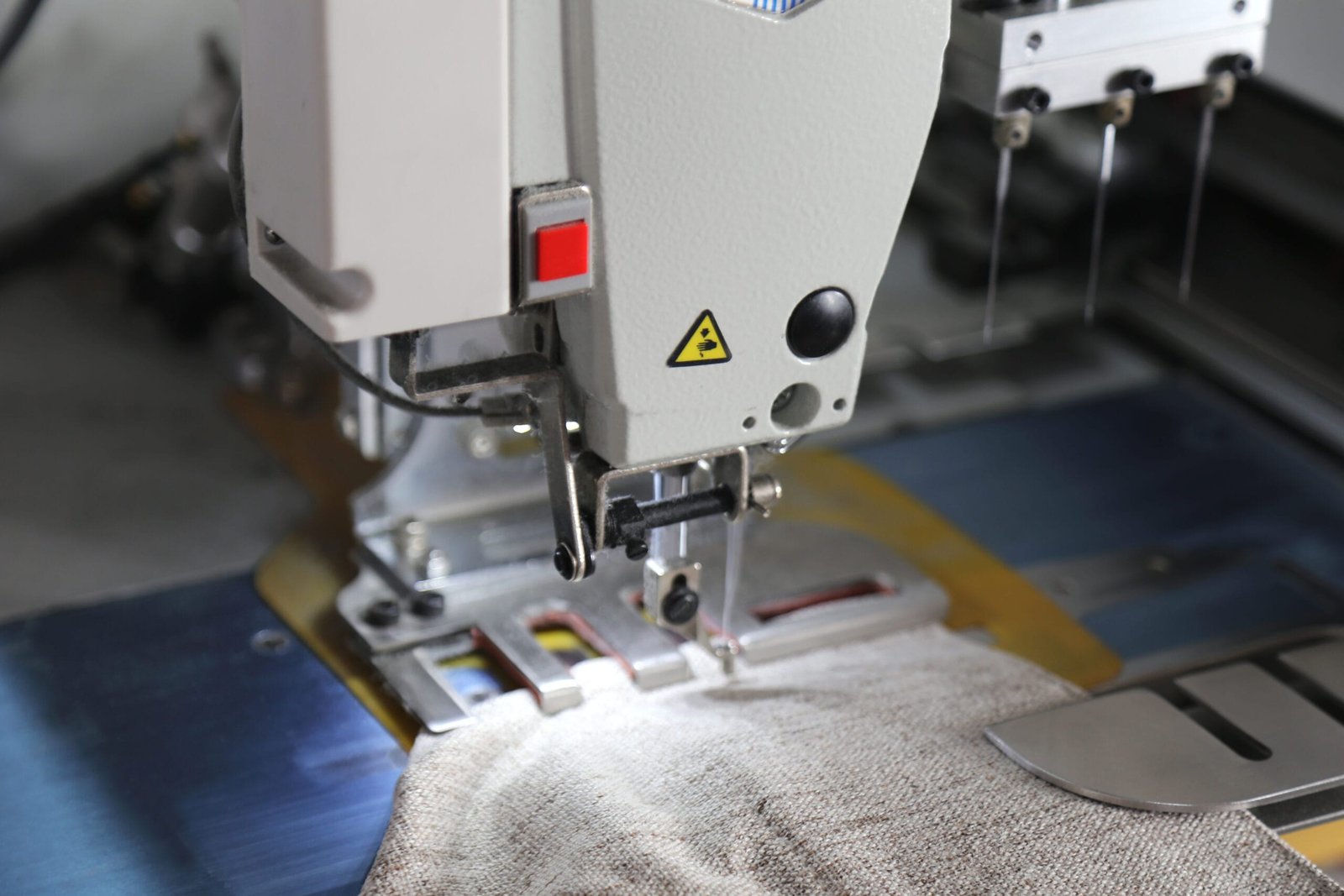
The right model depends on what’s inside your business — not just what you’re buying this season.
Choose roll supply if:
- You already have cutting and sewing capacity (or a local CMT partner)
- You sell on an aesthetic-led story where fabric is the hero (DTC linen, premium velvet)
- You need fast turn on small custom panels (1-week cut and sew beats 35-day OEM)
- Your color or pattern roadmap changes every quarter
Choose OEM finished if:
- You’re a retailer, wholesaler, or platform seller (Amazon, Walmart, retail chain)
- You need packaging, hangtags, labels, polybags ready to retail
- You sell hospitality or hotel project orders (FR certs and labeling required)
- You don’t have or want to build cut-and-sew capacity
- You order seasonally in 200+ pc batches per SKU
Choose both if:
- You’re a mid-size DTC brand with hero SKUs (fabric-by-roll, custom finishing in-house) and a long tail (OEM finished, lower volume per SKU)
- You’re building a private-label retail program around a few signature fabrics
We’re happy to support buyers across both models from a single account — same color card, same MOQ math, same lead-time clock.
Certifications and Compliance for Fabric Exports
Fabric and finished curtain exports from China are governed by destination-country regulations, not Chinese ones. The most common buyer-requested certifications:
- OEKO-TEX Standard 100 — Fabric-level safety certification covering harmful substances. OEKO-TEX certified fabrics are available.
- BSCI — Social compliance audit. Dairui is a BSCI-audited factory.
- NFPA 701 (US hotels and public spaces) — Flame-retardancy. SGS test reports to NFPA 701 are available for applicable fabrics.
- EN 13773 Class 1 (EU) and BS 5867 Part 2 Type B/C (UK) — Hospitality FR compliance. Tested to project requirements on request.
- DIN 4102 B1 (Germany) — Building material fire rating. Tested to project requirements on request.
- REACH (EU) — Chemical compliance, supported by OEKO-TEX certified fabrics.
For a full country-by-country breakdown of which certifications you actually need (US, UK, EU, Canada, Australia), see our Curtain Import Certifications by Country reference guide.
Frequently Asked Questions
1. What’s the minimum order for curtain fabric by the roll from China?
800 meters per color is our standard MOQ, matching one dye-vat batch. Stock-color rolls have no MOQ and ship immediately from inventory. Multi-color combined orders totaling 800m+ unlock smaller per-color quantities.
2. Can I order fabric and finished curtains in the same purchase order?
Yes. Many mid-size DTC brands run both — buying fabric by the roll for hero SKUs they finish in-house, and ordering OEM finished panels for their long-tail SKUs. Same account, same color card, one combined shipment if requested.
3. How does dye-lot matching work for reorders?
We hold confirmed dye samples for 6 months and assign each color a dye-lot reference number. On reorders, we match within the original lot if production timing permits, or run a fresh batch matched to the held sample. Any noticeable lot variation (rare) is flagged before shipment for buyer approval.
4. What’s the difference between coated blackout and woven black-yarn blackout?
Coated blackout uses acrylic foam layers sprayed on a polyester base — durable, washable, and at 3-pass coating delivers 100% light blocking. Woven black-yarn blackout integrates carbon-yarn weave into the textile itself — softer hand-feel, fully washable without coating degradation, but typically 80–90% light blocking, not 100%.
5. Can you ship small samples internationally before bulk order?
Yes. Standard swatches from our color card ship via DHL/FedEx in 3–5 days, freight-prepaid at ~$30–$50 per sample shipment. Custom dyed samples take 7–10 days and carry a sample fee per color, credited back against bulk orders above 800m.
6. Do you supply curtain fabric to DTC brands competing with each other?
Yes — fabric is a commodity input, and we run separate dye lots and tracking for different buyer accounts. For OEM finished orders, we offer non-disclosure agreements and SKU-level exclusivity on custom-developed prints, weaves, or constructions.
Common Mistakes First-Time Curtain Fabric Buyers Make
After a decade of supplying curtain fabric and finished panels to overseas buyers, we see the same five mistakes hurt first-time purchases. All are avoidable if you raise them in the quote stage.
- Ignoring the 800m-per-color rule. Buyers often request 300m of a custom color and balk at the price quoted — not realizing the mill must still dye a full 800m vat. Splitting orders across multiple colors that total 800m solves this; insisting on small per-color custom runs does not.
- Confusing GSM with quality. Higher GSM doesn’t always mean better. A 90 GSM voile is correct for sheer panels; pushing it to 130 GSM makes the fabric stiff and ruins the drape. Match GSM to end-use, not to a vague "heavier is better" instinct.
- Skipping the lab-dip approval step. Approving a color from a JPEG or a phone photo nearly always ends in a complaint. Request a physical dye-matched swatch (credited against the bulk order), inspect it under three light sources (daylight, store LED, warm incandescent), and sign-off before vat scheduling.
- Underestimating FR-treatment timeline. Flame-retardancy treatment adds 7–10 days and is non-reversible. Buyers booking hotel projects often forget this and end up short on lead time. If your project needs NFPA 701 or BS 5867 certification, declare it at the first quote — not mid-production.
- Mixing dye-lot batches on reorders without disclosure. If you reorder 6+ months after the original batch, the dye sample may have aged or the original vat schedule isn’t available. Always specify "match held dye-lot reference number" on the reorder PO, and accept that a slight tolerance is normal between batches separated by long time gaps.
Each of these is more about process discipline than fabric expertise. A buyer who locks specs, approves samples, and declares certifications upfront gets faster, cheaper, more consistent fabric supply than one who optimizes individual line items in isolation.
Bottom Line: Pick Your Sourcing Model First, Then Lock In Specs
Buying curtain fabric from China comes down to one decision your finance and operations teams need to align on: roll supply or OEM finished.
Roll supply (800m MOQ per color, 25–35 days for custom dye) fits DTC brands, designers, and workshops that already cut and sew. OEM finished (200 pcs custom MOQ, 35–45 days) fits retailers, wholesalers, and hospitality buyers who want packaged-and-labeled panels off the shipping container. A growing number of mid-size brands use both — fabric for the hero collection, finished panels for everything else.
Once the model is locked, the specs decisions follow: fabric type, GSM, color path (stock vs custom dye), certifications, and finishing. The MOQ math — particularly the 800m-per-color industrial dyeing reality — is the most common buyer surprise; planning your purchase order around dye-vat batches saves both money and color consistency on reorders.
To get pricing for a specific fabric weight and quantity, request a quote with your color reference (swatch or factory color card pick) and intended end-product (DTC retail, hotel, wholesale). We’ll come back with FOB Ningbo pricing, lead time, and sample logistics within 24 hours.
Author: DAIRUI Sourcing Desk · Last reviewed: 2026-06