Bottom line: an FF&E buyer should specify a double-layer sheer and blackout curtain as one coordinated system, not as two independent fabric selections. The specification must connect opening dimensions, operating concept, track layout, heading, stack position, fullness, layer order, light-control objective, fire or documentation requirements, and the approval sample.
The fabrics still need individual approval, but successful project delivery depends on how the layers overlap, travel and meet the room geometry.
Start with the room and operating intent
Record the opening type, measured width and height, ceiling or wall condition, obstructions, sill or floor relationship, and the intended curtain coverage. Identify whether the system is manual or motorized, one-way or center-opening, and where each layer should stack.
The design intent should also state what each layer is expected to do. The sheer may provide daytime privacy and filtered light. The blackout layer may target stronger room darkening when closed. Because edge, center, top and bottom gaps can admit light, the requested outcome cannot be defined by fabric selection alone.
Specify the two layers as a system matrix
| Specification field | Sheer layer | Blackout layer | System decision |
|---|---|---|---|
| Function | Filtered light, view control or decorative texture | Room darkening and privacy | Operating scenarios for day, night and unoccupied room |
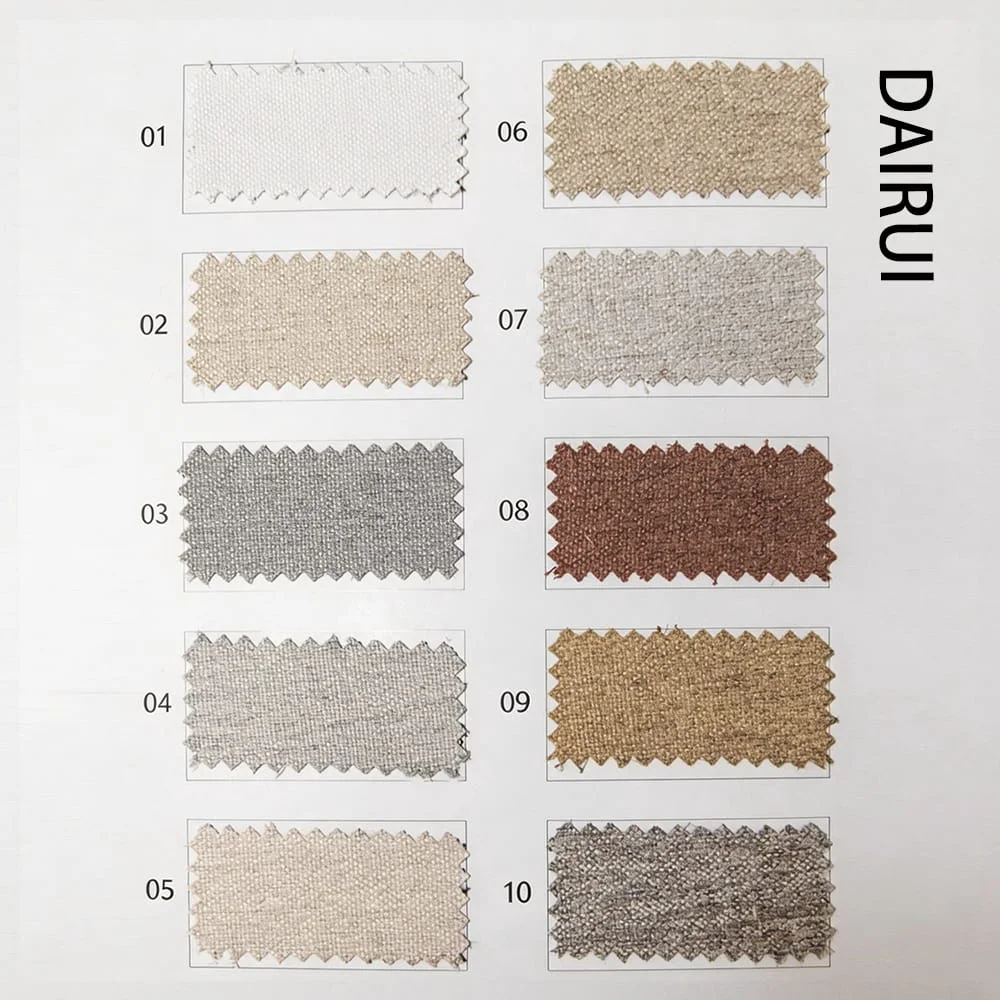
| Fabric identity | Item, color, usable width and finish | Face, backing or lining arrangement, color, usable width and finish | Compatibility of appearance, handfeel and project requirements |
| Heading | Selected heading and carrier interface | Selected heading and carrier interface | Track spacing, fullness and consistent finished drop |
| Movement | Draw direction and stack location | Draw direction and stack location | Clearance between layers and access for operation |
| Coverage | Finished width, overlap and return | Finished width, overlap and return | Control of side and center light paths |
| Documentation | Project-required material information | Project-required material information | Exact scope, legal entity and submission responsibility |
Coordinate track layout and layer order
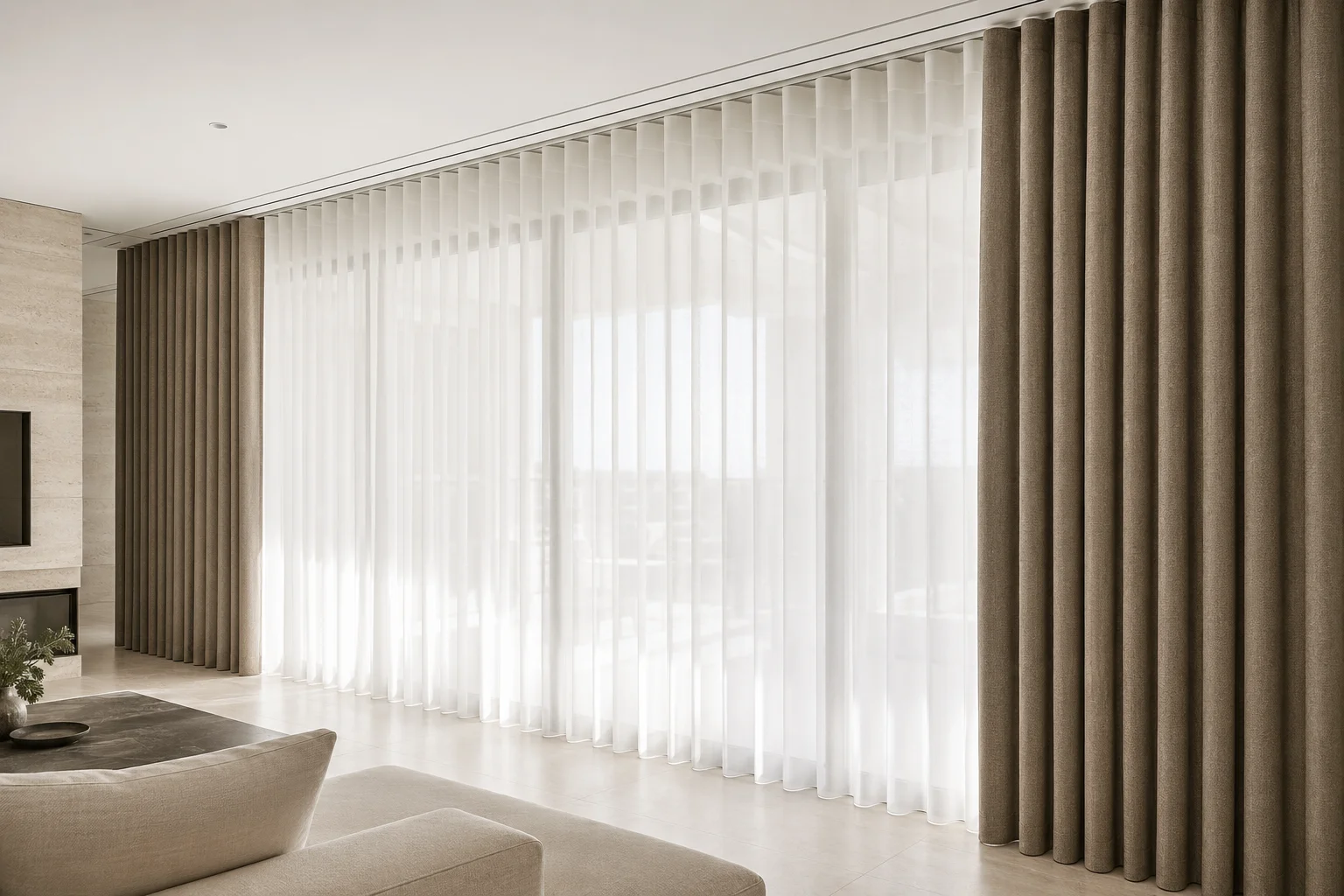
A double system normally needs separate travel paths. The drawing should identify which rail is nearest the glazing, the centerline distance between rails, bracket or ceiling-fix conditions, carrier type, end stops and the relationship to pelmets, pockets or other architectural details.
Layer order affects clearance and visual presentation. The blackout layer should move without dragging against the sheer, and the sheer should not be trapped by the deeper folds of the room-side layer. Confirm that heading depth, fabric thickness and fullness leave workable separation across the complete run.
Define light control through coverage details
The distinction between fabric blackout vs installation light leakage matters because the fabric and the installation each contribute to the finished result. Specify the intended overlap at center joins, side returns where required, top treatment, finished drop and relationship to the floor or sill. If a pocket, pelmet or recessed track is part of the design, include it in the coordinated drawing.
A fixed blackout percentage should not be inferred for the complete installed system unless a defined, applicable method and exact construction support that statement. For buyer approval, it is more useful to identify the target room condition and the physical light paths that the design is intended to manage.
Connect fullness, finished sizes and stack space
Fullness should be stated for each layer because it affects fabric quantity, appearance and stack depth. The finished curtain width should be linked to the track length and overlap concept, not copied from the structural opening without explanation.
Sheer and blackout fabrics can stack differently. Confirm the available wall, pocket or return space and whether the open curtains must clear glazing, doors, controls or furniture. Large project elevations should identify split points and panel counts so that seams and stacks occur where intended.
Make project requirements variant-specific
If the hotel or jurisdiction requires fire-performance documentation or another test, the submission should match the exact fabric, construction, finish, color where relevant, report, date and legal entity. A general reference to “FR curtain” is not a complete compliance package.
Responsibility should be clear: who states the requirement, who supplies the document, who checks scope, and who accepts the submission. Requirements can vary by destination, property standard and selected material.
Approve a coordinated mock-up or finished sample
A useful sample should demonstrate the selected sheer and blackout fabrics, headings, layer order, spacing and operating relationship. For project-scale concerns, a representative mock-up or detailed elevation may be needed in addition to fabric samples.
FF&E release checklist
- Opening dimensions and fixing conditions are recorded.
- Track type, number of rails, rail spacing and operation are defined.
- Sheer and blackout item, color, finish and usable width are identified.
- Heading, fullness, finished drop, finished width and panel count are stated for both layers.
- Center overlap, side coverage, top condition and floor or sill relationship are detailed.
- Stack direction and available stack space are coordinated.
- Required documents are matched to the exact selected variants.
- The approved system sample, drawing or mock-up is version-controlled.
Browse Dairui’s hotel curtain category for relevant product directions, and use solutions and project support to frame a coordinated project specification.
Frequently asked questions
Can an FF&E schedule list only the two fabric codes?
No. Fabric codes do not define the track, heading, fullness, panel split, overlaps, returns, stack or installation interfaces that control the finished system.
Should the sheer and blackout use the same fullness?
Not necessarily. Fullness depends on the selected fabric, heading, appearance and space. State and approve each layer separately, then verify their combined stack and movement.
Does blackout fabric guarantee a dark room?
No. The installed result also depends on center overlap, side returns, top and bottom conditions, track position and room geometry. Specify the system-level light-control target and coverage details.