Bottom line: A motorised curtain track is sized before the curtain is cut, not after. The motor body adds length at one end, so a wall-to-wall run is deducted by 4–6.5 cm depending on motor model and wall profile, while a window-only track is extended by 15–25 cm per side instead. Confirm motor model, motor side, power position, control type and curtain box depth on the purchase order — every one of them changes the finished track length.
A Motorised Track Is a Pre-Production Decision
Manual tracks forgive a lot. Cut them slightly long, trim on site, add a bracket, done. Motorised tracks do not work that way. The motor is a physical object with a length and a diameter that has to live somewhere, the belt has to run the full travel, and the limit positions are set to a specific track length.
That means a motorised order carries a set of dimensions the manual version never needed: which end the motor sits on, how much wall or curtain box depth is available there, where the power outlet is, and whether the client wants remote, wall switch, app or building-management control. Get one of them wrong and the track either does not fit or does not connect to anything.
For hotel and project work this is a scheduling issue as much as a technical one. Motorisation has to be designed in at specification stage — added late, it pulls in electrical coordination, longer lead time and often a revised curtain box detail. Our hotel curtain supplier guide covers where this sits in the wider FF&E timeline.
Motor Options and the Wall Space Each One Costs
Different motors take different amounts of the run. The table below lists commonly specified models with reference dimensions and the deduction each one typically requires on a wall-to-wall installation. Treat these as planning references and confirm against the final motor supplied for your order.
| Motor | Control type | Reference size | Wall-to-wall deduction |
|---|---|---|---|
| Dooya DT52E | Built-in direct remote | Approx. 235 mm long, 55 mm body diameter | Flat wall: W − 4 cm. With skirting or protrusion: W − 5 cm. |
| Dooya DT82TN | WiFi | Approx. 277 × 70 × 45 mm | Flat wall: W − 5 cm. With protrusion: W − 6 cm. Curtain box: at least W − 4.5 cm. |
| A-OK AM57 | Remote | Approx. 235 × 60 × 45 mm | Flat wall: W − 4 cm. With skirting, gypsum line or corner: W − 5 cm. |
| A-OK AM68 | WiFi | Approx. 320 × 78 × 52 mm | Flat wall: W − 5.5 cm. With protrusion: W − 6.5 cm. Curtain box: at least W − 5.5 cm. |
Two patterns are worth noting. First, WiFi motors are physically larger than basic remote motors — the AM68 is roughly 85 mm longer than the AM57 — so upgrading the control type late in a project can invalidate a track length that was already approved. Second, the deduction is not only about the motor: skirting boards, gypsum cornice lines and corner returns all add to it, which is why “flat wall” and “with protrusion” are separate rows rather than one number.
The Deduction Rule: Wall-to-Wall vs Window-Only
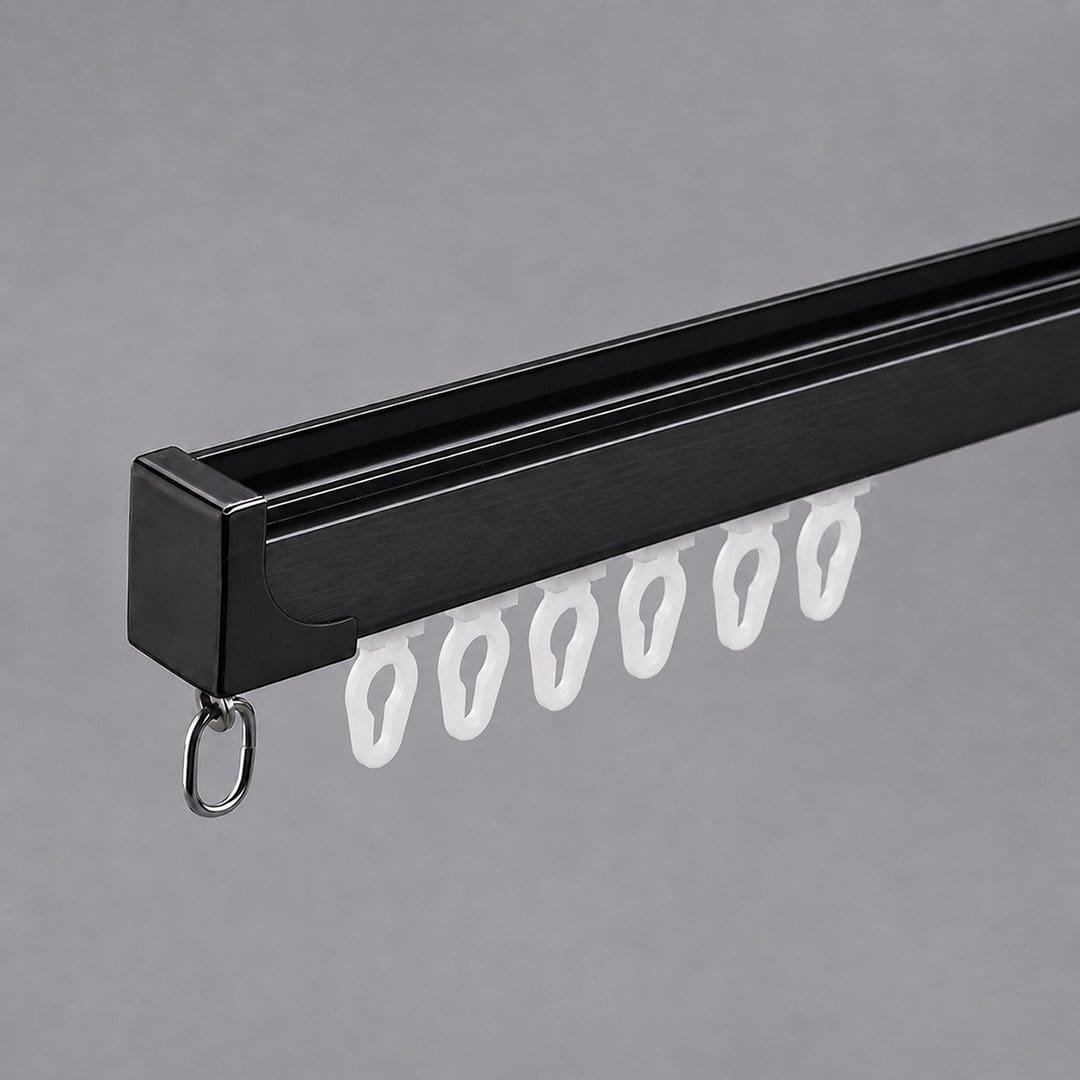
This is where most measurement errors happen, and the two cases point in opposite directions.
Wall-to-wall runs are deducted. The track spans the full wall, so the motor and its cover have to fit inside that width. Take the wall width, subtract the figure from the table above, and that is your finished track length. Ordering the full wall width and hoping to trim on site does not work with a motorised system — the belt and limit positions are set to the ordered length.
Window-only runs are extended. When the track covers just the window rather than the whole wall, do not apply the deduction. Instead add 15–20 cm on each side for standard curtains, or 20–25 cm each side when heavy blackout panels need extra stack-back room. This keeps the open curtain off the glass and gives the motor end somewhere to sit without crowding the window frame.
Applying wall-to-wall logic to a window-only track is the single most common motorised measurement mistake we see on incoming project drawings. The result is a track that stops short of where the curtain needs to stack, so the open panel sits across the glass.
Track Profiles: What the Numbers Actually Mean
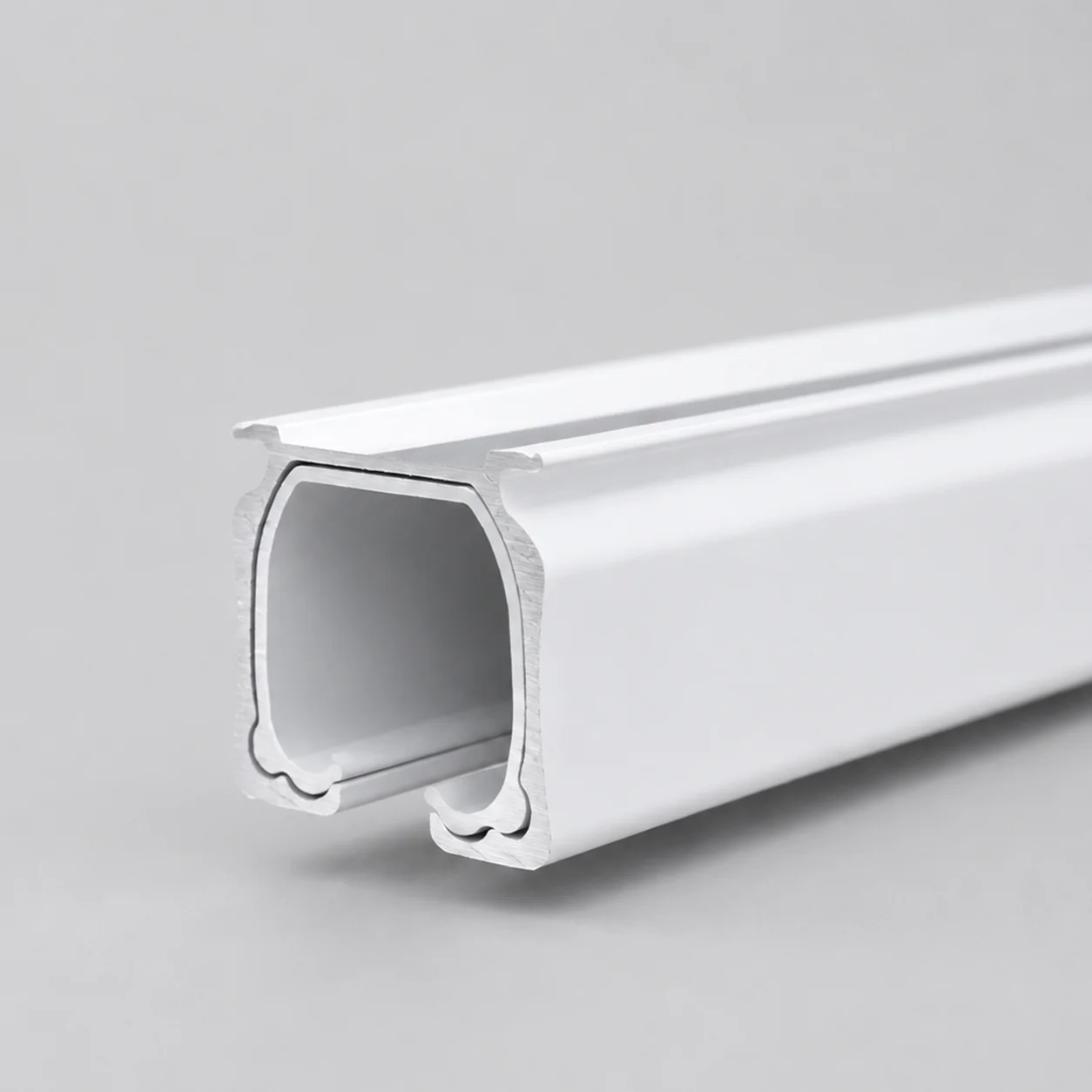
Motorised profiles are quoted by wall thickness and section size. Thickness matters because the profile carries both the curtain weight and the belt tension over the full span; section size matters because it has to fit the curtain box or the ceiling recess.
| Profile | Listed thickness | Section reference | Typical use |
|---|---|---|---|
| Standard electric profile | 1.5–1.9 mm | 32 × 25.8 mm | Standard electric runs |
| Slim electric profile | 1.1–1.3 mm | 34 × 22 mm | Lighter electric runs, slimmer section |
| Compact electric profile | 1.5–1.9 mm | 30.7 × 25.3 mm | Standard electric runs, compact height |
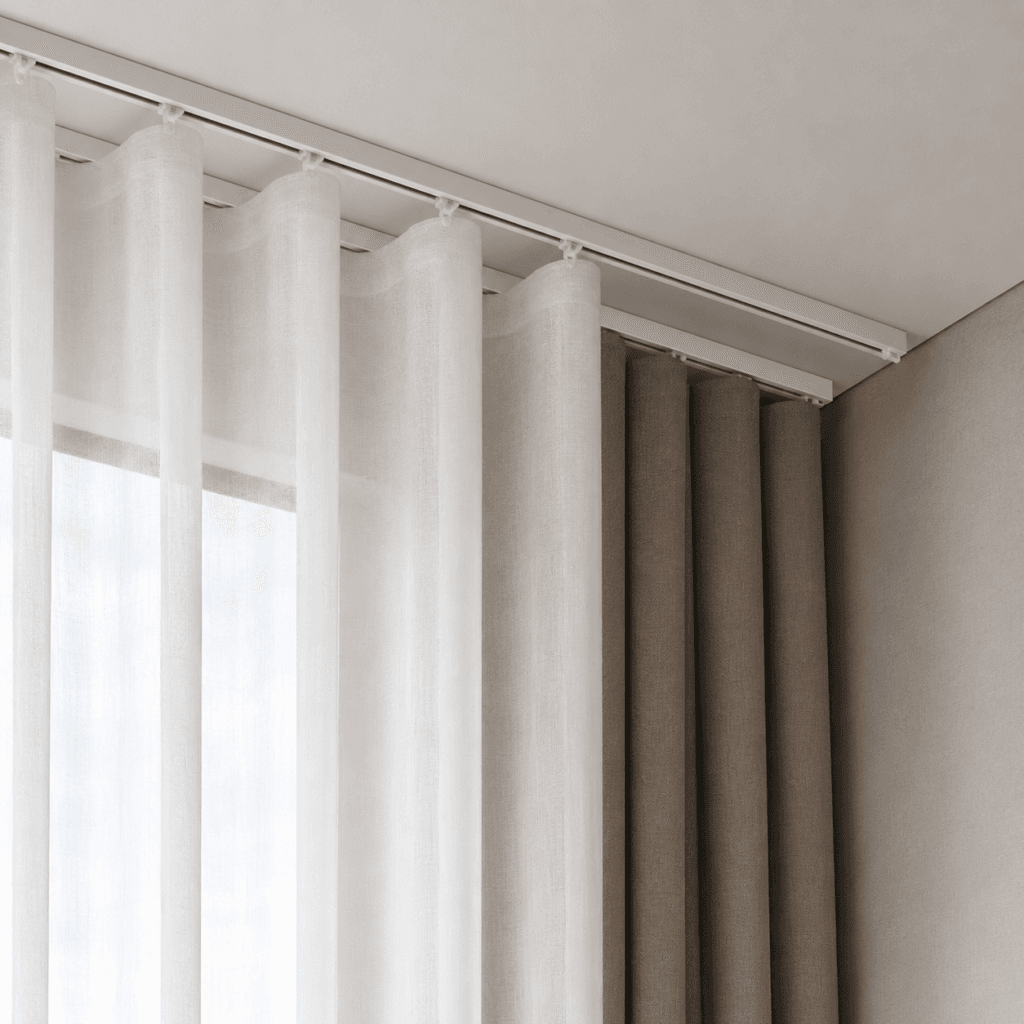
| Hidden electric profile | 1.5–1.9 mm | 39 × 26 mm | Hidden / built-in electric track |
Industry practice treats 1.0 mm and above as a working benchmark for project-grade aluminium, and motorised profiles commonly sit in the 1.1–1.9 mm band. For heavy blackout drapery over long spans, the thicker end of that range plus closer bracket spacing — commonly planned around 50–60 cm — is the safer specification. Surface treatment matters too: electrophoresis, anodising or controlled spray coating all improve consistency and moisture resistance over an untreated extrusion.
Power and Control: The Question That Delays Projects
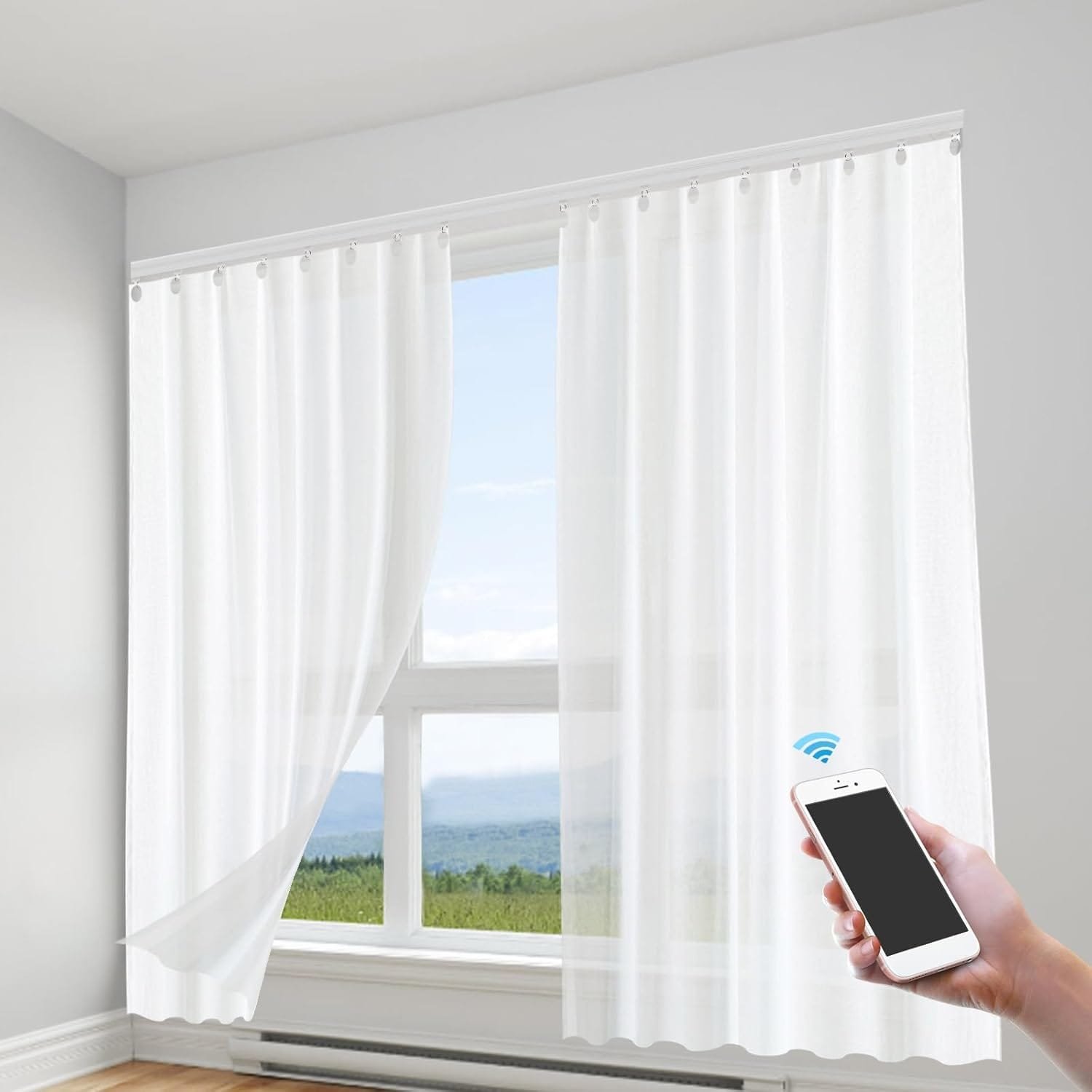
Control method decides more than convenience. It decides the motor model, the motor size, and therefore the deduction — which loops straight back to the track length.
Basic remote (RF or IR) is the simplest and smallest. It suits residential and mid-scale hospitality where each room is controlled independently and no integration is required. WiFi and app control adds a larger motor body and a dependency on the property network, but allows scheduling, grouping and voice assistants. Building or room-management integration is the upper-upscale hotel case, and it needs coordination with the controls contractor before anything is manufactured.
Power supply position is the other half. Hardwired motors need the outlet at the motor end, which has to be confirmed against the electrical drawings — not assumed. Battery or rechargeable options avoid the outlet but bring a maintenance cycle that a 200-room property may not want. Whichever route the project takes, the decision has to be on the purchase order, because the motor side and cable exit are manufactured in, not adjusted later. For the wider automation picture, see our overview of motorized curtains for smart homes and hotels.
Curtain Box Depth and Motor Clearance
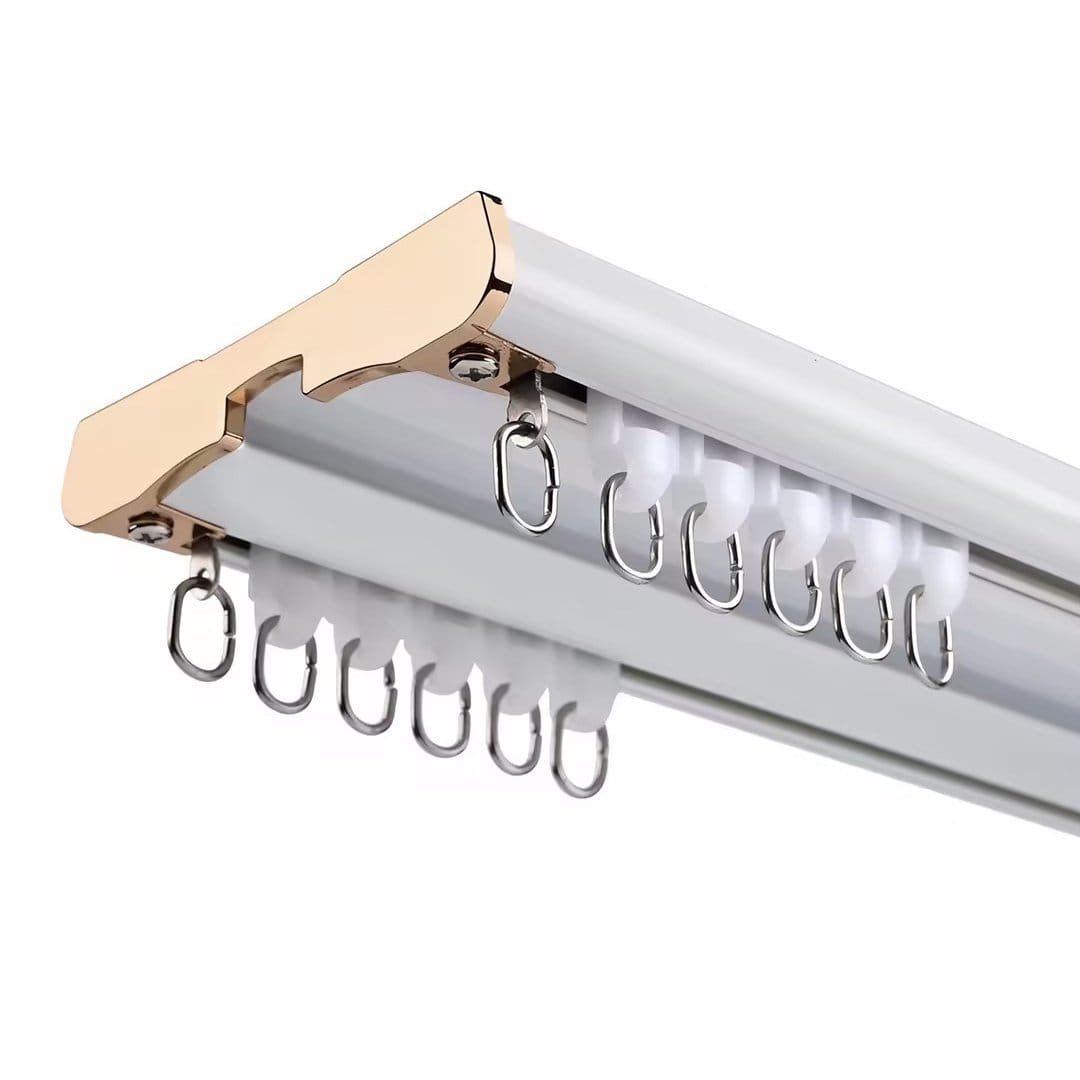
Where the track disappears into a ceiling recess or a curtain box, two clearances have to work at once: the box has to be deep enough for the profile plus the curtain stack, and long enough for the motor plus its tail cover.
The motor requirement is the one that catches projects out. A DT82TN needs at least W − 4.5 cm inside a curtain box; an AM68 needs at least W − 5.5 cm. If the box was detailed by an architect before the motor was selected, that clearance may simply not exist, and the options at that point are a smaller motor, a shorter track, or a revised box — all of them expensive late in a build.
Hidden and built-in profiles exist for exactly this situation: the rail is designed to sit inside the recess and disappear once the curtain is hung. They still need the motor clearance, so send the box dimensions with the enquiry rather than after approval.
Where Motorisation Actually Earns Its Cost
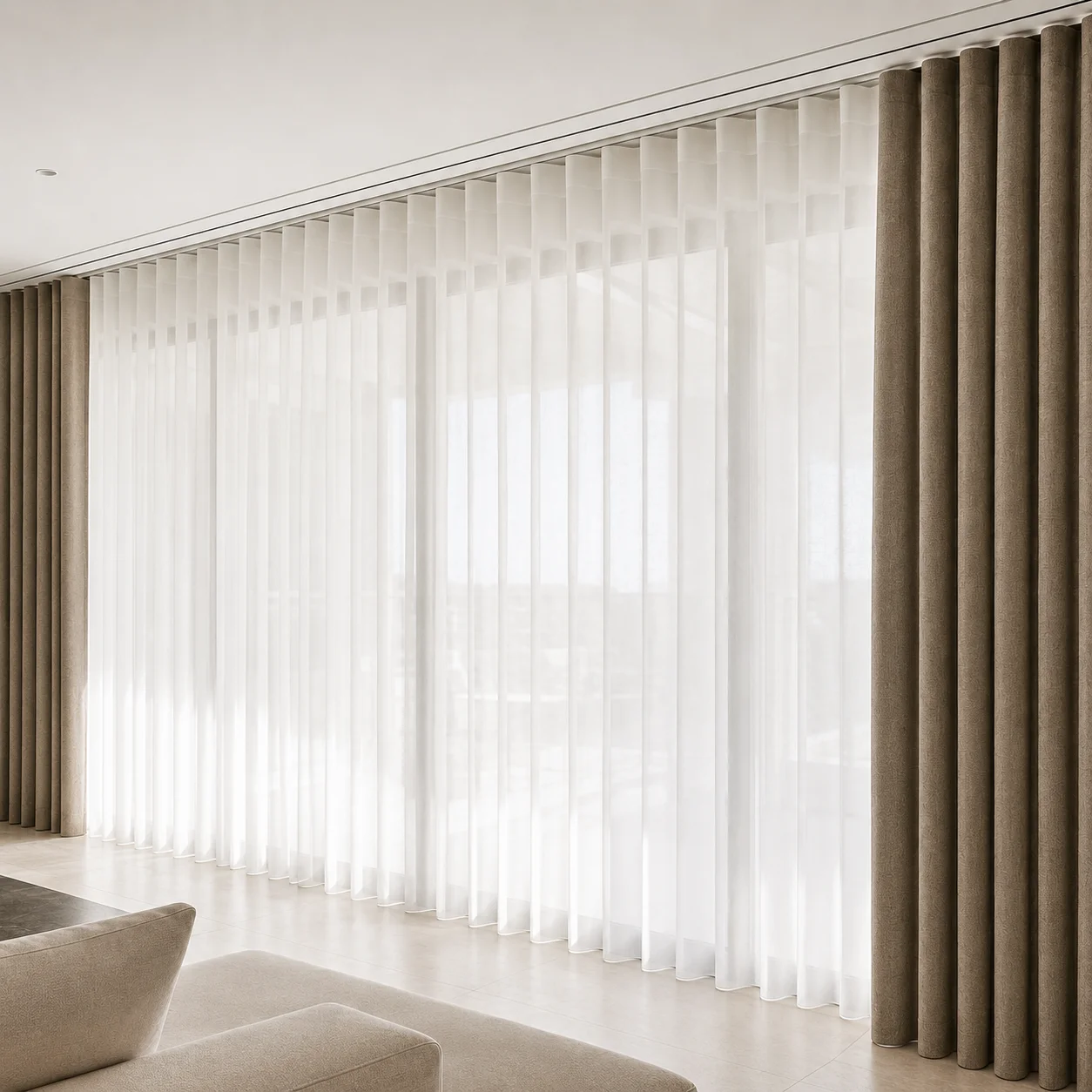
Not every window on a project should be motorised, and specifying it everywhere is a fast way to inflate a budget without improving the result. The cases where it consistently pays back:
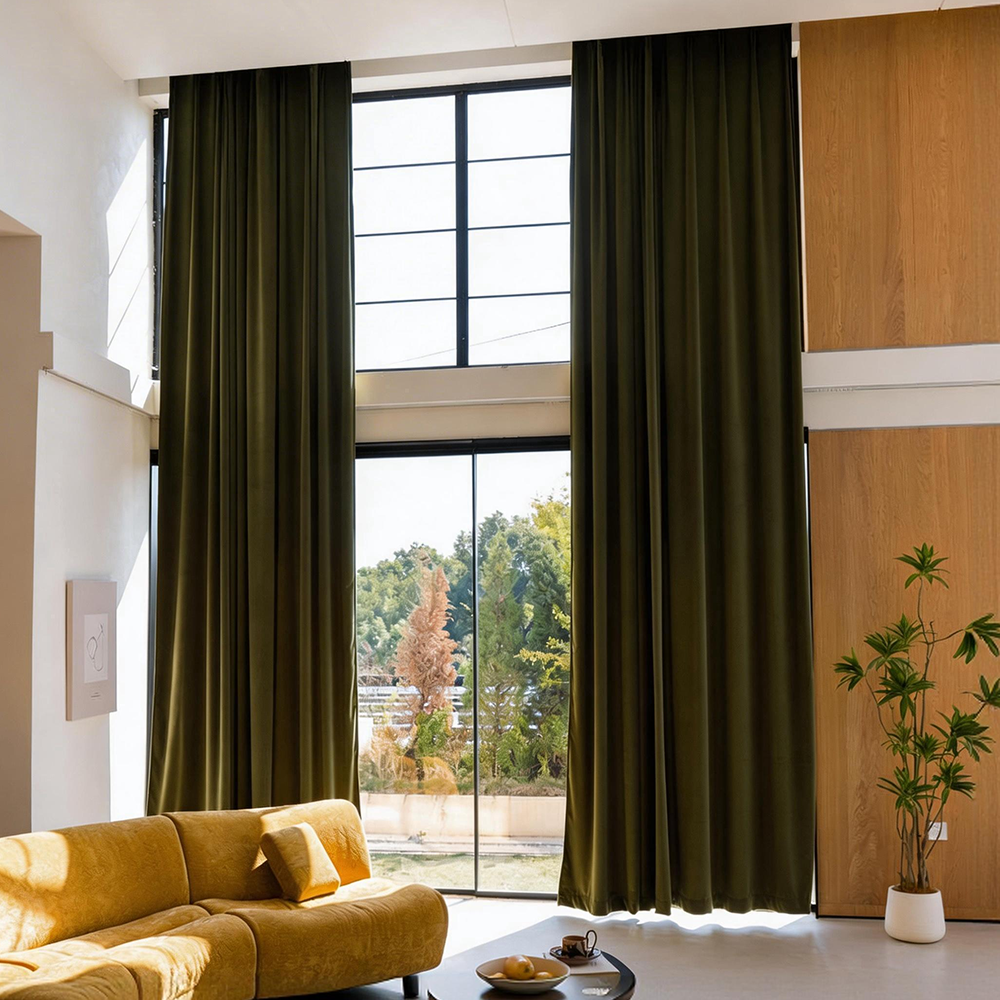
- Windows nobody can reach — double-height glazing, stairwell windows, atria and clerestory runs, where manual operation means a ladder or a pole nobody uses.
- Heavy panels over long spans — full blackout drapery on a 5 m run is unpleasant to draw by hand, and hand-drawing is what wears out leading edges and pulls headings out of shape.
- Upper-upscale rooms and suites — where guests expect a bedside button, and where the drapery is part of the room-management system rather than an accessory.
- Meeting rooms and banquet spaces — grouped control of several tracks at once is the whole point; doing it manually needs staff time at every changeover.
Where it usually does not pay back: small standard guest-room windows on a budget property, short-let apartments where maintenance access is limited, and any window a guest can comfortably reach and would rather just pull. A wand-operated or cord-drawn track costs a fraction of the motorised equivalent and has almost nothing to go wrong.
Budget the whole system, not the motor. A motorised line item carries the motor, the heavier profile, the transmission and belt, the controls, the electrical coordination on site, and a maintenance stock of spare motors and runners. Properties that skip the last one discover the cost two years later, when a discontinued motor has to be matched across an entire floor.
What a Complete Motorised Track Order Includes
A motorised quotation that lists only the profile price is not a complete quotation. On a project order, missing small parts hold up an entire floor of installation. Confirm all of the following before shipment:
- Track profile — model, cut length, finish colour, mounting method (ceiling or wall)
- Motor — model, control type, motor side (left or right), power method
- Transmission — transmission case, synchronous belt, positioning pieces
- Carriers — runners or wheeled gliders, master carrier, hooks or snap tape to match the heading
- Mounting — ceiling and wall brackets, correct screws for concrete, timber or drywall, end covers and stoppers
- Controls — remotes, wall switches, hub or gateway if app control is specified
- Connectors — for long runs, bends, or track extension
- Spares — spare runners, brackets and at least one spare motor per property for maintenance
Before bulk production, a sample run is worth the time on any project of scale. Check movement and noise under load, confirm the limit positions hold after repeated cycling, and verify the finish against the approved colour. The full range of profiles and accessories is on our wholesale curtain track page.
FAQ
How much length does a curtain motor take off the track?
On a wall-to-wall installation, typically 4–6.5 cm depending on the motor model and whether the wall has skirting, cornice or a corner return. A compact remote motor sits at the lower end; a larger WiFi motor at the upper end. Window-only tracks are extended rather than deducted.
Do motorised tracks need different measurements from manual ones?
Yes. Motorised tracks need clearance for the motor body and tail cover, which manual tracks do not. You also need to specify the motor side, the power outlet position and the curtain box depth. The limit positions are set to the ordered length, so on-site trimming is not an option.
Can motorised tracks be used with wave or ripplefold headings?
Yes, and they pair well — the fixed carrier spacing keeps folds even through repeated cycling. The carrier spacing still has to match the heading tape, so specify both together. Our guide on which track suits each heading covers the spacing figures.
What curtain box depth does a motorised track need?
The box must fit the profile plus the curtain stack, and the run must allow the motor clearance — commonly at least W − 4.5 cm for a mid-size WiFi motor and W − 5.5 cm for a larger one. Send the box width, depth and height with the enquiry so the profile and motor can be matched to it.
Can tracks and motors ship with the curtain order?
Yes. Profiles, motors, carriers, brackets and controls can be quoted alongside the made-up curtains so the fabric weight, heading and hardware are matched to one specification rather than sourced separately. Packaging, carton marks and labelling can be planned at the same time for project delivery.
What information does a motorised track quotation need?
Wall or window width, mounting type, whether the run is wall-to-wall or window-only, curtain box dimensions if any, fabric type and weight, heading style, control method, motor side, quantity, destination country and any drawings or site photos. Pricing, MOQ and lead times are quoted per order.
Bottom Line
Motorised track length is an output, not an input. It falls out of the motor model, the wall condition, the mounting case and the curtain box detail — so those four have to be settled before anything is cut. Wall-to-wall runs deduct 4–6.5 cm; window-only runs add 15–25 cm per side. Everything else on the order, from belt length to limit positions, follows from that one number.
For quantity planning across a property, our guide to how many curtains a hotel needs works through the window schedule; for the hardware itself, see the curtain track and accessory range.
DAIRUI Sourcing Desk — curtain and track manufacturing for importers, wholesalers, private label brands and hospitality projects. Motor models and dimensions listed are planning references; confirm against the units supplied for your order.
Last reviewed: 2026-08