Bottom line: Sourcing curtains from China means working with manufacturers in Shaoxing or Haining (Zhejiang), where custom MOQs start at 50 pcs for trial orders and 200 pcs for full custom runs. Expect 3–5 day sampling at $50–80 per custom color, matched either from the factory’s color card or against your reference swatch and 60–90 days end-to-end from first inquiry to delivered goods. The retailers and brands who succeed vet three suppliers in parallel — not ten sequentially. To compare sourcing destinations, see our guide to the best country to wholesale curtains.
Why China Dominates Curtain Manufacturing for Global B2B Buyers
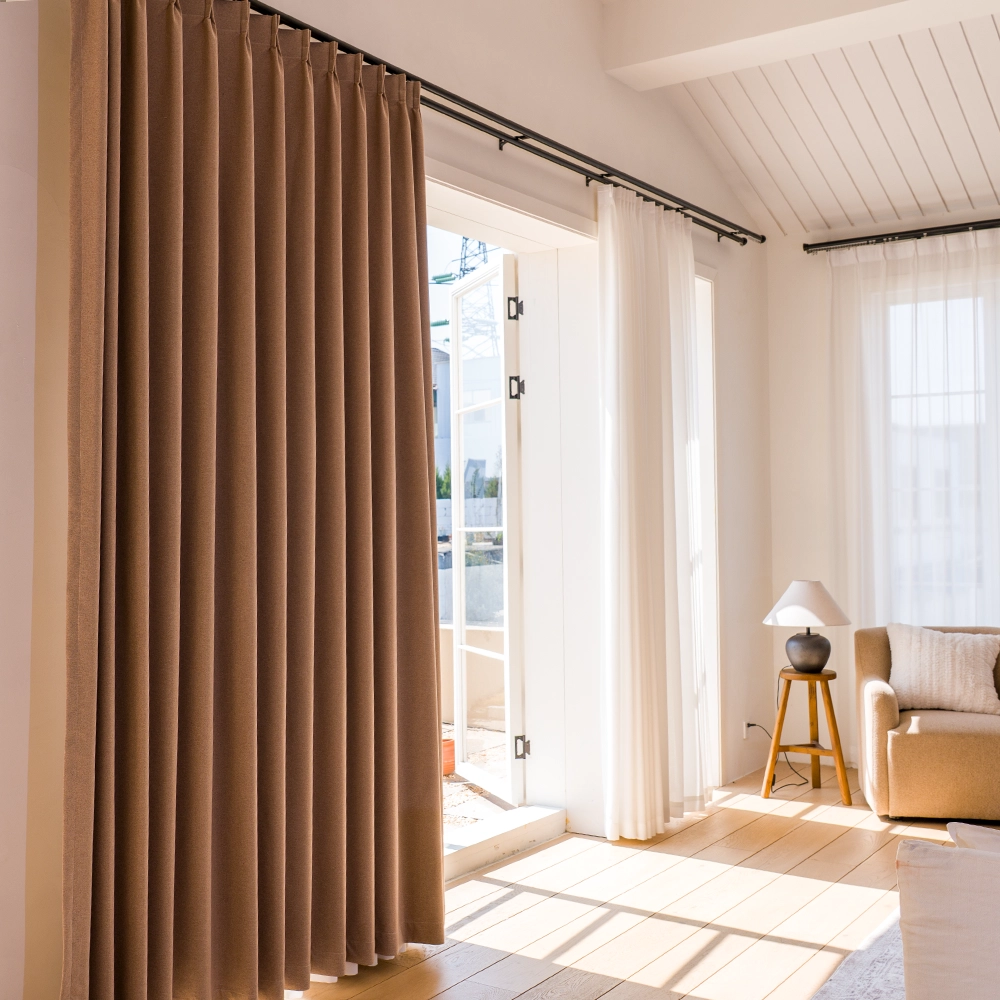
China produces an estimated 60–70% of the world’s curtains and window treatments, with the majority of export-grade output concentrated in two Zhejiang cities: Shaoxing (home to China Textile City — the world’s largest textile trading market) and Haining (the warp-knit velvet and home-textile fabric capital). For retailers, DTC brands, and interior procurement teams, this concentration is what makes China the default sourcing region — within a 50 km radius you can find blackout-fabric mills, sheer-voile weavers, velvet finishers, sewing workshops, and packaging suppliers operating side by side. Review what makes a good curtain supplier before you shortlist. For the data behind China’s position in the global curtain trade, see our curtain industry statistics for 2026.
The cost advantage is real but secondary. Factory-direct pricing typically lands 30–50% below trading-company quotes on identical SKUs, and customization is treated as standard practice rather than an upcharge — fabric, GSM, color, header style, lining, hangtag, polybag, and master carton are all negotiable on most custom orders. The harder part isn’t finding suppliers; it’s vetting them well enough to trust your first 200-pcs deposit. That’s what the rest of this guide is for.
Step 1: Identify the Type of Supplier You Actually Need
Before you message a single supplier, decide which of four categories fits your business. Sending the same inquiry to all four is the #1 reason first-time buyers get useless quotes.
- Curtain manufacturer (factory): Owns sewing lines, employs production staff, ships under their own export license. Best for OEM, private label, and custom development. MOQ typically 200+ pcs per SKU.
- Fabric mill: Sells raw curtain fabric by the roll (300–500 meters MOQ). Best if you operate your own cut-and-sew facility or work with a separate workshop. Will not produce finished panels.
- Trading company: Sources from multiple factories on your behalf, marks up 15–30%. Best for buyers placing diverse orders (curtains + rugs + bedding in one container) who value coordination over price.
- Wholesale exporter: Holds inventory of ready-made stock styles, ships small quantities (often 50–200 pcs). Best for retailers testing the market before committing to custom development.
If you’re building a brand, you want a manufacturer. If you’re filling a Shopify store fast, a wholesale exporter is faster. If you’re sourcing for a hotel project that requires FR-certified curtains plus matching upholstery, a trading company saves you procurement bandwidth. For deeper comparison, see our breakdown of curtain suppliers vs factories and the verification checklist for finding an actual manufacturer.
Step 2: Find and Vet Curtain Manufacturers in China
The standard discovery path is some combination of Alibaba, Made-in-China.com, Global Sources, the Canton Fair (held twice yearly in Guangzhou), and direct outreach through Google search. Each surface produces a different supplier mix: Alibaba favors export-focused factories and trading desks; Made-in-China leans toward mid-size SMEs; Global Sources screens for verified manufacturers; the Canton Fair gets you in front of decision-makers in person. For brands targeting a 12-month launch, attending one Canton Fair edition and shortlisting 5–8 candidates is often more efficient than three months of online vetting.
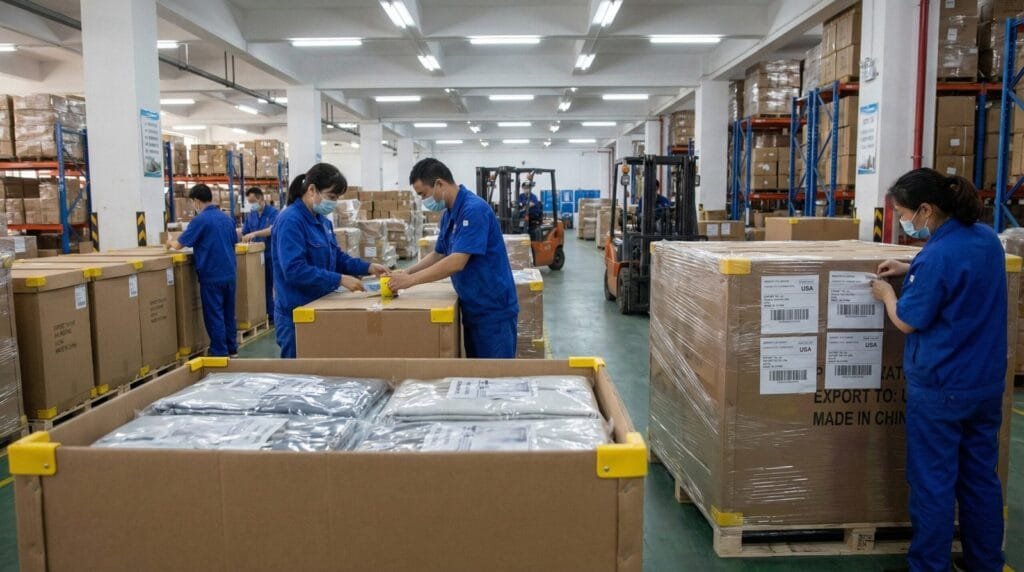
We tell buyers to ask every factory for a walkthrough video. Here is ours:
Regardless of where you find them, run every shortlisted factory through a five-question vetting filter before requesting samples:
- Production capacity: Ask for annual output in panels. Mid-size export factories should comfortably quote 300,000–500,000 panels per year. If they hedge, they’re likely a trading desk.
- Fabric breadth: A serious curtain manufacturer handles the four core categories — blackout (1-pass and 3-pass coated, woven black-yarn), sheer/voile (60–110 GSM polyester, 110–150 GSM linen-blend), velvet (180–350 GSM), and shower/utility. Single-category specialists are fine, but know what you’re buying.
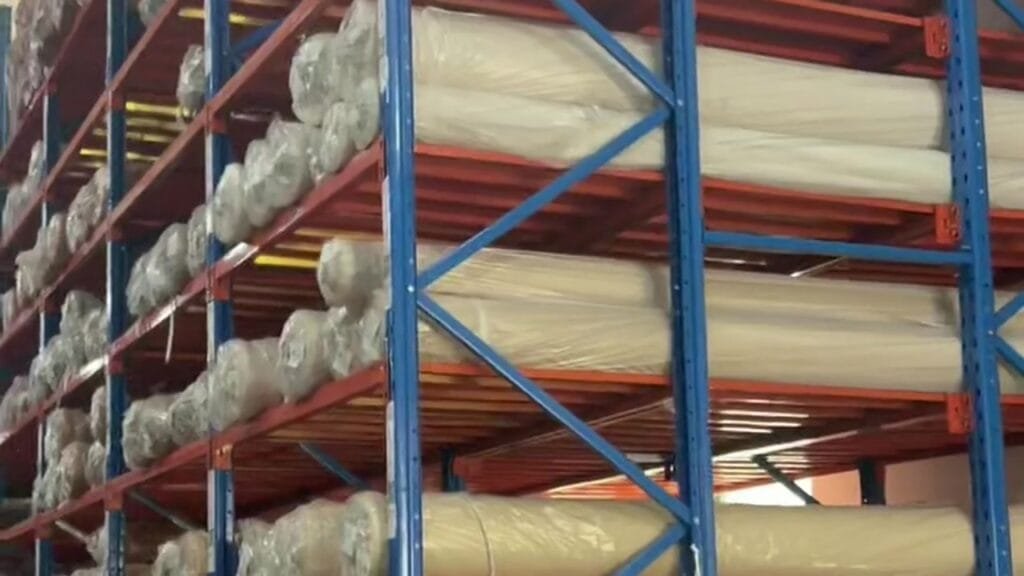
- Factory walkthrough: Ask for a 5-minute video tour showing the sewing line, fabric storage, and QC station. Real factories send it within a day; trading companies stall.
- Recent buyer references: Two named customers in your target market who placed orders within the last 12 months. If they won’t share any reference at all, walk away.
- Certifications by document: Ask for actual OEKO-TEX fabric certificates and per-batch SGS or Intertek reports — not just verbal claims. We cover this fully in our guide to choosing a reliable China curtain manufacturer.
Step 3: Request Quotes and Order Pre-Production Samples
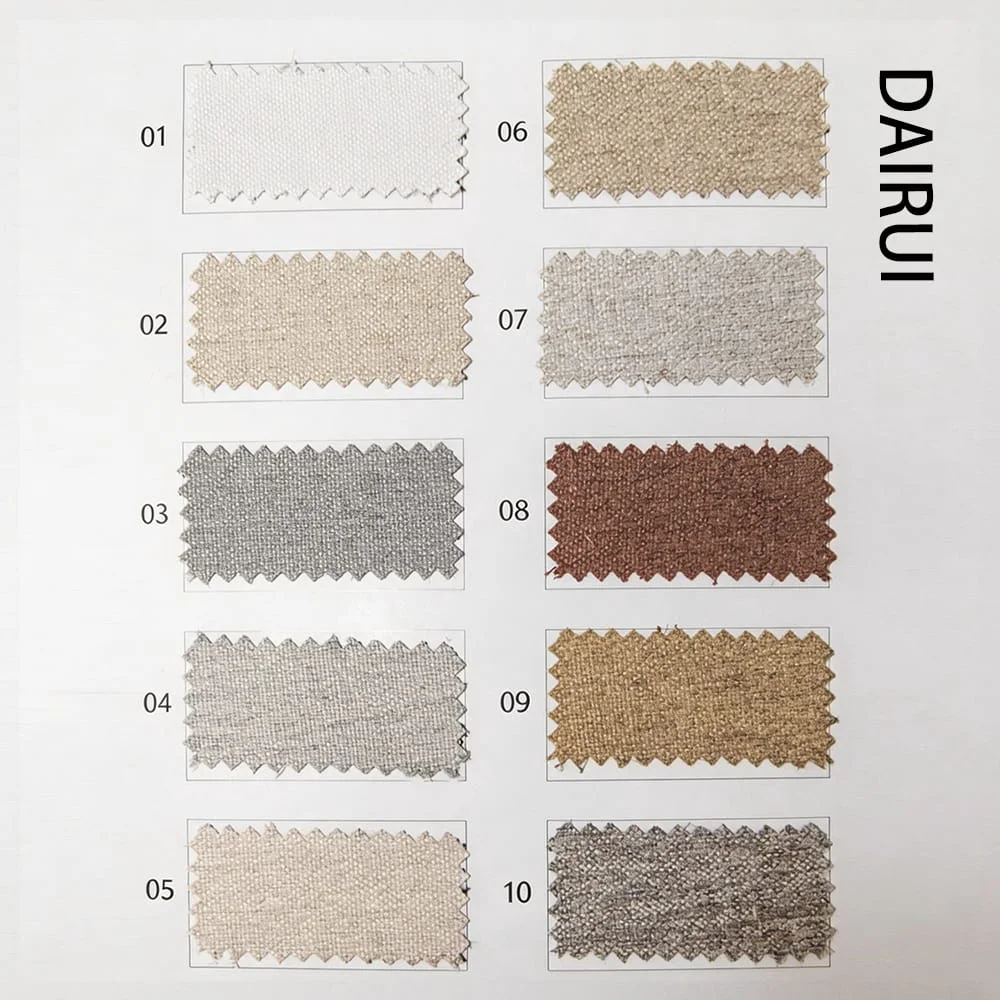
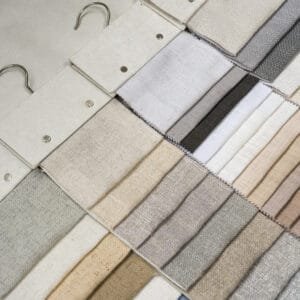
After shortlisting 3–5 manufacturers, send the same inquiry to all of them on the same day. Apples-to-apples quoting only works when the spec is identical. A complete inquiry should include: panel size (width × drop), fabric type and GSM, header style (grommet, pinch pleat, ripplefold, tab top), lining, color reference (selected from the factory’s color card or a physical fabric swatch you send in), expected MOQ per SKU, target landed price, and target delivery month.
Most reputable Chinese curtain manufacturers will return a written quote within 48–72 hours. If a factory takes a week to send a price on a standard fabric, you’ve already learned something about how they’ll behave once your deposit is paid. Compare quotes not on the unit price alone — compare on what’s included (lining, hangtag, polybag, master carton, FOB or EXW), MOQ flexibility, and sampling terms.
Standard sampling workflow:
- Stock fabric swatches: Free or $20–50 shipping. 5–7 days delivery via DHL/FedEx.
- Custom color sample (matched from the factory’s color card or your reference swatch): $50–80 per color, 3–5 day production. Pre-production proof, usually a 30×30 cm swatch.
- Finished panel sample: $80–200 per unit, 7–10 days. The closest thing to a real production unit and the strongest verification step before bulk.
Skip the swatch stage if you’re already confident on fabric; never skip a finished panel sample on private-label development. The $150 you spend on a sample is the cheapest insurance available against a 2,000-pcs order that arrives off-color.
Step 4: Understand MOQ, Pricing Structures, and Payment Terms
MOQ is where first-time buyers most often misread the market. There’s no universal number — it depends on fabric, customization depth, and factory positioning:
- Stock styles, ready-made: 50–100 pcs per SKU. Lowest barrier, lowest differentiation.
- Trial orders, light customization (your label + your packaging on factory’s existing fabric): 50 pcs per SKU achievable with most curtain manufacturers.
- Full private-label customization (your fabric spec, custom color, custom construction): 200 pcs per SKU minimum, often 300–500 pcs to justify dye-lot setup.
- OEM with custom fabric weave or coating: 500–1,000 pcs per SKU. Fabric mills will not run a custom roll for less.
Pricing breaks are real but smaller than buyers expect. A typical curtain factory might quote a ~5% discount at 1,000 pcs and 8–12% at 5,000 pcs versus the 200-pcs base price. If a supplier is offering 30% off for moving to 1,000 pcs, the 200-pcs quote was inflated to begin with. Standard payment terms: 30% deposit on order confirmation, 70% balance against B/L copy or before shipment. Letters of credit (L/C at sight) become workable above ~$30,000 order value. PayPal is rare for B2B curtain orders due to merchant fees. For full price-break analysis, see our guide to how wholesale curtain prices are determined.
L/C at sight & DDP also available
Approve a physical sample before any bulk run
Third-party inspection report per shipment
Provided on request for full traceability
Step 5: Verify Certifications and Compliance for Your Market
“OEKO-TEX certified” is one of the most loosely used phrases in the curtain trade — and the source of most certification disputes between buyers and Chinese suppliers. Three different scenarios get described with the same words: (1) the factory itself holds OEKO-TEX Standard 100 certification at the company level, (2) the fabric supplier holds it and the factory passes through the certificate, or (3) per-batch SGS/Intertek lab reports verifying fabric meets equivalent thresholds. Scenario 2 is by far the most common for Chinese curtain manufacturers; scenario 1 is rare and usually only at the largest mills.
For hospitality and commercial projects, fire-retardancy requirements are more specific and less negotiable:
- NFPA 701 — required for US hotels and public buildings.
- BS 5867 Part 2 Type B/C — required for UK hospitality and contract installations.
- EN 13773 Class 1 — required for European hospitality projects.
- DIN 4102 B1 — required for German commercial installations.
Curtains can be FR-treated (chemically coated to pass tests) or inherently FR (yarn is fire-resistant by composition, e.g. Trevira CS). Treated curtains are cheaper but lose effectiveness after washing. For repeated-wash environments like hospitals or 5-star hotel rooms, inherent FR is the only honest answer. See our deeper coverage in the fireproof curtain compliance guide.
Step 6: Plan Shipping, Container Loading, and Customs Clearance
Logistics is where curtain budgets break unexpectedly. A few rules of thumb:
- 20-foot container (≈28 CBM usable): fits approximately 2,000–2,800 finished curtain panels in standard polybag-and-master-carton packaging, depending on fabric weight and panel size.
- 40-foot HQ container (≈68 CBM usable): approximately 4,800–6,800 panels.
- Sea freight transit: 25–35 days from Ningbo or Shanghai port to US West Coast; 35–45 days to East Coast; 30–40 days to most European ports.
- Air freight: 5–7 days door-to-door, but typically 5–8× the per-CBM cost of sea. Only worth it for samples, emergency replenishment, or sub-100-pcs trial runs.
For HS code purposes, finished polyester curtains generally classify under HS 6303.92, with import duties varying 5–20% by destination. US Section 301 tariffs may add 7.5–25% on top depending on the current schedule. EU duties run 8–12%. Confirm with your customs broker before quoting landed cost to clients — a factory’s FOB price is not your true cost.
One commonly overlooked step: pre-shipment inspection (PSI). For any order above ~$10,000, hiring a third-party inspector (SGS, Intertek, or a freelance QC service in Shaoxing) to perform AQL sampling before the container is sealed costs $250–400 and prevents the most common bulk-order disasters: wrong color batch, missing hangtags, short-shipped quantities, or hidden defects on bottom layers.
Bulk production runs 30+ days, plus 30–40 days ocean freight to the US, UK, and Australia. To have stock ready for the Q4 retail season, place orders by early September. We dispatch expedited samples in as little as 3 days and reply to every inquiry within 8 hours.
Get a quote & sample →Step 7: Manage Reorders, Color Consistency, and Long-Term Supplier Relationships
The first order proves a factory can produce. The second order proves they can produce consistently — and this is where most supplier relationships quietly fail. Curtain color consistency across dye lots is the most common reorder complaint: the factory ran a different batch of fabric, the dye lot shifted 2–3 Delta E units, and your retail customers notice.
Three habits prevent this:
- Reserve fabric on your first run. Ask the factory to hold an extra 10–15% of your original dye lot in storage (usually free for 6 months, then a small storage fee). Your first reorder draws from the same lot — no shift.
- Keep your original sample as the reference. Every reorder gets compared against the production sample from Order #1, not the new factory swatch. This forces accountability.
- Build a long-term price agreement at year-end. Most Chinese curtain factories quote 12-month flat pricing if you commit to a minimum annual volume — typically 5,000–10,000 pcs. This locks your cost basis and reduces re-negotiation overhead. See our overview of building reliable supplier relationships.
Frequently Asked Questions
What’s the minimum order to source custom curtains from China?
Trial orders with your label on the factory’s existing fabric usually start at 50 pcs per SKU. Full private-label customization (your fabric, custom color, custom construction) typically requires 200 pcs per SKU minimum, with 300–500 pcs being more common for dye-lot efficiency. OEM with custom fabric development jumps to 500–1,000 pcs.
How long does the full sourcing process take from quote to delivery?
Plan for 60–90 days end-to-end: 1 week for quote comparison, 1–2 weeks for sampling, 4–6 weeks for production (longer if custom fabric or FR treatment is involved), 3–5 weeks for sea freight to North America or Europe, plus 1 week for customs clearance and delivery to your warehouse. Air freight cuts shipping to 5–7 days but multiplies cost.
Do Chinese curtain factories provide free samples?
Custom color samples — matched either from the factory’s color card or against a physical reference swatch you provide — cost $50–80 per color with 3–5 day production
How can I verify a curtain factory’s claims before paying a deposit?
Request a 5-minute factory walkthrough video showing the sewing line and fabric storage. Ask for two recent buyer references in your target market. Cross-check the factory’s business license number against China’s national company registry (国家企业信用信息公示系统). For orders above $10,000, hire a third-party inspector (SGS, Intertek, or a freelance Shaoxing QC) to visit on-site before the deposit is wired — typical cost $200–350.
What payment terms are standard when sourcing curtains from China?
30% deposit on order confirmation, 70% balance against B/L copy or before shipment is the industry standard for orders under $50,000. Letters of credit at sight become workable above ~$30,000 order value. T/T (telegraphic transfer / wire) is the dominant settlement method. PayPal is rarely accepted for B2B due to merchant fees. Avoid suppliers who demand 100% upfront — that’s a red flag.
Can I source small batches from China for a Shopify or Amazon store?
Yes — look for curtain manufacturers offering trial MOQs at 50 pcs per SKU with light customization (your label, your polybag, factory’s existing fabric and styles). Combined with air freight on the first batch, you can validate a Shopify product in 4–6 weeks total. Once you confirm demand, the second order moves to sea freight and proper private-label development at 200+ pcs.
Bottom Line
Sourcing curtains from China isn’t difficult once you separate the four supplier types, vet three candidates in parallel, and invest the $150 in a finished sample before any deposit moves. The buyers who get burned are almost always the ones who skip the sample stage, take a single quote at face value, or move from inquiry to bulk in under three weeks. The buyers who scale are the ones who build a reorder discipline — reserved dye lots, retained reference samples, and annual pricing — by Order #3, not Order #30.
Dairui Curtain operates from Shaoxing as a B2B curtain manufacturer specializing in OEM, ODM, and private-label production. We work with retailers, brands, hospitality buyers, and interior procurement teams across North America, Europe, and Oceania. If you’re planning your first China curtain sourcing project, our team can walk you through fabric selection, MOQ structuring, and sample turnaround — get in touch here.
Author: DAIRUI Editorial Team · Last reviewed: 2026-06
Related reading: wholesale curtain suppliers.
More Sourcing & Supplier Guides
- Curtain Wholesale: A Complete Sourcing Guide for Retailers and Brands
- How to Place a Wholesale Curtain Order from China: A Step-by-Step Buyer’s Guide
- Inside a Curtain Factory: How Quality, Scale, and Customization Come Together
- The Curtain Manufacturing Process: How Curtains Are Made in a Factory
- How to Switch Curtain Suppliers Without Losing Specs or Quality
- Commercial Curtains: Sourcing for Hotels, Restaurants, Offices & Public Spaces