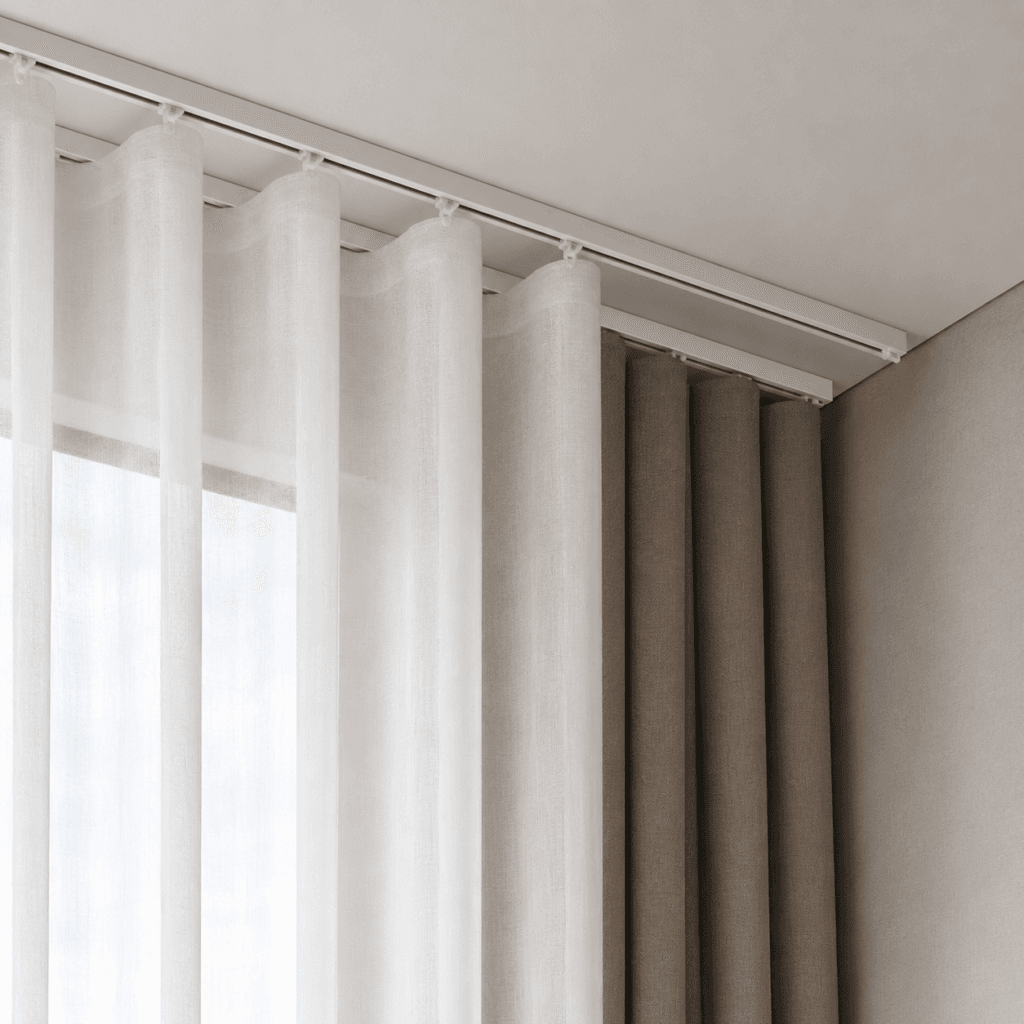
Bottom line: Private label curtains deliver 40–60% margins versus 15% for resellers, provided product mix and MOQ structure are right. Stock-based programs require MOQ 200 per color/size (50–100 for trial orders), with 3–5 day samples and 30+ day bulk lead times; full ODM adds 800–1,000m of custom-woven fabric and 2–3 weeks. Most DTC brands launch with 2 SKUs, validate unit economics, then scale to 4,000+ pieces/month. For brands adding printed patterns, see our guide to custom printed curtains.
Private labeling lets retailers, DTC brands, and importers put their own name on curtains made in someone else’s factory — and keep 40–60% margins instead of reselling someone else’s catalog at 15%. The trade-off: you take on inventory risk, packaging design, and a longer first-order timeline. Whether that math works depends on three things — the right product mix, the right manufacturer, and an MOQ structure that lets you start small and scale.
This guide covers all three. At Dairui Textile, we’ve been manufacturing private label curtains in Shaoxing since 2014, and most of our DTC clients started with a 50–100 piece trial before scaling to 4,000+ pieces per month. The patterns below are what actually works at that scale.

What “Private Label Curtains” Actually Means
A private label curtain is manufactured by a third-party factory but sold under your brand. Two versions exist, and confusing them is the most common mistake first-time buyers make:
- Stock-based private label — you pick from the factory’s existing fabric library and add your own packaging, hangtag, and barcode. Fastest path: 3–5 days for samples, 30+ days for bulk, MOQ from 200 pieces (or 50–100 for first-time trial orders).
- Full ODM (custom-developed) — you brief the factory on a new fabric, weight, or print. This requires custom-woven inventory at 800–1,000 meters minimum and adds 2–3 weeks to lead time.
Most DTC brands start with stock-based private label for the first 2–3 SKUs, then graduate to ODM once they’ve validated the niche. For full service details, see our private label curtain manufacturer page.
Which Curtain Categories Sell Best for Private Label Brands
Don’t launch with eight SKUs. Start with two complementary categories, validate the unit economics, then expand. The four below are what our DTC clients actually reorder — ranked by repurchase frequency, not by margin.
Blackout Curtains
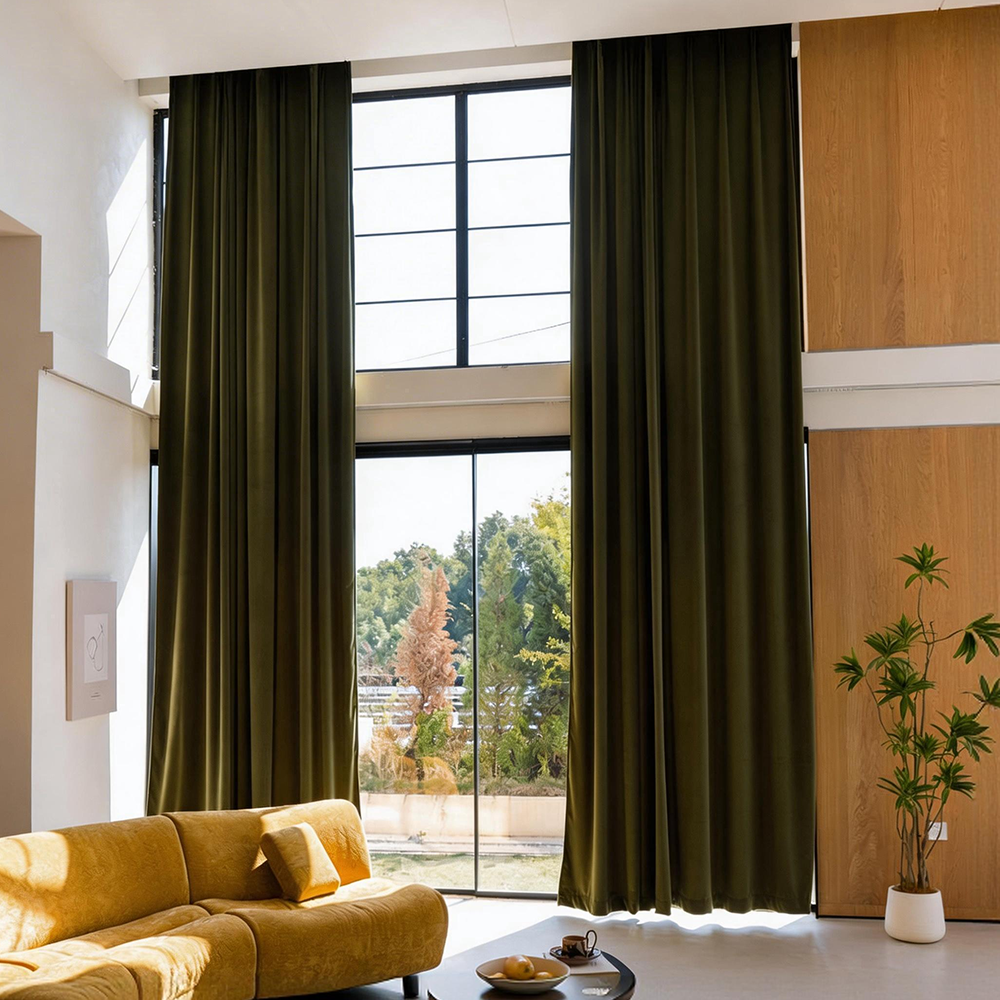
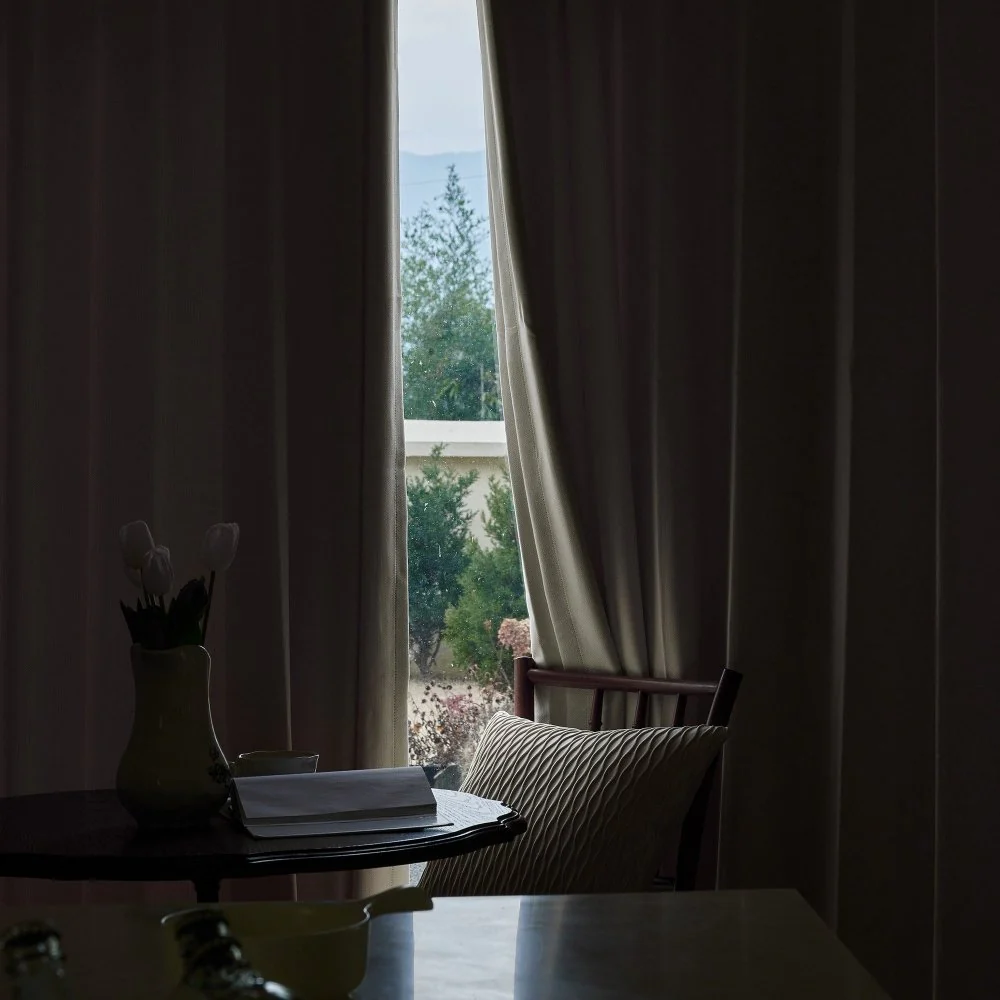
Our highest-volume private label category. DTC bedroom brands typically order 280 gsm coated polyester in 52″×84″ and 52″×96″ — the two sizes that cover 70% of US apartment windows. Standard MOQ 200 per color/size; trial 50–100 negotiable. Browse Blackout Curtains →
Sheer Curtains
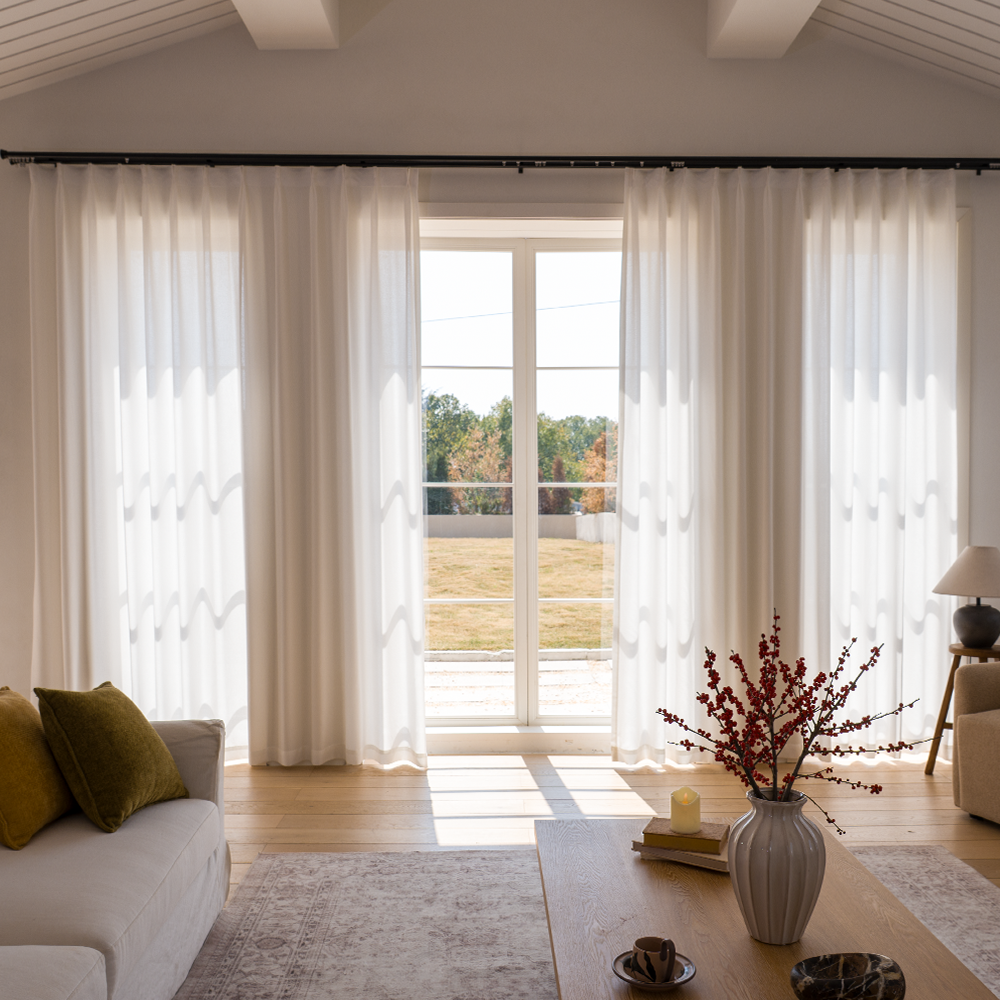
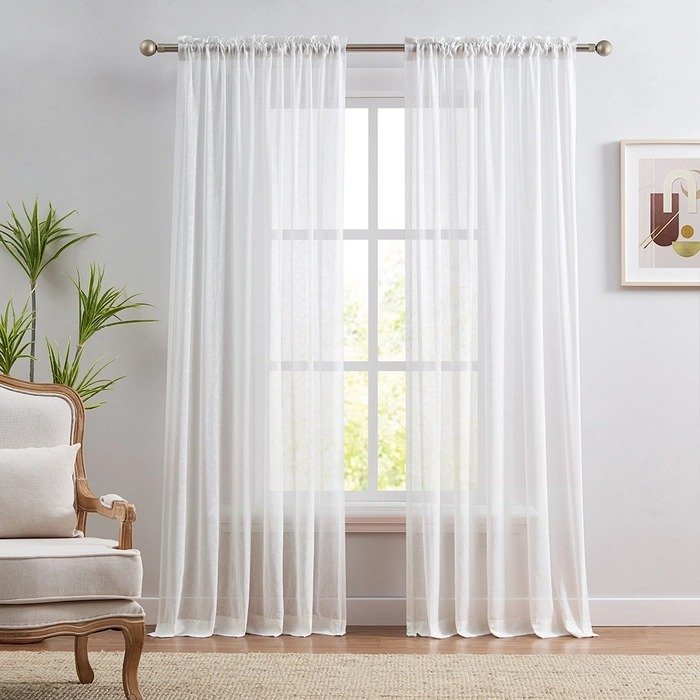
Light, layerable, and the easiest first SKU because color tolerance is wider — white, ivory, and natural cover 80% of DTC sheer demand. We weave linen-look voile at 85–110 gsm. Strong attach rate when bundled with blackout panels in two-pack listings. View Sheer Collection →
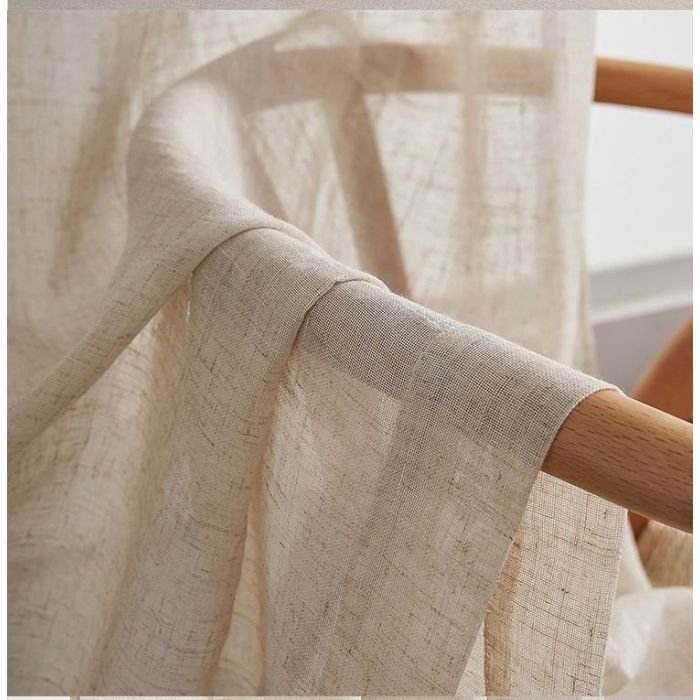
Faux Linen Curtains
Polyester engineered to look and drape like 200 gsm Belgian linen, without the price or the wrinkles. The strongest “premium feel at mid-market price” category — we ship a lot of these to Shopify brands targeting the $80–140 panel-pair retail bracket. See Faux Linen Options →
Outdoor Curtains
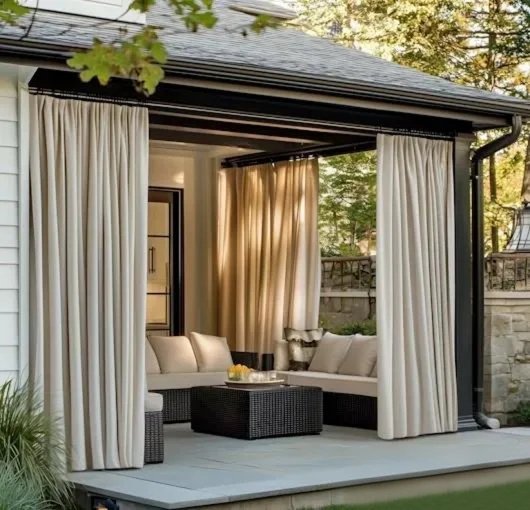
Solution-dyed polyester canvas with UV-stable pigment and water-repellent finish. Smaller addressable market than indoor but high AOV — patio and pergola buyers spend 2–3x per panel vs. bedroom buyers. Strong Q1–Q2 seasonality in North America. Browse Outdoor Curtains →
What You Can Actually Customize
Private labeling isn’t just slapping a logo on a polybag. Five dimensions are negotiable from the first PO, and each has a different cost impact:
| Dimension | What’s Possible | Cost Impact |
|---|---|---|
| Fabric | 200–400 gsm polyester, faux linen, velvet, sheer voile, blackout coatings | Stock library: no upcharge. Custom-woven: 800–1,000m MOQ |
| Heading Style | Grommet, S-Fold, Pinch Pleat, Rod Pocket, Back Tab, Tab Top | Pinch pleat uses 2.0–2.5x fabric vs. grommet — adds ~15% material cost |
| Print & Color | Digital print, jacquard weave, embroidery, foil stamp, swatch-based color match | Digital print: no MOQ uplift. Jacquard: requires 800m custom weave |
| Functional Add-ons | FR treatment (NFPA 701), waterproof, thermal lining, soundproofing | FR treatment: $0.40–0.80 per curtain. Inherent FR fiber: $1.20–2.50 |
| Packaging & Branding | Custom polybag, kraft hangtag, insert card, barcode label, gift box | $0.30–1.20 per unit depending on materials and print runs |
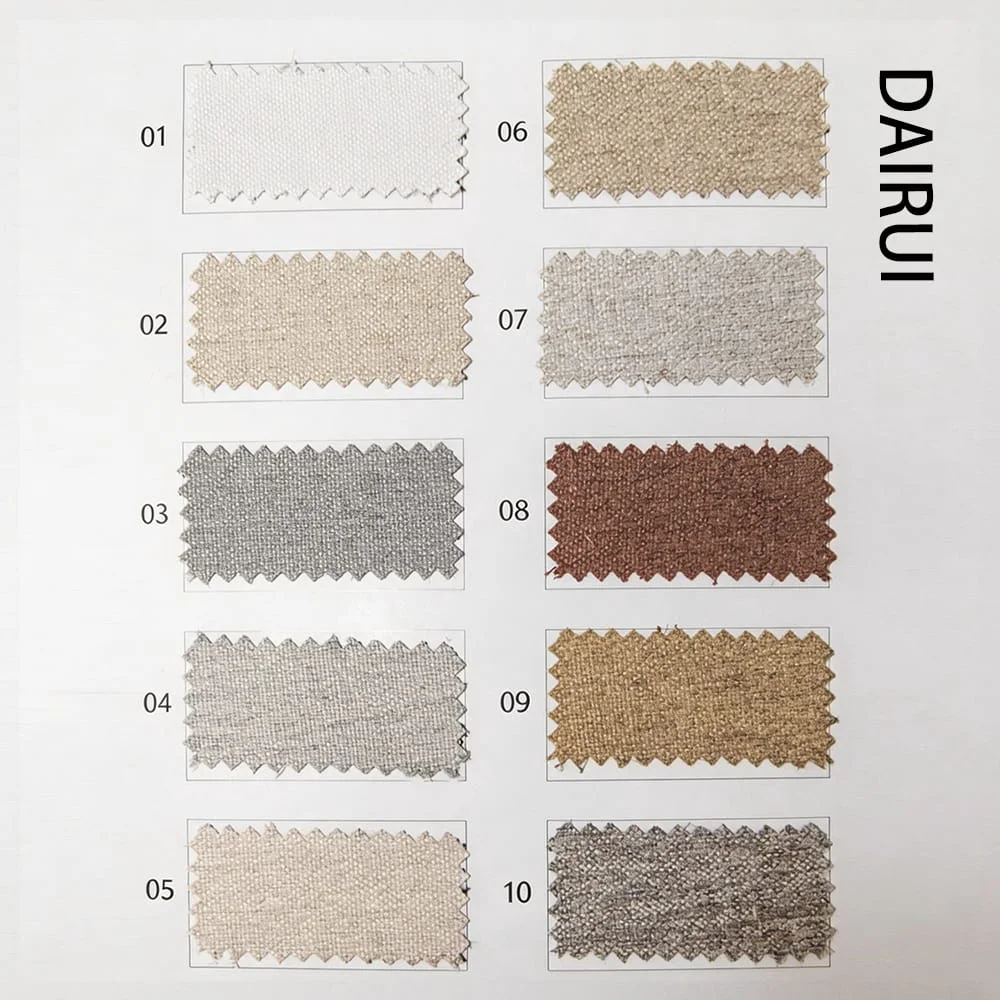
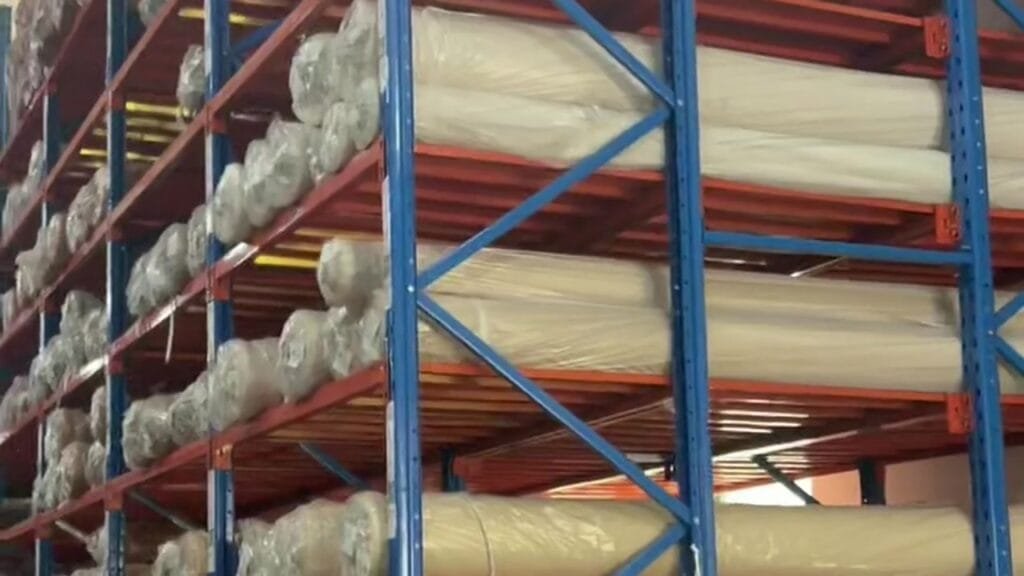
One thing worth flagging early: we don’t stock finished SKUs. We stock fabric inventory by weight, weave, and color, and cut/sew to your order. That’s how the same factory can run a 50-piece trial alongside a 12,000-piece container order without one starving the other.
Packaging Decisions That Move the Needle
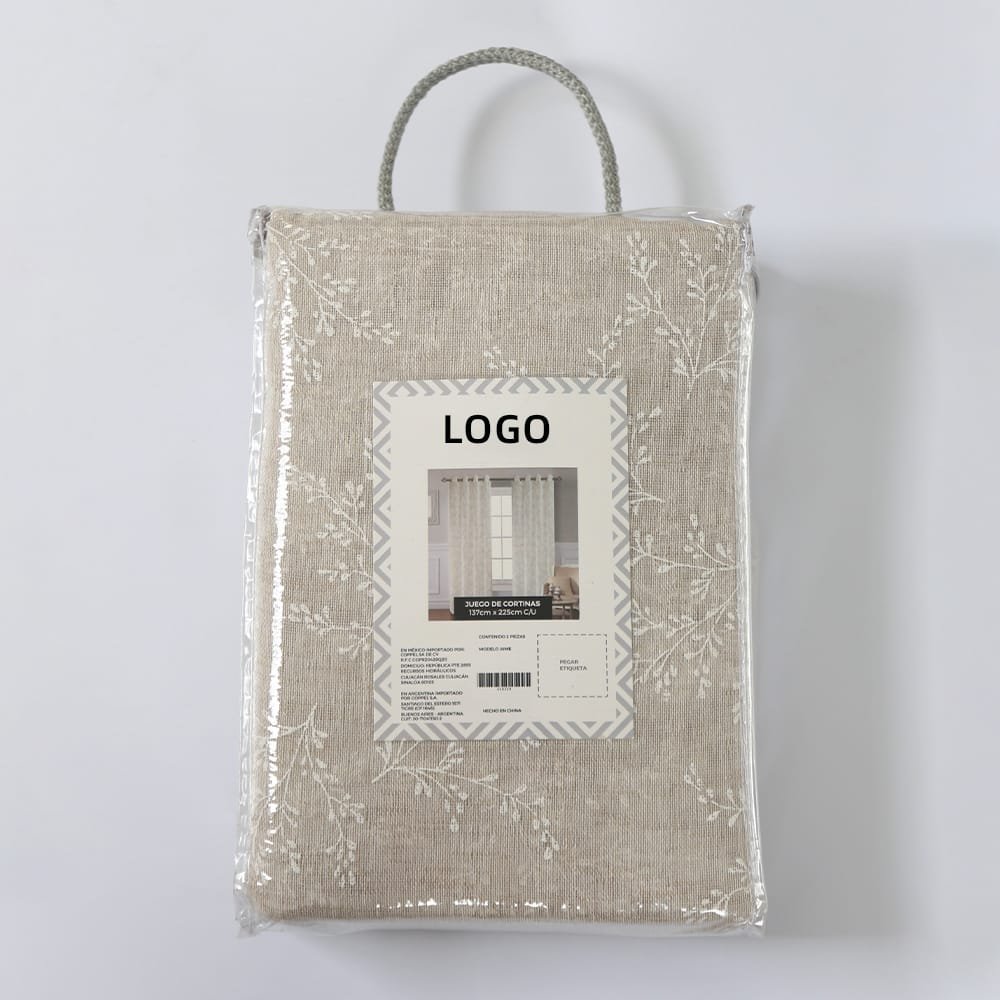
Packaging is the only part of a private label curtain a customer touches before unfolding it. Three decisions matter most:
- Polybag vs. box — polybag for Amazon FBA (lower DIM weight), gift-style box for premium Shopify ($15–30 perceived value lift, but 5x the unit cost)
- Hangtag stock — kraft adds “natural” cues, coated white feels mass-market, recycled cardboard reads premium-eco
- Insert card — washing care + warranty + brand story on a single 4×6″ insert is the single most reorder-driving asset we see
Barcode and SKU labeling are mandatory for Amazon FNSKU and Shopify warehouse intake; we apply both at our facility before bulk packaging so receiving teams scan-and-shelf in one motion. Eco-friendly polybags (recyclable LDPE or compostable PLA) add about $0.08–0.15 per unit.
Custom Labeling for Curtain Systems: What’s Included
Three label layers get applied at the factory: a woven brand label in the panel hem, a printed care-and-fiber-content label (required in most retail markets), and the barcode/SKU label above — all inside the $0.30–1.20 per-unit range in the table. Our guide to custom labeling curtain systems covers all six components with artwork requirements, MOQs and lead times.
How to Vet a Private Label Curtain Manufacturer
The DTC brands that fail at private label almost always fail at supplier selection, not product. A workable shortlist screens for five things:
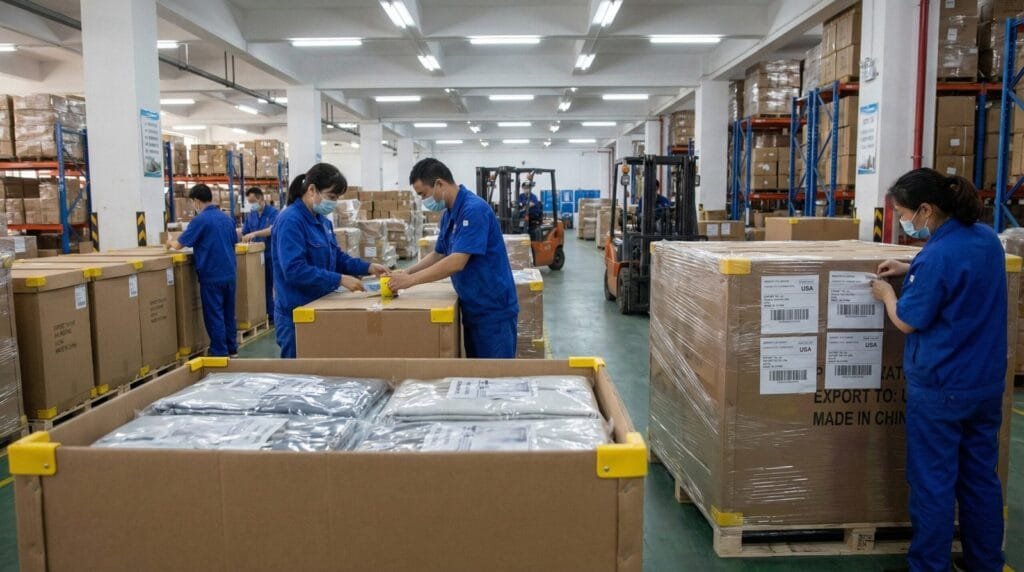
Here is what our production floor actually looks like:
- MOQ flexibility — can they accept 50–100 piece trial orders before locking you into 200+? If “no”, they’re a trader, not a factory
- OEKO-TEX Standard 100 + BSCI — the two certifications Shopify, Amazon Aware, and most US retail buyers actively check
- Sample turnaround under 7 days — slower than that means they’re outsourcing sampling, which means inconsistency in bulk
- Owned cutting and sewing — not just owned showroom. Ask for a facility video showing cutting tables, sewing lines, and QC stations in the same building
- Written replacement policy — what happens if 2% of a 1,000-piece batch arrives off-color? Get the answer before the PO, not after
Dairui operates a 10,000 m² facility in Shaoxing with 50+ in-house staff, holds OEKO-TEX Standard 100 and BSCI certifications, and runs a Customer-Approved Replacement Policy for recurring partners — defective or off-spec units are remade free and consolidated with the next shipment. Recent 12-month delivery on-time rate: 98%. For full service scope and how we structure private label engagements, see our private label manufacturing service page.
A Realistic Launch Timeline
Here’s what a first private label launch actually looks like, week by week. Most brands compress this aggressively on first attempt and regret it; the timeline below is what works without crisis-mode rework: For a real-world version of this timeline, see our case study of an Australian retailer who went from trial order to monthly reorders within one quarter.
- Week 1–2: Shortlist 3 manufacturers, request fabric swatches and existing private label references
- Week 2–3: Order finished samples from 2 finalists (3–5 working days production each, plus international shipping)
- Week 3–4: Finalize logo, hangtag artwork, insert card design with your designer or Canva-level tools
- Week 4–5: Place trial order (50–100 pieces), confirm packaging proof before bulk production starts
- Week 5–9: Bulk production runs (30+ days for fabric cut, sew, QC, packaging)
- Week 9–11: Sea freight Ningbo → US West Coast (20–25 days door-to-door including customs)
- Week 11+: Launch listings with lifestyle photography, A+ content, bundled sets (blackout + sheer two-packs convert better than singles)
Total: roughly 11–12 weeks from first supplier contact to first sale. Brands that try to compress under 8 weeks typically skip the trial order, hit a quality issue at scale, and lose 4 weeks on rework — net slower.
FAQ
What’s the minimum order to start a private label curtain line?
Standard MOQ is 200 pieces per style per color from stock fabrics. For first-time customers we negotiate trial orders from 50–100 pieces to let you validate the product before scaling. Custom-woven fabrics require 800–1,000 meters minimum.
How long from order to delivery for private label curtains?
Samples ship in 3–5 working days (excluding international transit). Bulk production runs 30+ days from deposit confirmation. Sea freight from Ningbo Port to US/EU adds 20–25 days door-to-door. Plan 11–12 weeks total for a first private label run.
Can I customize fabric, color, and size?
Yes. Stock fabrics come in standard weights from 85 gsm sheer to 400 gsm hospitality-grade blackout. Color matching to the factory color card or your reference swatch is available, with a lab dip for each custom color before bulk. Sizes are fully customizable; standard DTC sizes (52″×84″, 52″×96″, 52″×108″, 52″×120″) run fastest.
What certifications do you provide for retail compliance?
Dairui holds OEKO-TEX Standard 100 and BSCI compliance — the two most frequently requested by Shopify, Amazon, and US/EU retail buyers. NFPA 701 fire-retardant compliance is available for hospitality and contract orders. Third-party testing through SGS, Intertek, or TÜV can be arranged per order. See our certifications page for the full list.
Do you offer eco-friendly packaging?
Yes. Recyclable LDPE polybags, compostable PLA bags, and FSC-certified kraft hangtags are all available. Eco packaging typically adds $0.08–0.30 per unit depending on materials and print runs. We recommend ordering packaging samples before committing to bulk artwork.
How are payment terms structured?
Payment terms and pricing are confirmed during inquiry based on order volume, destination, and product specification. We accept USD and EUR. For recurring partners we offer staged terms after the first PO.
Ready to Source Your Private Label Line?
Most of our DTC clients started with a single 50–100 piece trial order to validate fabric, packaging, and unboxing before committing to bulk. That’s the lowest-risk way to test whether your concept ships — and whether the manufacturer ships when they say they will.
If you want to walk through MOQ structure, sampling, or packaging options for your specific brand, the fastest path is a direct conversation. See our full private label service page, or contact us with your target SKU, volume, and timeline — we’ll come back with sample lead time and indicative pricing within 24 hours.
Last reviewed: May 2026 · DAIRUI Editorial Team
More on Private Label & OEM
- Private Label Curtain MOQ, Lead Time & Cost Breakdown
- OEM vs Private Label Curtains: Which Fits Your Business?
- Dropshipping Curtains: A Made-to-Order Model
- Can You Mix SKUs and Colors to Reach a Curtain Wholesale MOQ?
- How to Get a Curtain Line Sheet or Catalog From a Factory
- How Curtain Sampling Works: Cost, Lead Time, and What a Sample Actually Proves